
Ukemi (受け身) — Breakfalls
Why Ukemi Matters
In aikido, two people take turns applying and receiving techniques. The person who applies the technique is called tori (取り), and the person who receives it is called uke (受け). Only when uke can fall safely can tori apply techniques freely. That is why ukemi is the most basic of the basics.
There are three kinds of ukemi, learned in order. Start from a sitting position to get rid of the fear of falling; once you are used to it, gradually raise the height to a one-knee-up position and then to standing.
Koho Ukemi (後方受け身) — Falling Backward
Koho ukemi is the breakfall you use when you fall backward. It is the first basic you learn when you study ukemi.
From Sitting
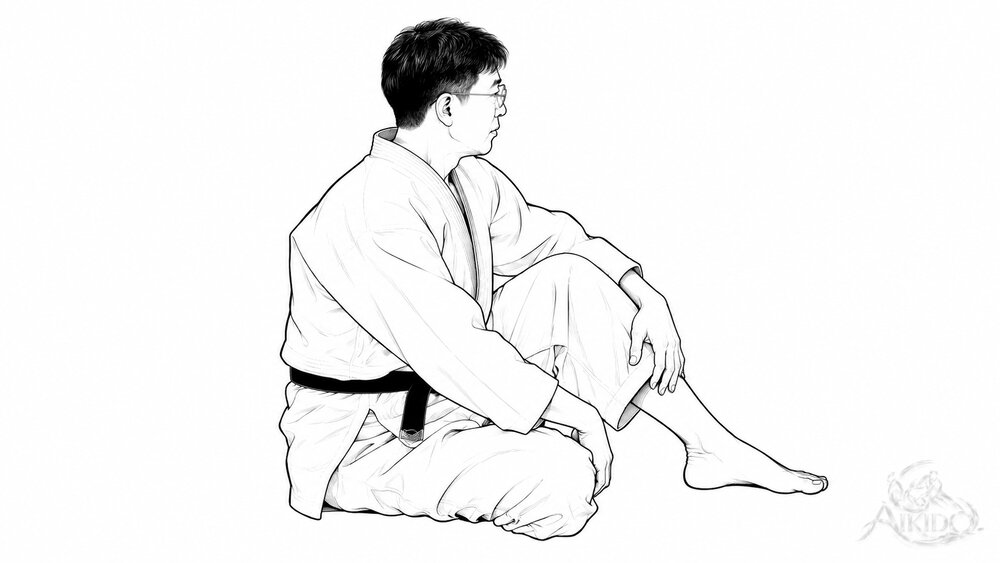
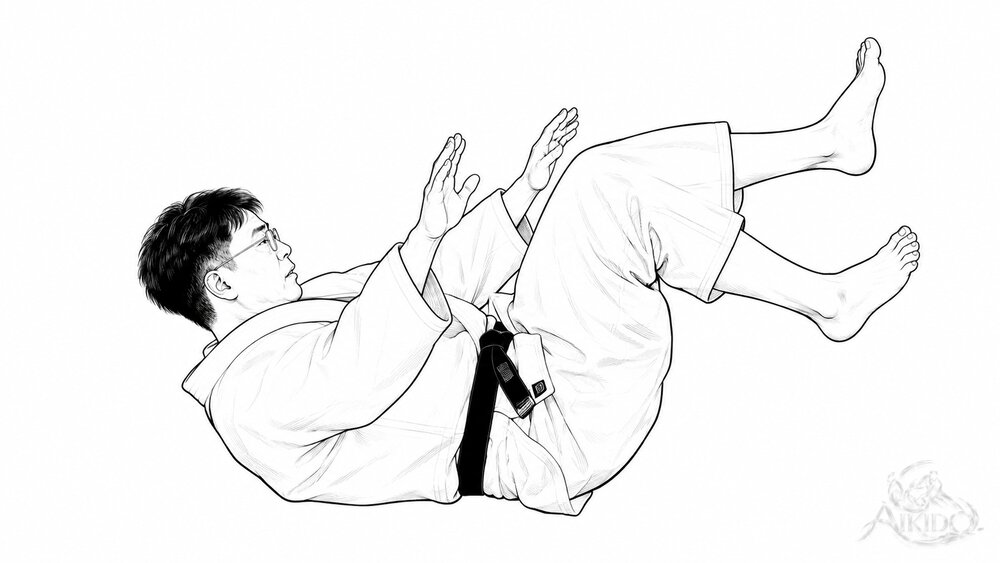
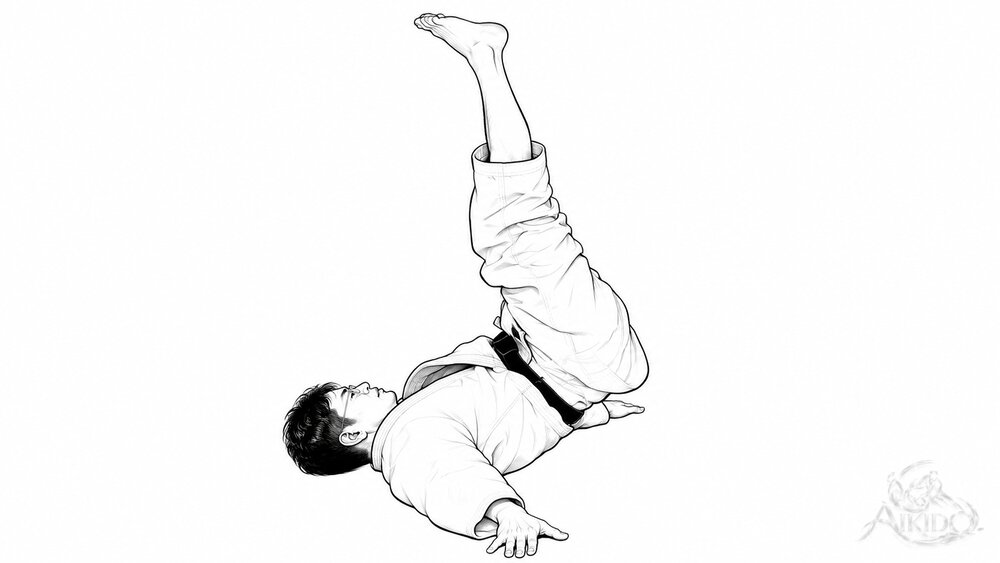
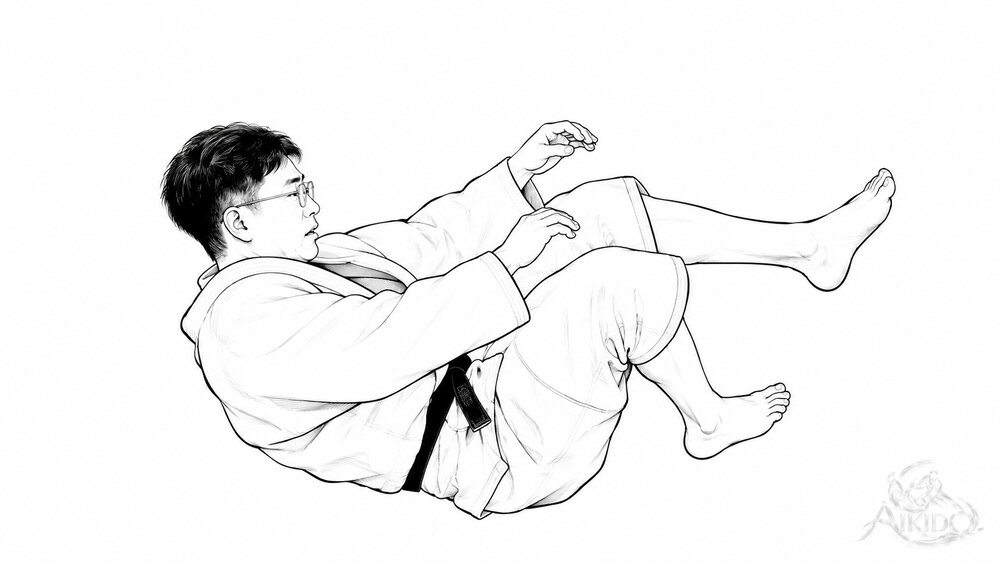
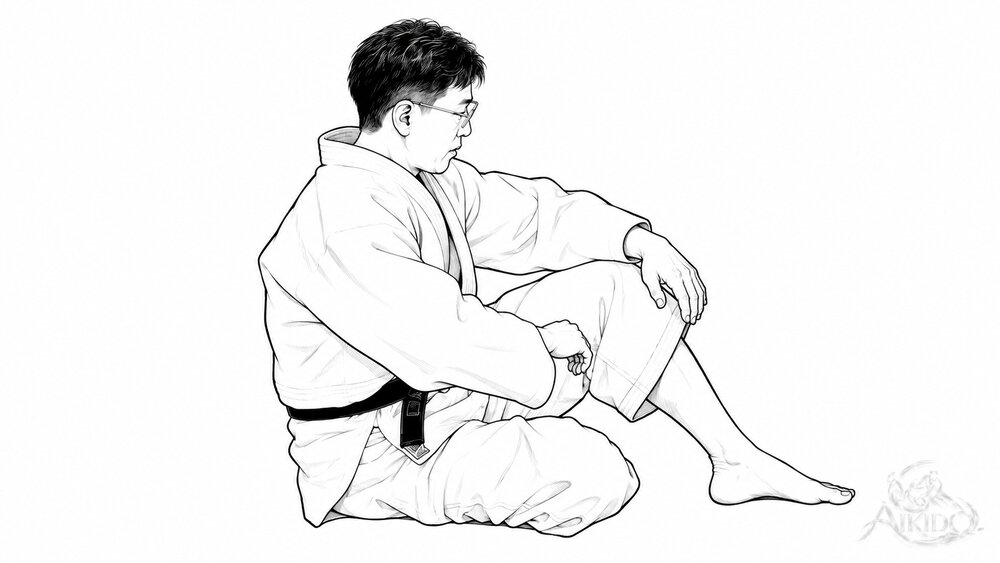
- Fold the right knee and sit down with your buttocks on the floor.
- Keeping the shape of your body, roll back like a cradle.
- The moment your back touches the floor, slap the floor with your whole arm.
- Taking care not to hit the back of your head on the floor, use the rebound to come up.
- Return to the original sitting position.
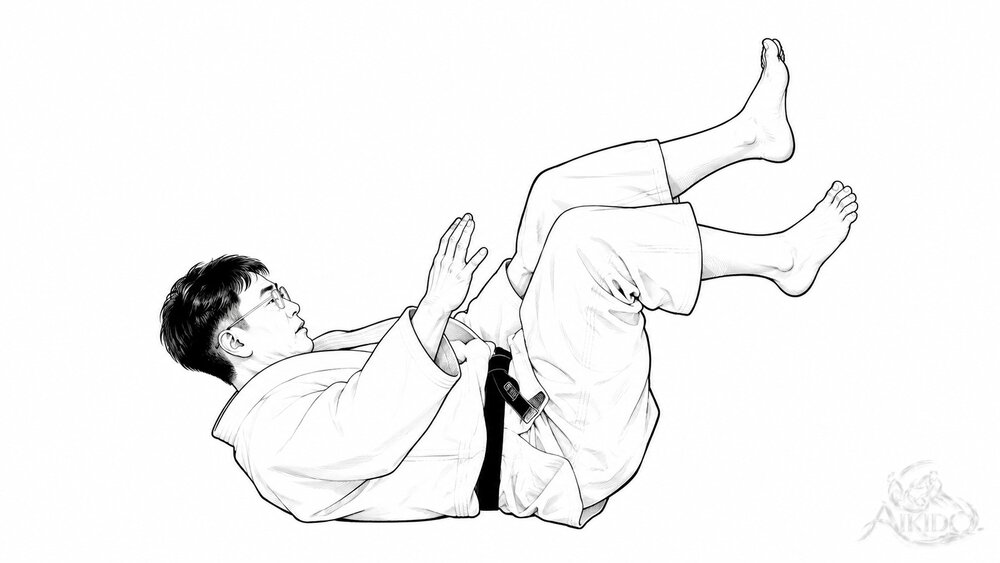
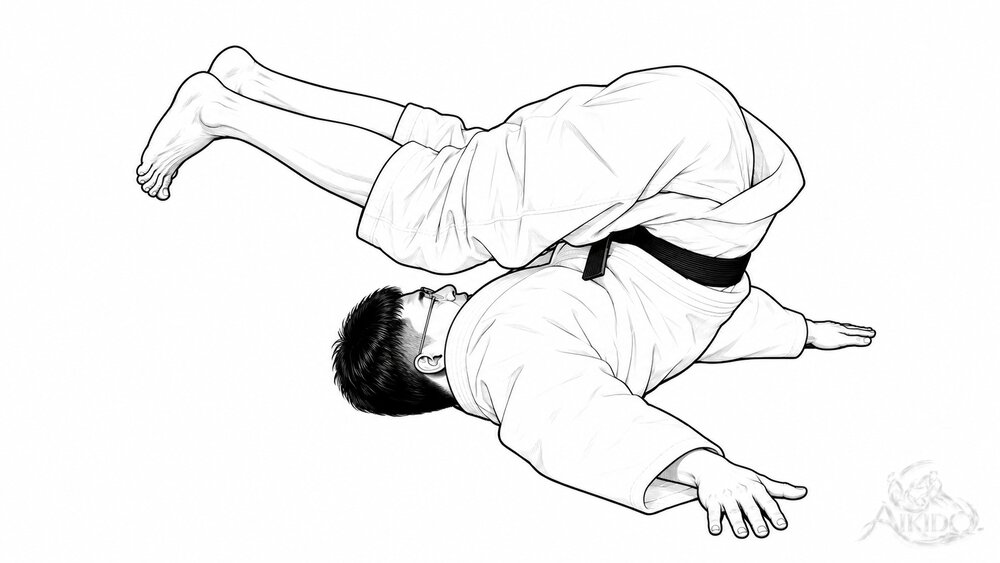
- Like a cradle: Round your whole body and roll back like a cradle. The impact is then not concentrated in one spot but spread out from the buttocks to the back.
- Protect your head: When you fall backward, the thing to be most careful about is hitting the back of your head on the floor. Tuck your chin firmly and put strength in your belly.
- NG — Do not fold the body too much: If you fold your body too much as you fall, you lose your balance and have trouble getting up, and you may even hit your head.
From One Knee Up
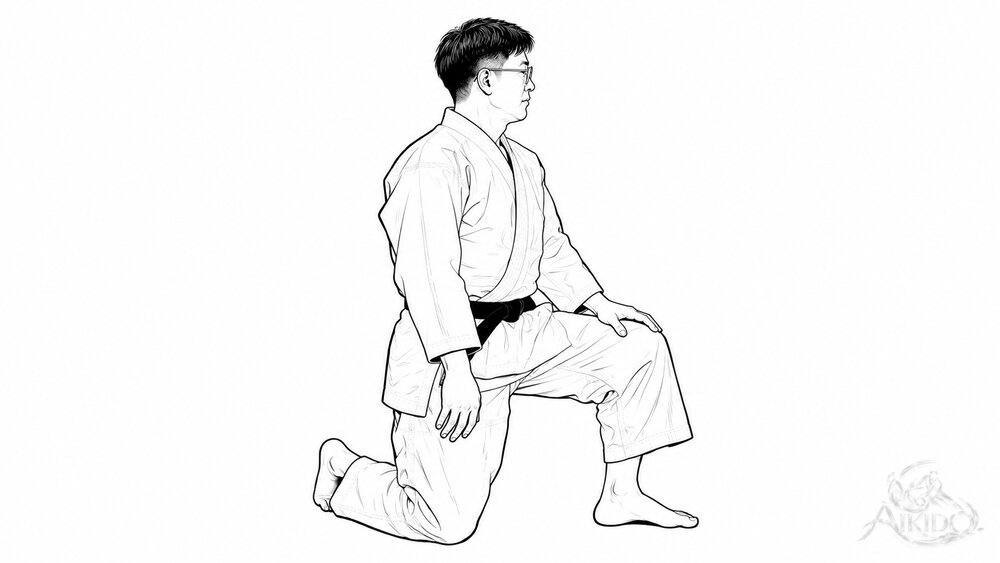
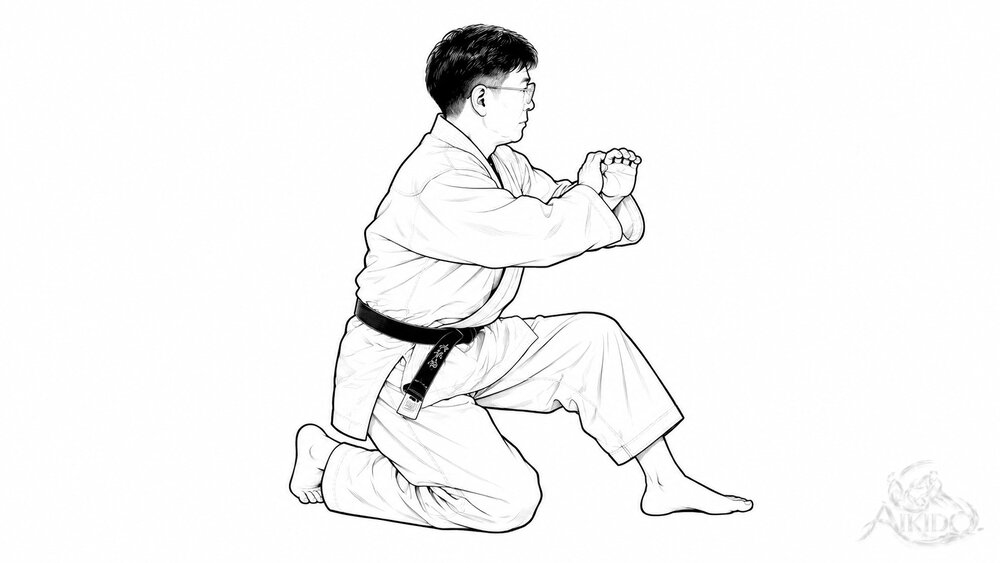
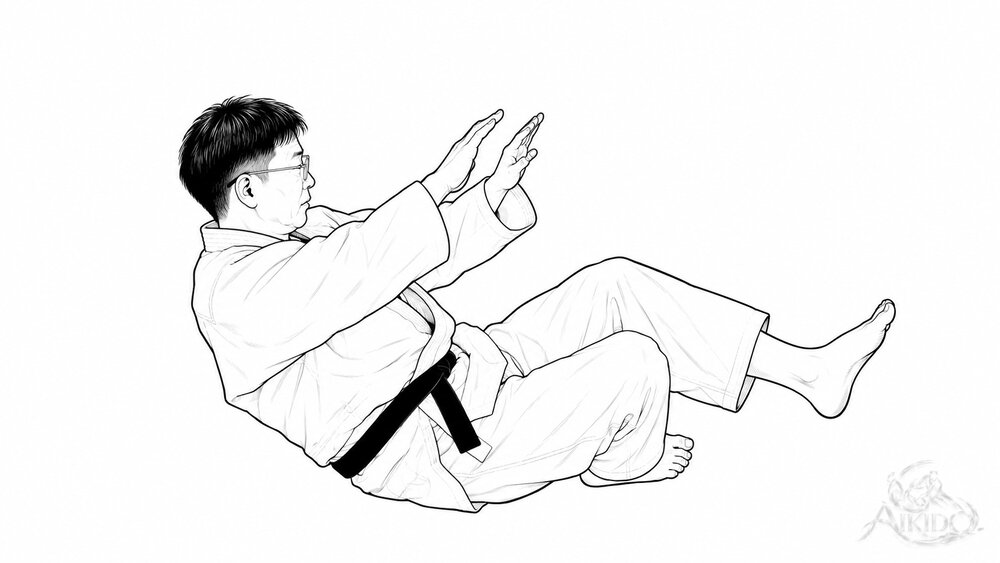
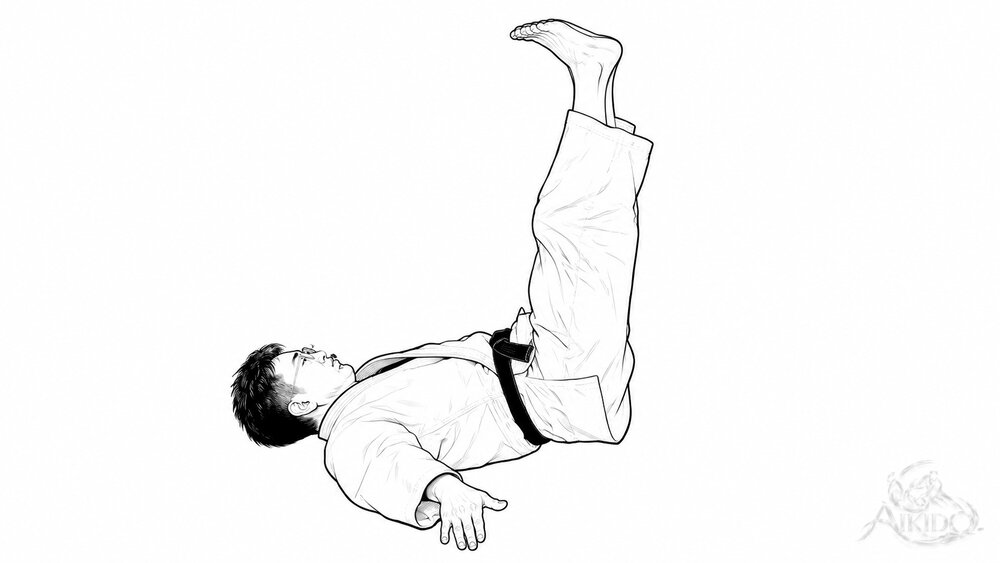
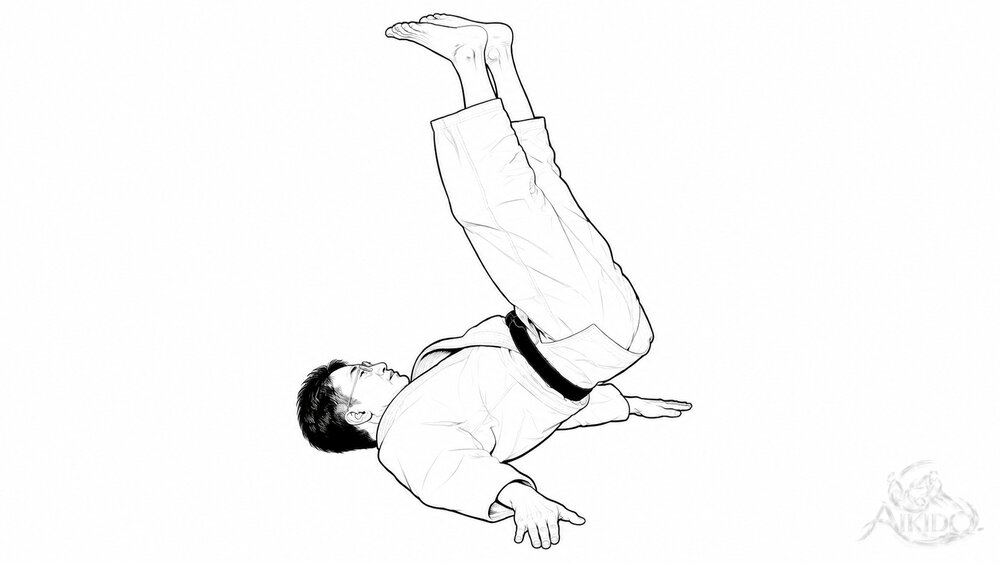
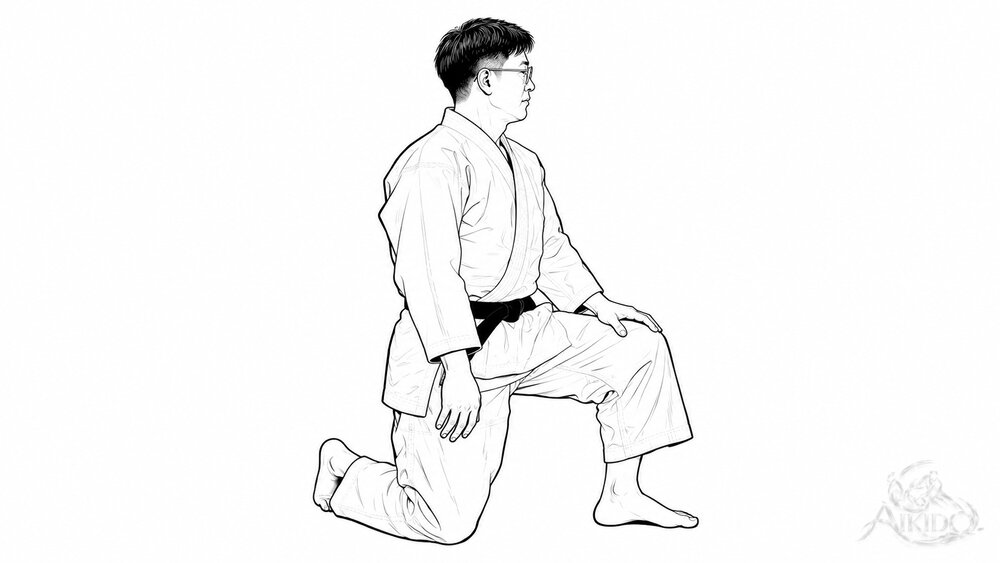
Koho ukemi from one knee up. One knee up (right toes pointing inward) → Fold the right knee and lower the hips → Touch down from the buttocks and round the back → As the back touches, slap the floor with one hand → Use the rebound to fold the right knee and come up → Back to the starting position
Kneel with one knee raised, with the toes of the right foot (the one on the floor) pointing inward. Fold the right knee and lower your hips, touching the floor buttocks first as you round your back. The moment your back touches, slap the floor with one hand, then use the rebound to fold the right knee and come up, returning to the starting position.
From Standing
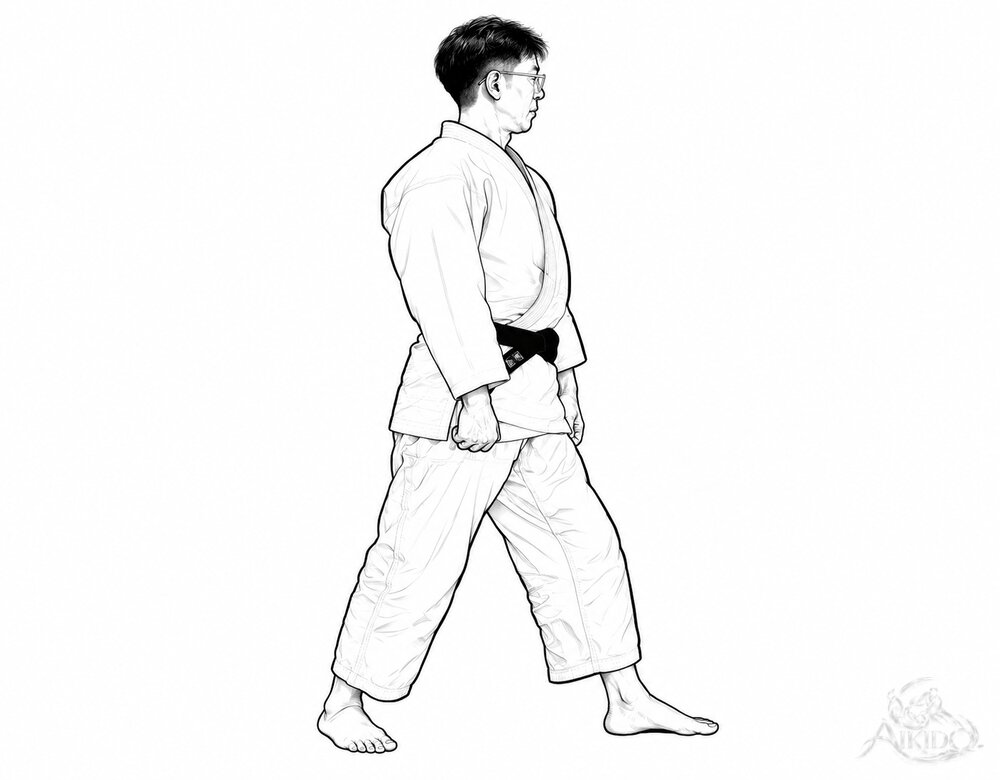
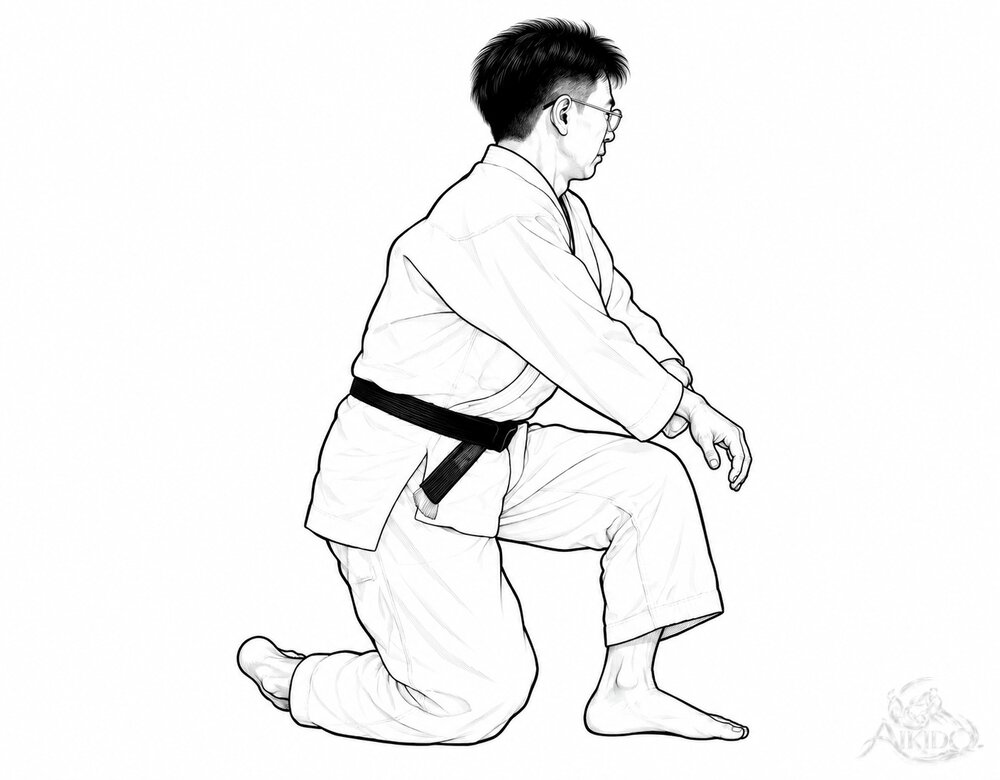
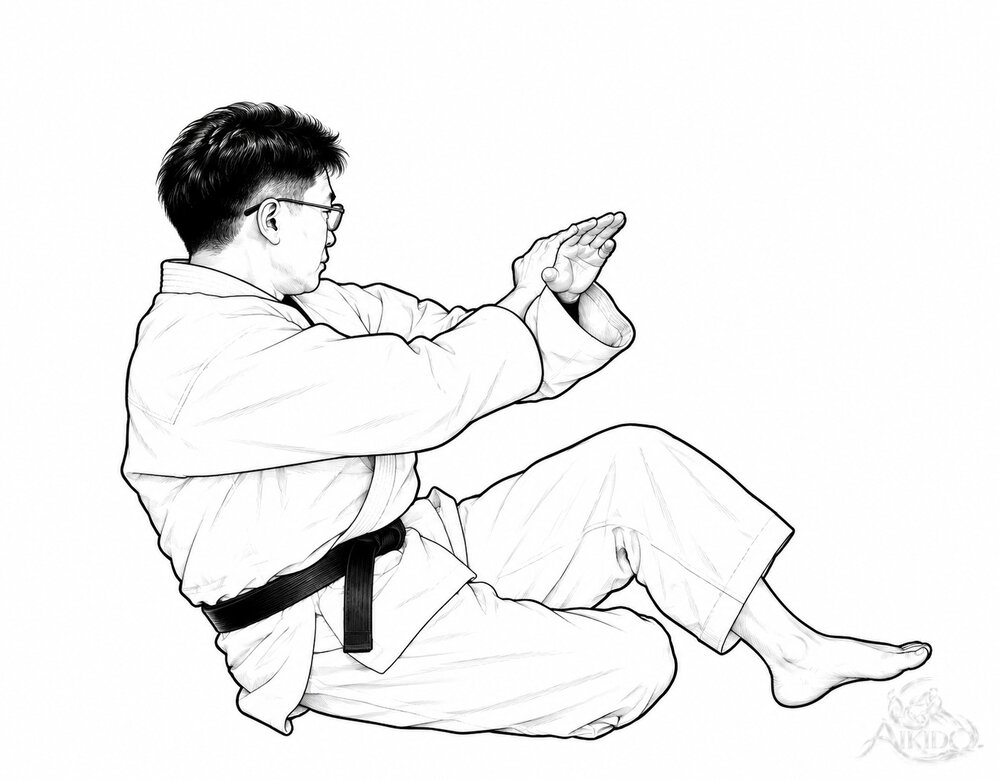
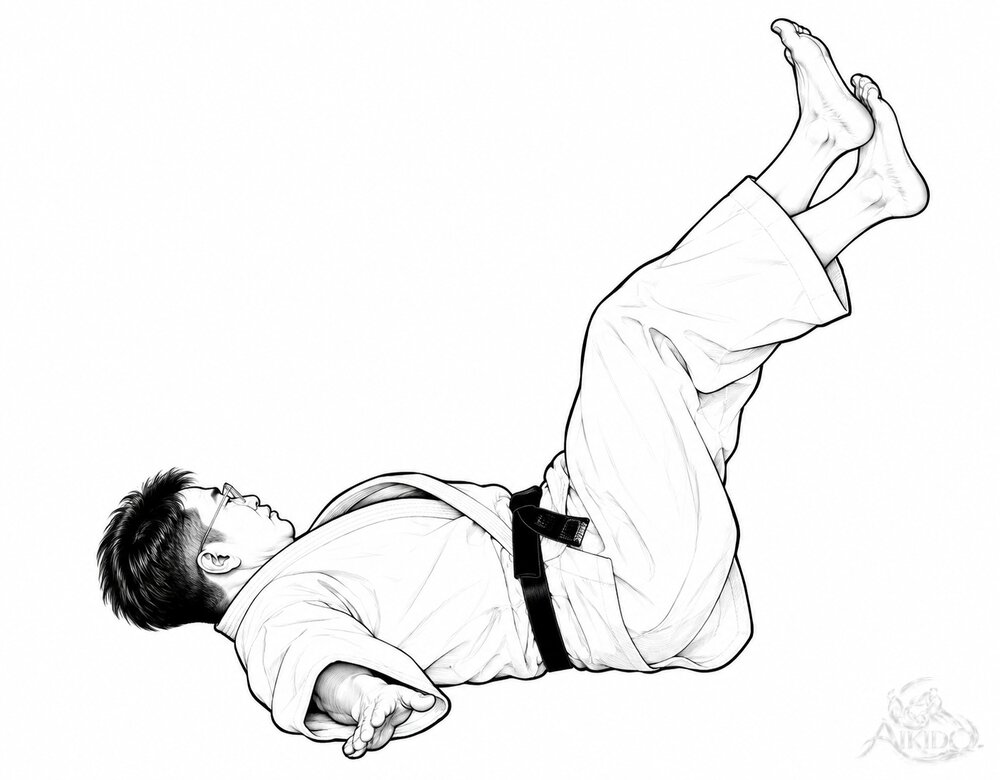
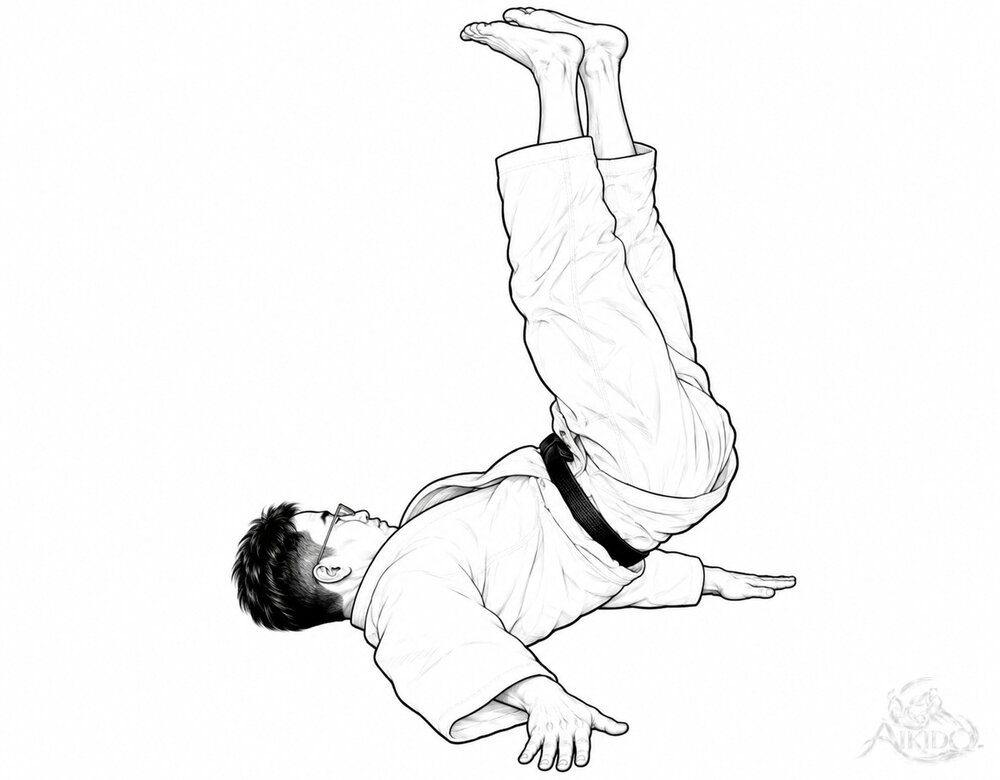
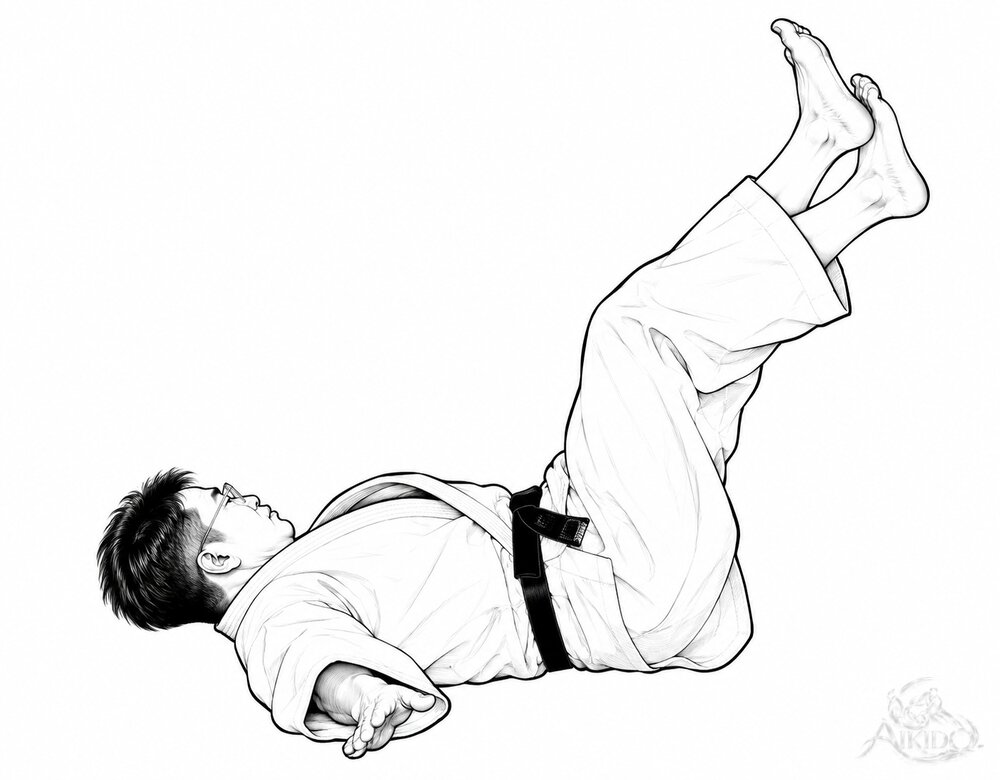
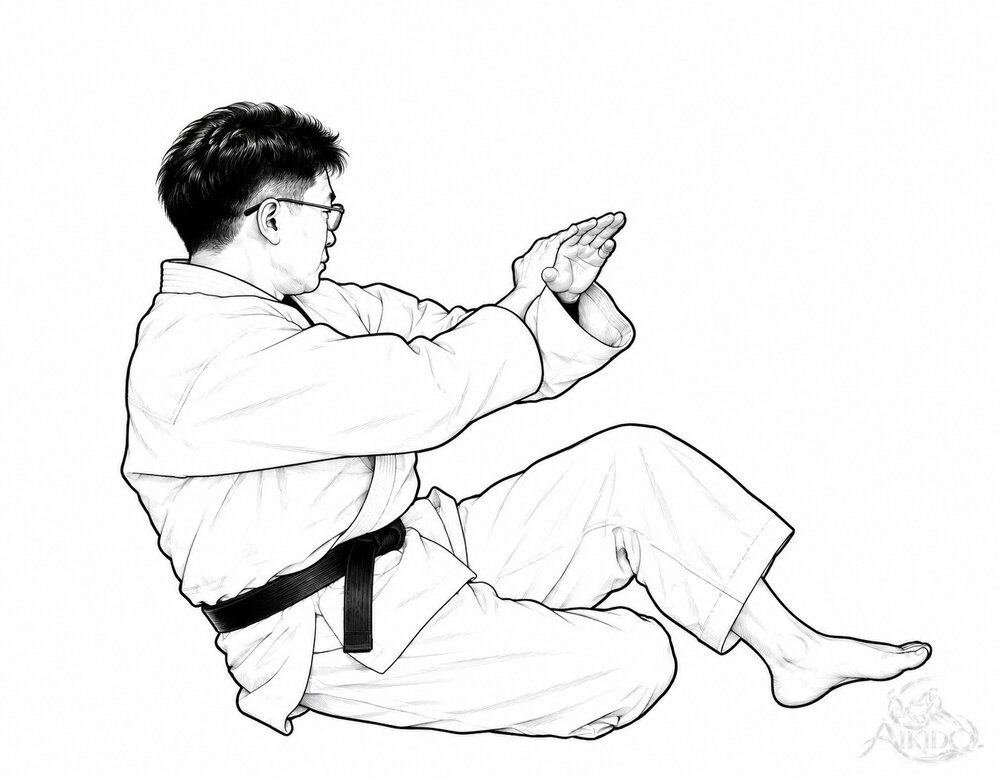
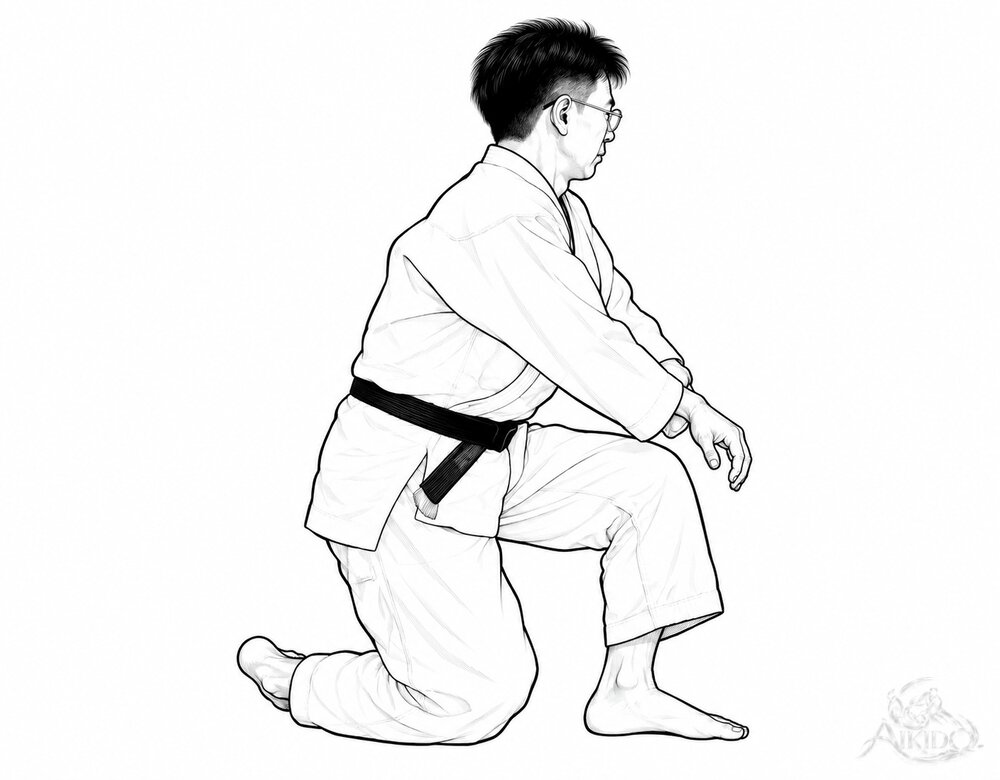
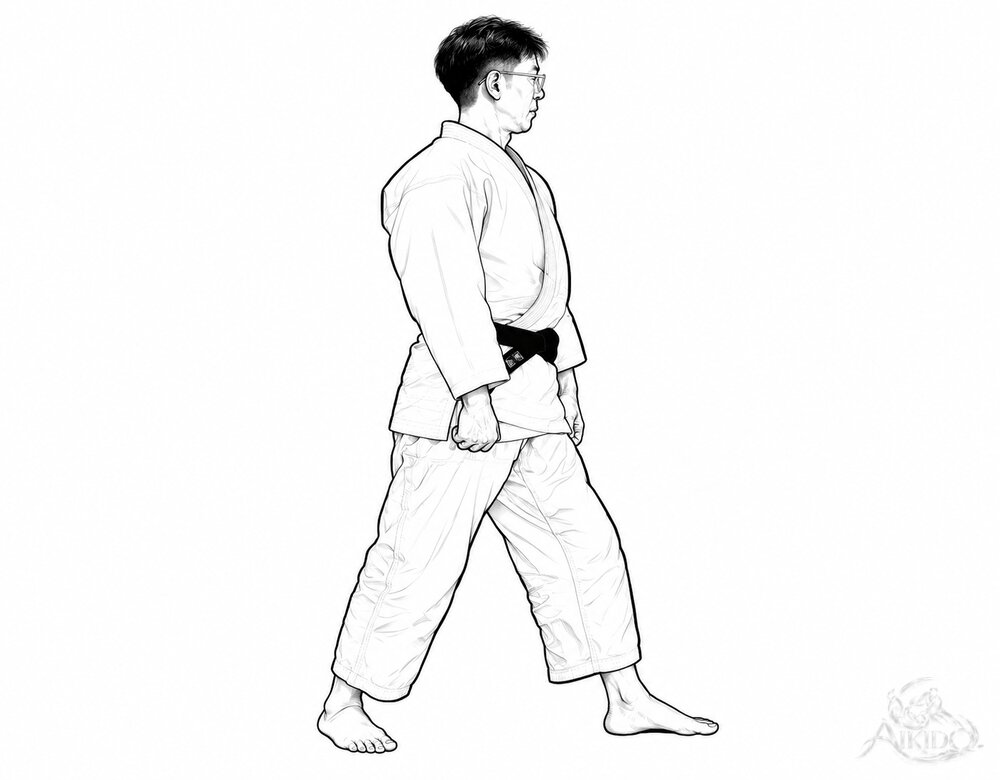
Koho ukemi from standing. 1 Hidari hanmi → 2 Fold the right knee and lower the hips → 3 Touch down from the buttocks → 4 Round the back and roll backward → 5 Slap the floor with one hand → 6 Use the rebound to come back → 7 Raise the body → 8 One knee up → 9 Hidari hanmi as you stand
From a hidari hanmi stance, fold the right knee and lower your hips. From there it is the same as from one knee up. The movement is complete only when you are back in hidari hanmi the moment you stand.
Koho Kaiten Ukemi (後方回転受け身) — Rolling Backward
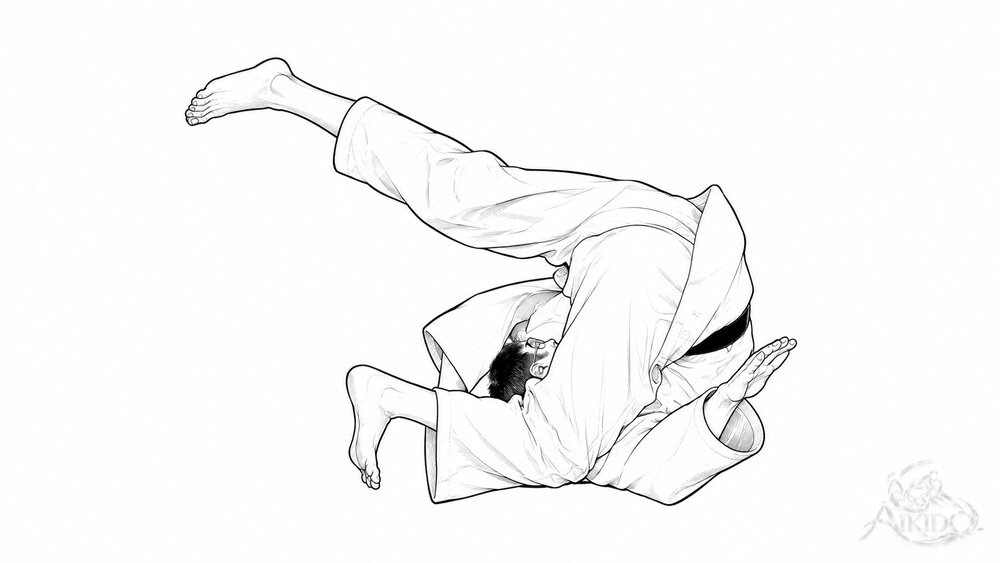
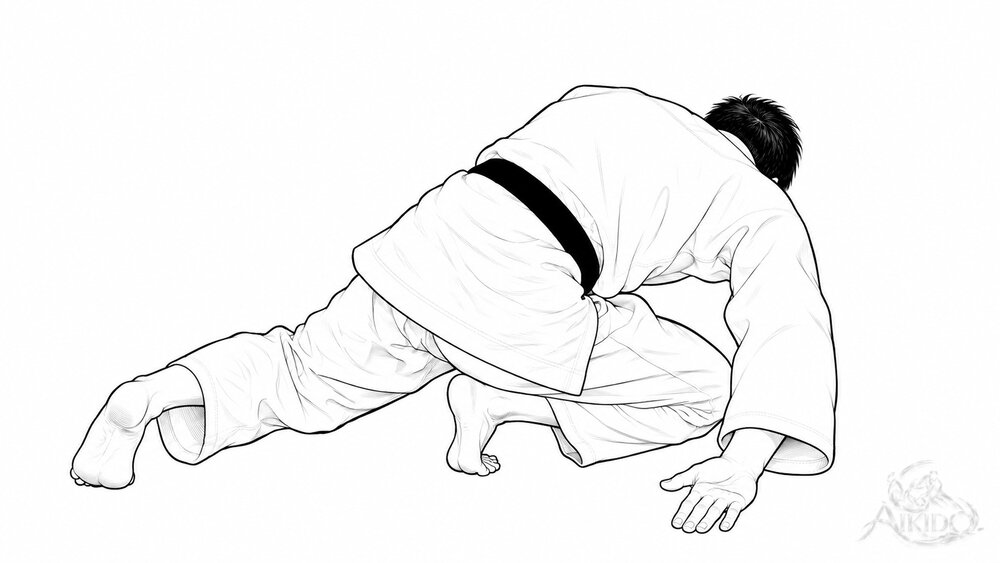
Koho kaiten ukemi is a breakfall that disperses the impact by rolling backward. As in koho ukemi, you round your back and go back like a cradle, but you roll backward over your shoulder, not your head. Then you raise your body as if pushing up off the floor with both hands.
From Sitting
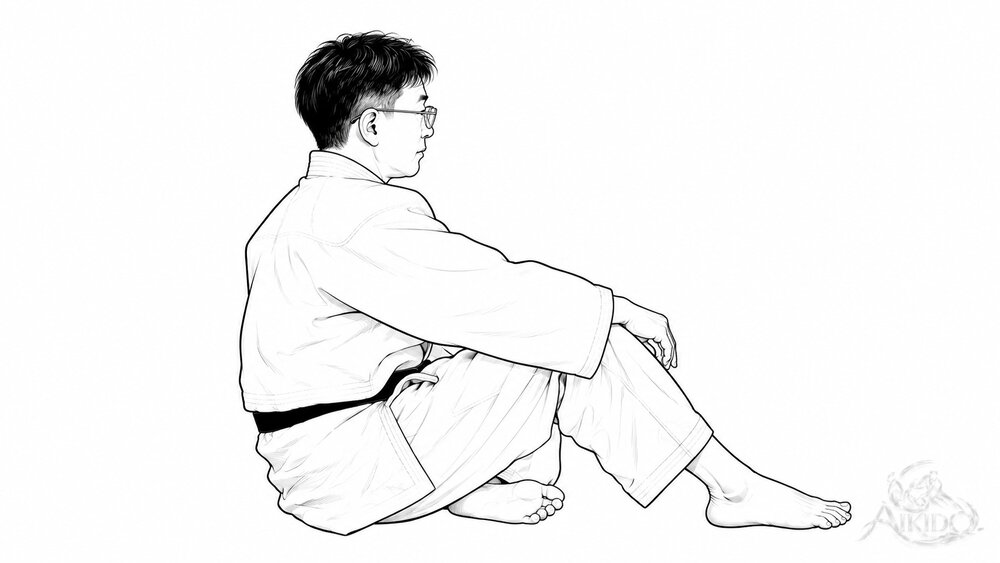
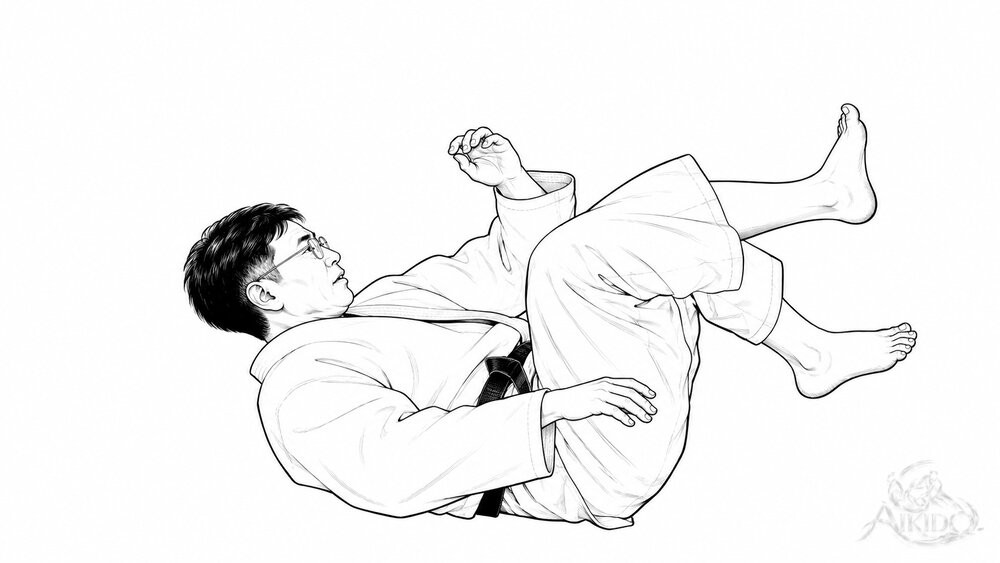
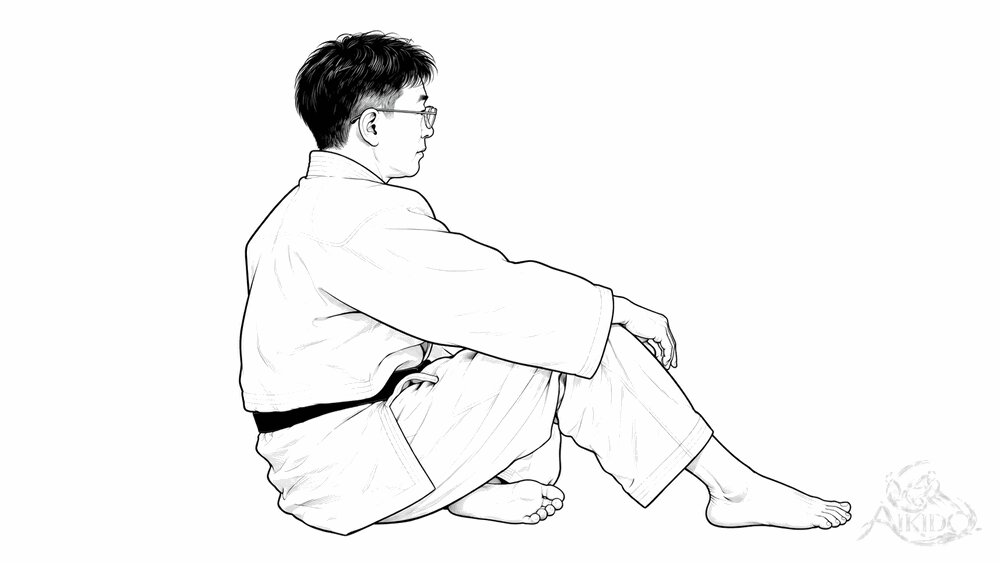
- Fold the right knee and sit down with your buttocks on the floor.
- Keeping the shape of your body, roll back like a cradle.
- Tilt your head to the side, ready to roll.
- Using the left shoulder as the pivot, bring the left foot back over.
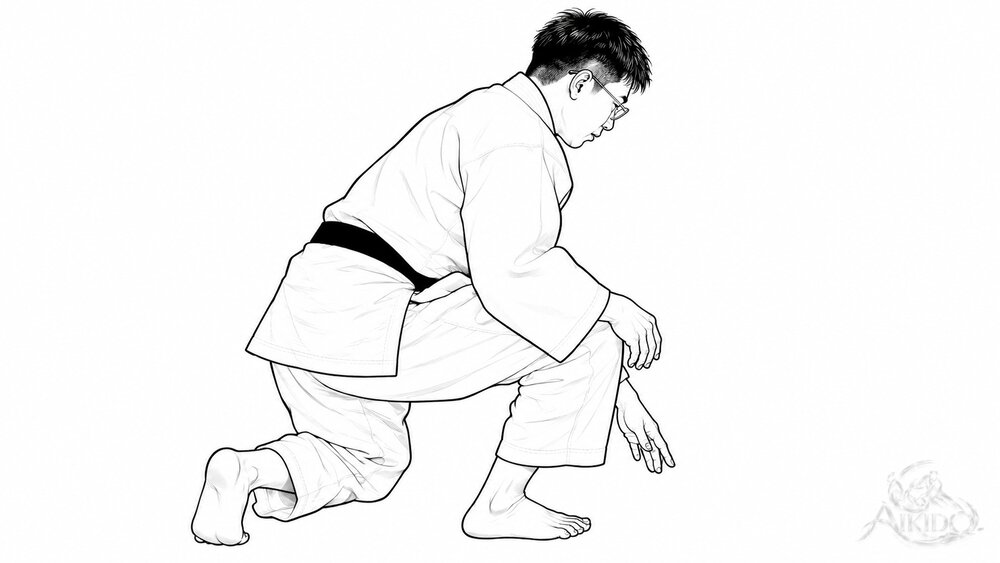
- Raise your body as if pushing up off the floor with both hands.
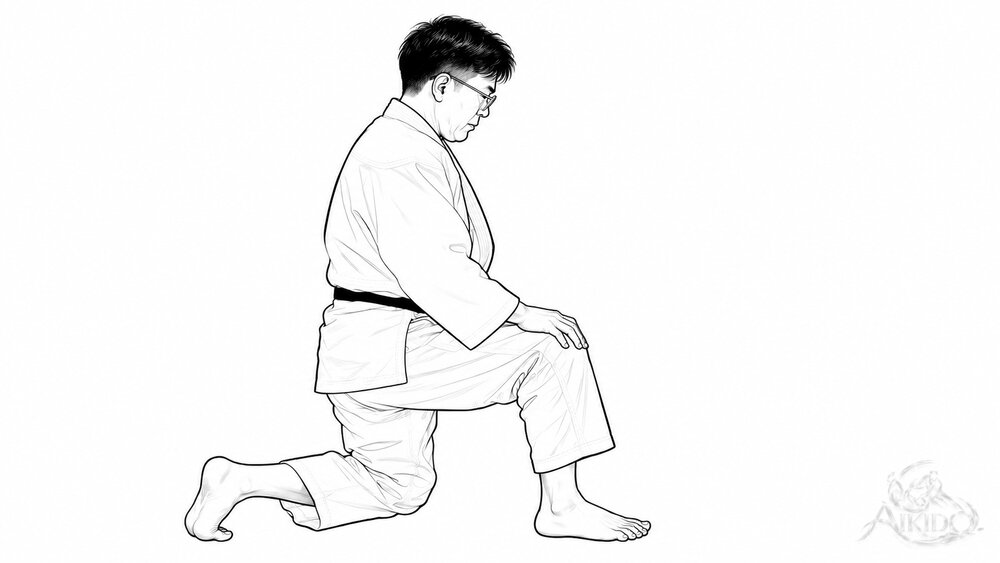
- You end in a position with one knee raised.
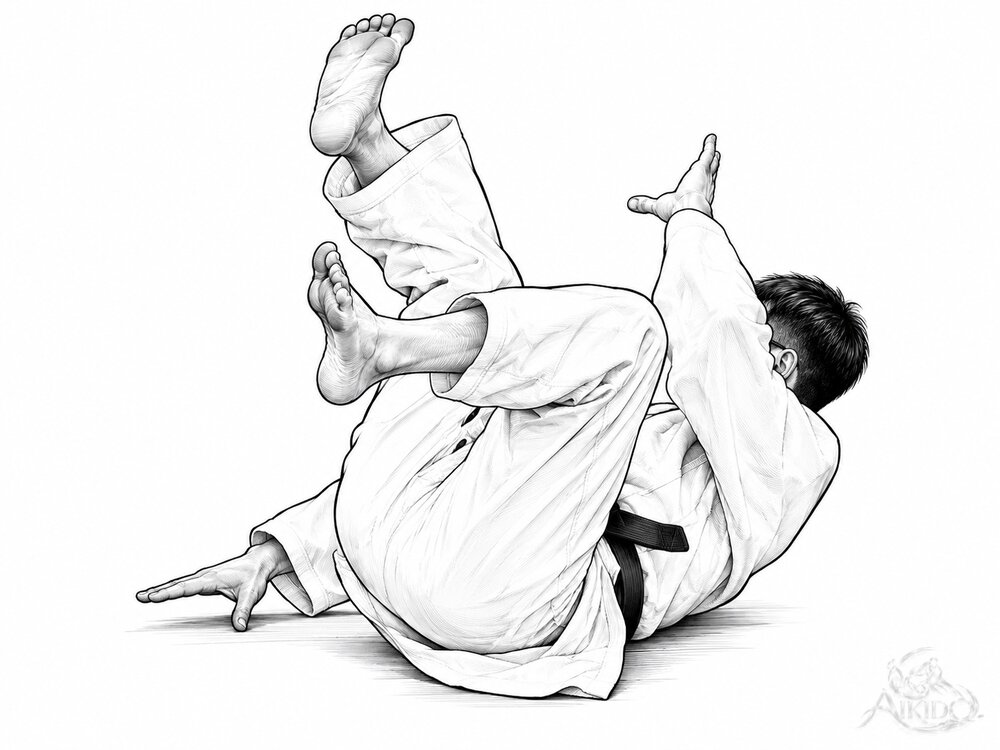
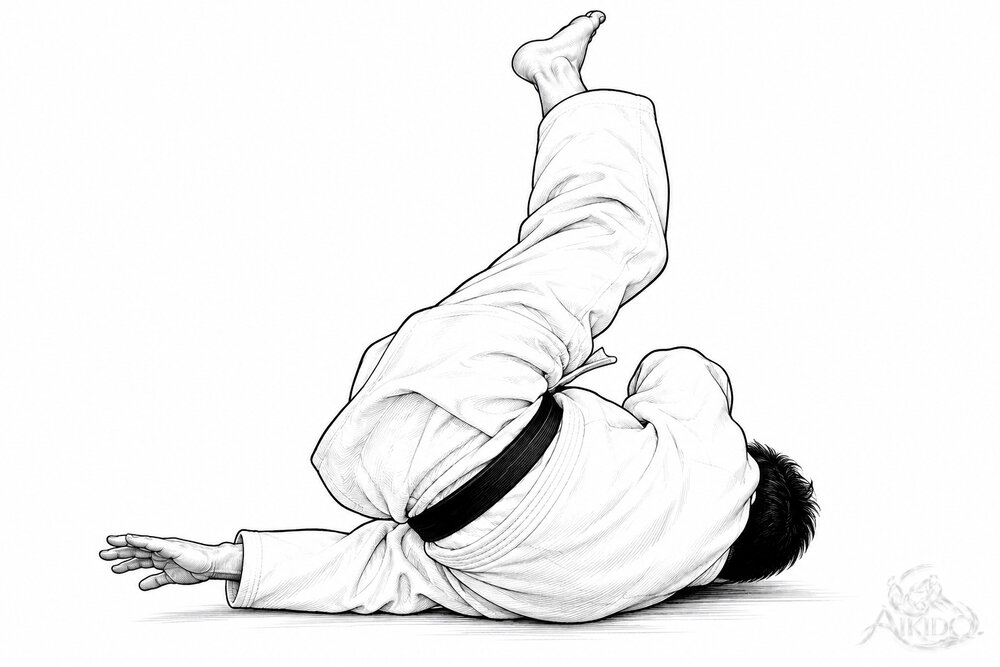
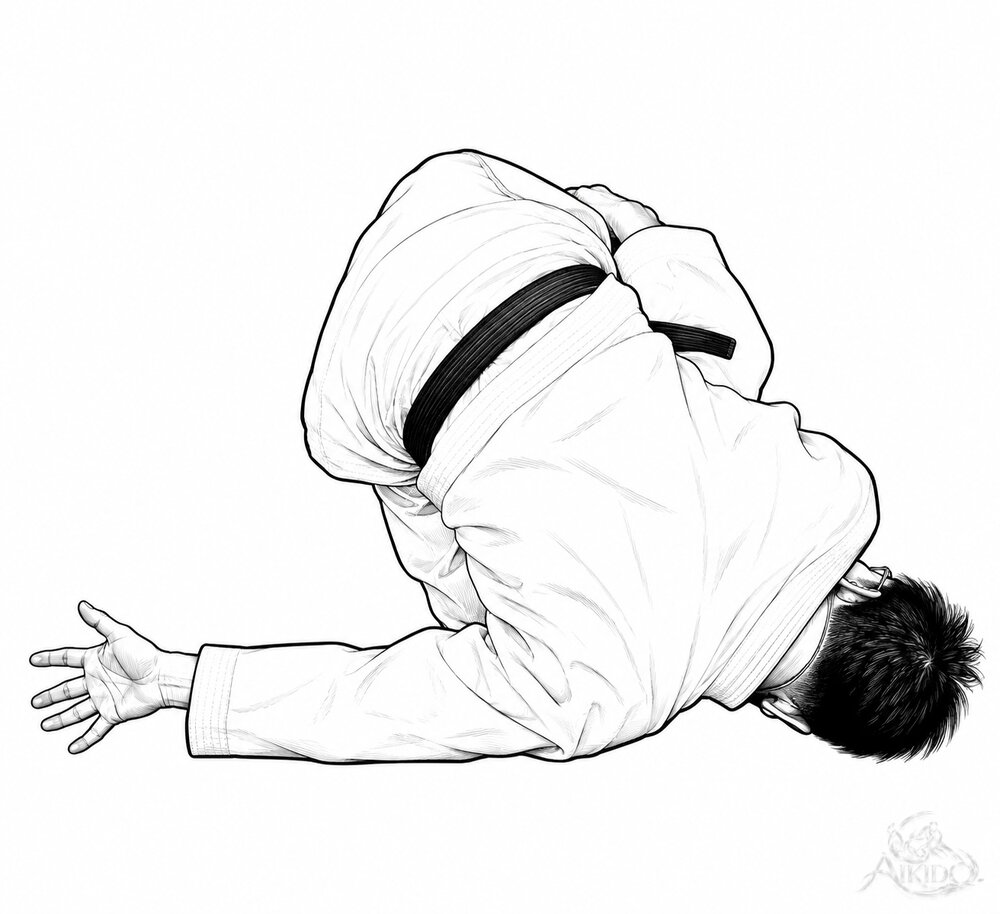
- Slip through over the shoulder: Roll with the feeling that your body slips through using the shoulder as a pivot. As you roll, place your hands on the floor and push your body straight up.
- Tilt the body slightly: If you go straight back, you are likely to hit your head, and you will not roll well. If you tilt the body slightly, your head does not get in the way and you can quickly bring your feet back over the shoulder. When falling from hidari hanmi, use the left shoulder as the pivot; from migi hanmi, the right shoulder.
From One Knee Up
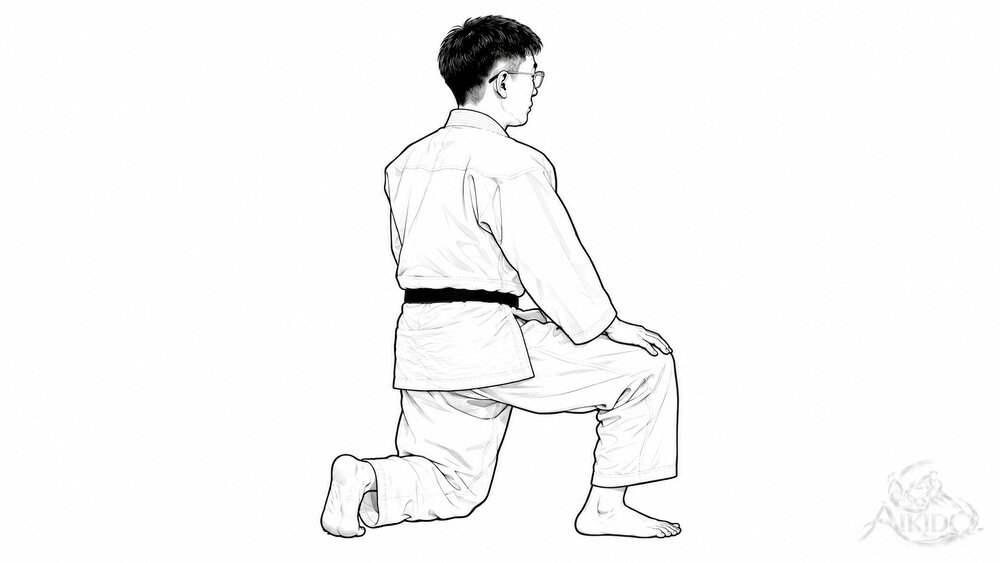
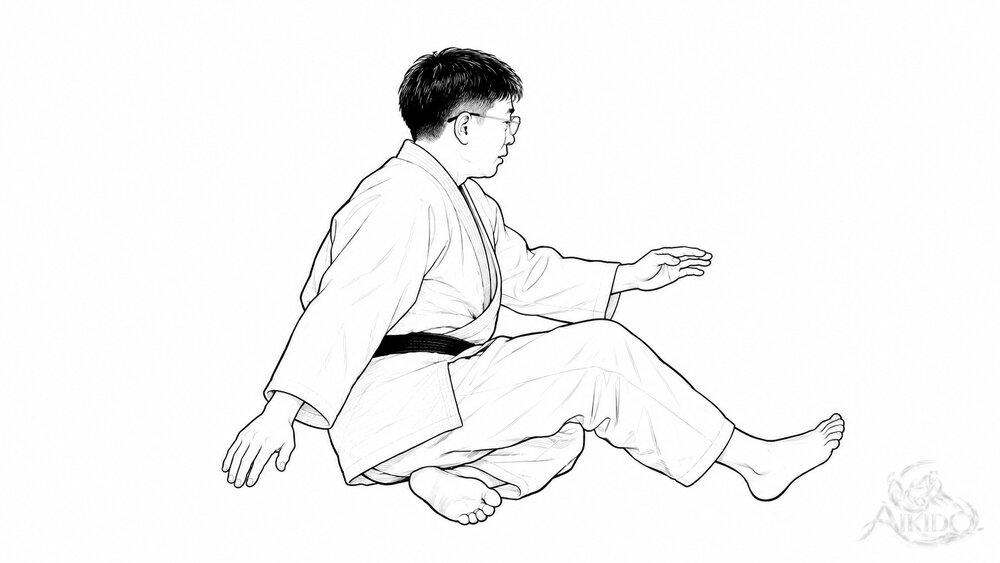
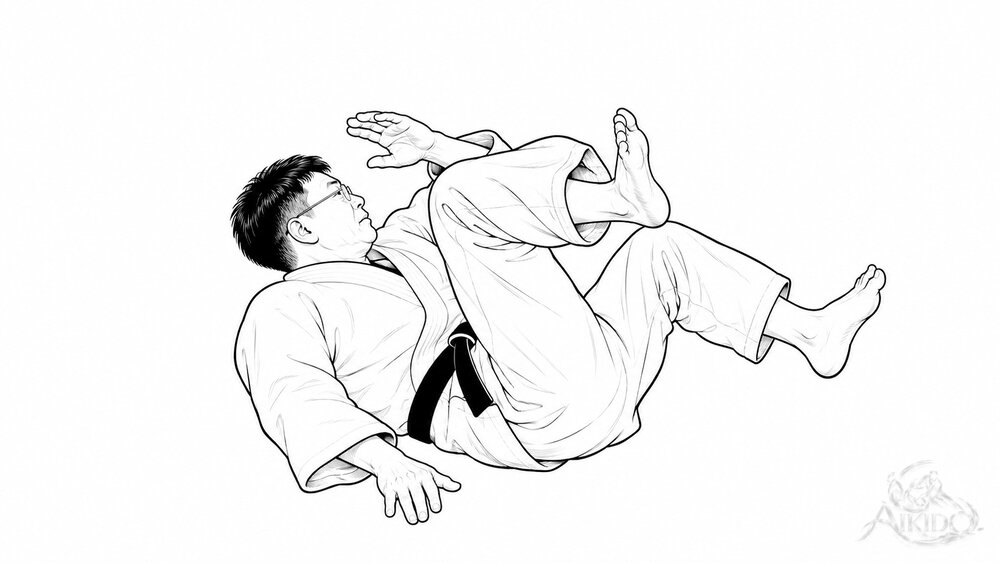
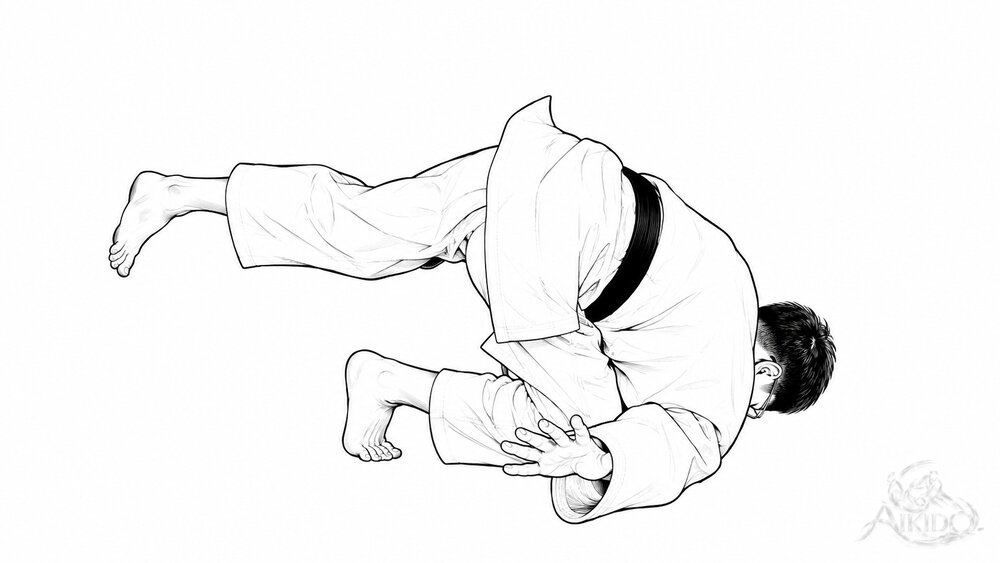
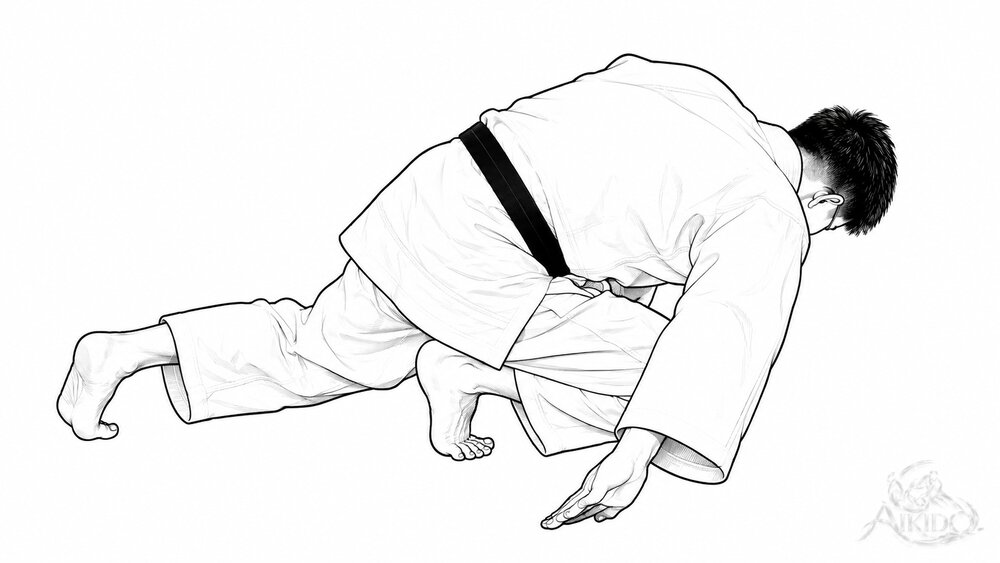
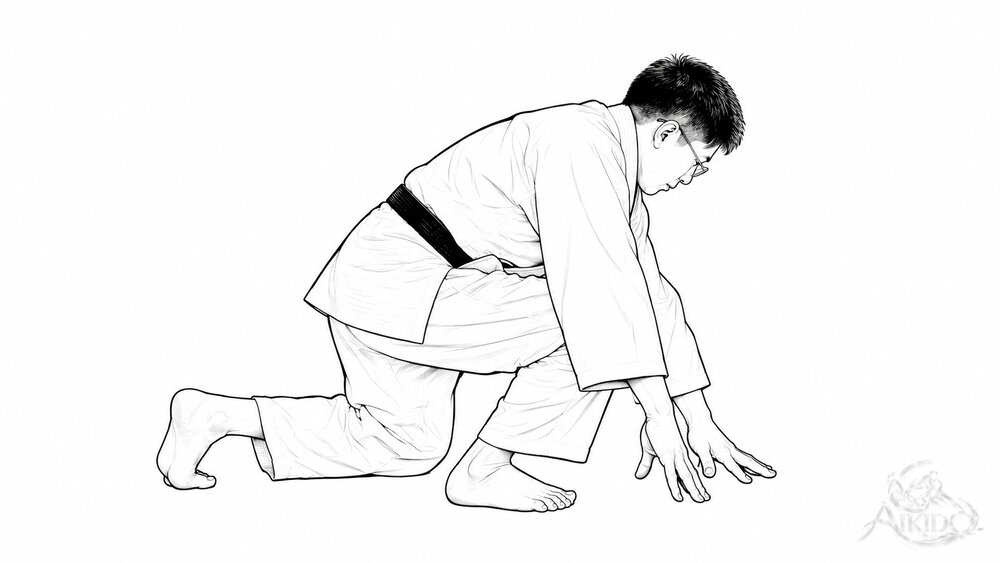
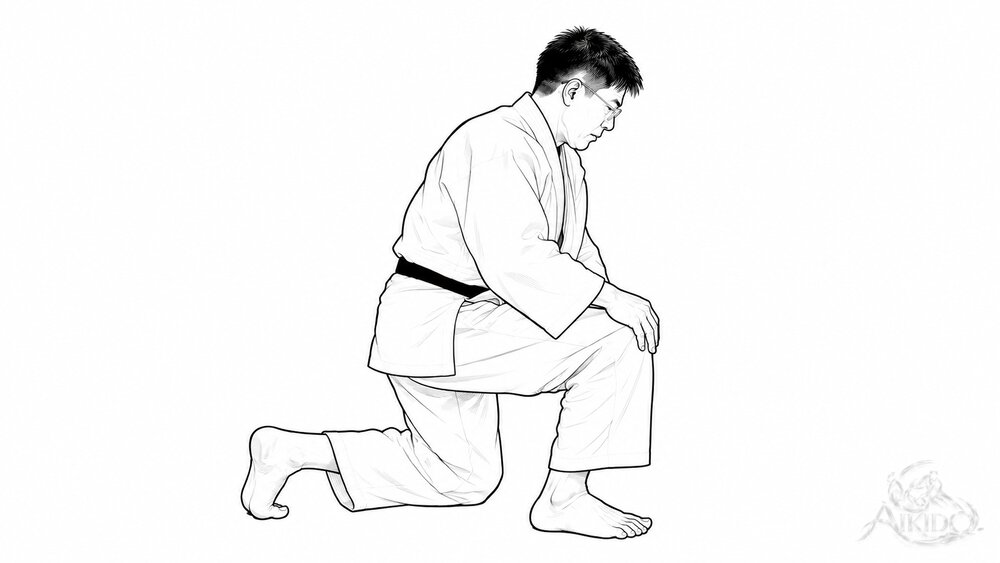
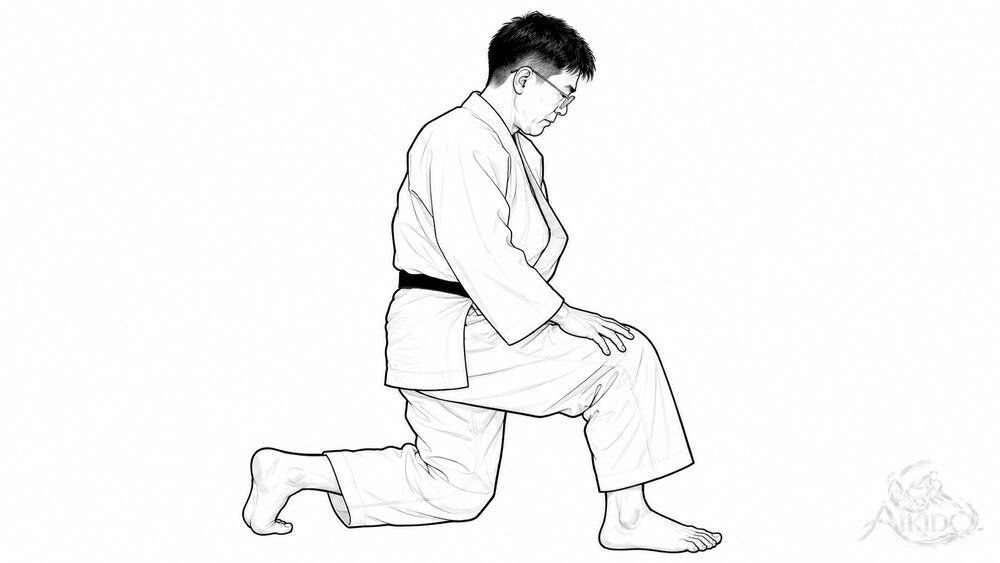
Koho kaiten ukemi from one knee up. One knee up (right toes pointing inward) → Fold the right knee and lower the hips → Tilt the upper body and roll backward → Bring the feet back over the shoulder → When both feet touch, raise the upper body → Back to the starting position
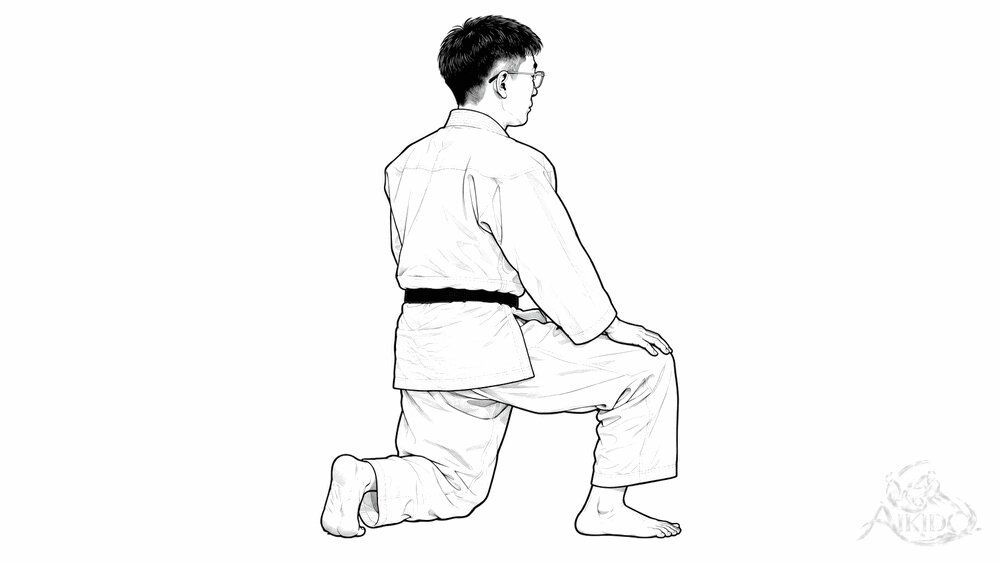
The order is the same from one knee up and from standing. Fold the right knee and lower your hips, tilt your upper body and roll backward over your shoulder, and raise your upper body once both feet touch the floor. If you started from standing, return to hidari hanmi the moment you stand.
Zenpo Kaiten Ukemi (前方回転受け身) — Rolling Forward
Zenpo kaiten ukemi is a breakfall that disperses the impact by rolling forward.
From One Knee Up
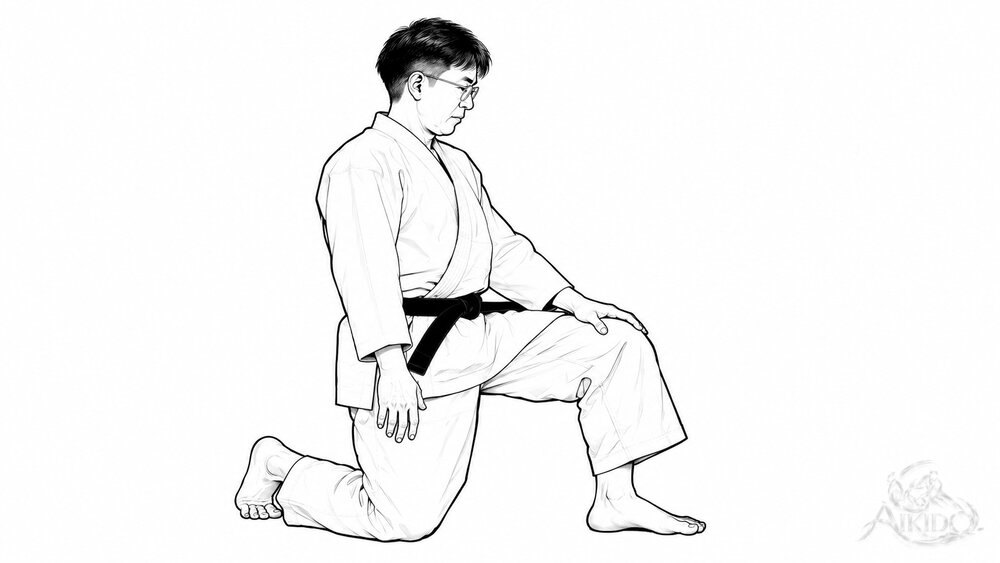
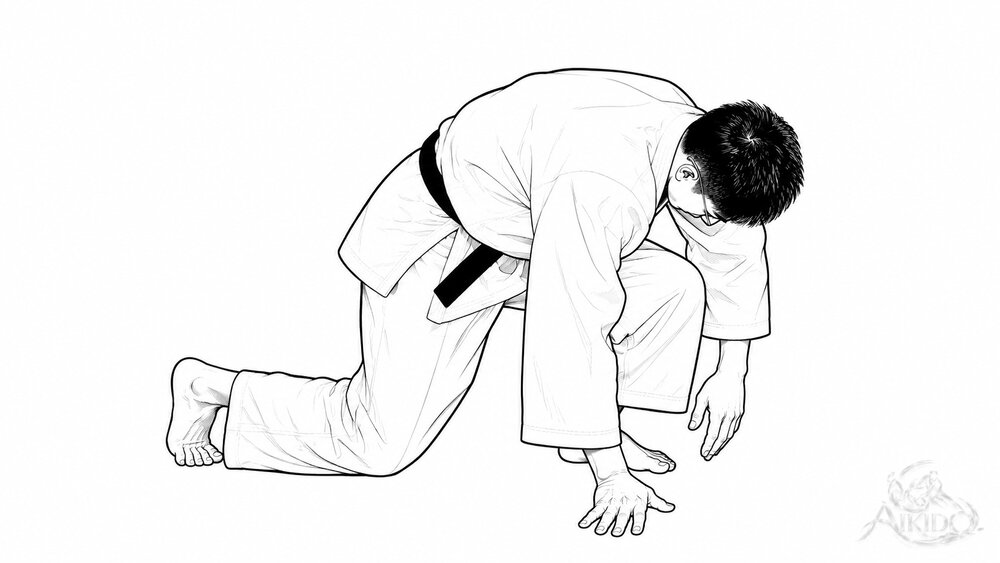
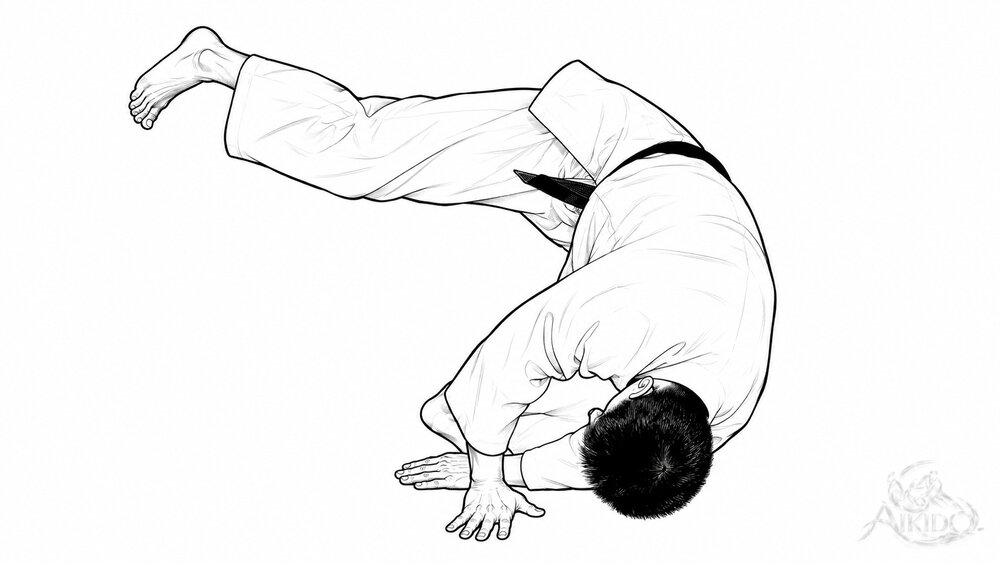
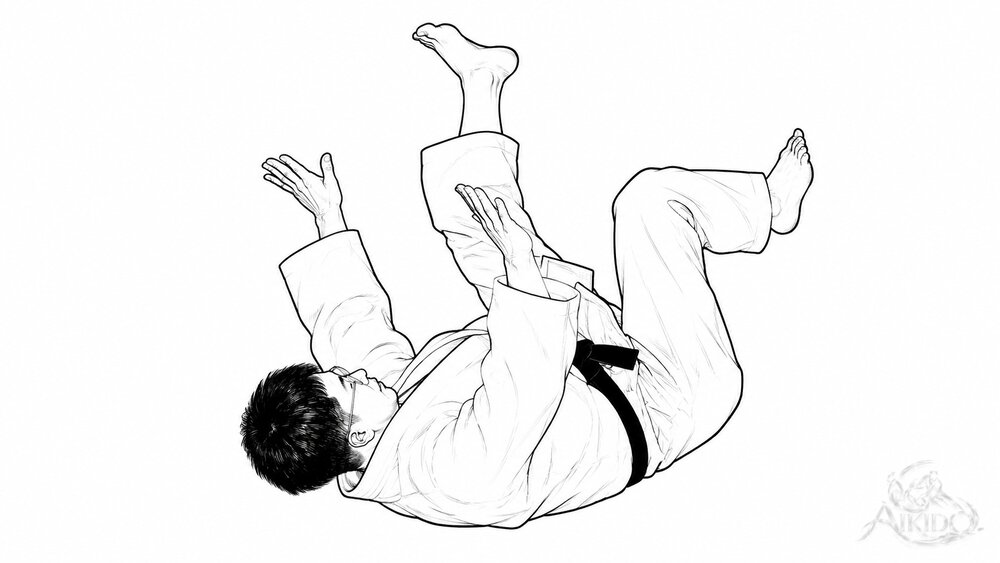
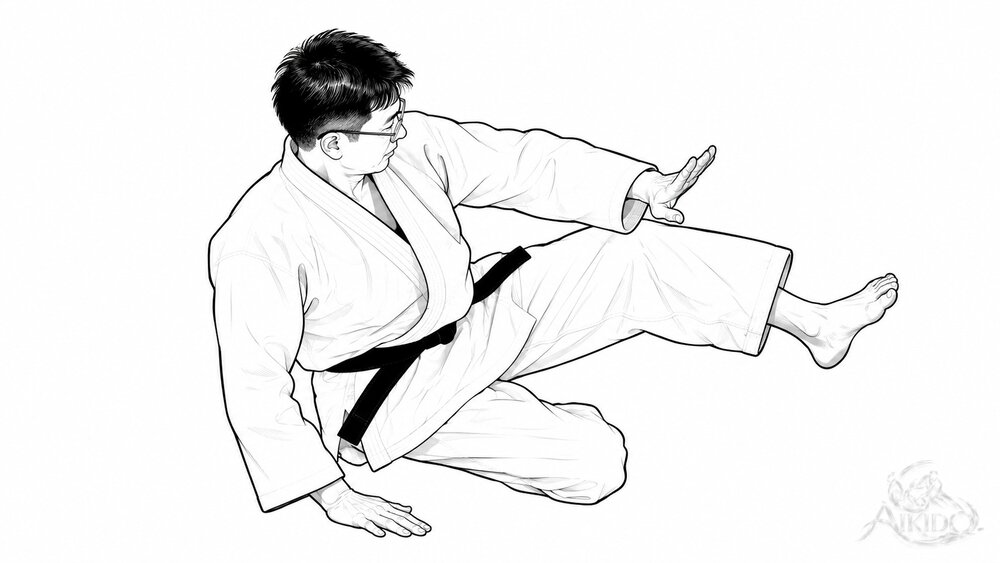
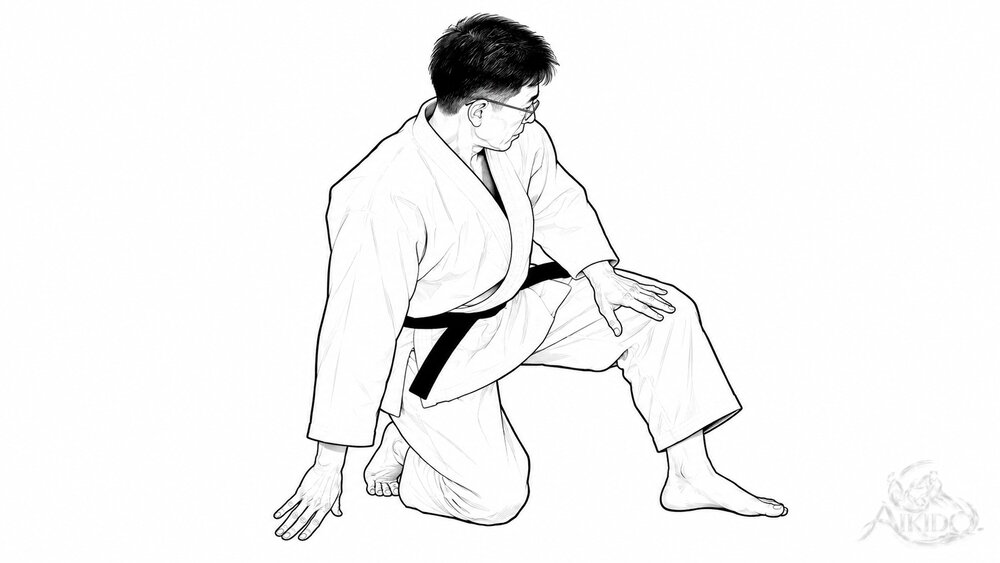
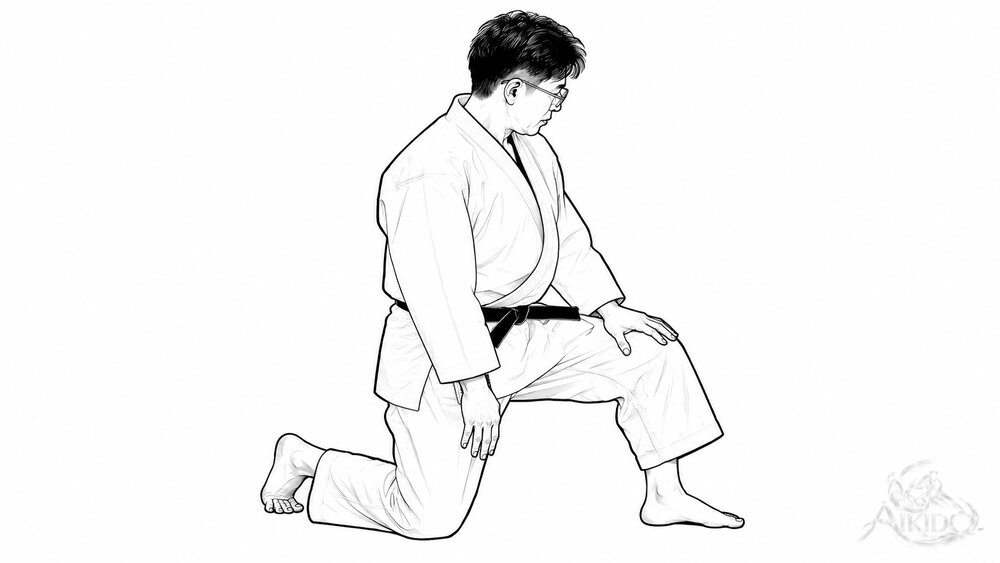
1 Fold the right knee, one knee up → 2 Touch the floor with the left hand, fingertips first → 3 Roll along the diagonal: elbow, shoulder, back, hips → 4 At the end of the roll, slap the floor with the right hand → 5 Use the rebound to fold the right (back) knee and come up → 6 Back to one knee up
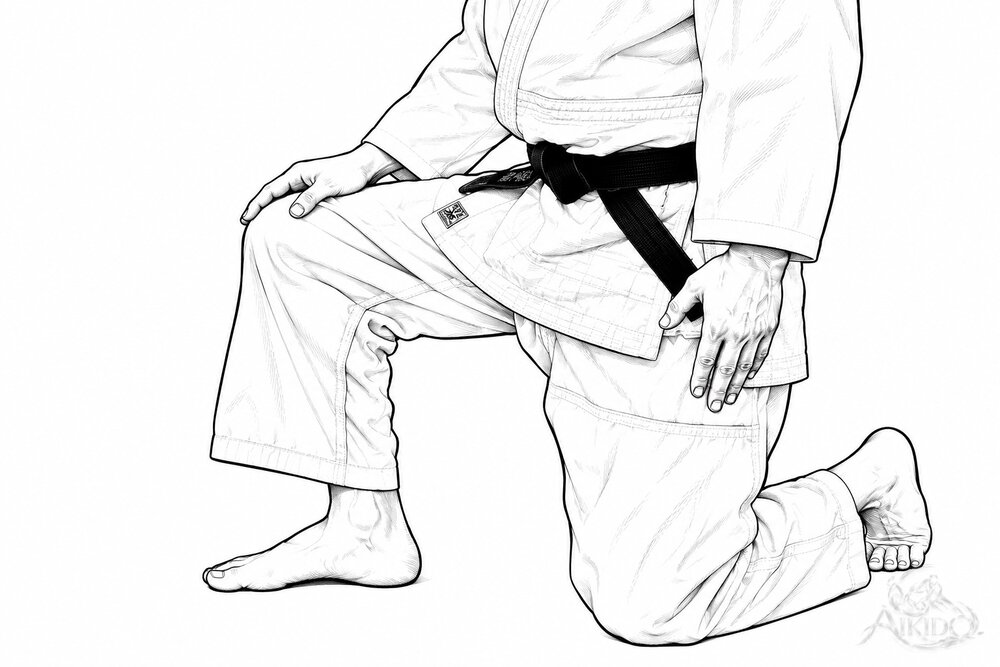
- Begin kneeling with one knee raised and the right knee folded.
- Place the left hand on the floor at an angle, with the fingertips pointing toward you.
- Leaning forward, roll so that your body touches the floor along the diagonal, in the order elbow, shoulder, back, hips.
- At the end of the roll, slap the floor with the right hand, the one opposite the hand you first put down.
- Use the rebound to fold the right knee, which becomes the back leg, and come up.
- Return to the one-knee-up position.
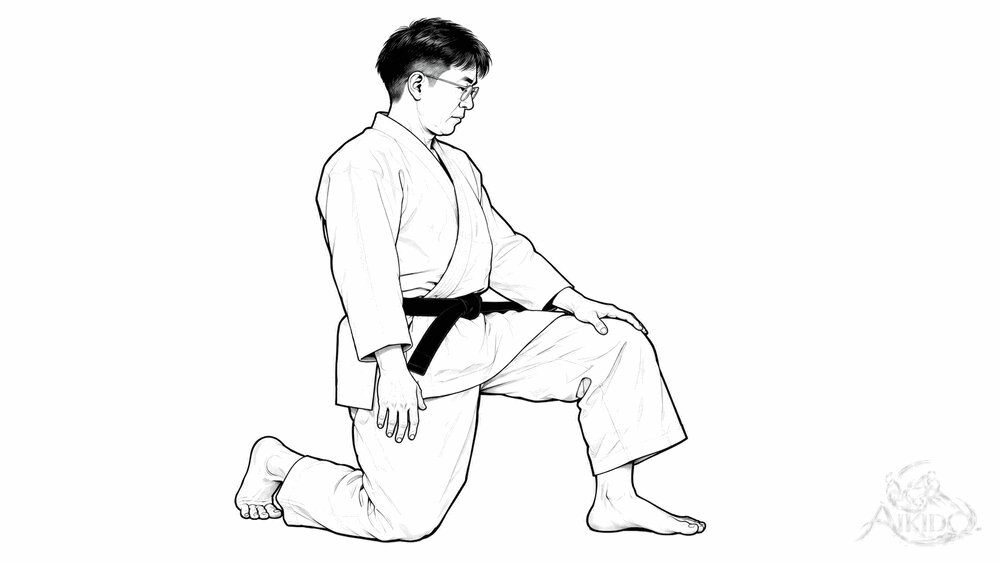
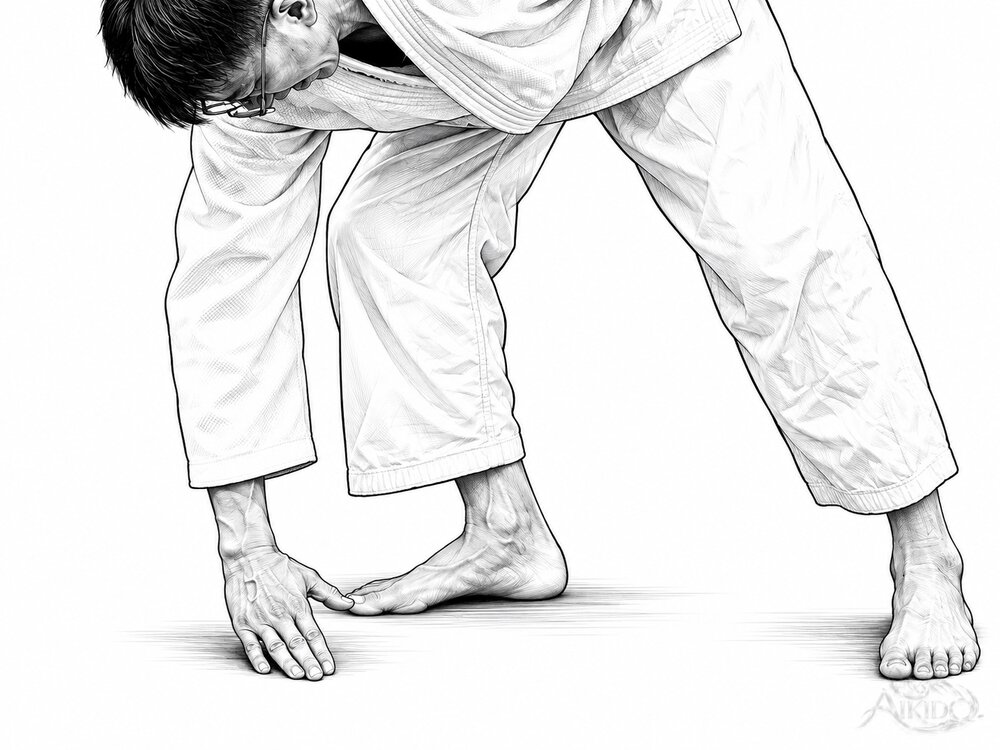
- Fingertips first: As you go over, first twist the arm on the same side as your front foot inward so the whole arm forms a curve. With the feeling of making a ring with your arm, let it touch the floor in order: fingertips, the side of the hand, elbow, shoulder.
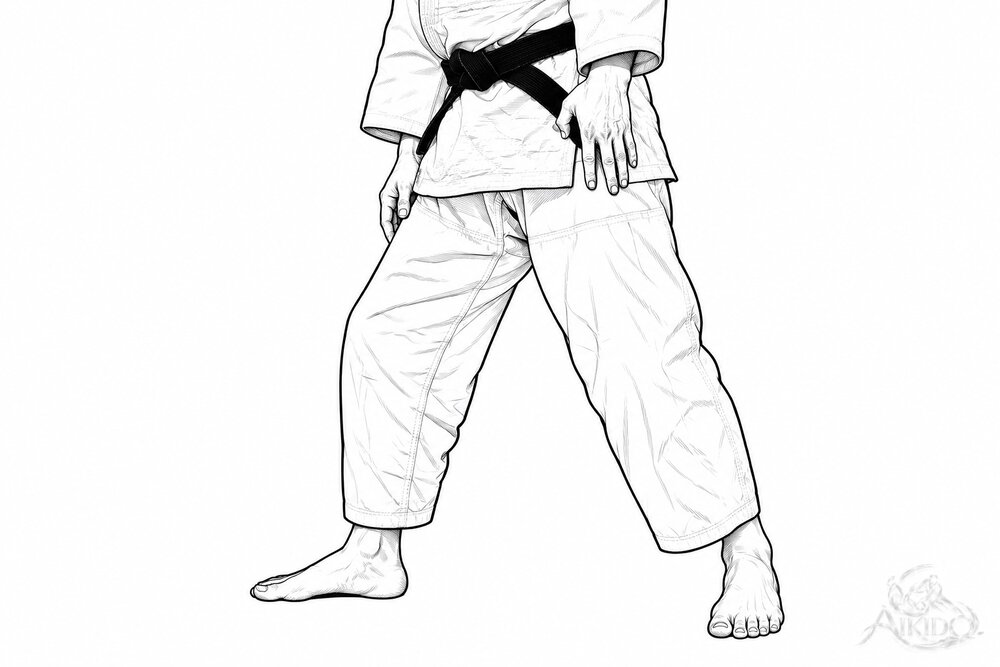
- Feet in the hanmi position: The moment you finish the roll, keep the knee of the back leg folded and be ready to be in hanmi as soon as you stand. In ukemi done from sitting, too, fold the knee and lay the toes flat to make the one-knee-up position. Always train with hanmi in mind.
From a Low Stance and From Standing
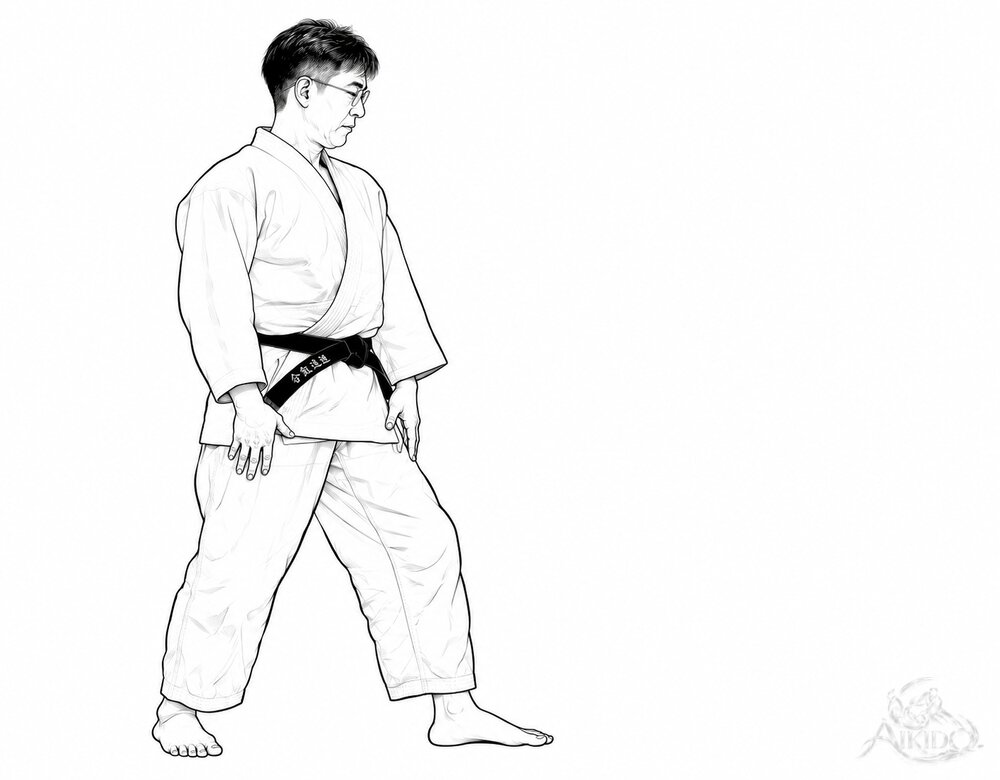
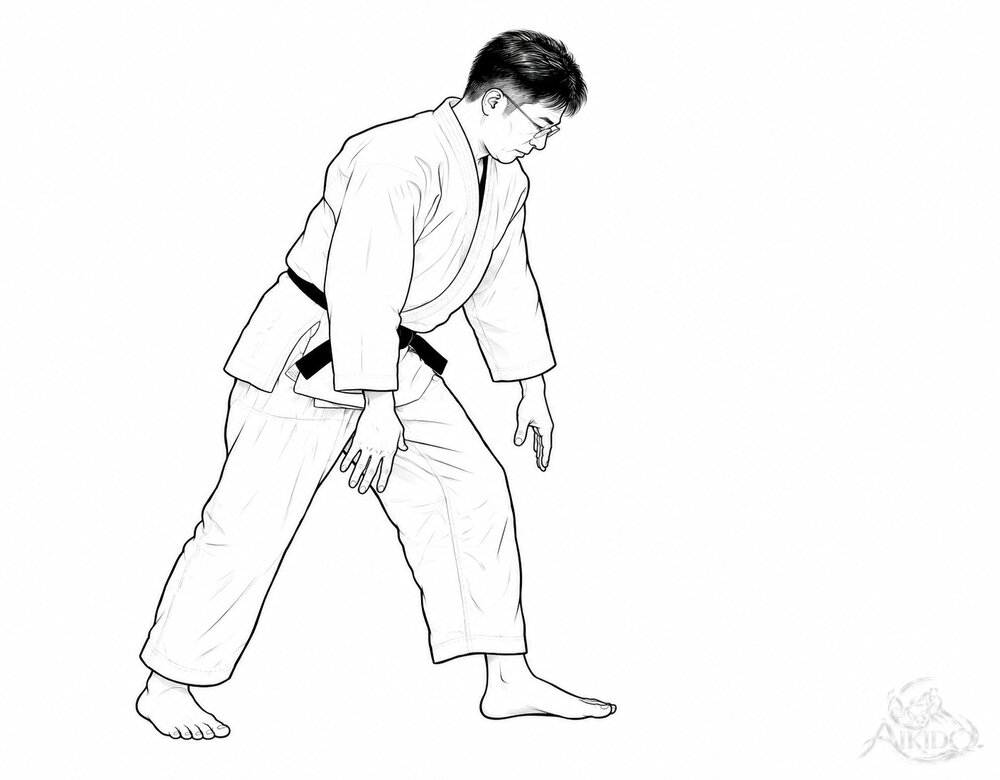
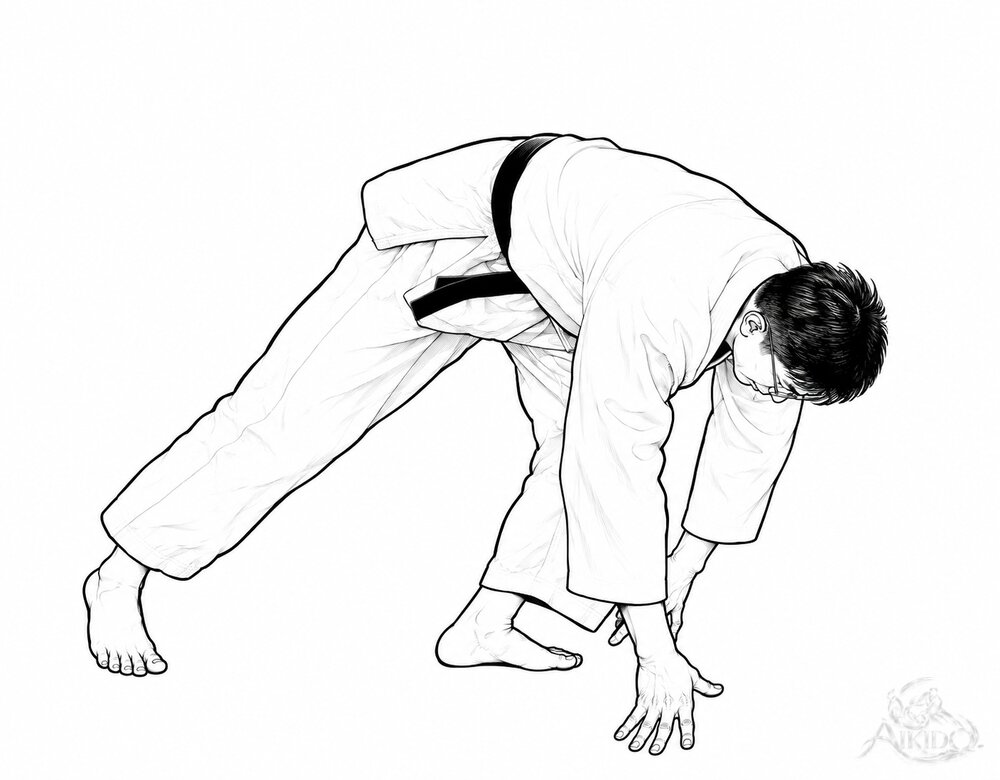
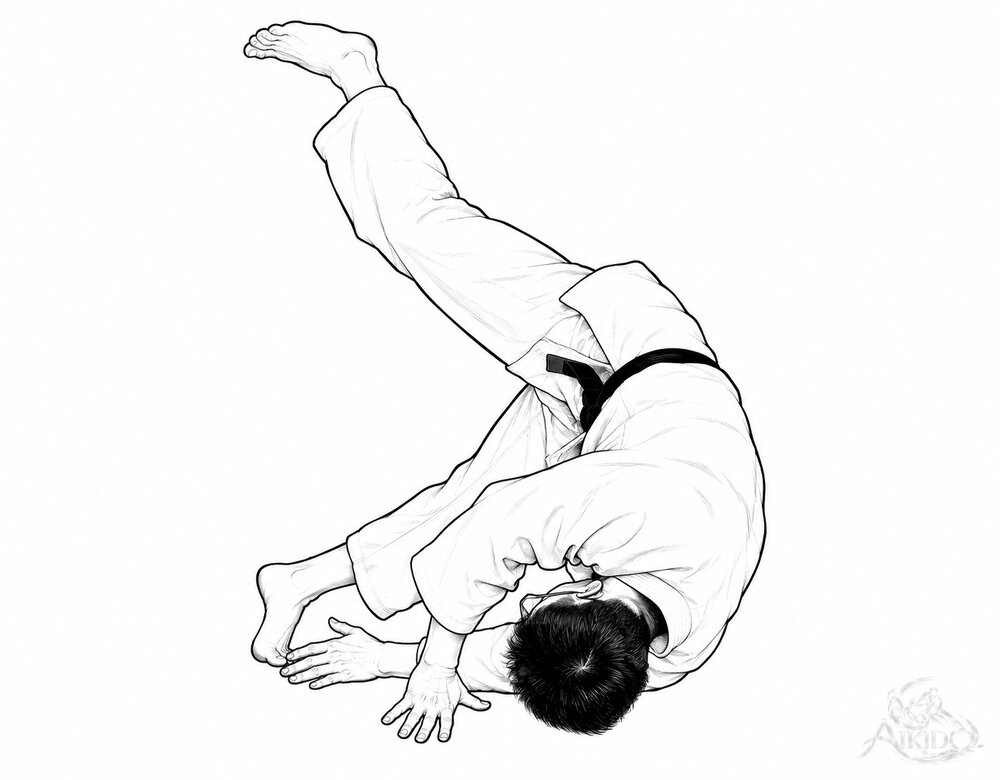
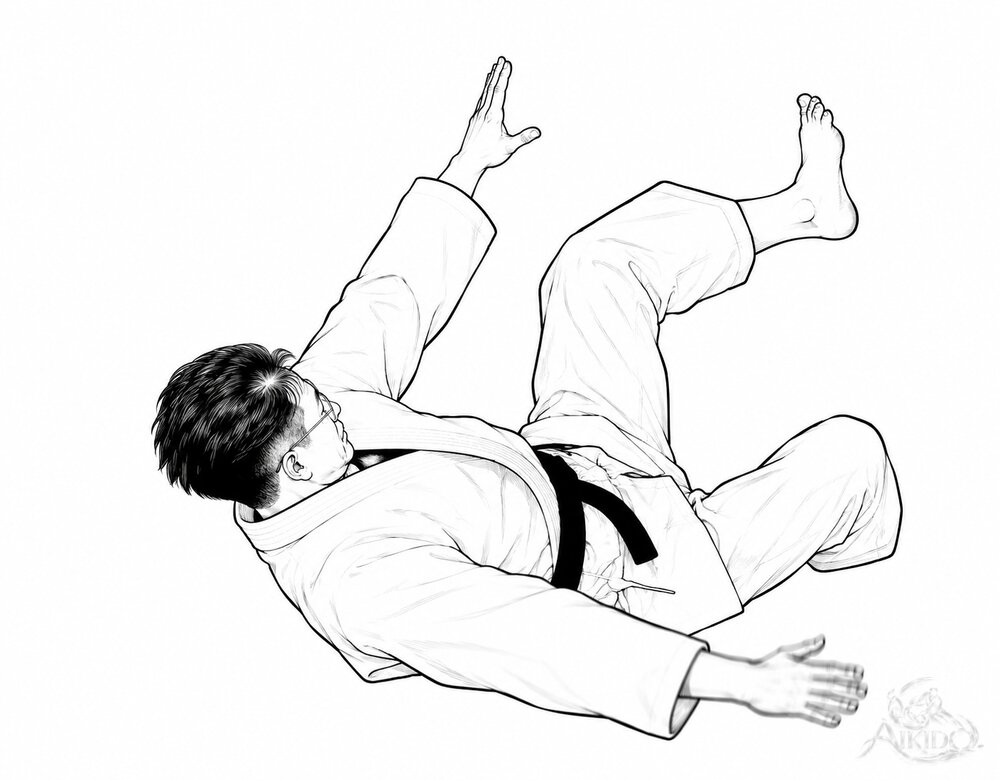
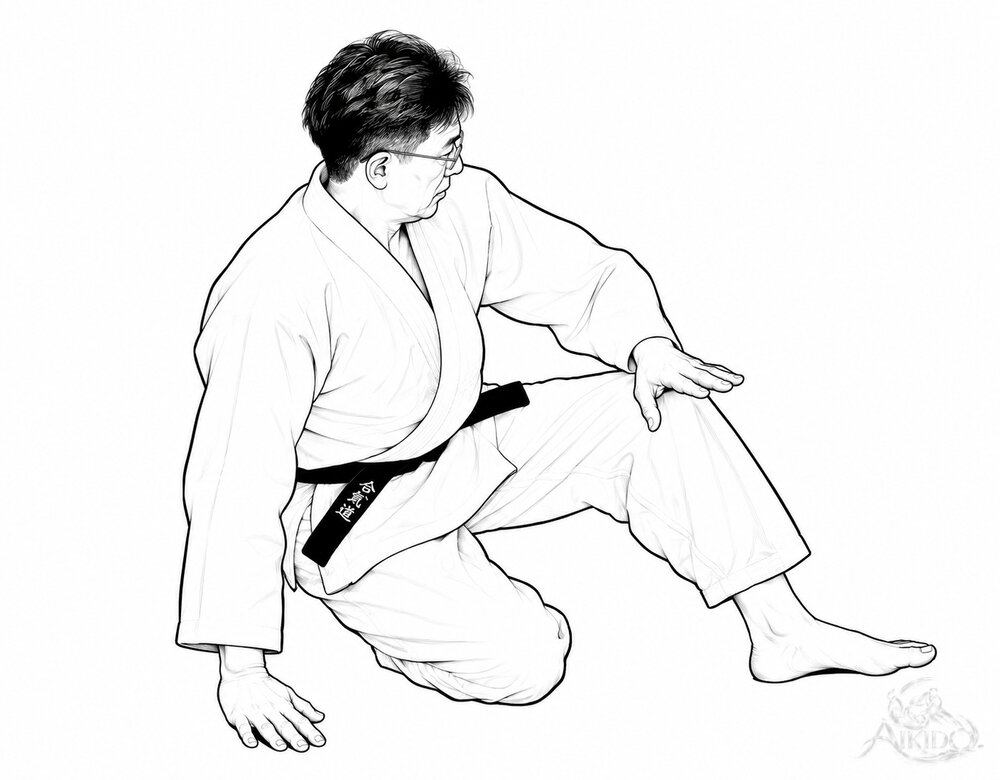
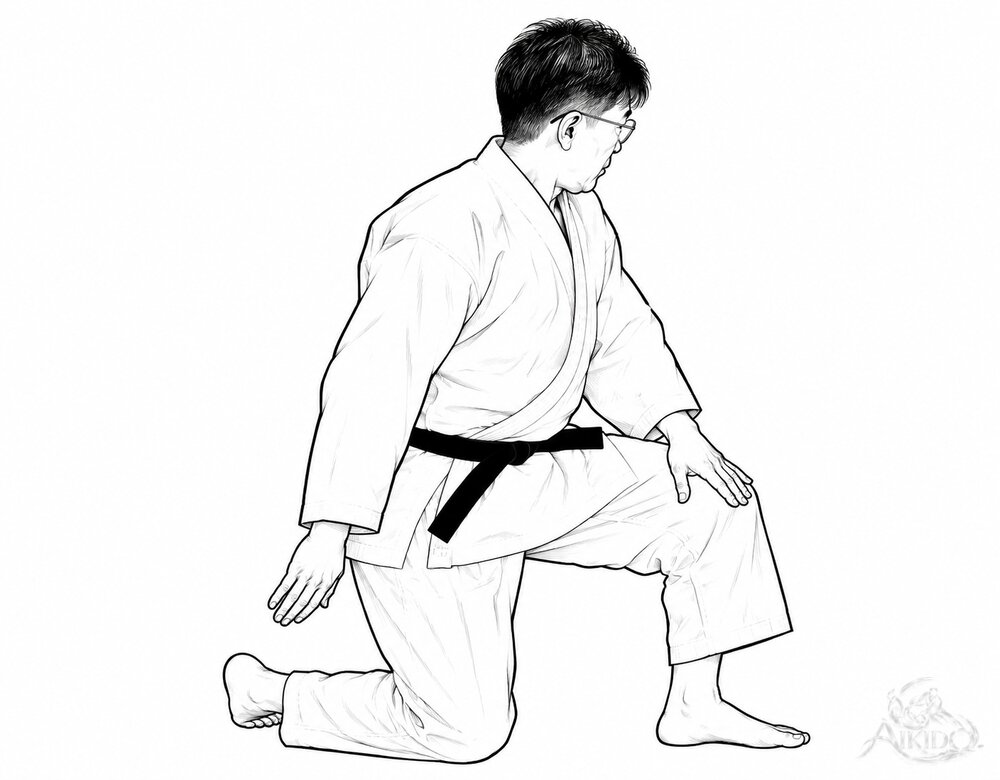
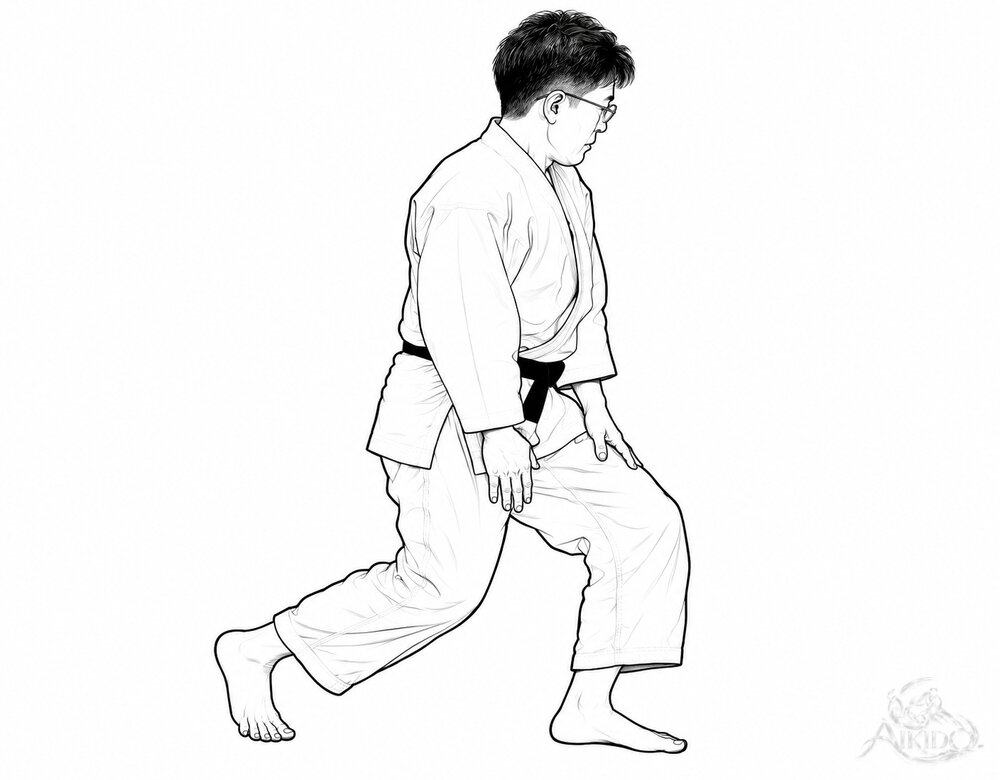
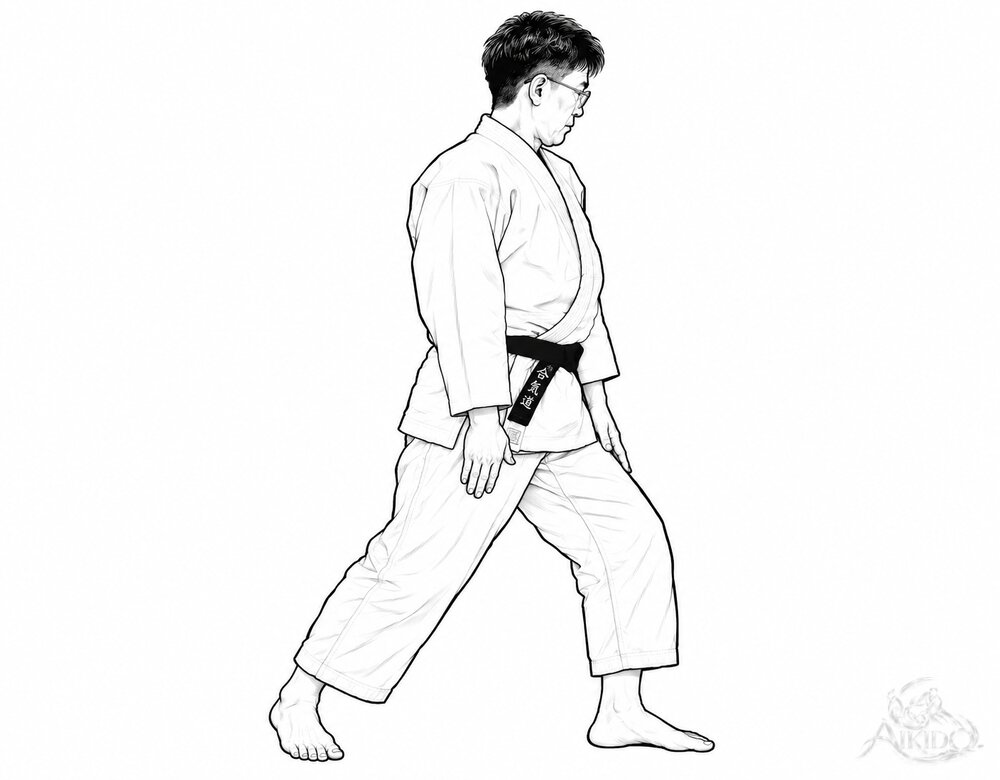
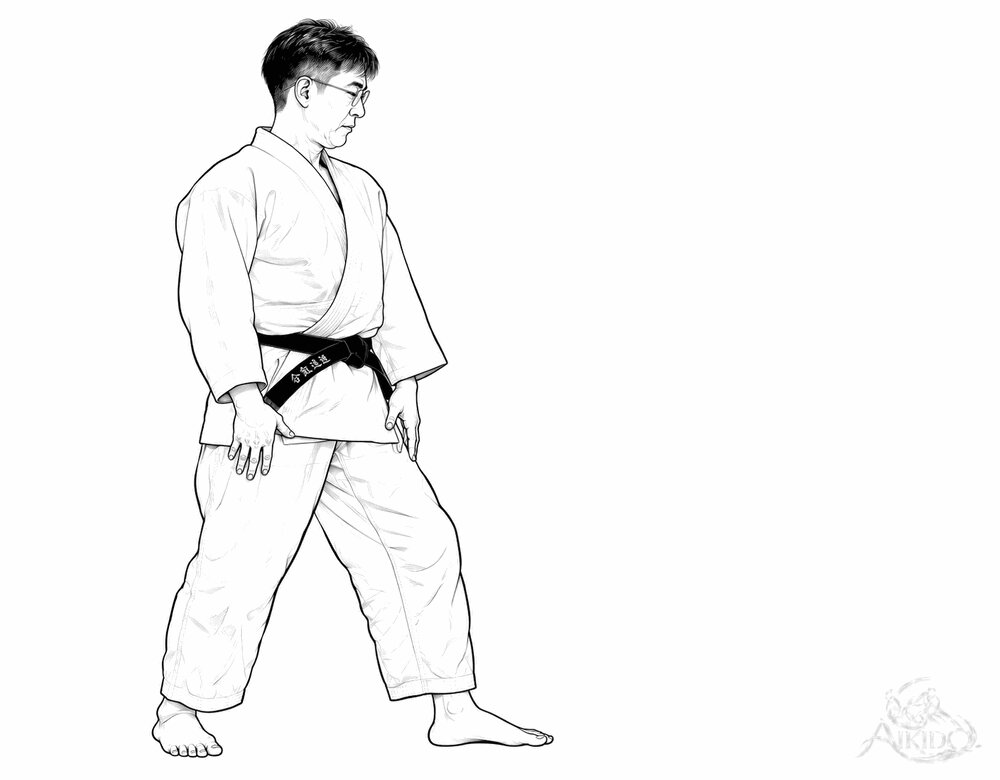
Zenpo kaiten ukemi from a low stance. 1 Hidari hanmi → 2 Lower the hips → 3 Place the left hand on the floor, fingertips toward you → 4 Roll forward, touching in order along the diagonal → 5 At the end of the roll, slap the floor with the right hand → 6 Use the rebound to fold the right knee and come up → 7 One knee up → 8 Stand → 9 Hidari hanmi
Raise the height in order: first from a low stance with the hips lowered, then from standing. Placing the left hand on the floor with the fingertips toward you and rolling forward is the same. At the end of the roll, slap the floor with the right hand, use the rebound to fold the right knee and stand, and take hidari hanmi.
A Step-by-Step Approach for Middle-Aged and Older Beginners
Many members of Jeju Oseung Dojo start aikido in their forties or later. Ukemi is frightening at first even for young people, so if your body has stiffened with age, there is all the more reason not to hurry.
- Low positions first, and slowly: Do not move on to the one-knee-up position until you are fully at ease from sitting. Raise the height only when your body itself feels, “I’m fine now.”
- Left and right equally: It is easy to keep repeating only your good side. Deliberately practicing your weaker side more is what brings your body into balance.
- Loosen the neck and lower back first: Before training, thoroughly loosen your neck, shoulders, lower back, and wrists. Backward breakfalls in particular can strain the neck.
- Stop if it hurts: If you have pain in a knee, your lower back, or a shoulder, do not put up with it; tell your instructor right away. Not overdoing it is also part of training.
- Repetition is the answer: Knowing something in your head is different from your body following. As you repeat the same movement countless times, your body comes to remember ukemi on its own.
Last updated November 1, 2026 · This book continues to be revised after publication.
© 2026 Moon Young-chan. All rights reserved.
The text and images of this book are protected by copyright and may not be reproduced or distributed without permission.