
Solo Exercises (Tandoku Dosa, 単独動作)
Footwork (Ashi Sabaki, 足さばき) 1 — Okuri-ashi (送足)
Key point: Right after stepping out with the front foot, quickly draw the back foot after it.
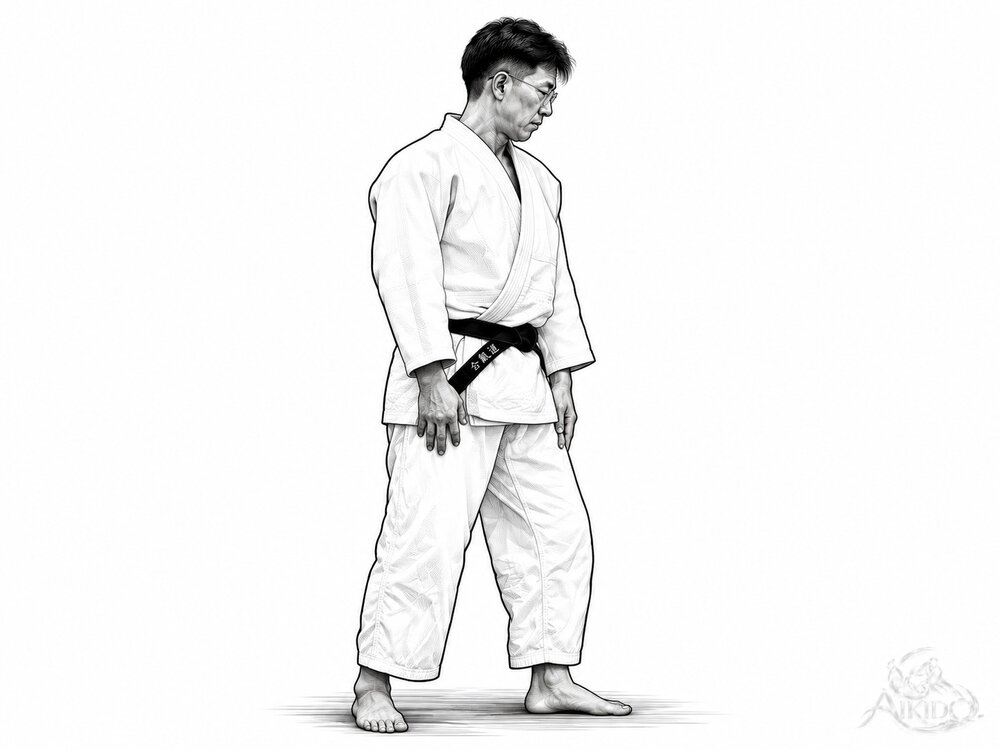
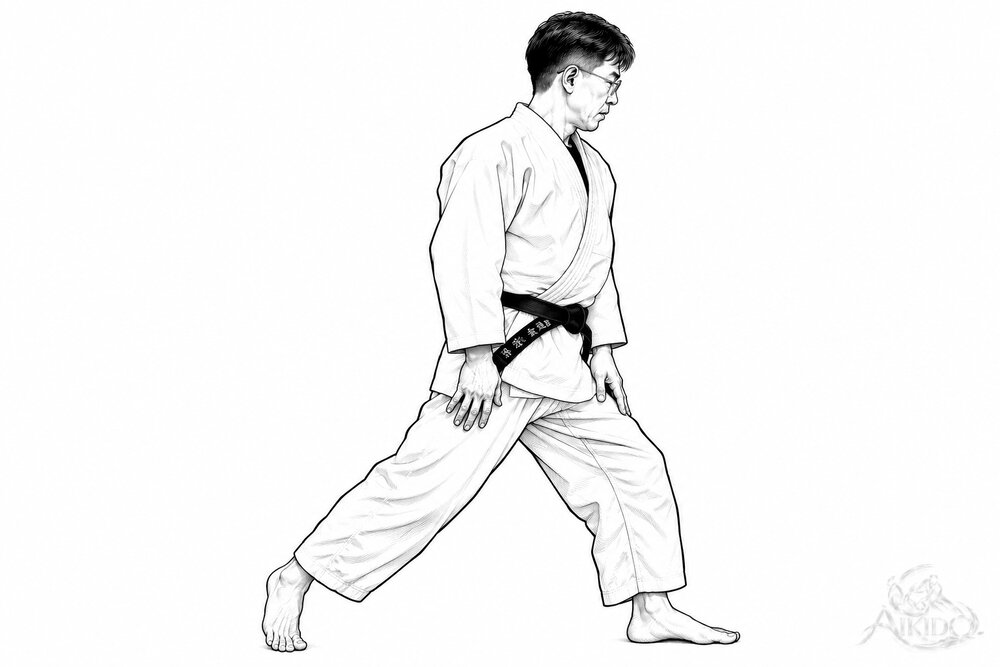
Okuri-ashi 1–2
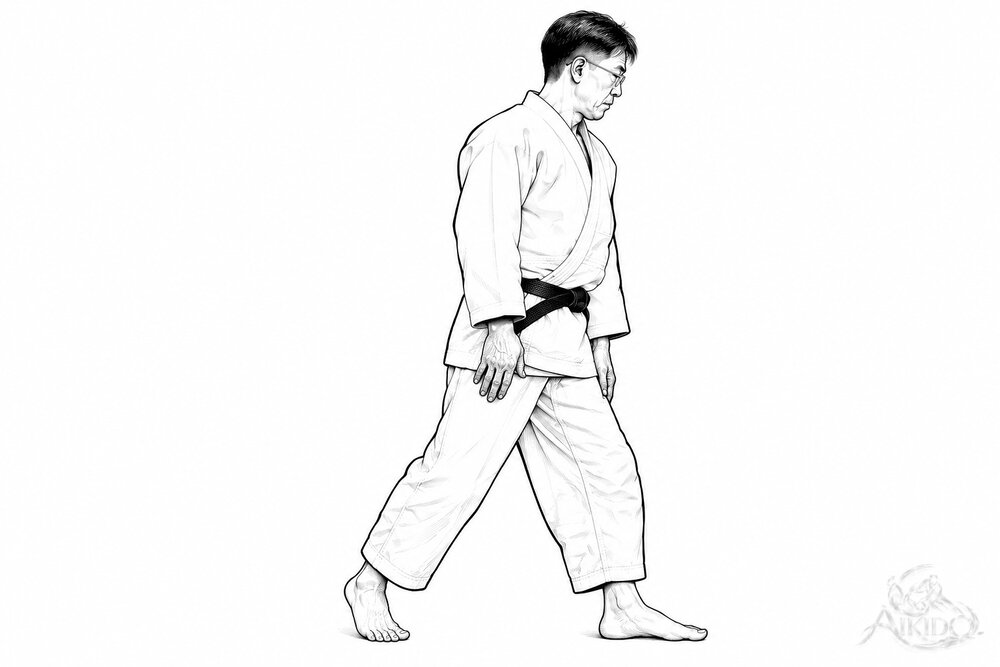
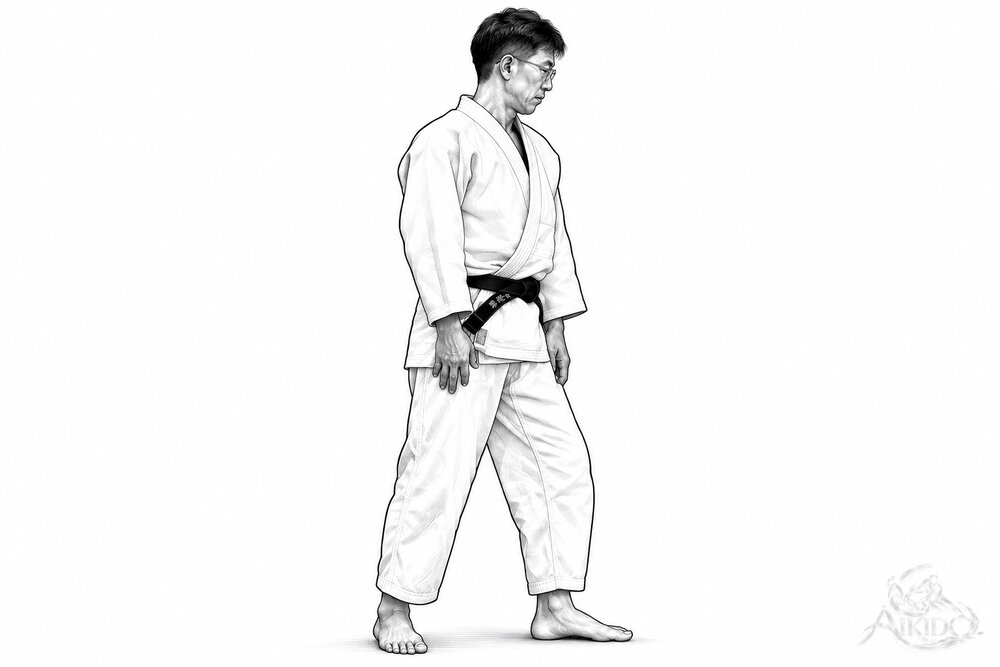
Okuri-ashi 3–4 and key points
Okuri-ashi is the most basic footwork. In hidari hanmi, step the left foot, your front foot, sharply forward. Before that foot has fully settled on the floor, quickly draw the right foot, your back foot, up to its original distance so that you are in hidari hanmi again. To move backward, do the reverse: move the back foot first and then draw the left foot after it. Whether you advance or retreat, the positions of the front and back foot do not change.
- Weight on the balls of the feet: Keep your weight on the ball of the big toe (拇指球) of both feet. If you slide the foot out with the feeling of lightly lifting the toes, it will not catch on the floor.
- Move from the hips: To keep your body’s axis from wobbling, it is important to move the hips. Do not lean forward; if you move from the hips, your center stays stable and you can perform the technique accurately.
- Do not leave the back foot behind: Once you have stepped out with the front foot, quickly draw the back foot after it. If the back foot lags, you spend longer in an unstable posture, and that much more of an opening appears.
Footwork 2 — Ayumi-ashi (歩足)
Key point: Move the left and right feet alternately, switching the side of your hanmi.
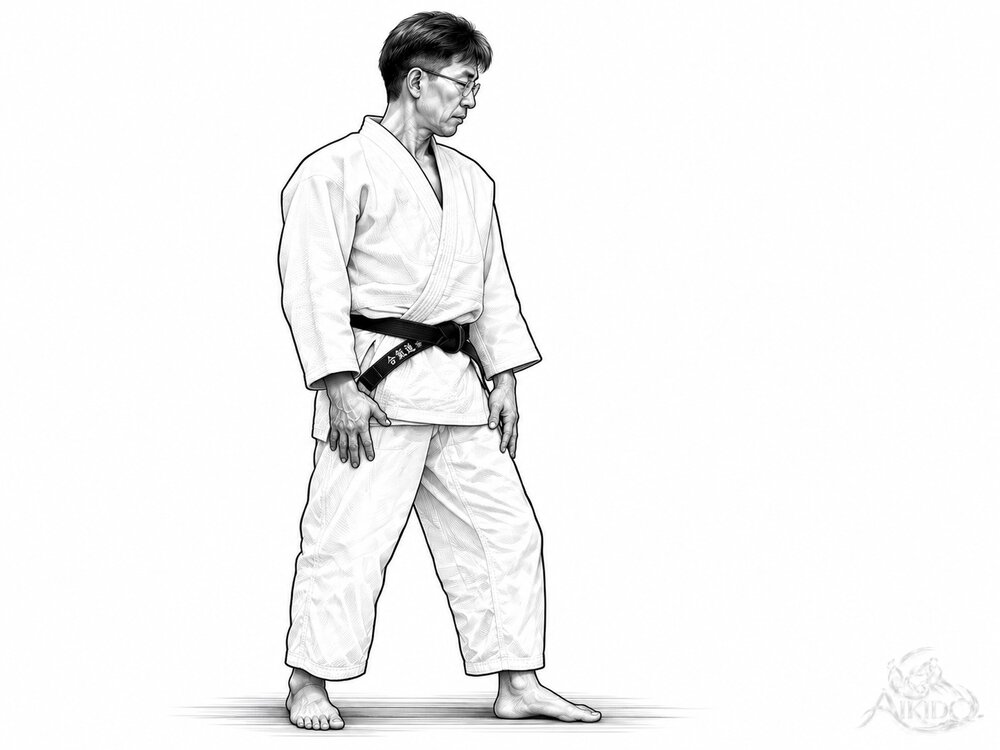
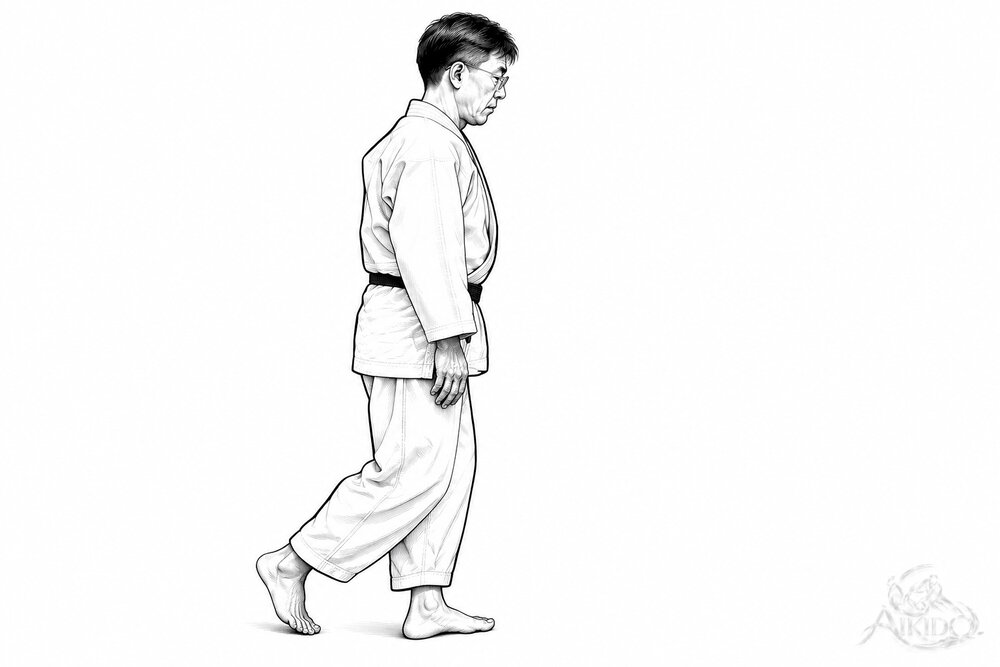
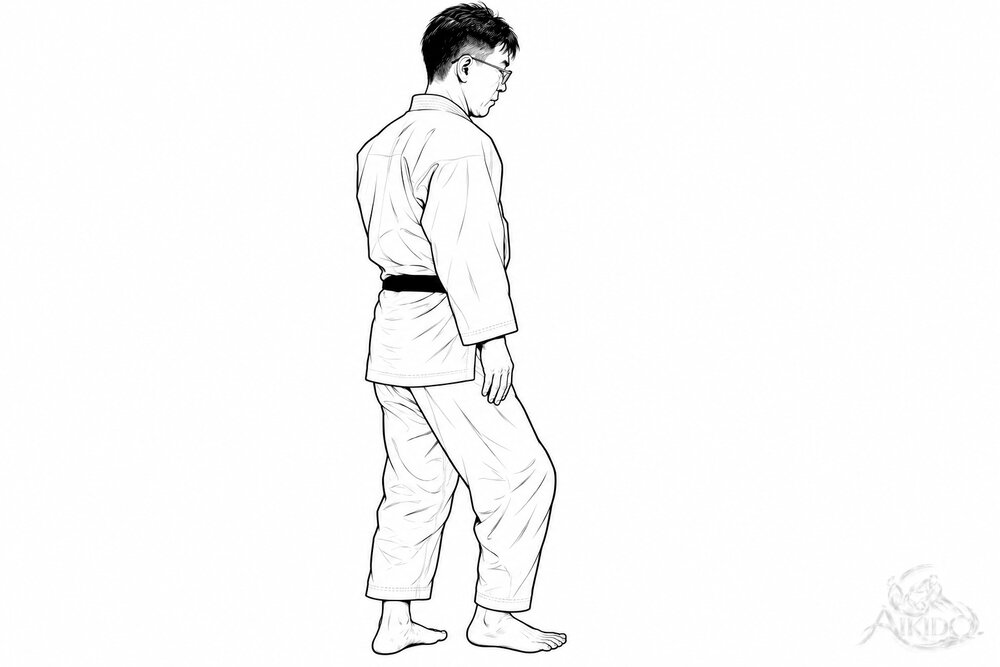
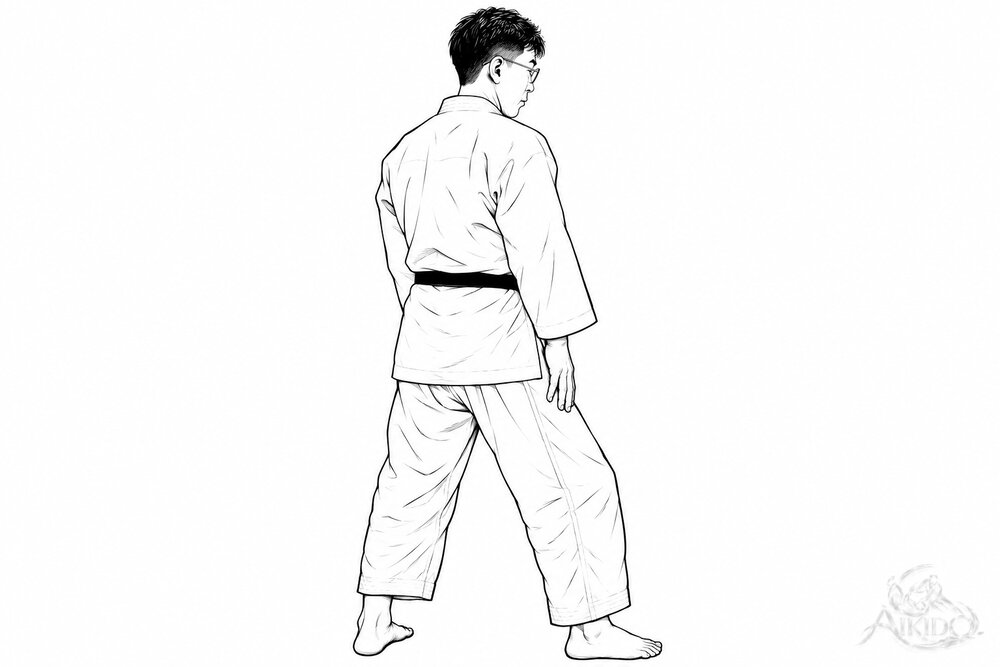
Ayumi-ashi is footwork in which the left and right feet step out alternately, as in ordinary walking. Each step changes the front foot, so the direction of your hanmi (半身) changes with it. In hidari hanmi, twist the left foot slightly outward on the ball of the big toe, and bring the right foot, your back foot, straight forward along the center line of the body. The moment the right foot touches the floor, turn the left toes outward to complete migi hanmi. The upper body also changes hanmi clearly in time with this movement.
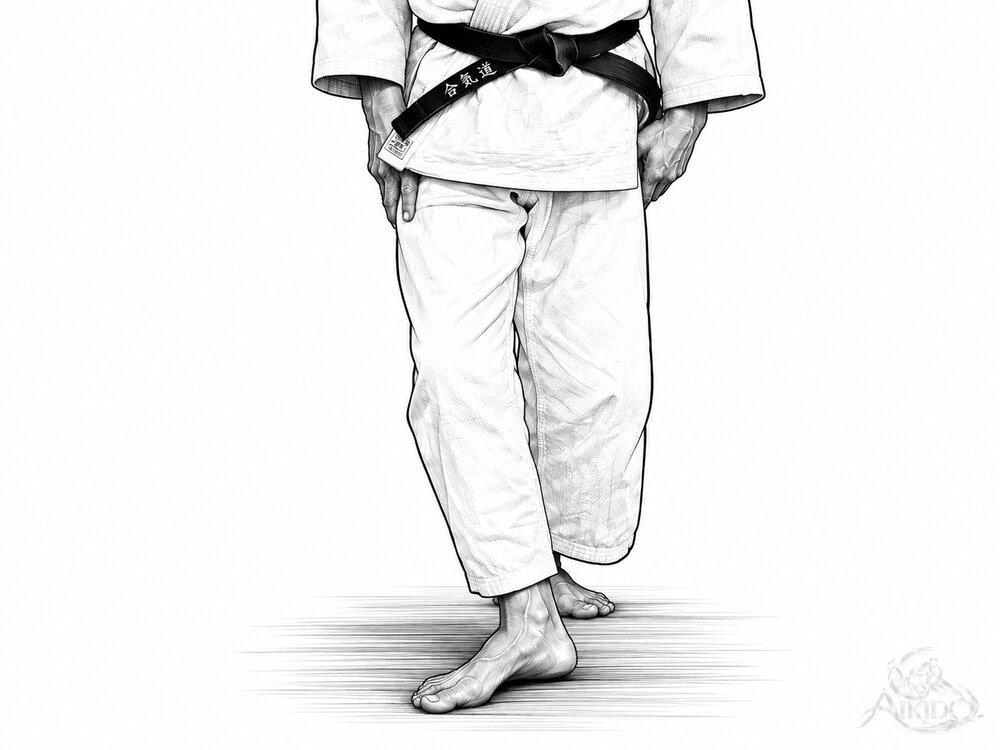
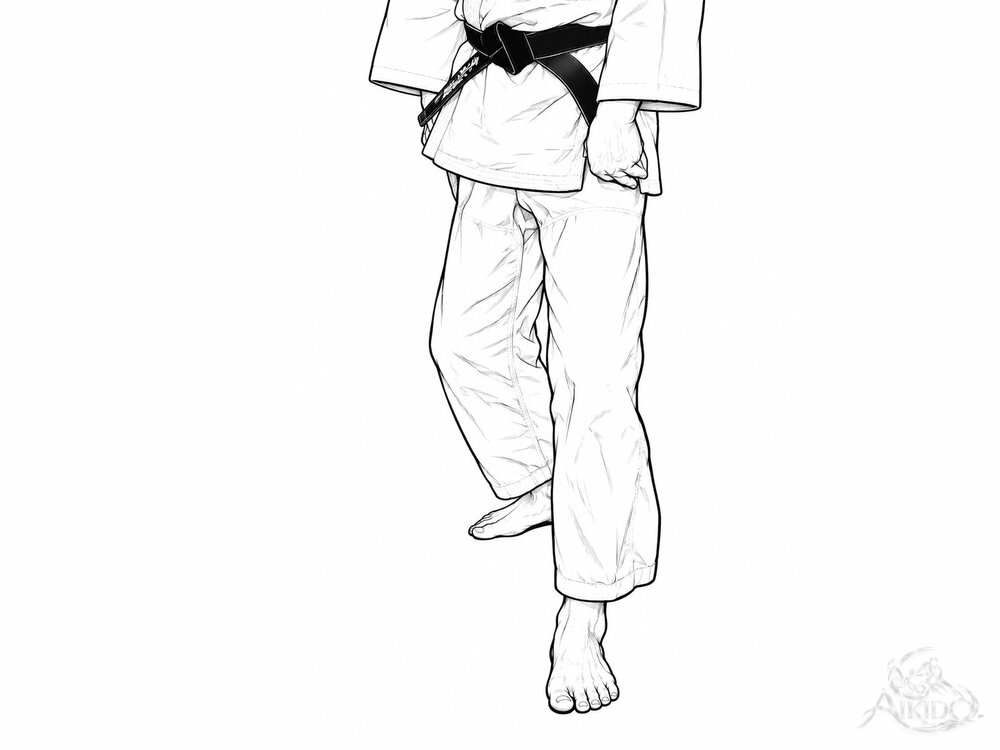
Turn the front foot slightly as you step out with the back foot
- Switch your hanmi: In aikido you must never let your hanmi collapse. The moment the front foot changes, change your hanmi too.
- Turn the front foot slightly as you step out with the back foot: In hanmi the front foot blocks the path in front of the back foot, so you cannot bring the back foot straight forward as it is. Turn the front toes slightly outward and let the back foot pass under the center of your body.
- Step from the hips: As with okuri-ashi, step with the feeling of carrying the hips forward without collapsing the body’s axis. Think of it as sending the hips forward so that the feet follow by themselves.
Footwork 3 — Tenkan-ashi (転換足)
Key point: Turn the body while drawing the back foot back.
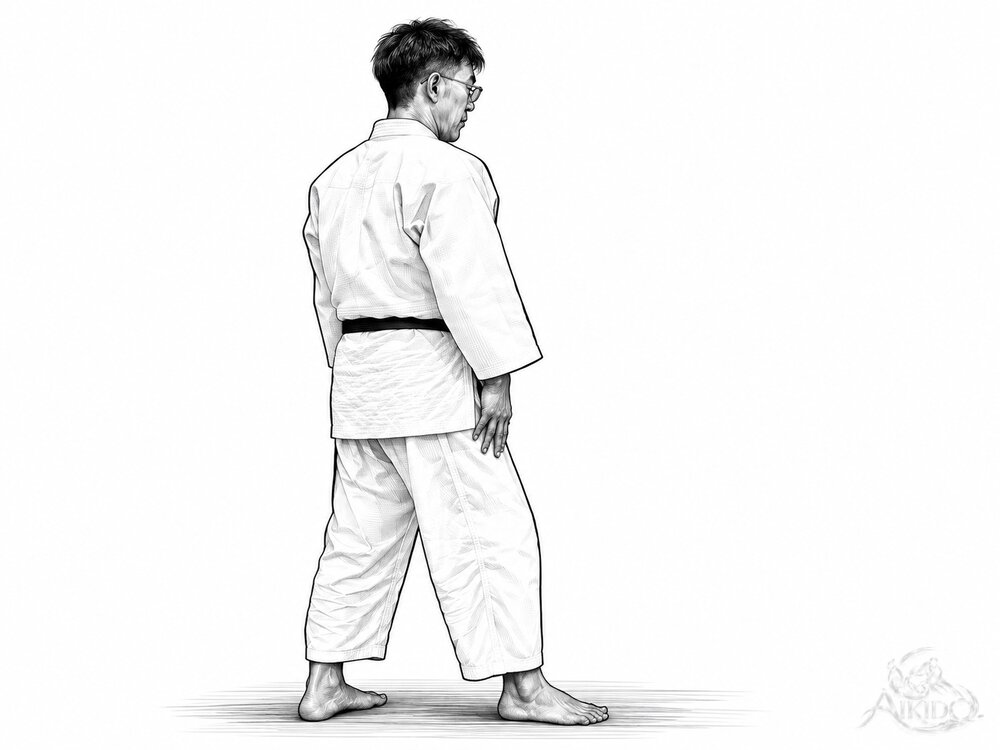
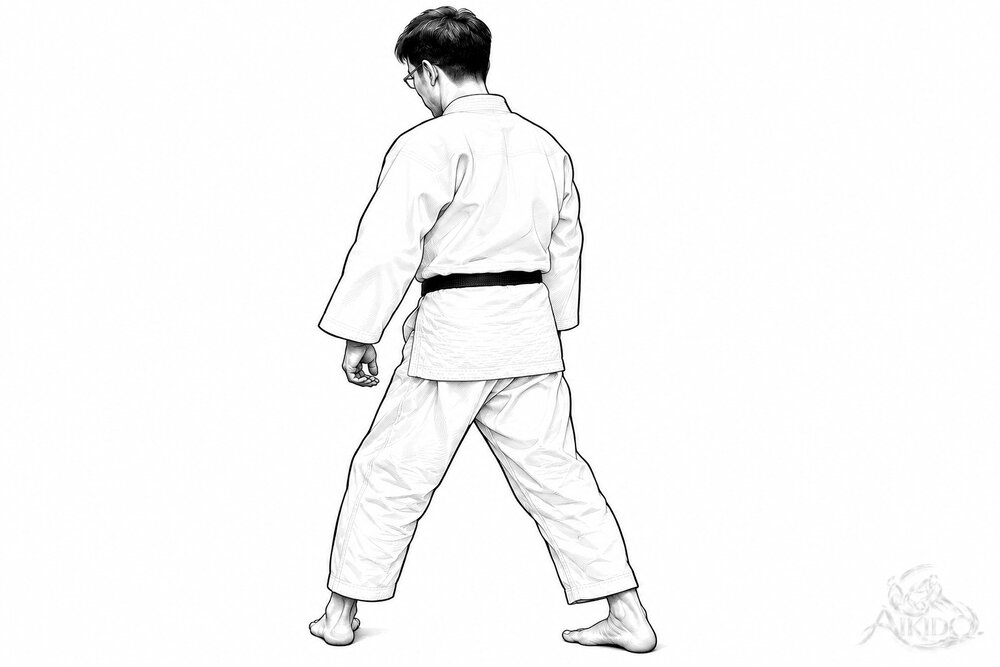
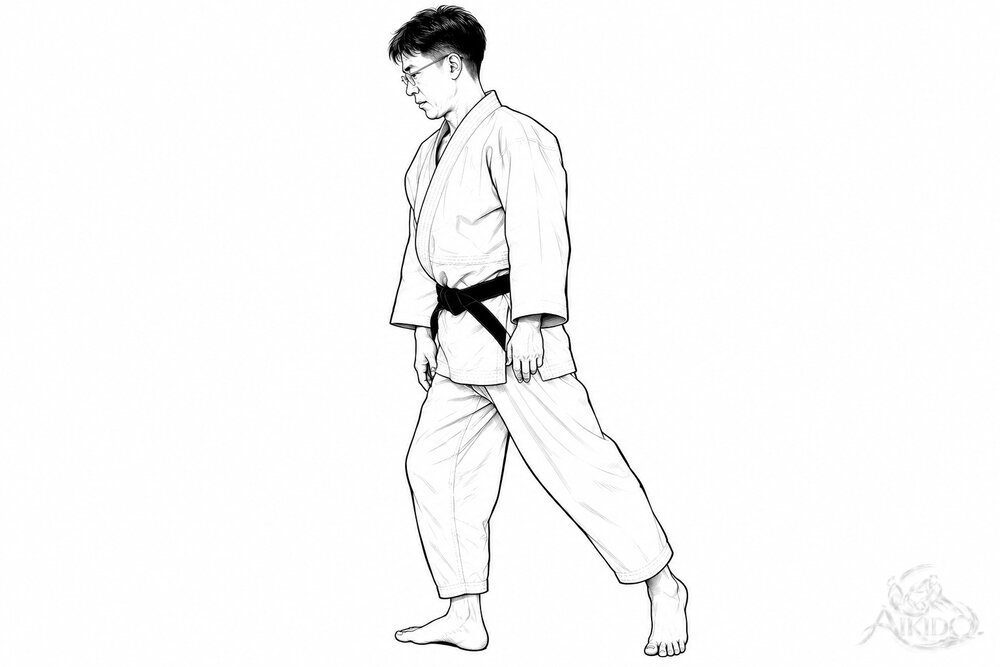
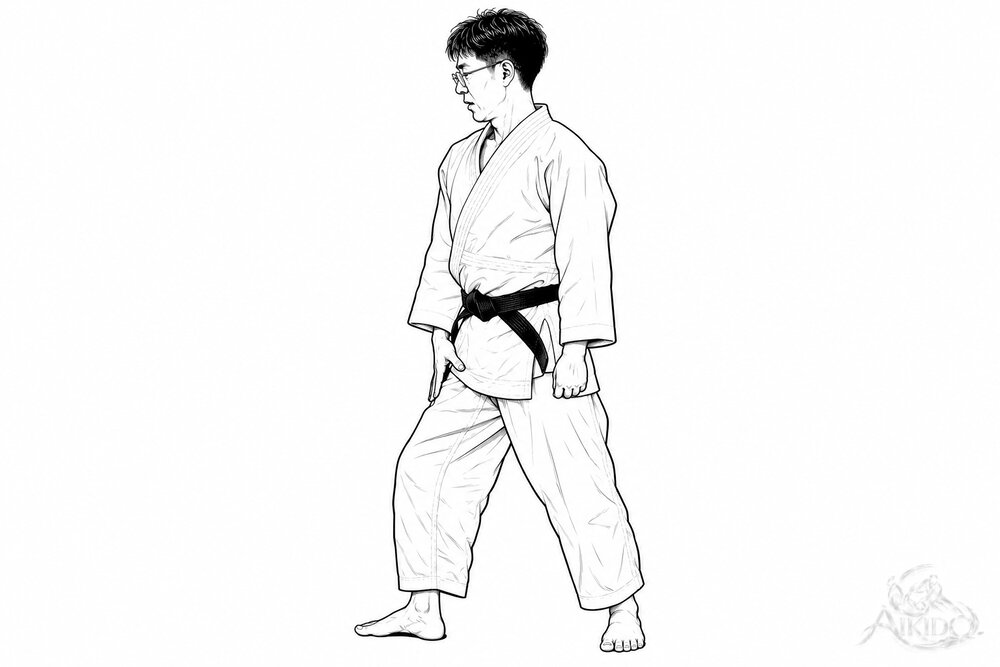
Tenkan-ashi is footwork in which you turn the body 180 degrees on the front foot. In migi hanmi, turn the body to the left on the right foot while drawing the left foot far back, turning 180 degrees. After the turn you are still in migi hanmi; only the direction you face has changed. The key is to keep your weight on the ball of the pivot foot’s big toe and to spin quickly, like a top, without collapsing the body’s axis.
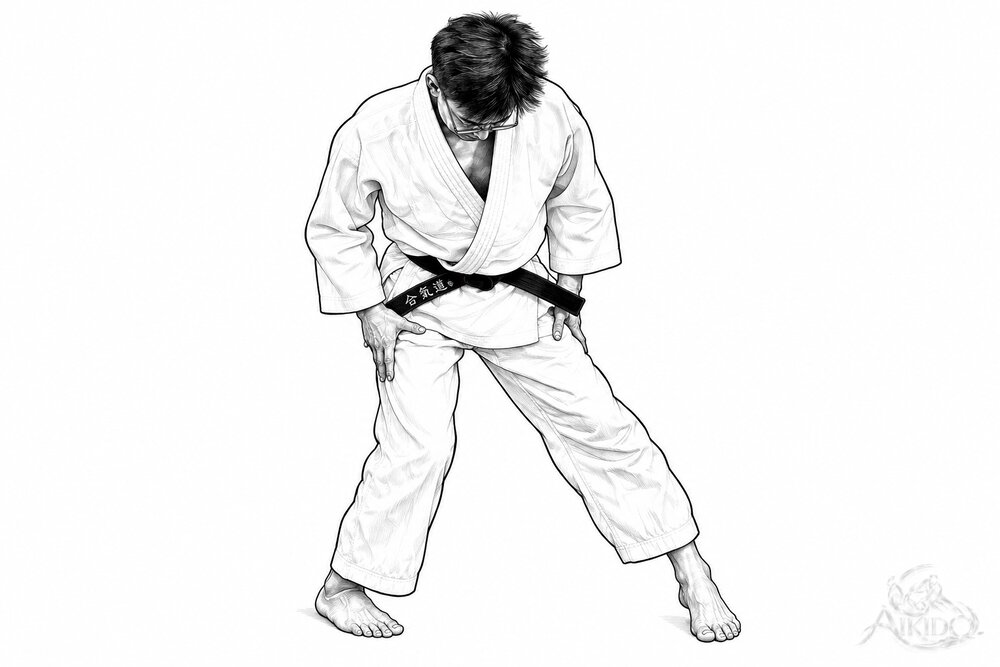
- Turn the hips to draw the foot: Rather than swinging the back foot around, think of turning the hips and drawing the back foot in time with that movement, and the motion becomes smooth. Thinking of footwork as centered on the hips is the shortcut to improvement.
- Keep the body’s axis upright: If the axis wobbles as you turn, there is more wasted motion and your balance becomes unsteady. Imagine a single straight line running from the ball of the right big toe through the center of your body.
- NG — Do not bend the upper body: Looking down or bending the upper body during the turn spoils your balance.
Footwork 4 — Tenkai-ashi (転回足)
Key point: Turn 180 degrees on both feet to change the direction of the body.
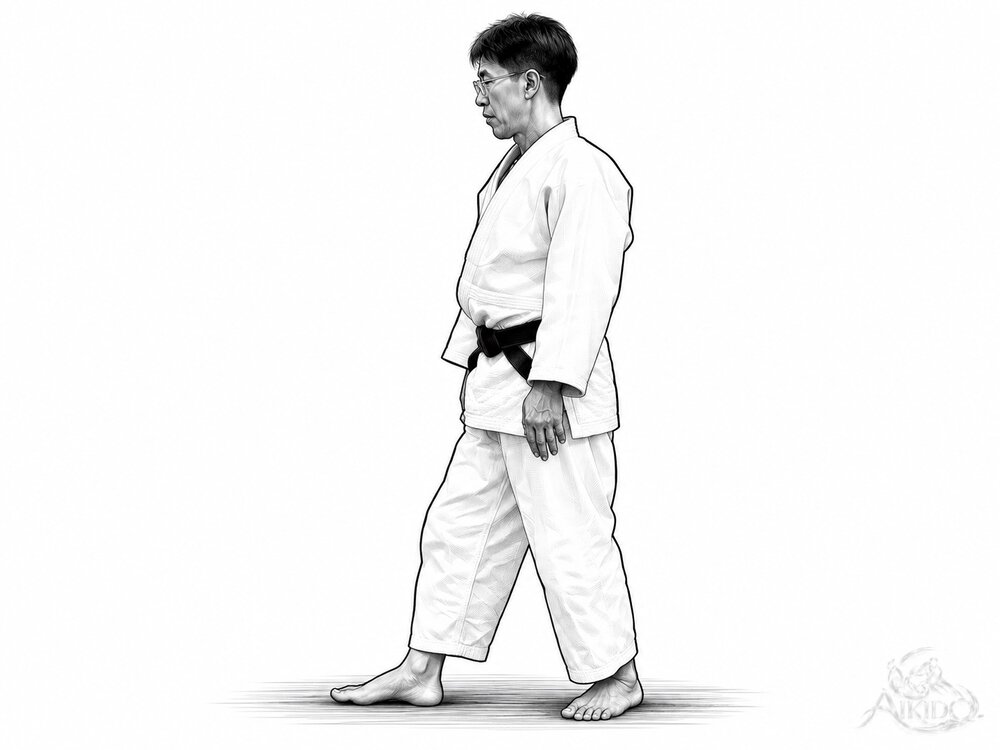
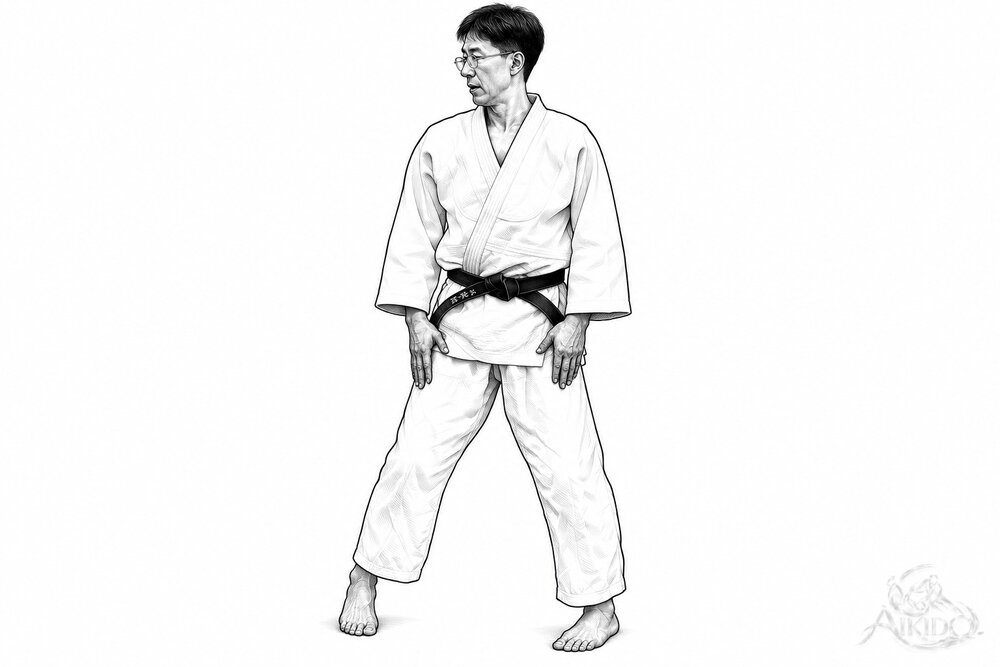
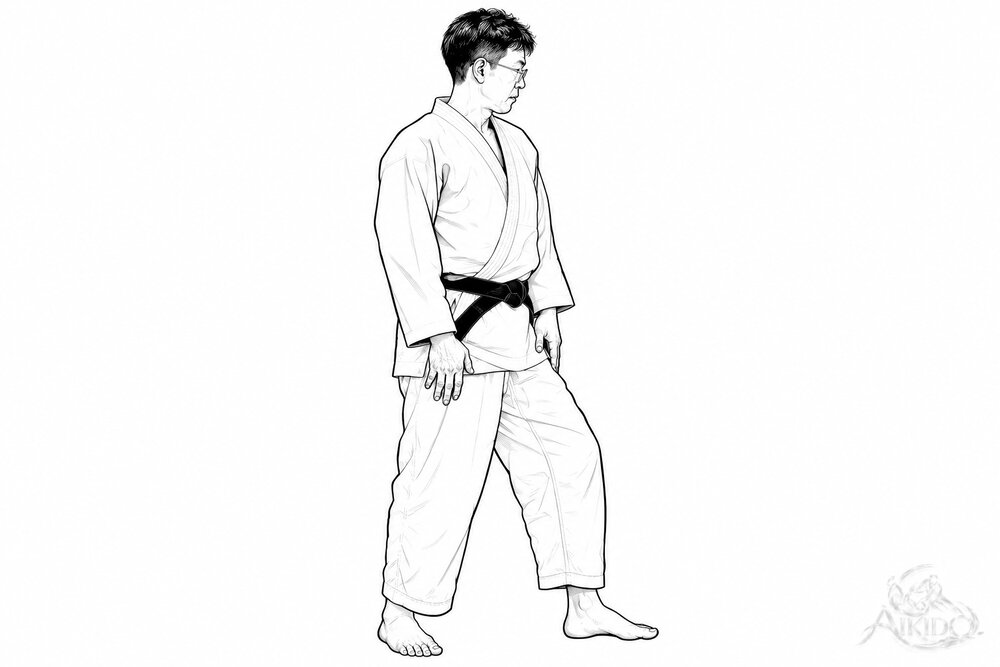
Tenkai-ashi 1–2 and key points
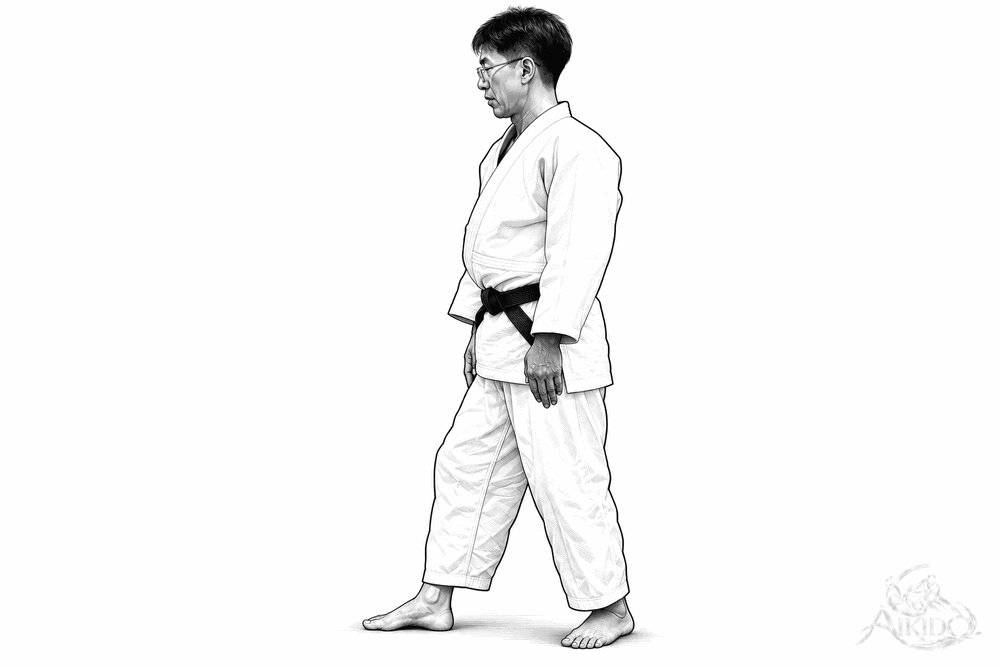
Tenkai-ashi is footwork in which you change direction 180 degrees in place, pivoting on the balls of both big toes. It is used mainly in techniques such as shiho nage. Its advantage is that you can change direction freely in response to your partner’s movement without shifting your center. In hidari hanmi, turn the body 180 degrees on the balls of both big toes to end in migi hanmi.
- Turn on the balls of the big toes: Turn with your weight evenly on both sides so that it does not lean onto either foot.
- Turn by turning the hips: All footwork moves from the hips. Think of changing the body’s direction by turning the hips, and match your feet to that movement. If you think only of the hips, though, the feet tend not to turn far enough, so turn the feet clearly as well.
Shikko (膝行) — Knee Walking
Key point: Move forward on both knees while staying seated.
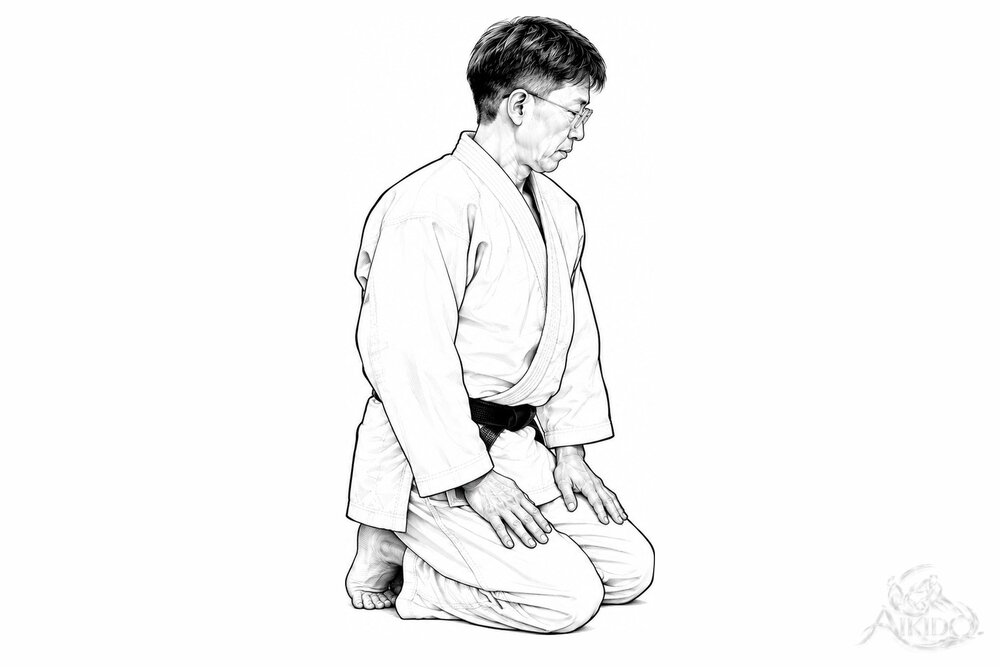
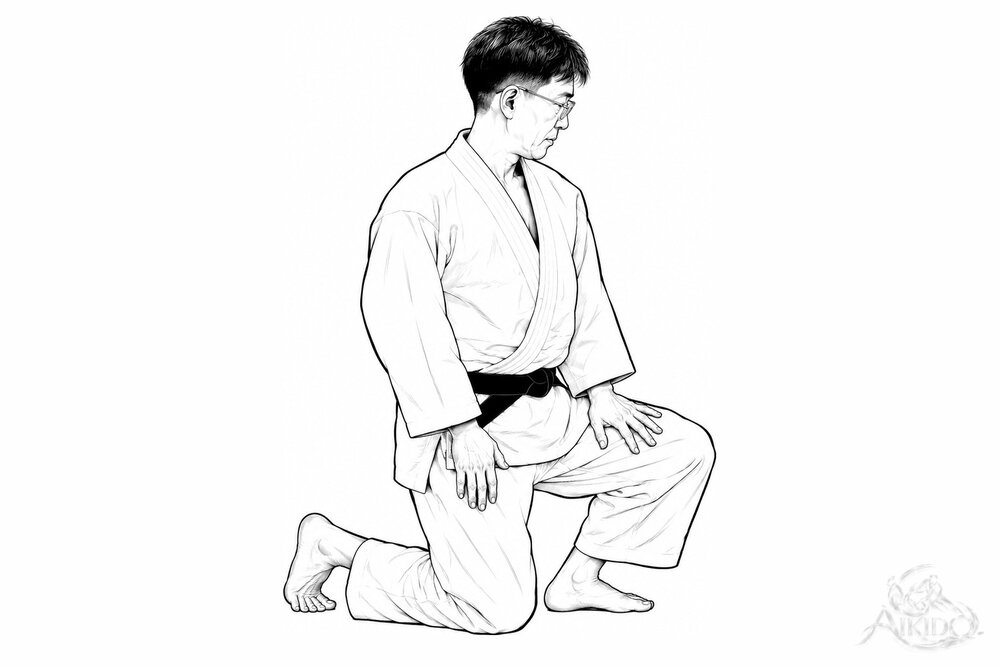
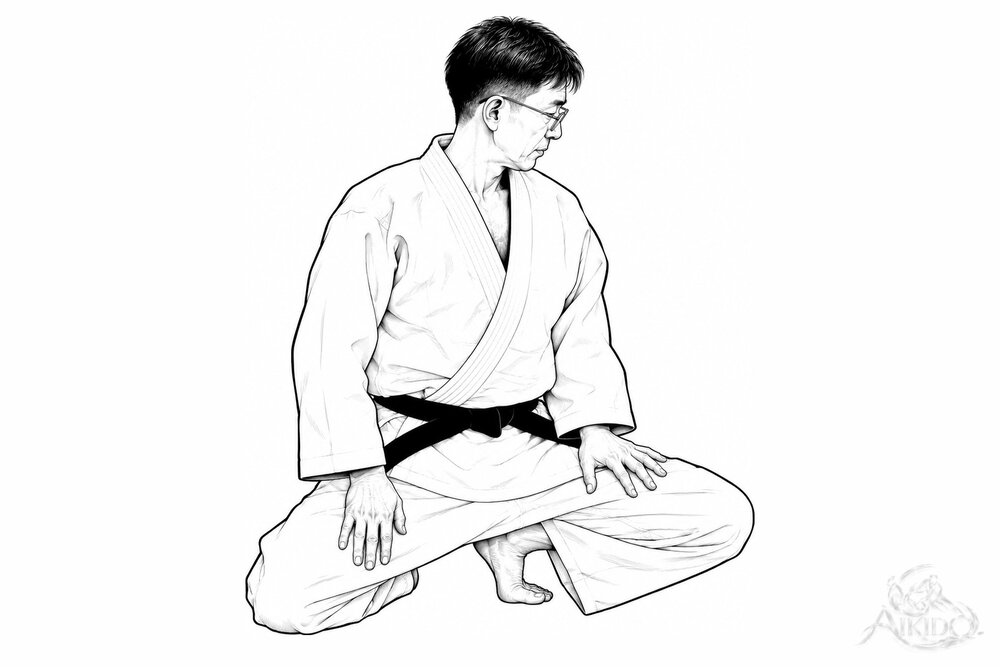
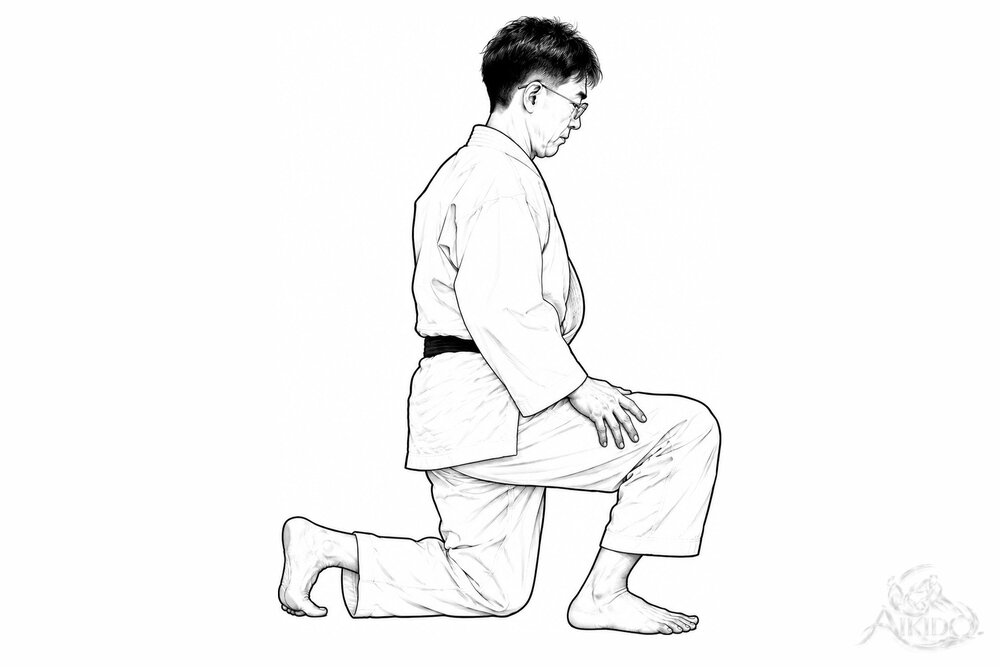
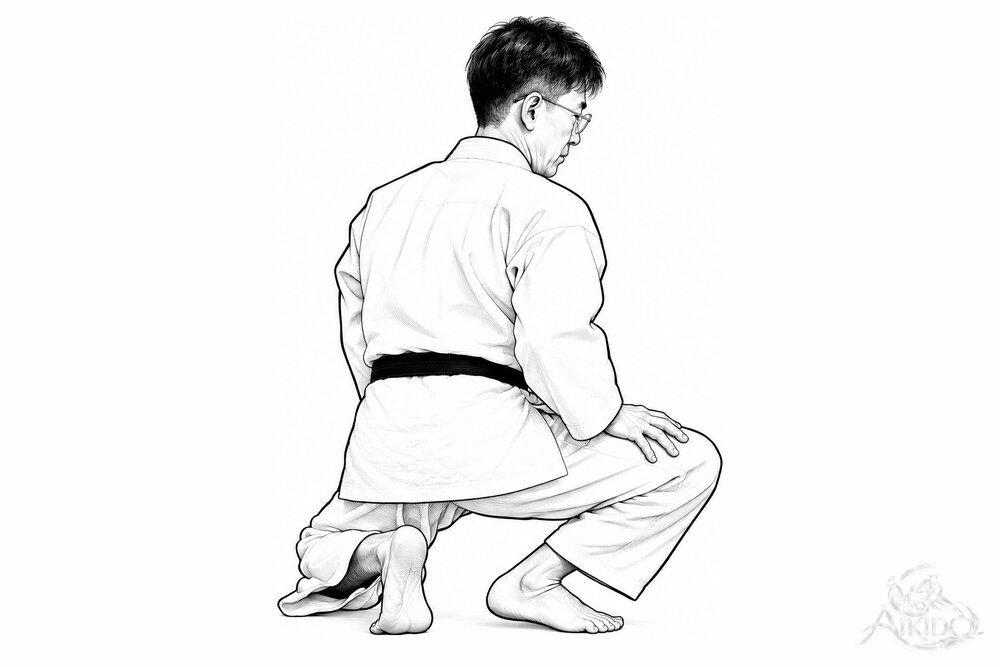
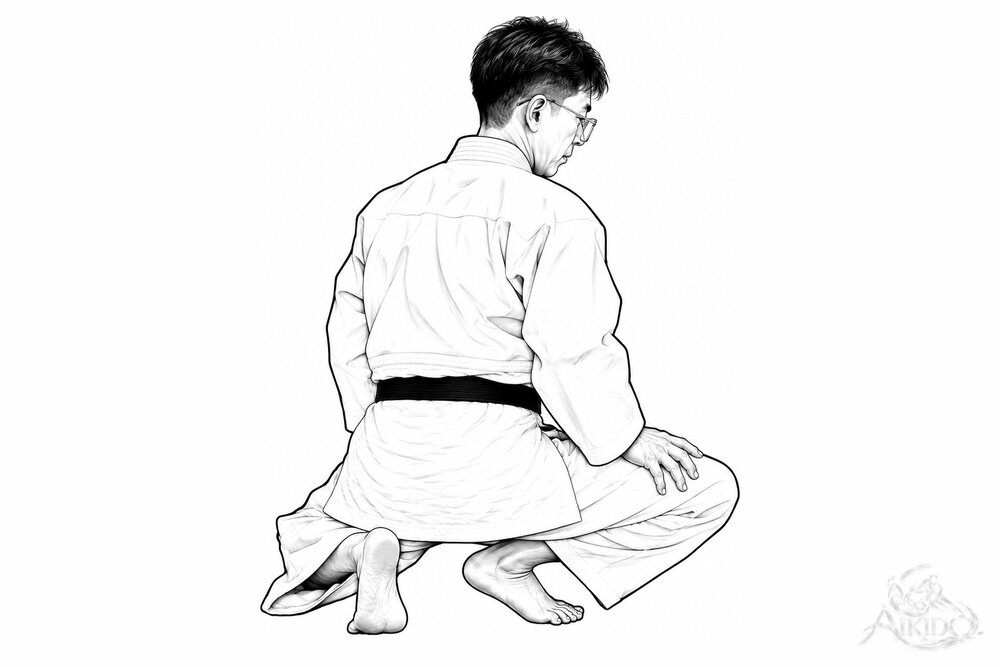
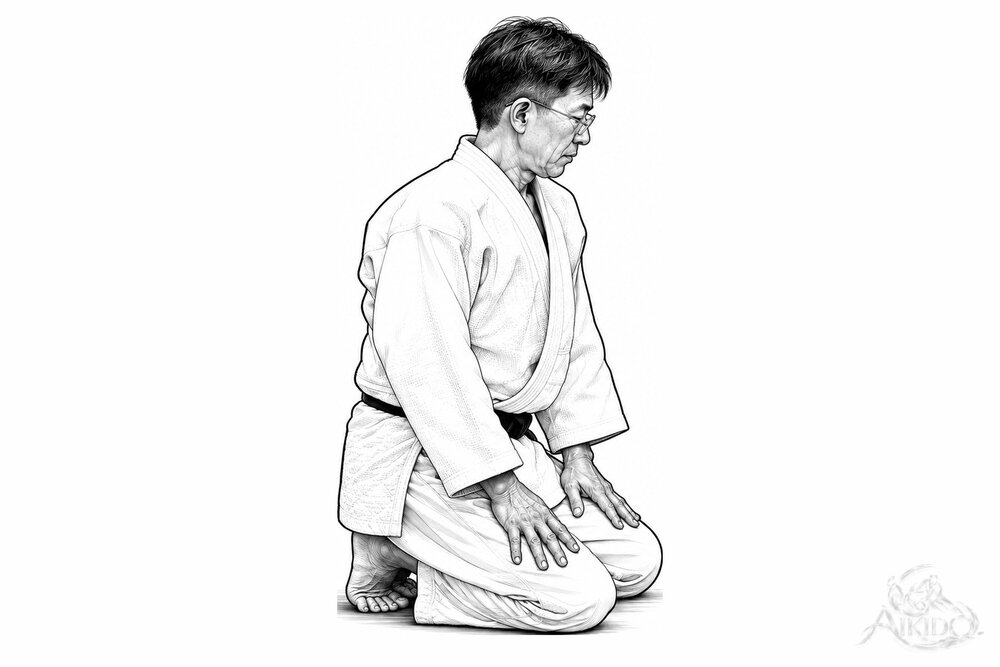
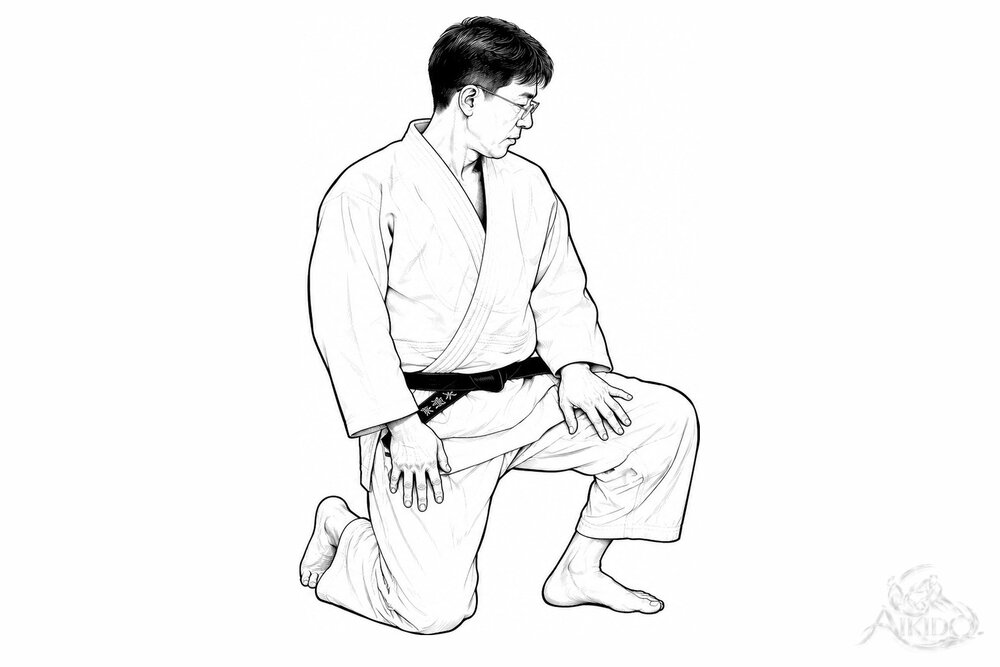
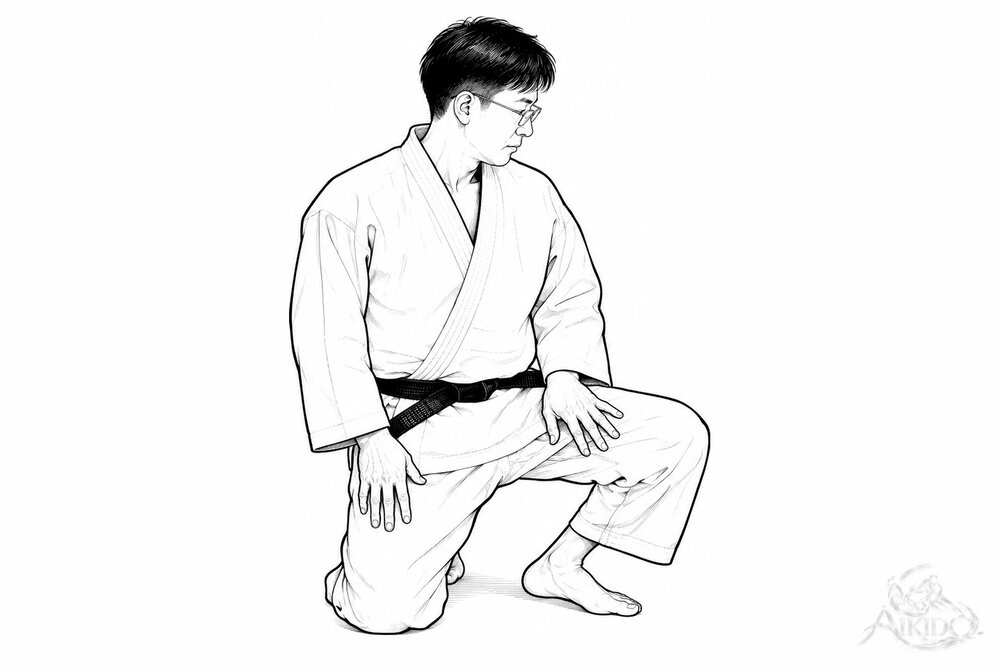
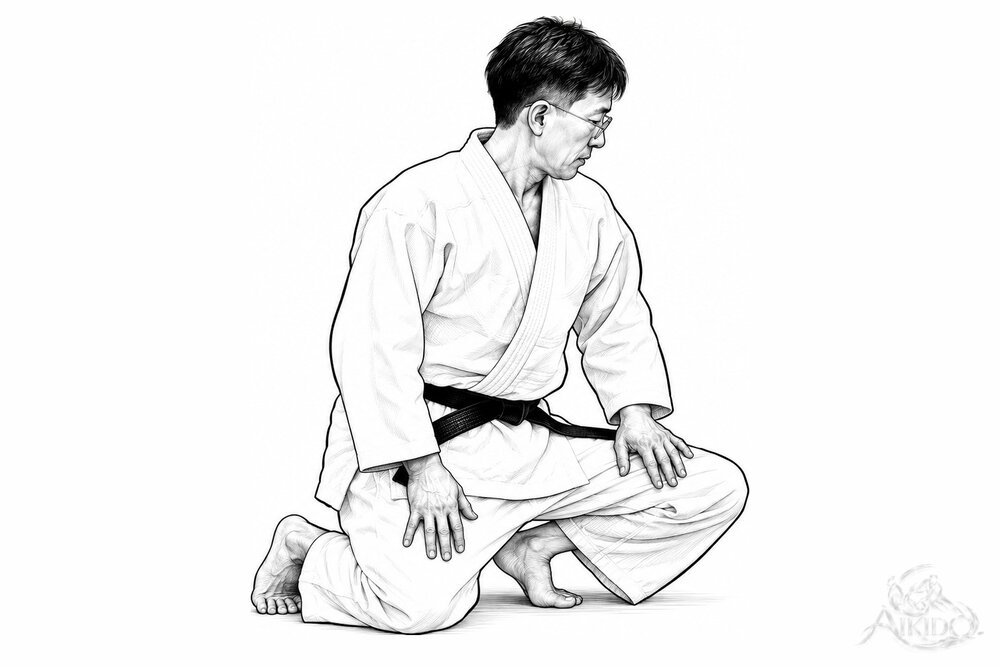
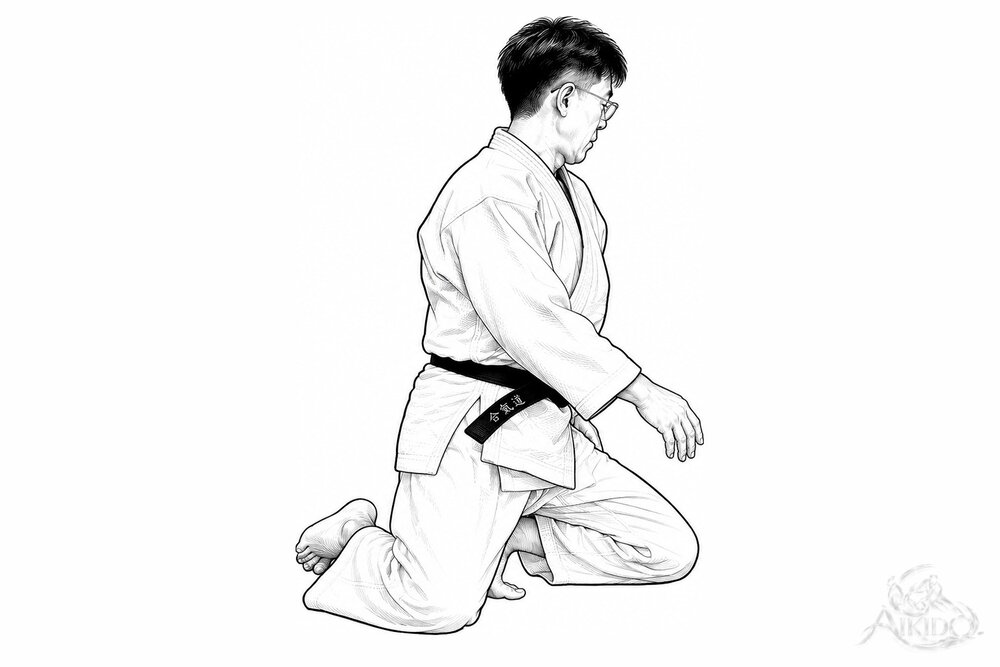
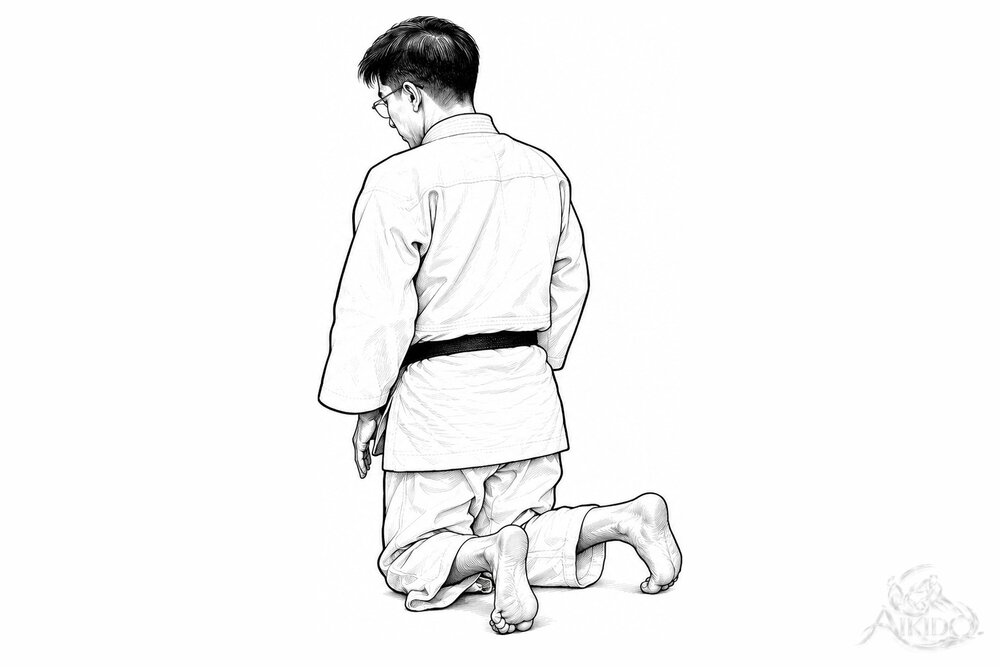
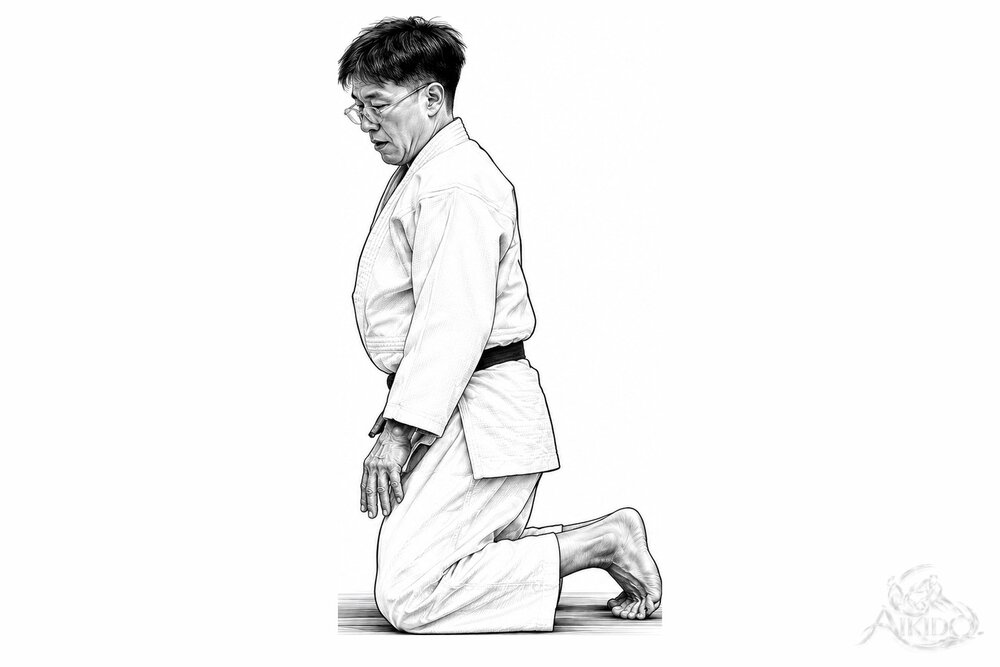
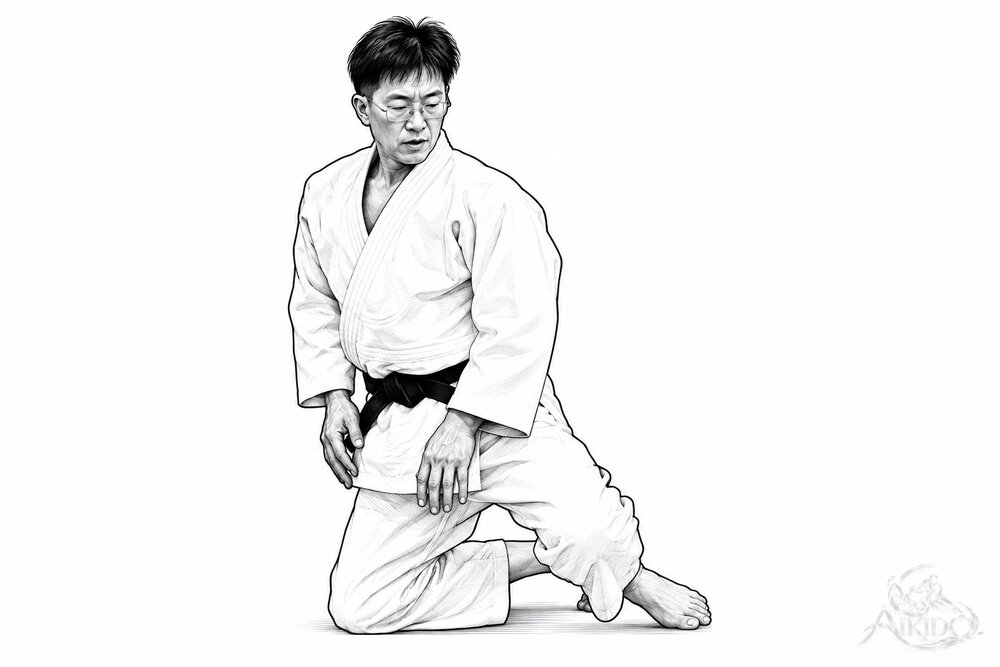
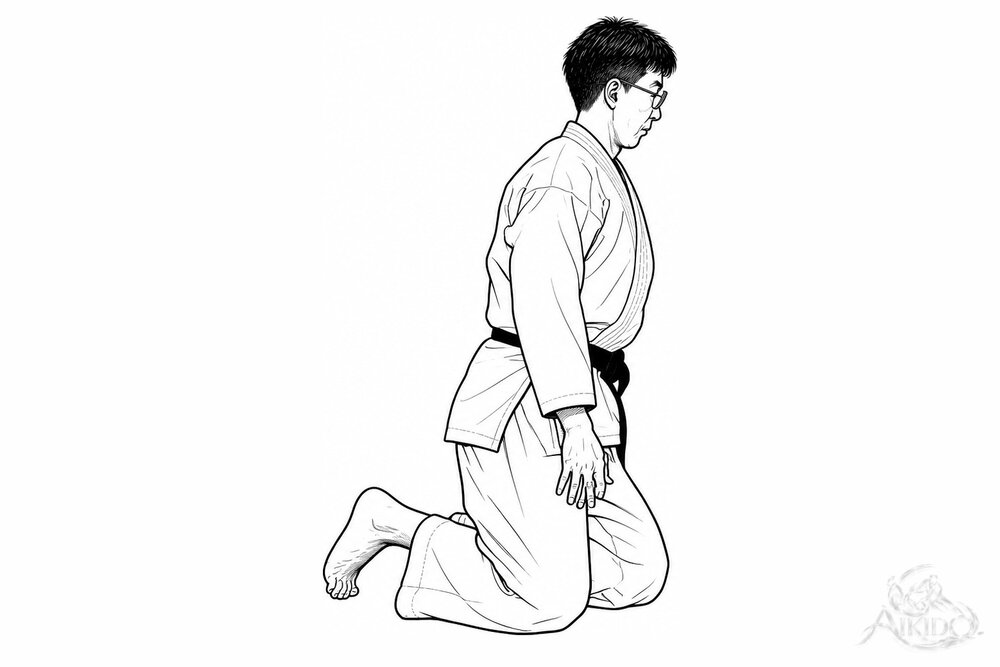
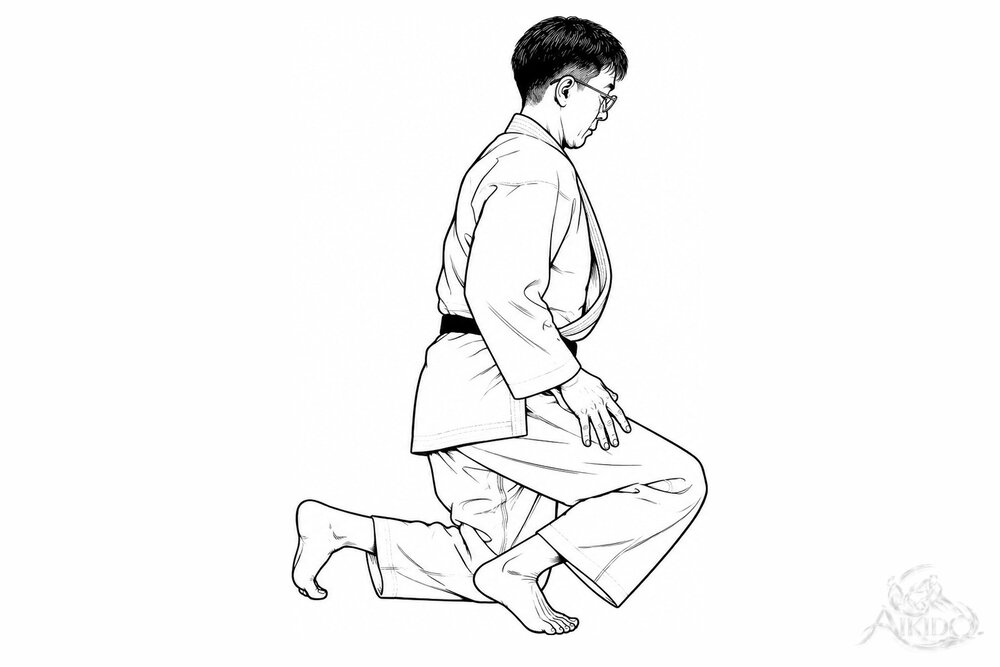
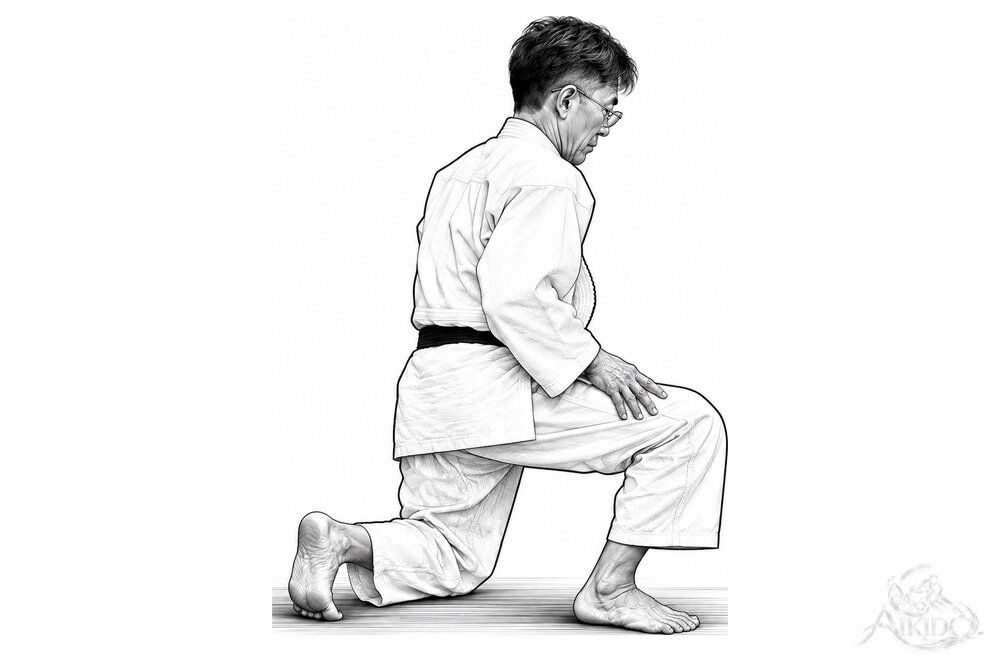
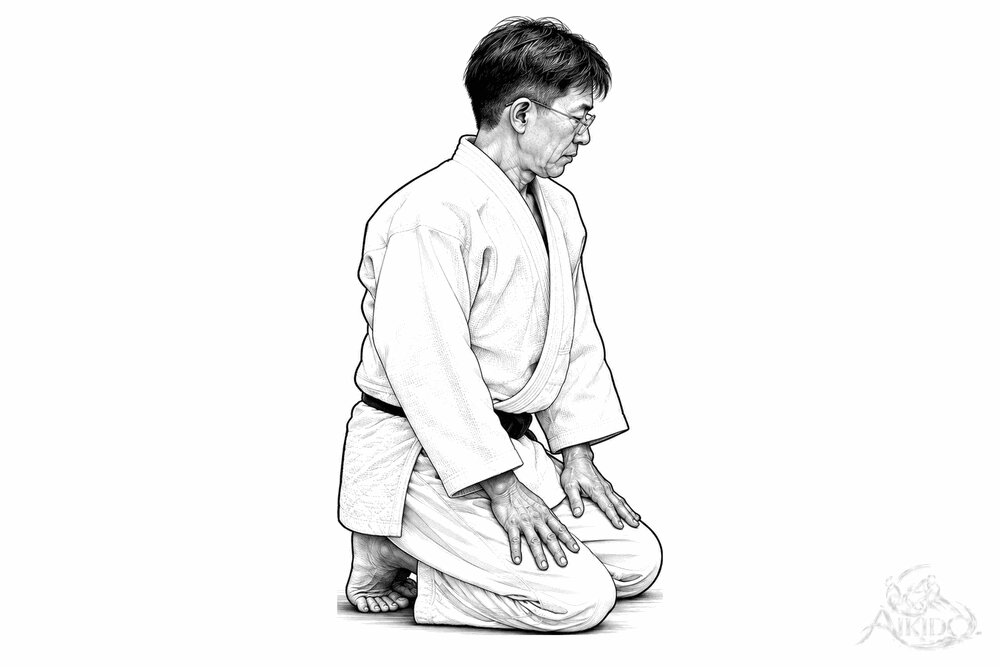
Shikko is a basic movement in which you move the body with the turning of the hips and the movement of the knees, without breaking your seated posture. Starting from kiza (跪座), bring the right knee forward and at the same moment quickly draw the left foot in. As you set the right knee on the floor, now bring the left knee forward and draw the right foot in. Use the turning of the hips to form a clear hanmi as you advance. It is important to keep your hands on your thighs and not to twist your body.
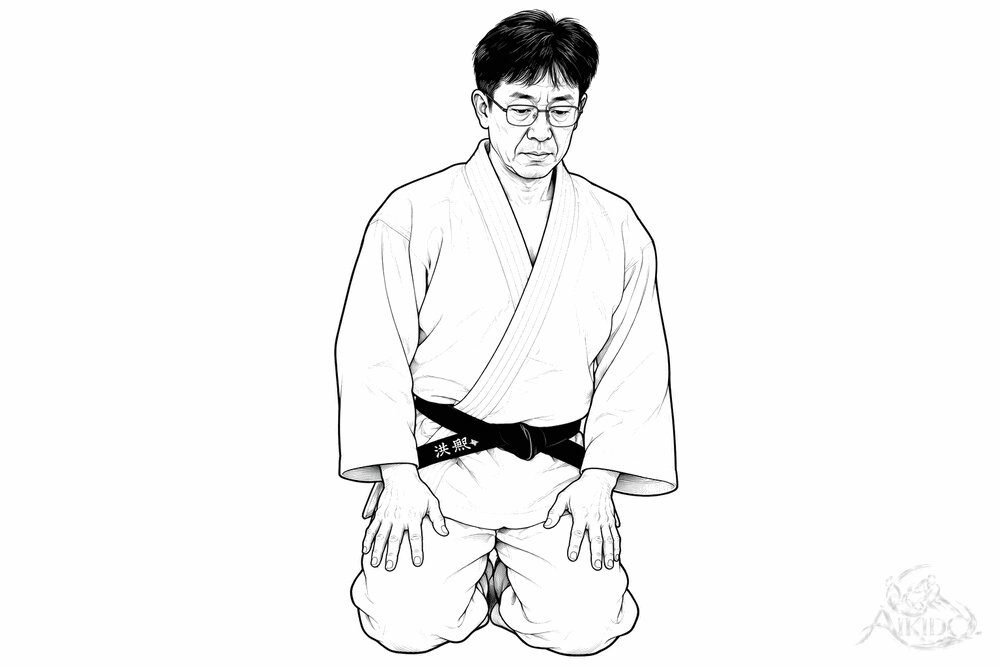
- Draw the back foot in to make hanmi: The moment you bring a knee forward, draw the toes of the back foot toward the front foot and quickly form hanmi. Each time left and right change, change your hanmi in time with that movement.
- Advance by turning the hips crisply: It is important to bring the foot forward while turning the hips sharply. Bring the foot toward your own center. Always keep your hands on your thighs. Swinging the hands twists the body, and you cannot use your power properly. In aikido the basic rule is that the hands and feet move in the same direction.
Variations of Shikko
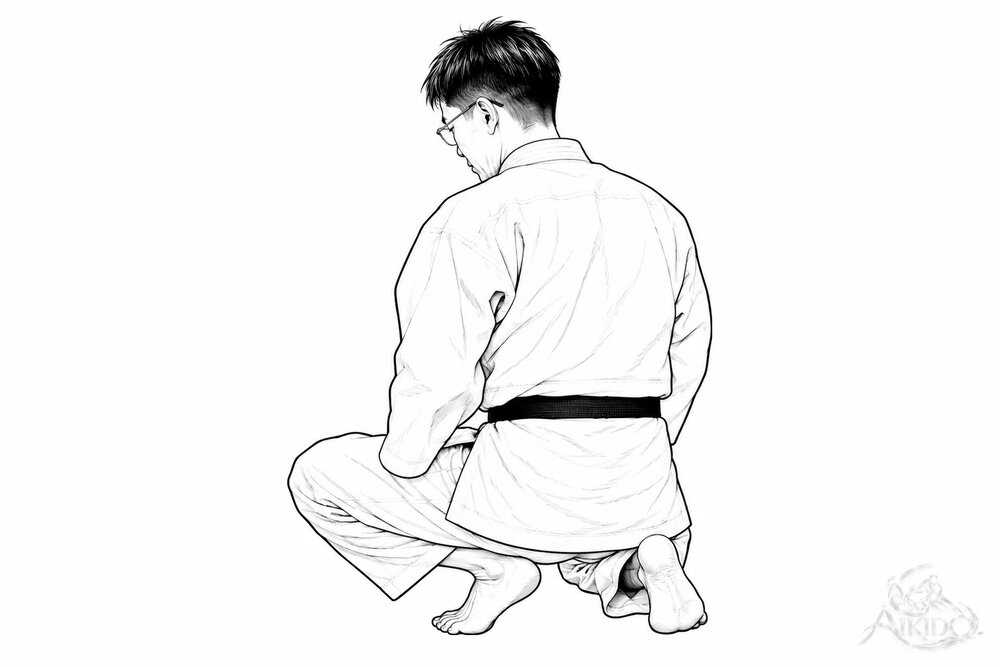
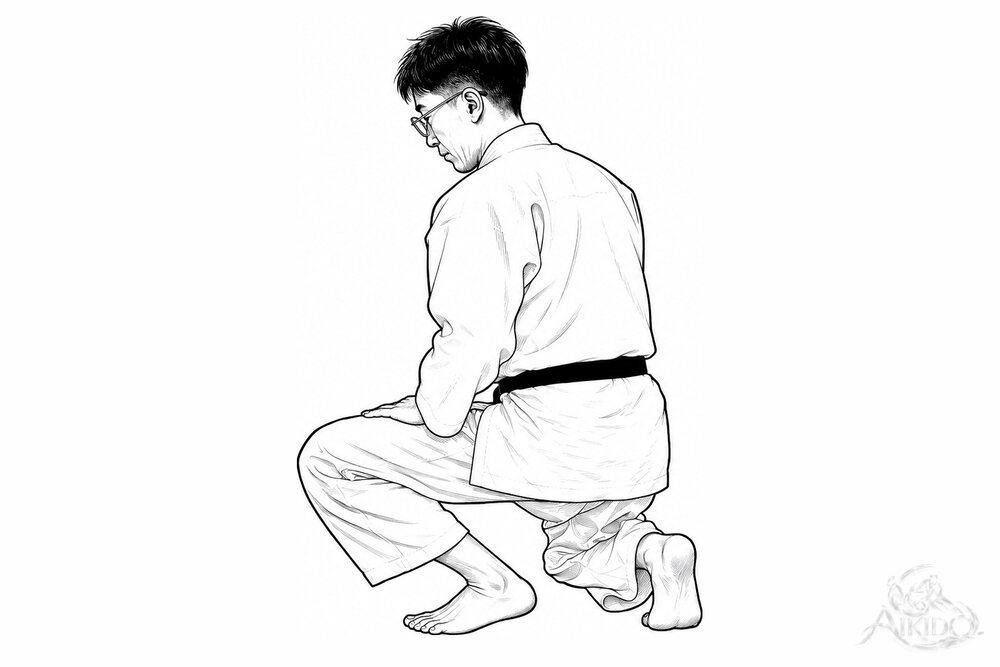
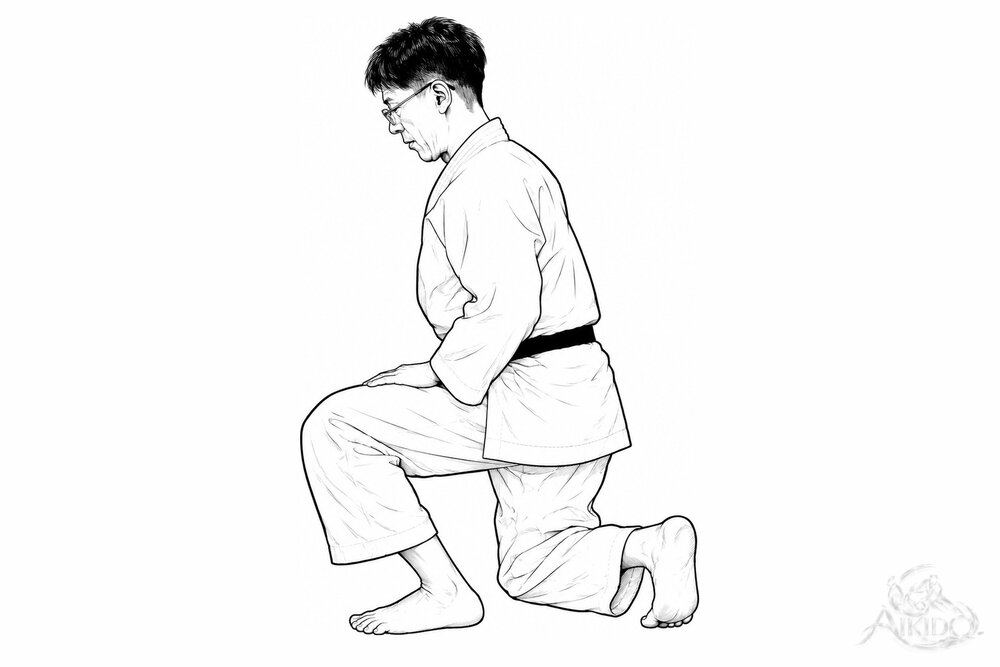
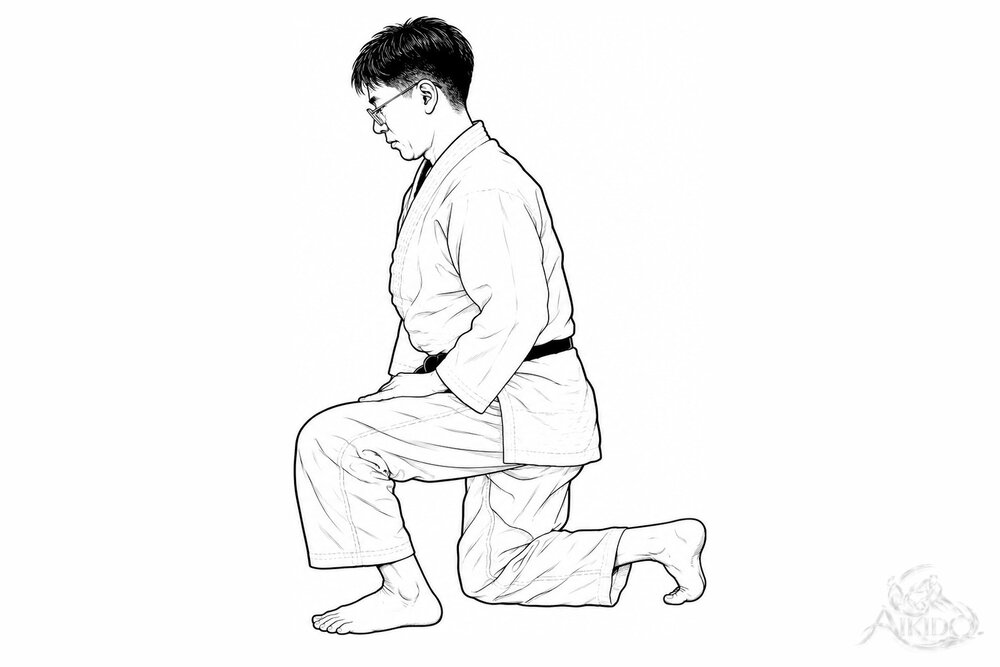
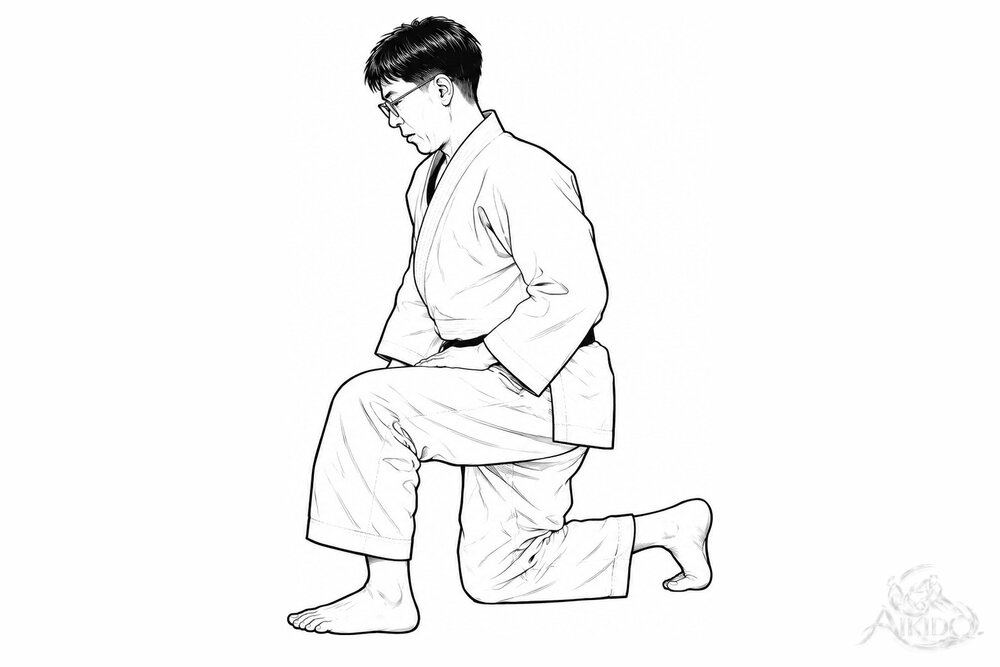
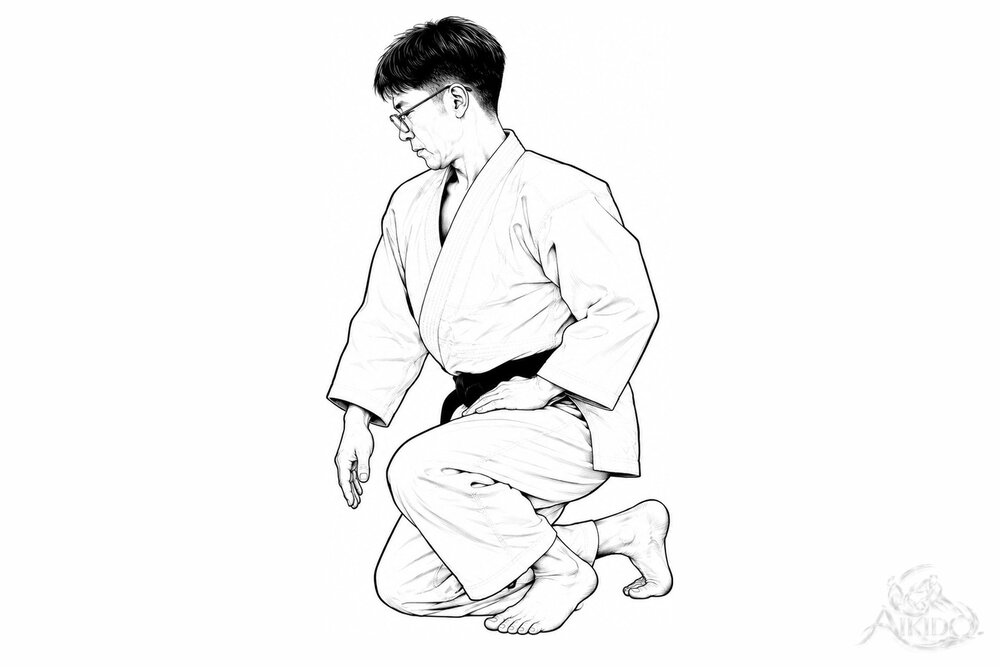
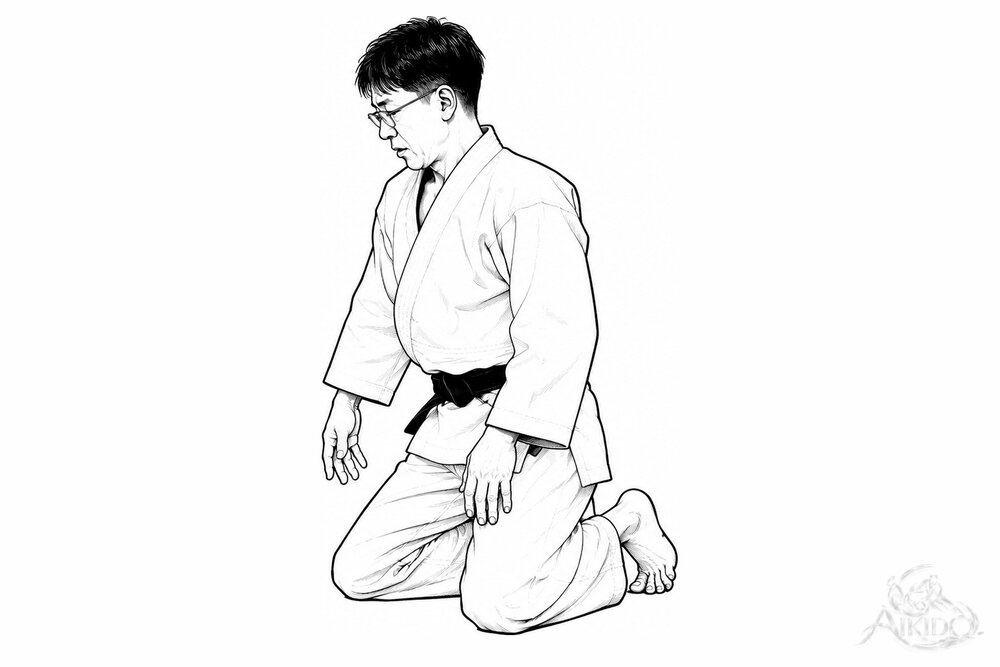
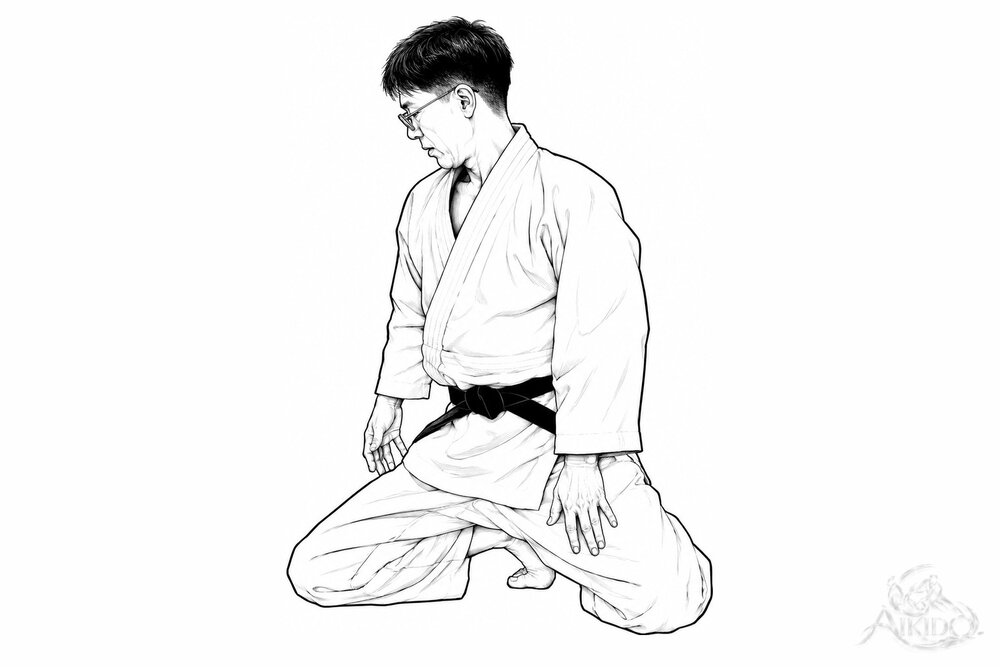
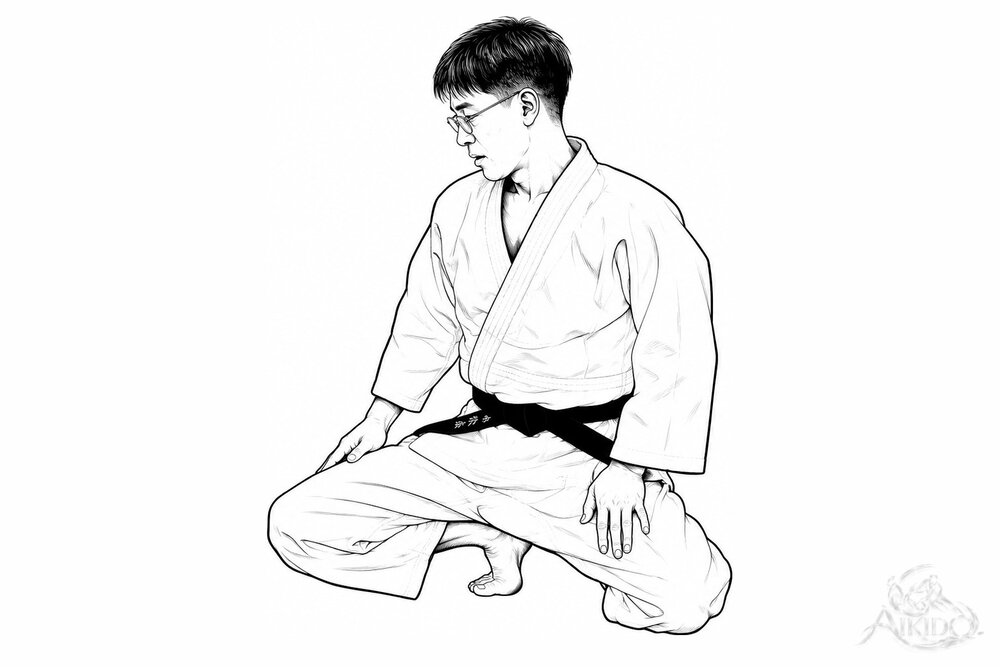
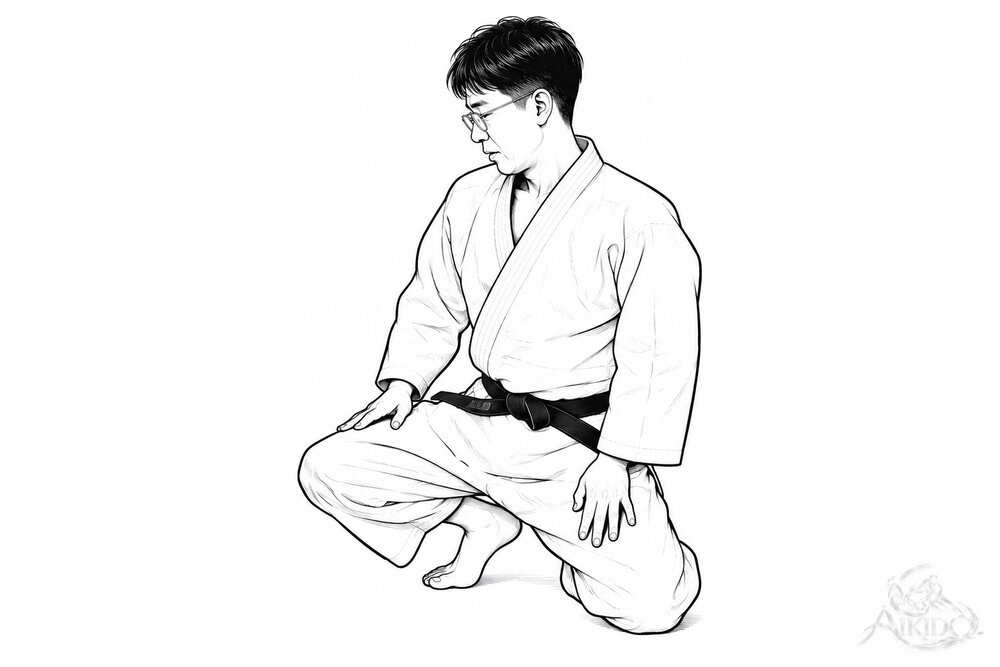
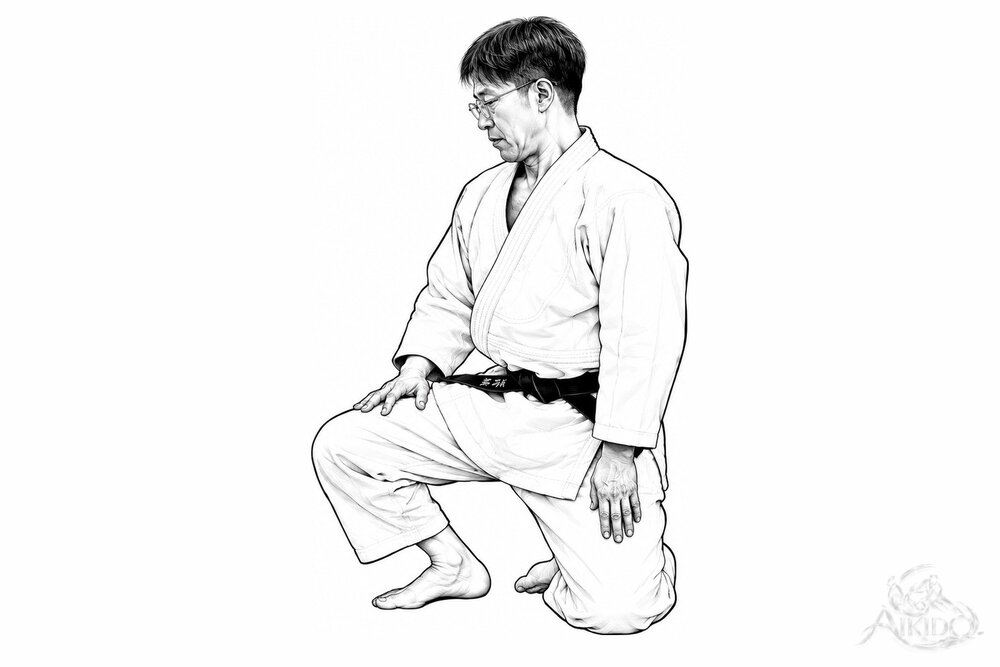
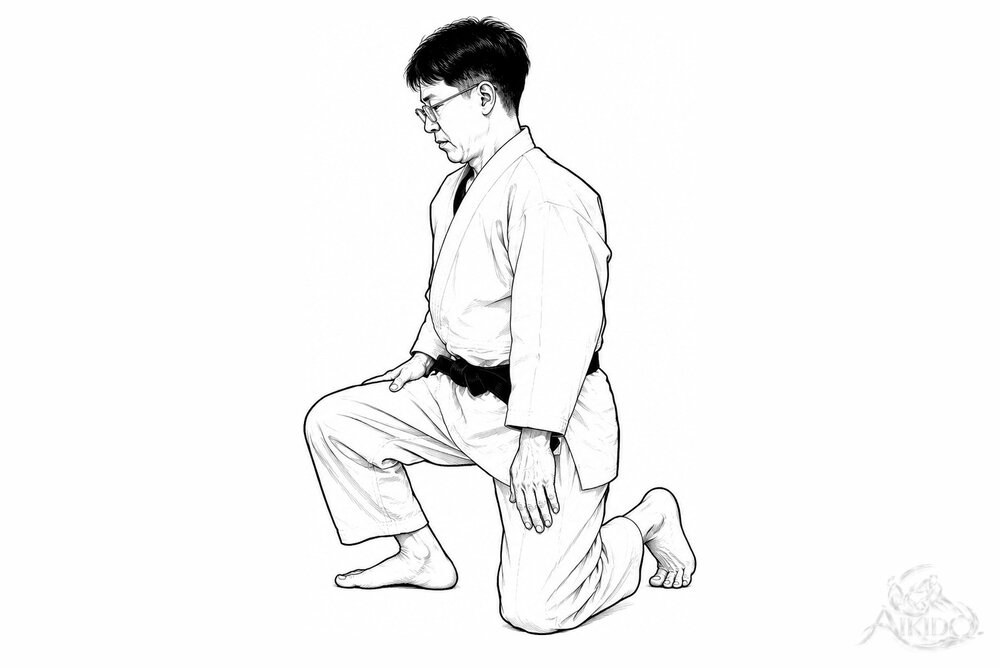
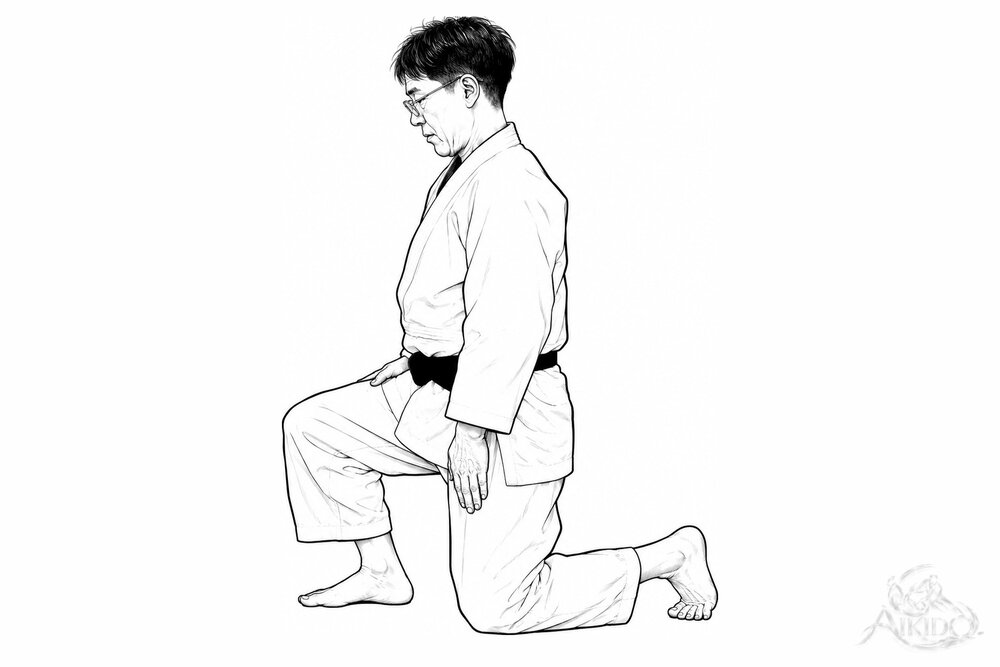
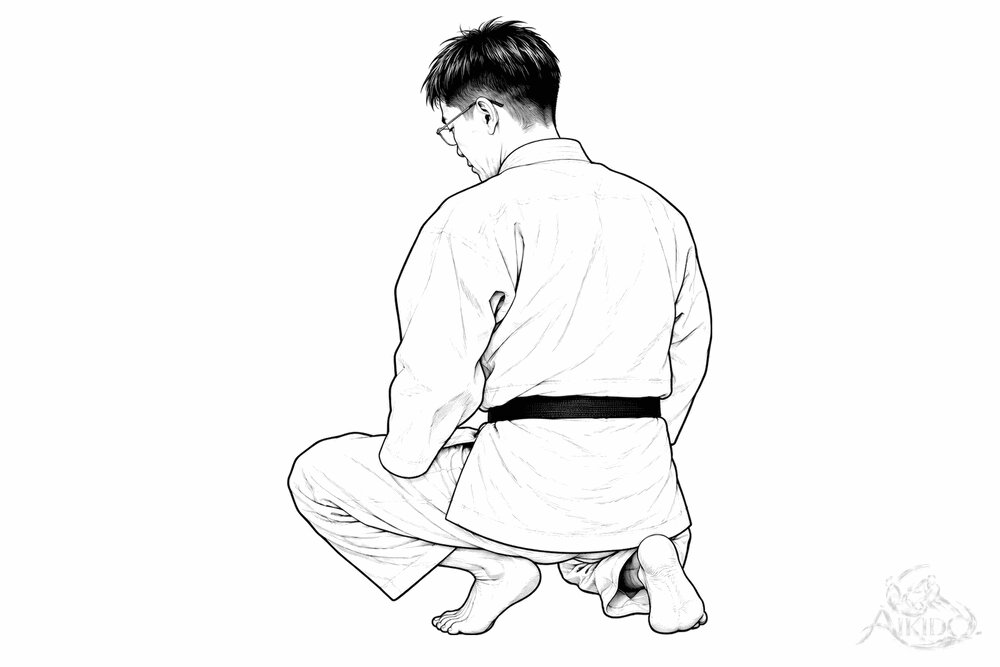
Shikko backward
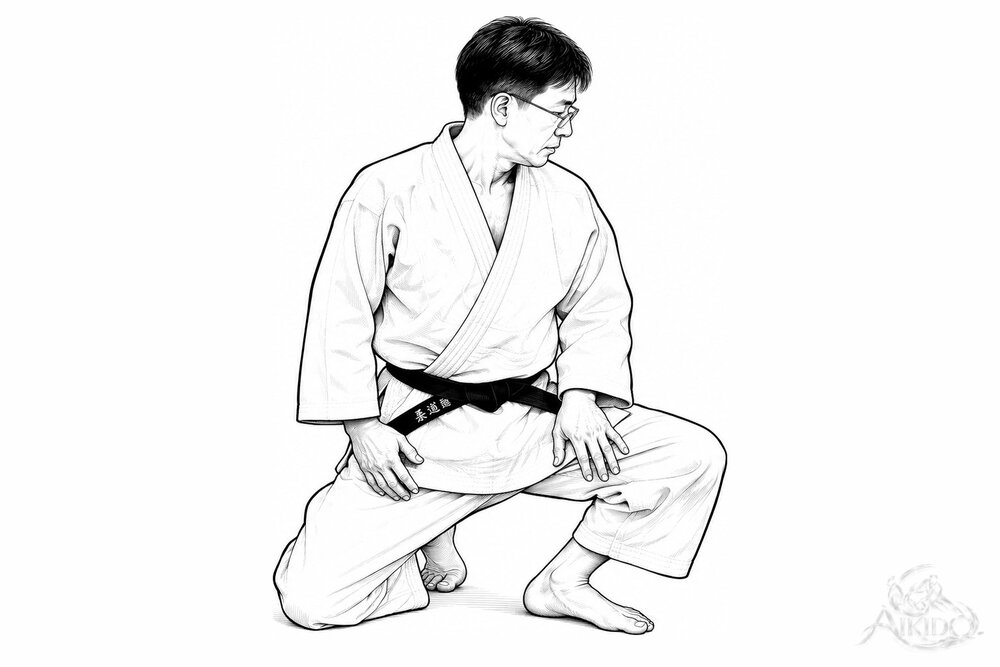
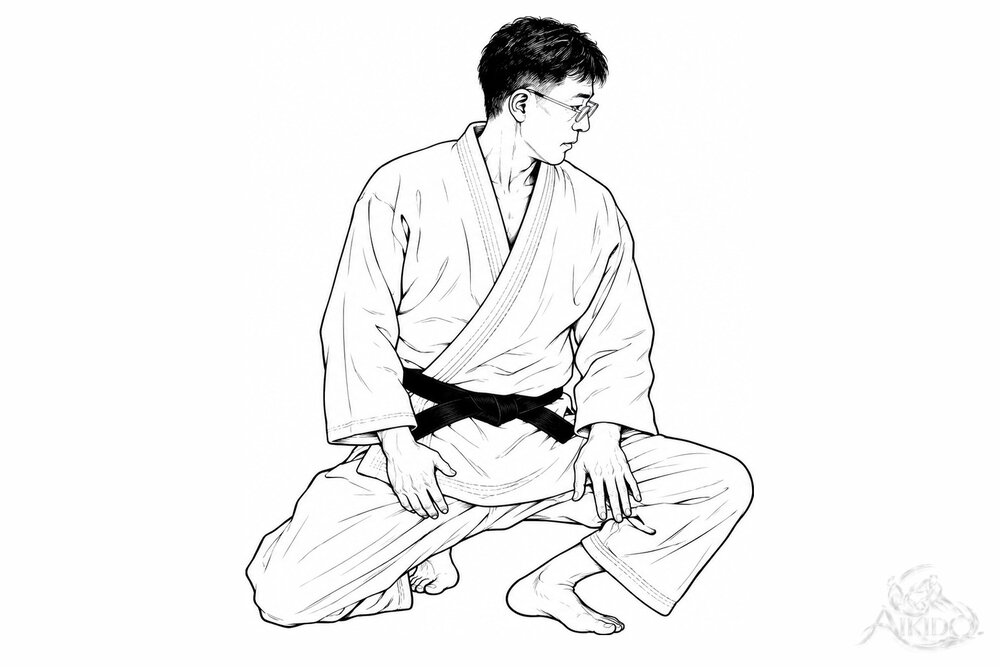
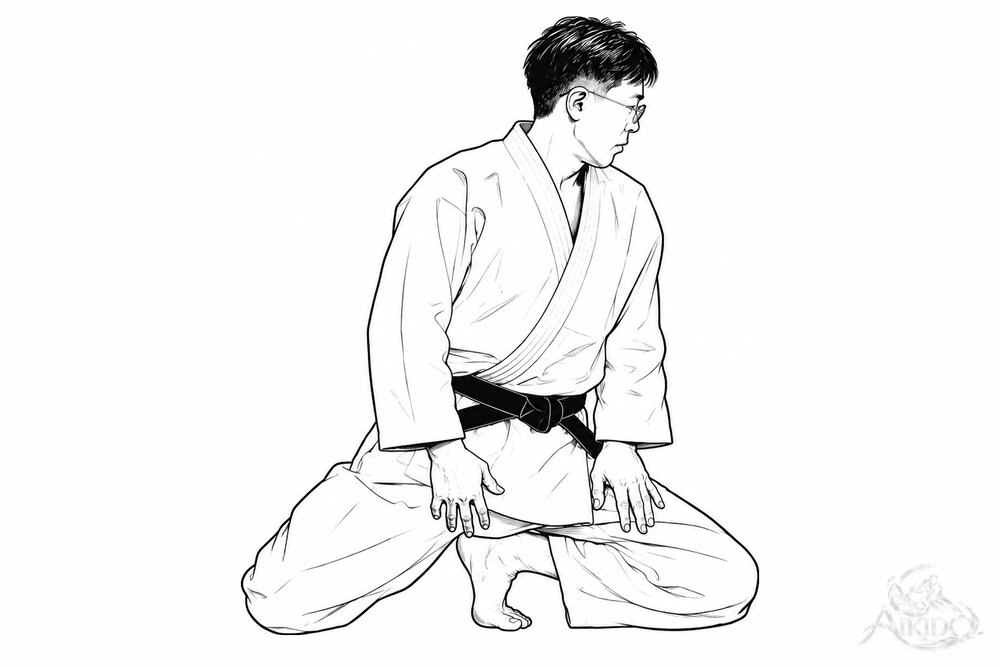
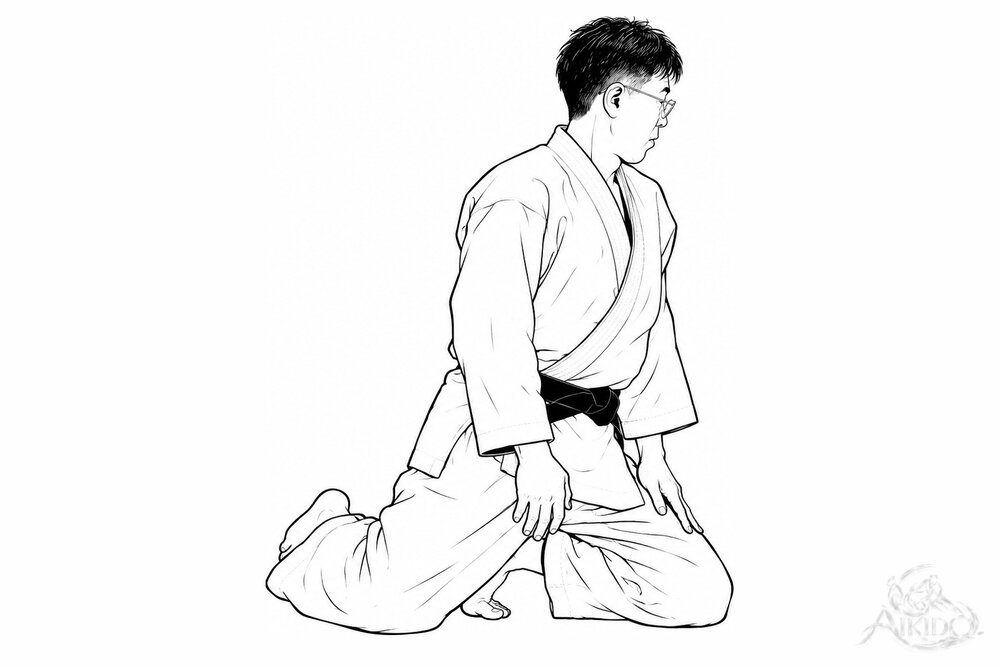
Turning in shikko
Besides moving forward, shikko can also move backward and turn. To move backward, from kiza send the right knee back, turn the hips on the right foot, and draw the left foot back. Then quickly send the left knee back, retreating continuously. To turn, while advancing in shikko set the left knee on the floor and turn the body backward using it as the pivot. As the body turns, send the right knee back; after turning 360 degrees, when the right knee comes to the front, draw the left foot in to end in migi hanmi.
Footwork Combination 1 — Ayumi-ashi and Tenkan-ashi
Key point: Linking ayumi-ashi and tenkan-ashi gives the footwork that leads from irimi into tenkan.
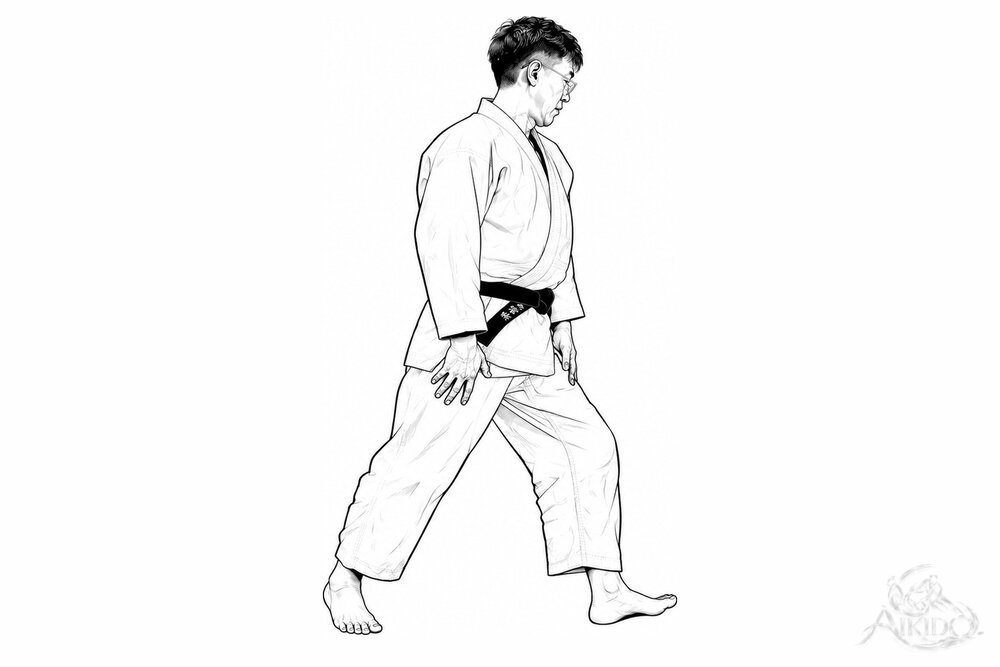
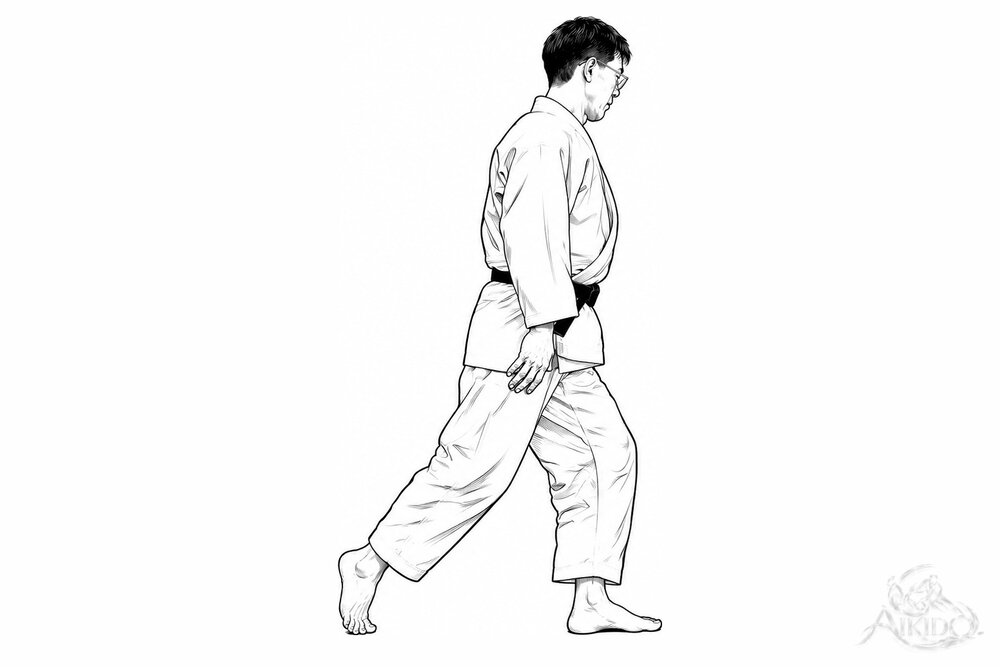
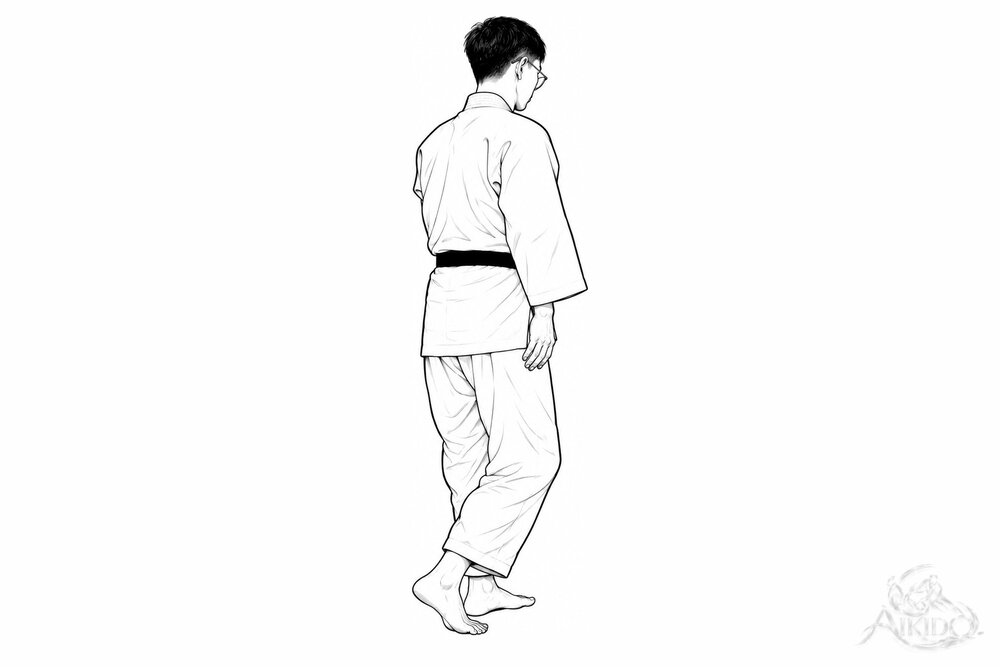
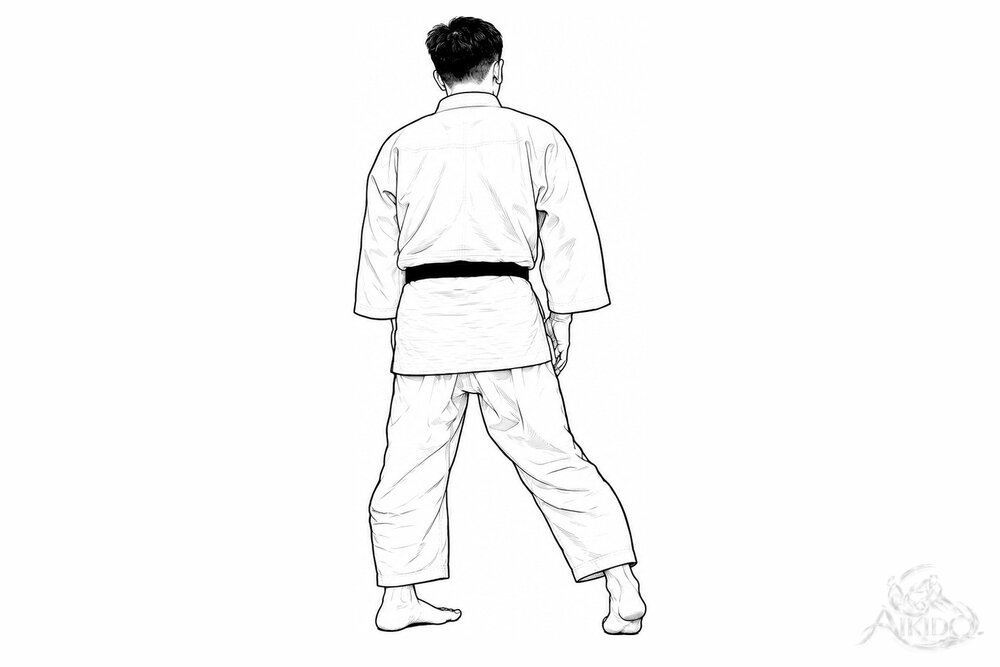
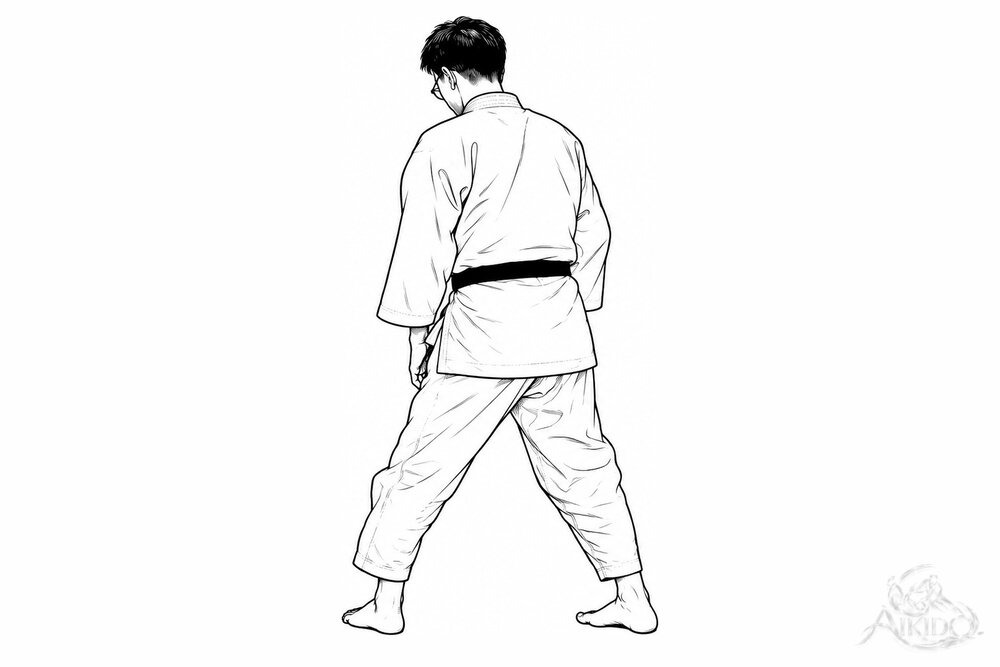
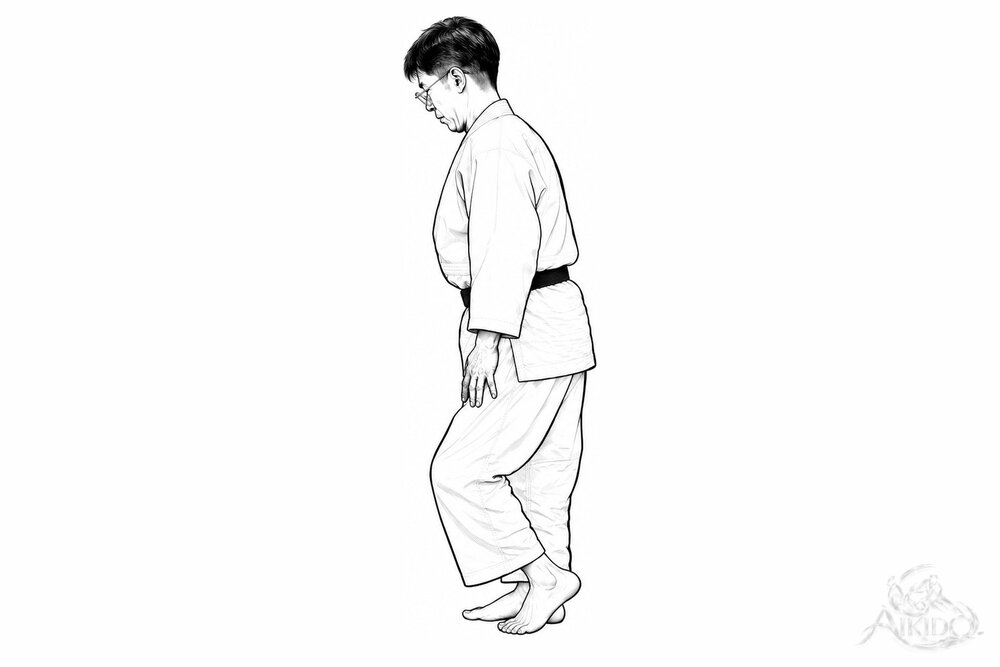
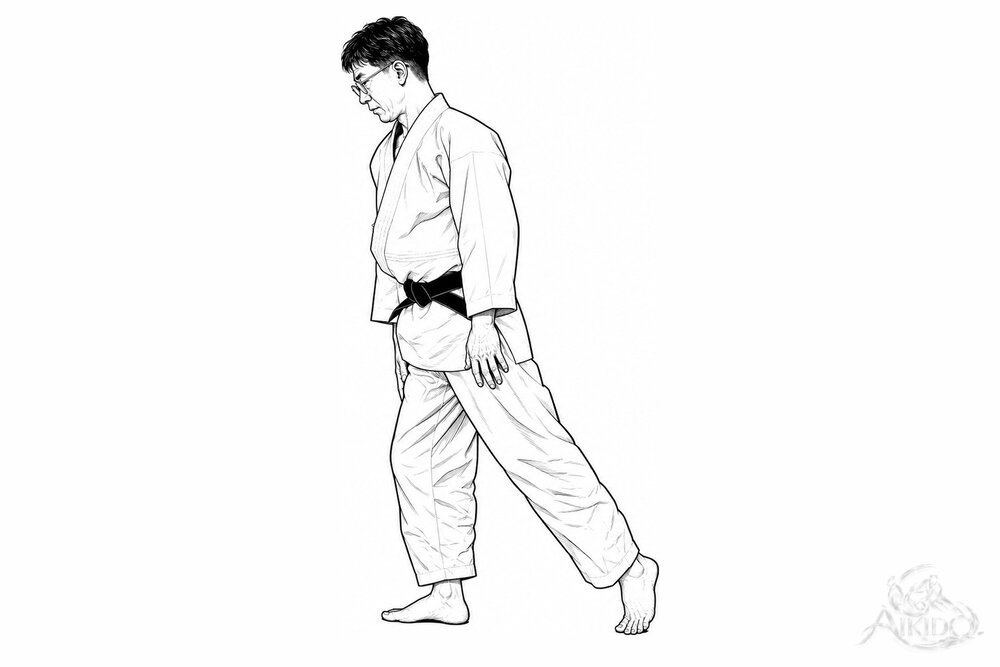
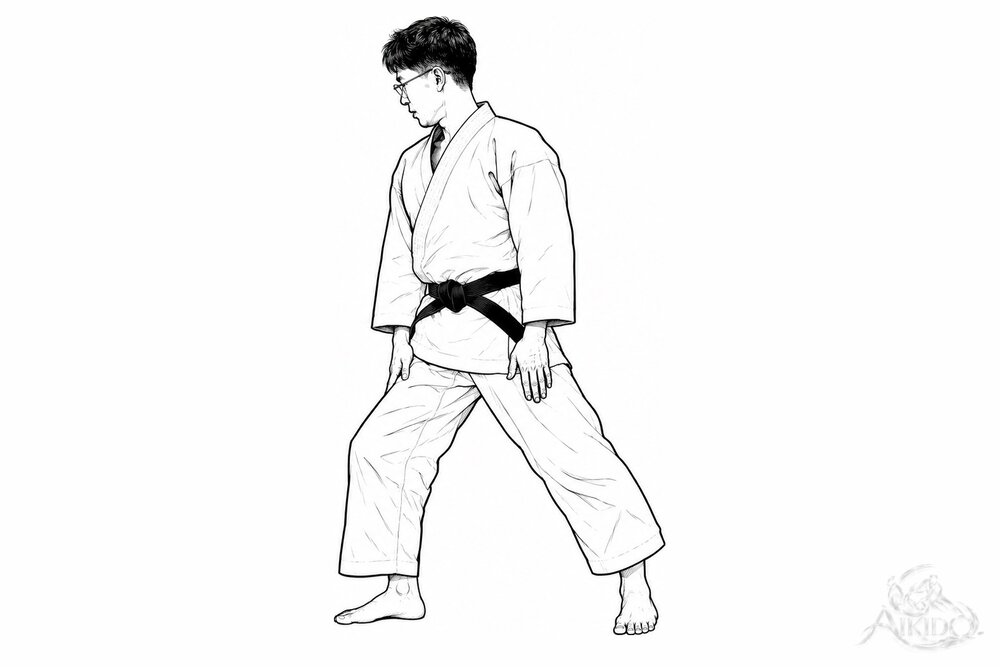
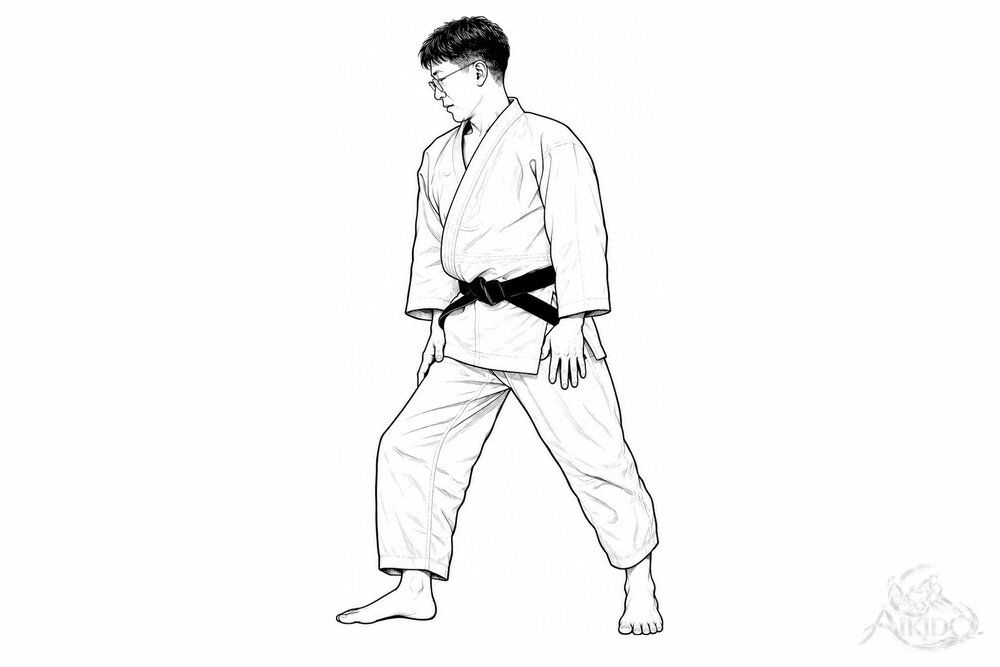
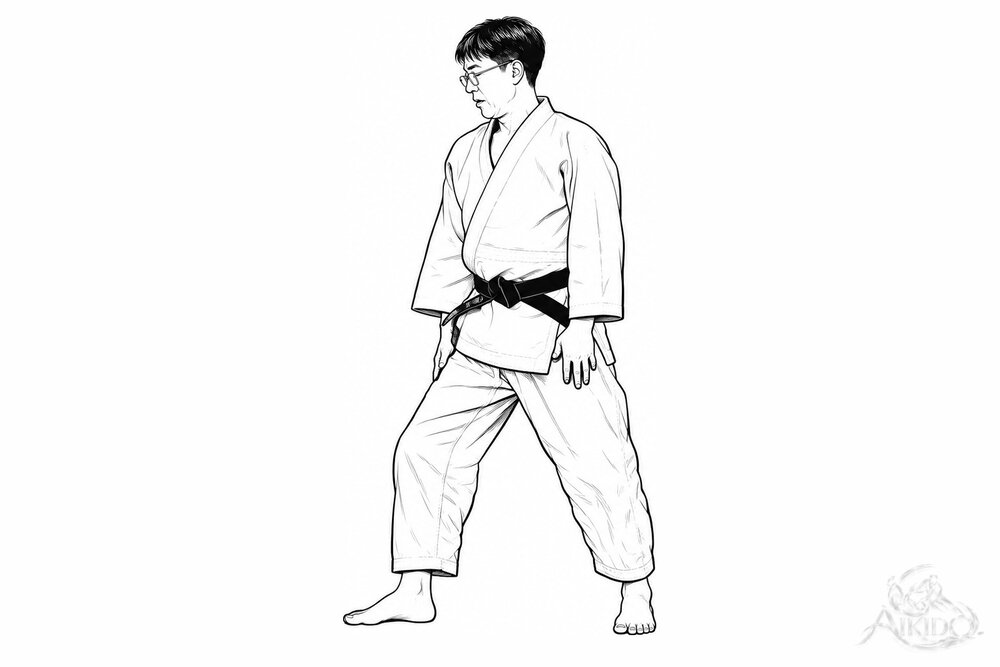
1 Hidari hanmi → 2 Step the right foot forward in ayumi-ashi → 3 Turn the body backward on the right foot, drawing the left foot far back → 4 Having turned 180 degrees, migi hanmi
In actual techniques, the footwork you have learned so far is used in combination. Linking ayumi-ashi and tenkan-ashi produces the body movement that leads from irimi into tenkan. In hidari hanmi, step the right foot forward in ayumi-ashi and immediately do tenkan-ashi on that foot. Draw the left foot far back and quickly turn 180 degrees into migi hanmi. Do all of this as one flow, keeping a stable posture with awareness of your body’s axis.
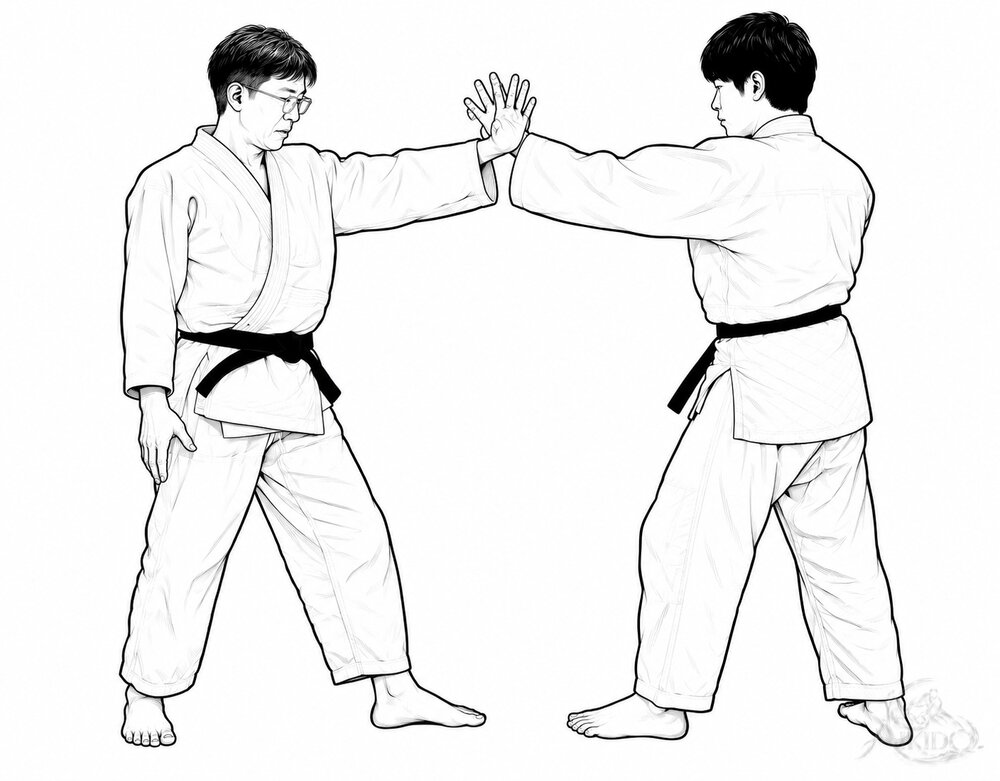
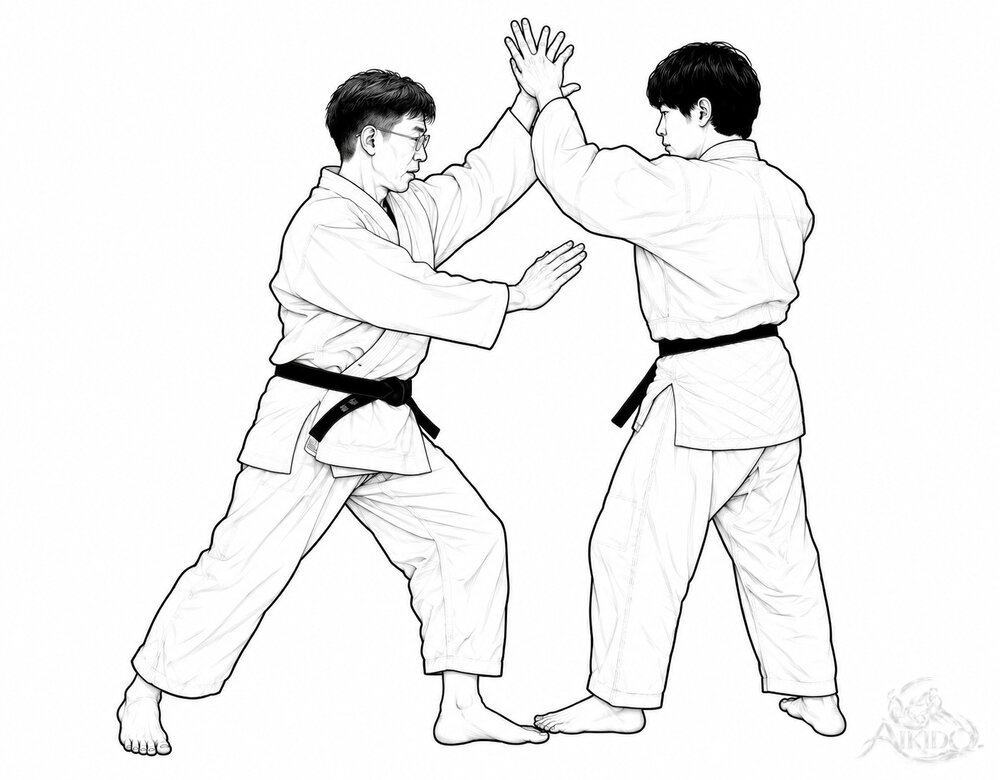
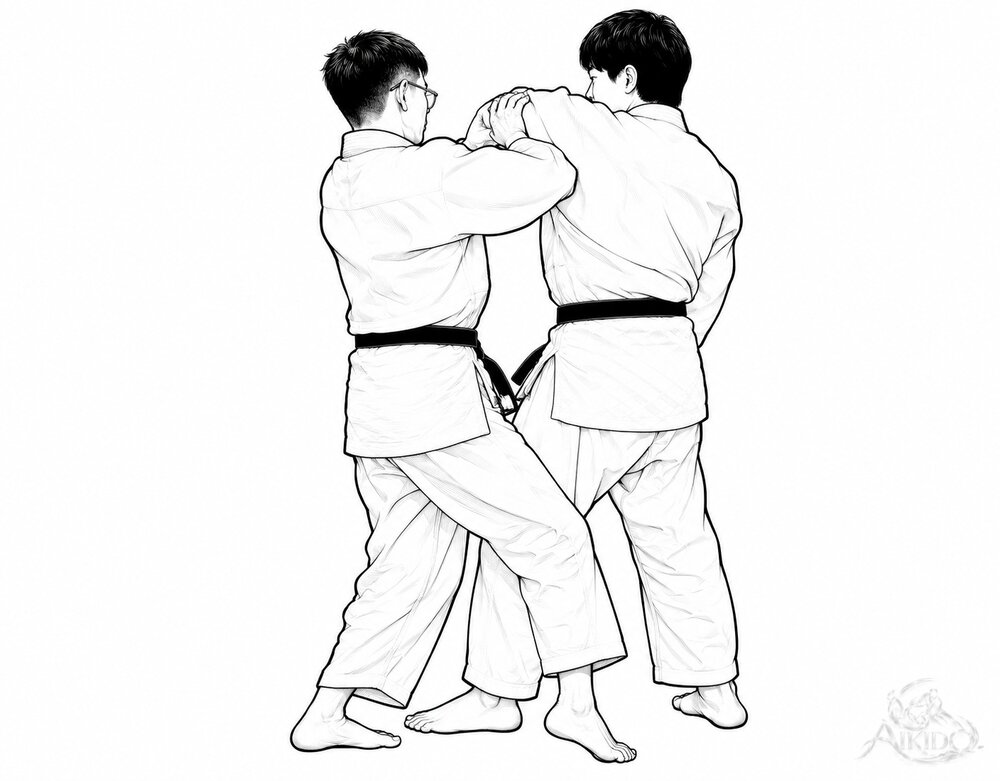
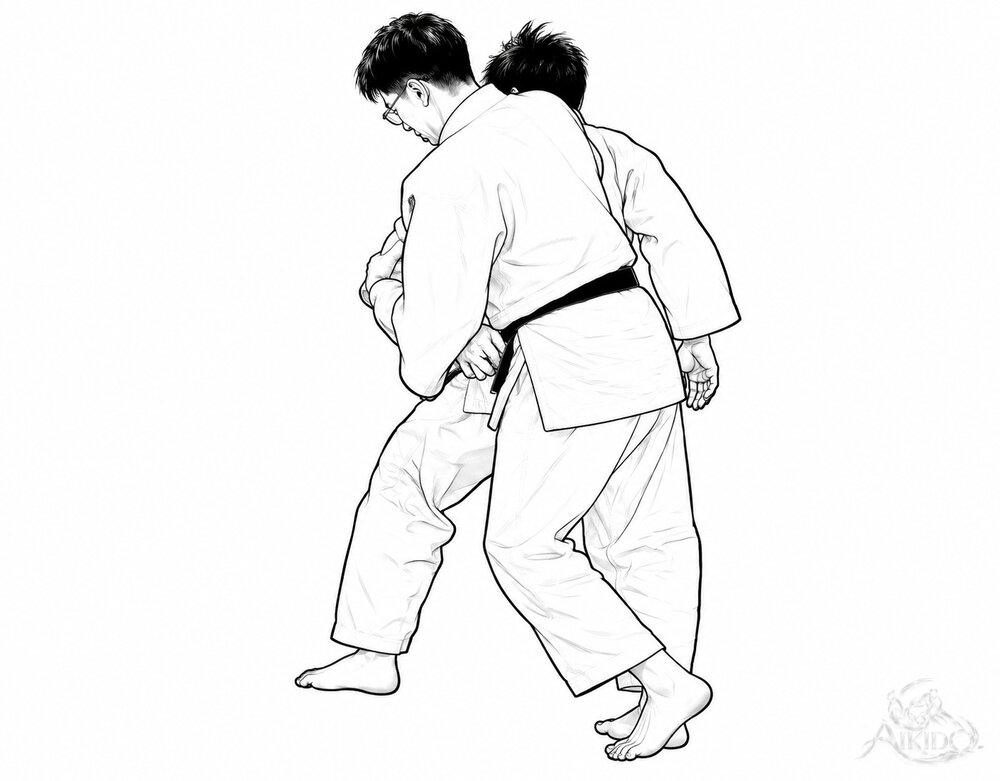
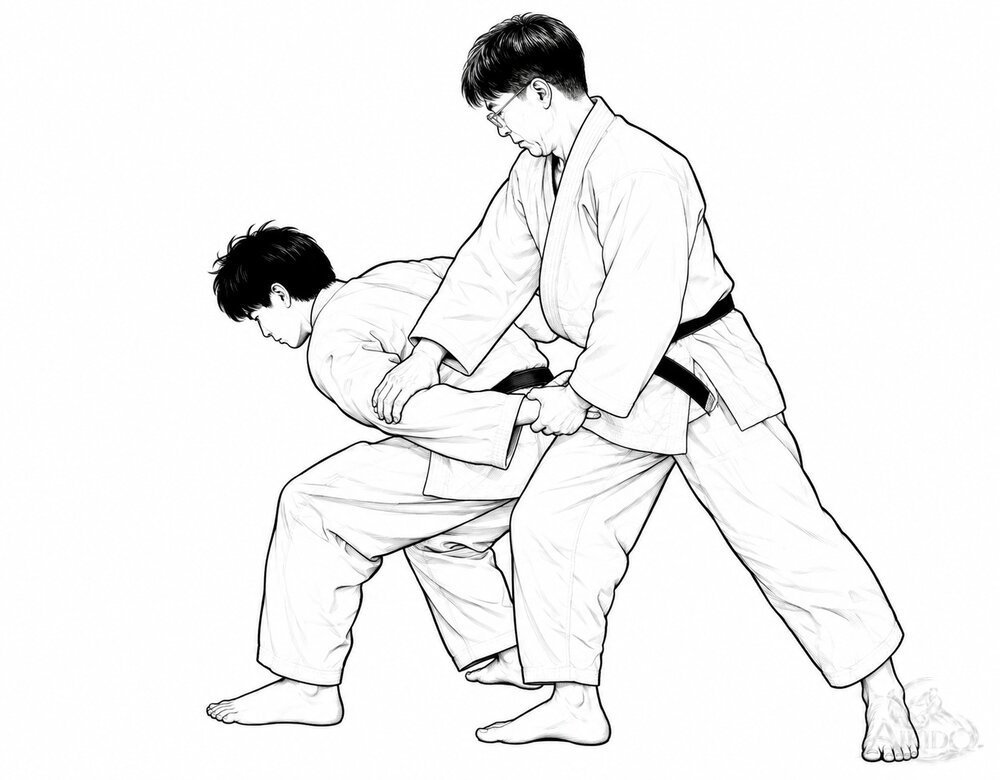
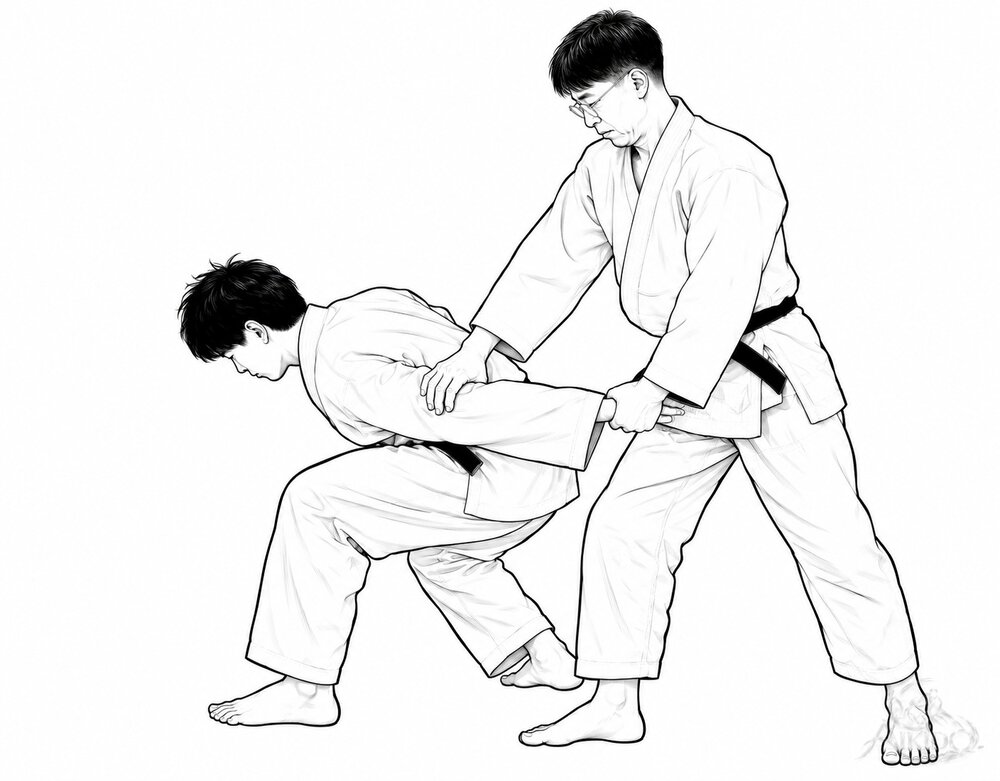
Actual body movement (irimi → tenkan). 1 From ai-hanmi at striking distance, cut up your partner’s tegatana → 2 Pressing your partner’s elbow, step the right foot in with ayumi-ashi (irimi) → 3 Leading your partner, turn on the right foot → 4 Drawing the left foot back, turn 180 degrees (tenkan)
- NG — The upper body collapses: If you bend the upper body forward and collapse your axis, the turn falls apart and your balance becomes unsteady. Keep the upper body upright and be aware of the body’s axis.
- Do not let your hanmi collapse: Keep the hanmi stance from beginning to end. Both when stepping out in ayumi-ashi and after turning 180 degrees in tenkan-ashi, you must always be in hanmi. Take care that hanmi, the starting point of every technique, does not collapse.
Footwork Combination 2 — Ayumi-ashi and Tenkai-ashi
Key point: The footwork combination used in the body movement of shiho-giri (irimi).
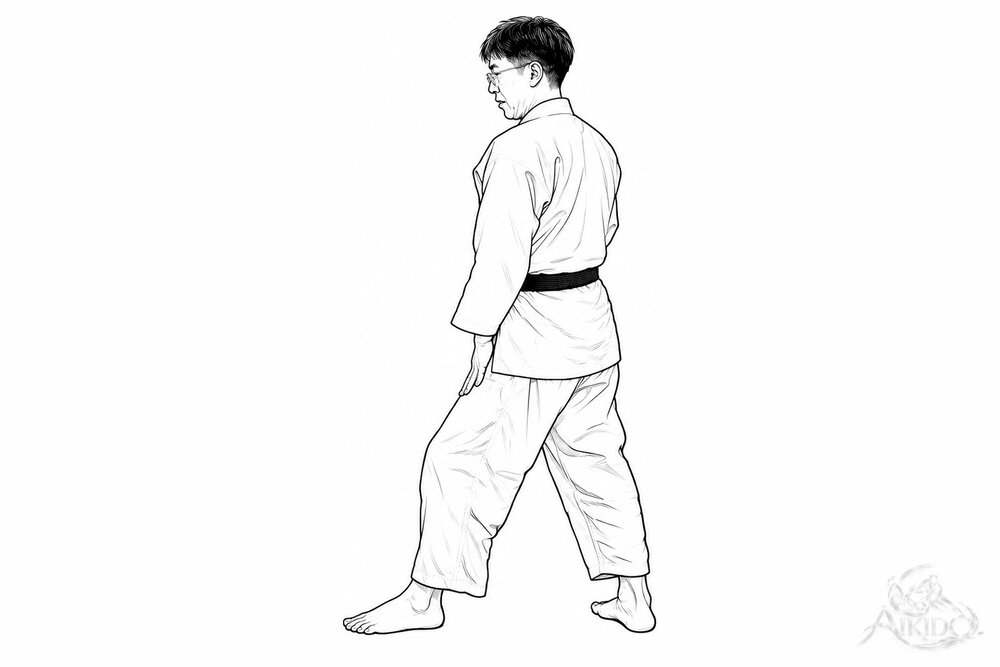
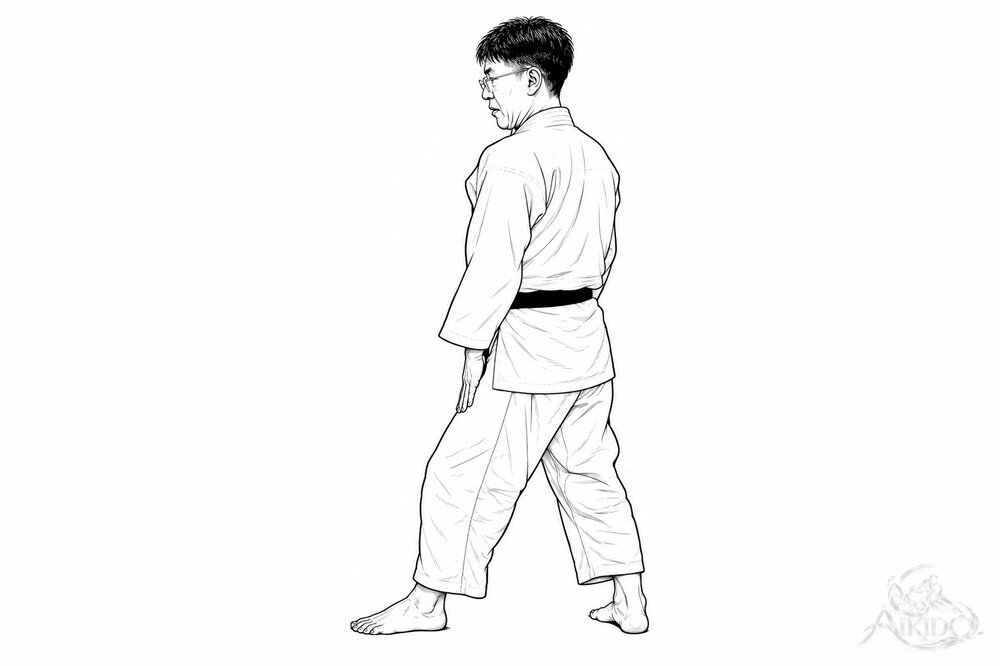
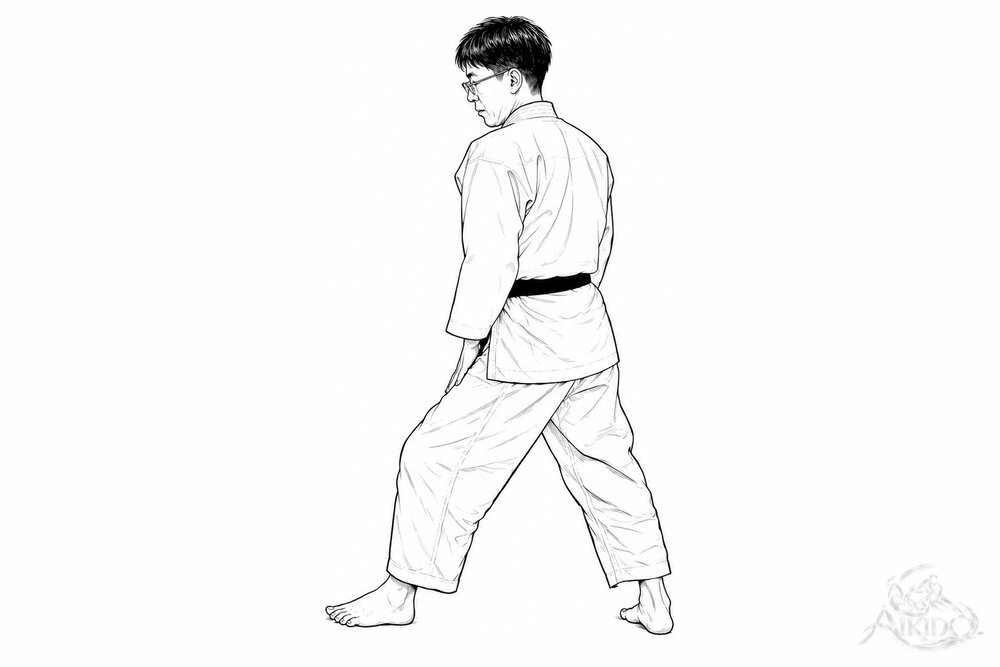
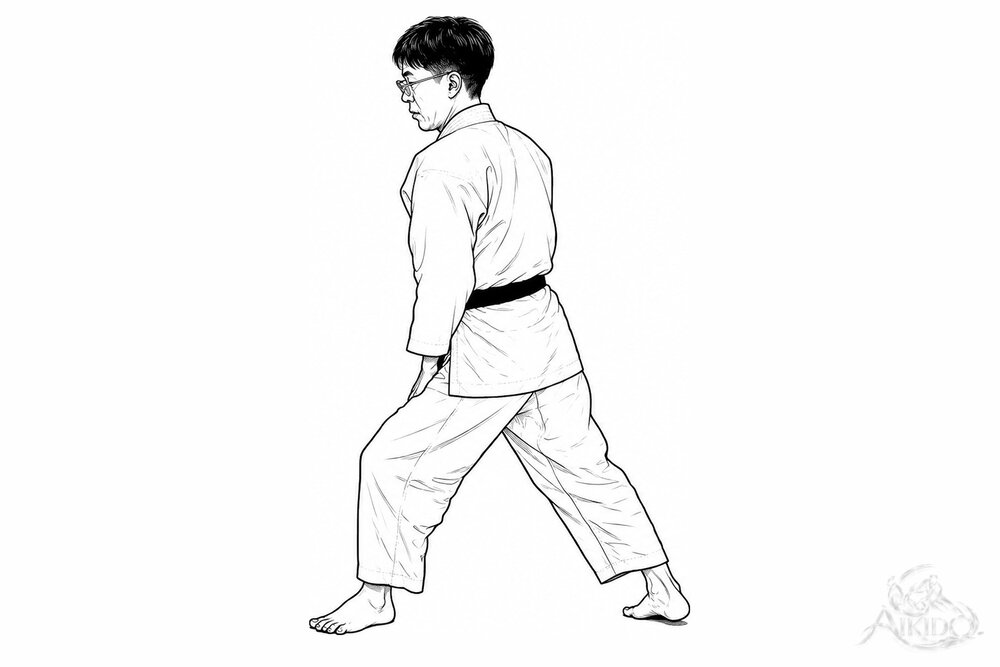
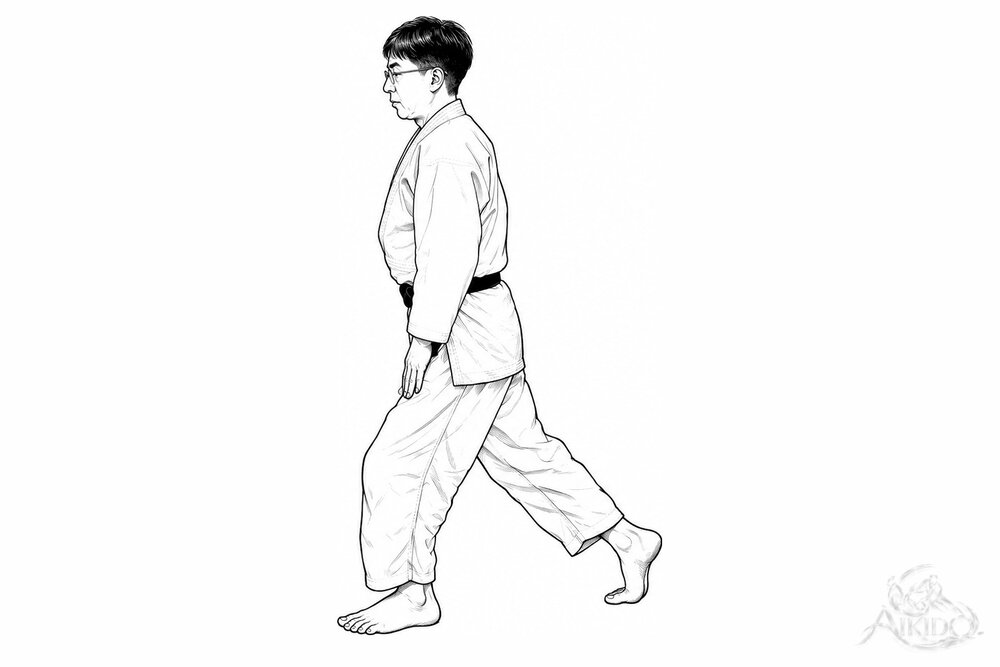
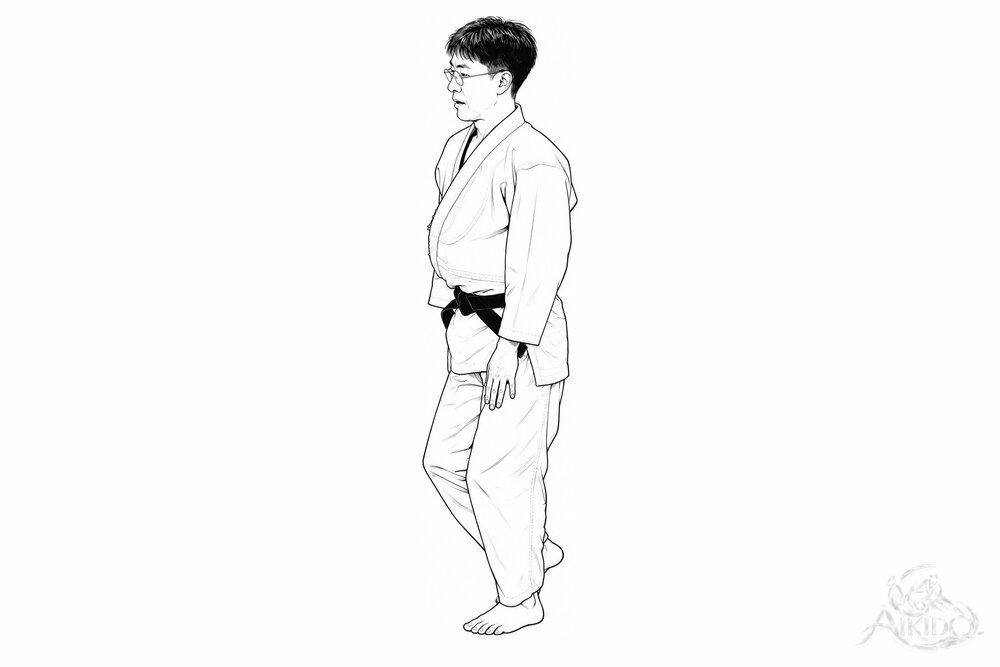
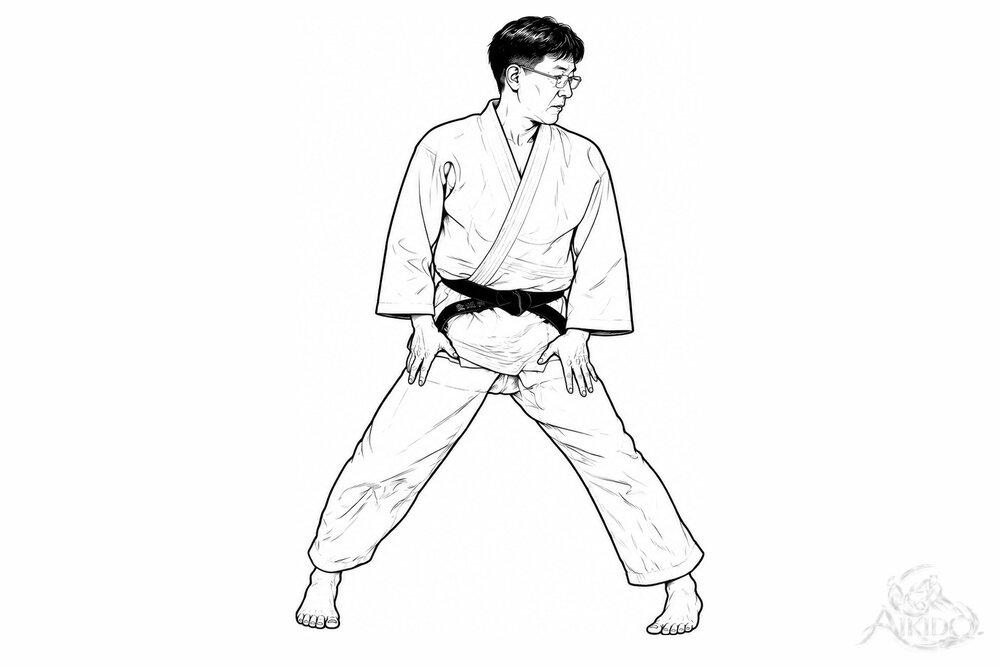
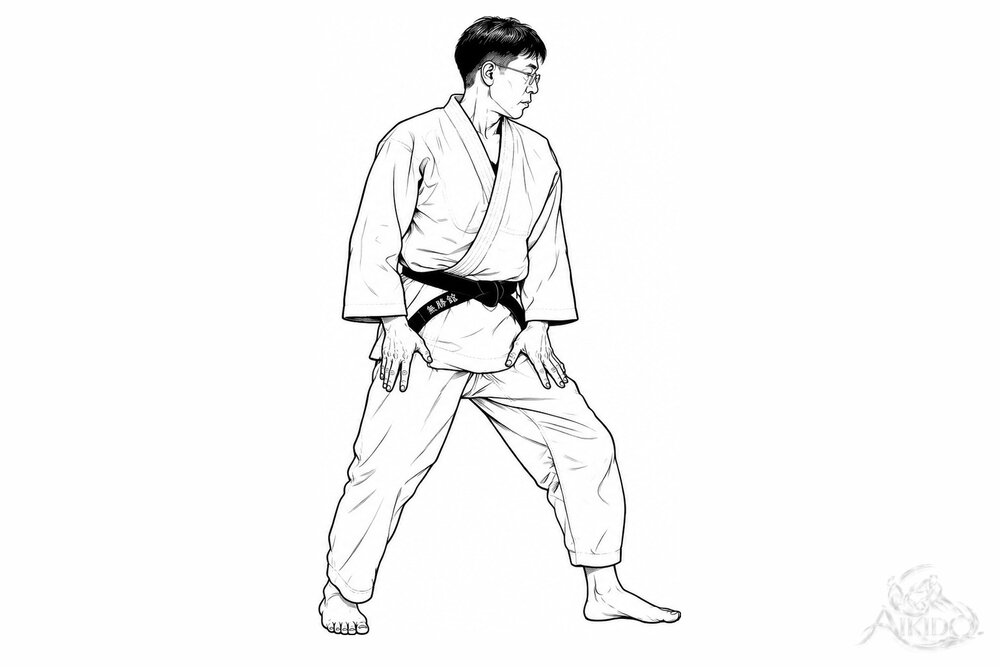
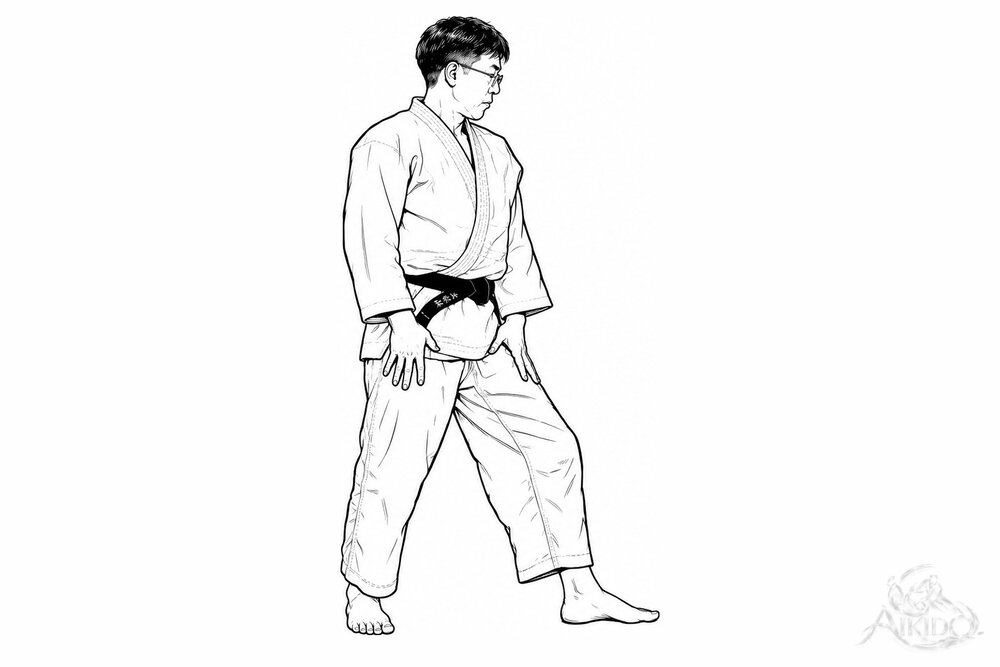
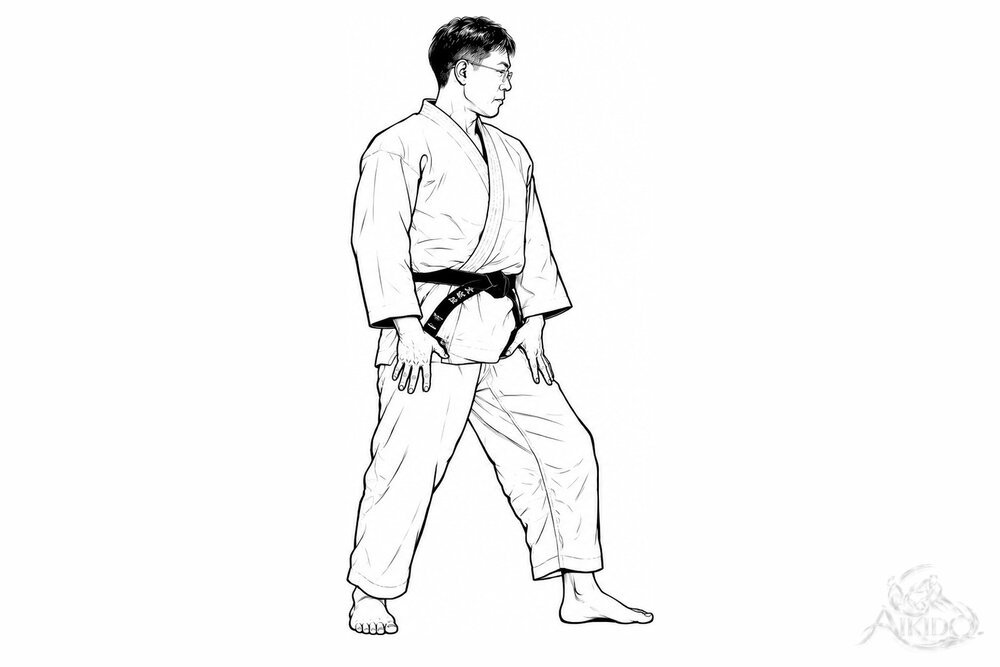
1 Migi hanmi → 2 Step the left foot forward in ayumi-ashi → 3 Turn 180 degrees on both feet in tenkai-ashi → 4 Into migi hanmi
This is the basic footwork combination used in shiho-giri (irimi). In migi hanmi, step the left foot forward in ayumi-ashi (irimi) and move straight into tenkai-ashi. Turn the body 180 degrees on the balls of both big toes to return to migi hanmi. Keep your center between both feet throughout. With your balance stable, change the direction of the body by turning the hips.
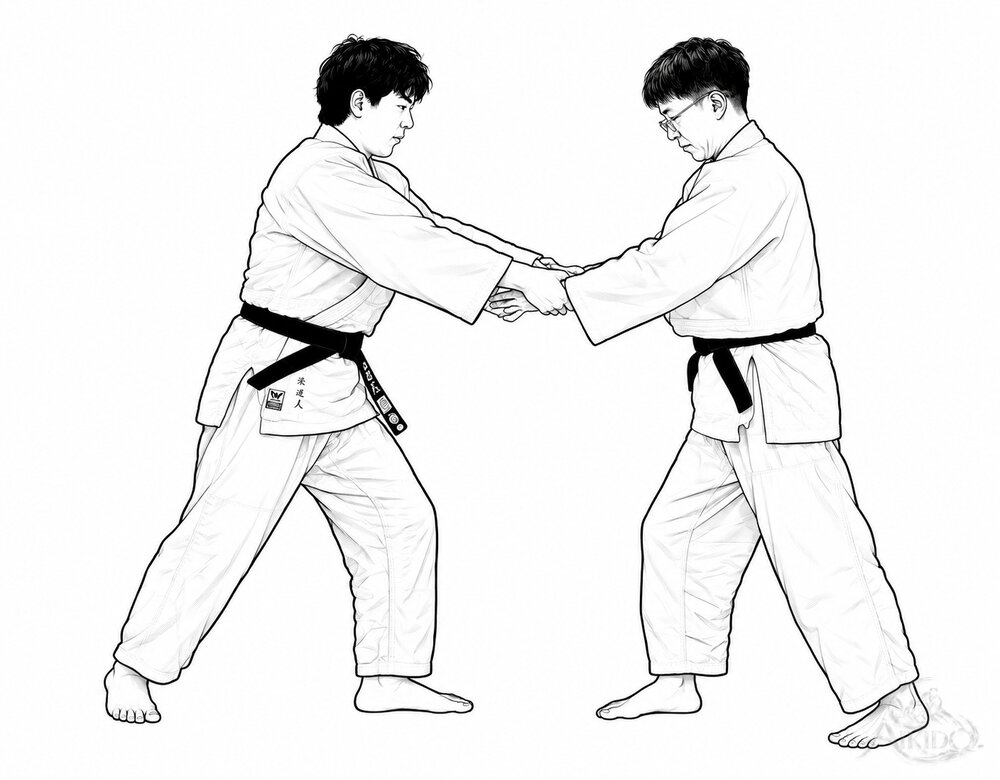
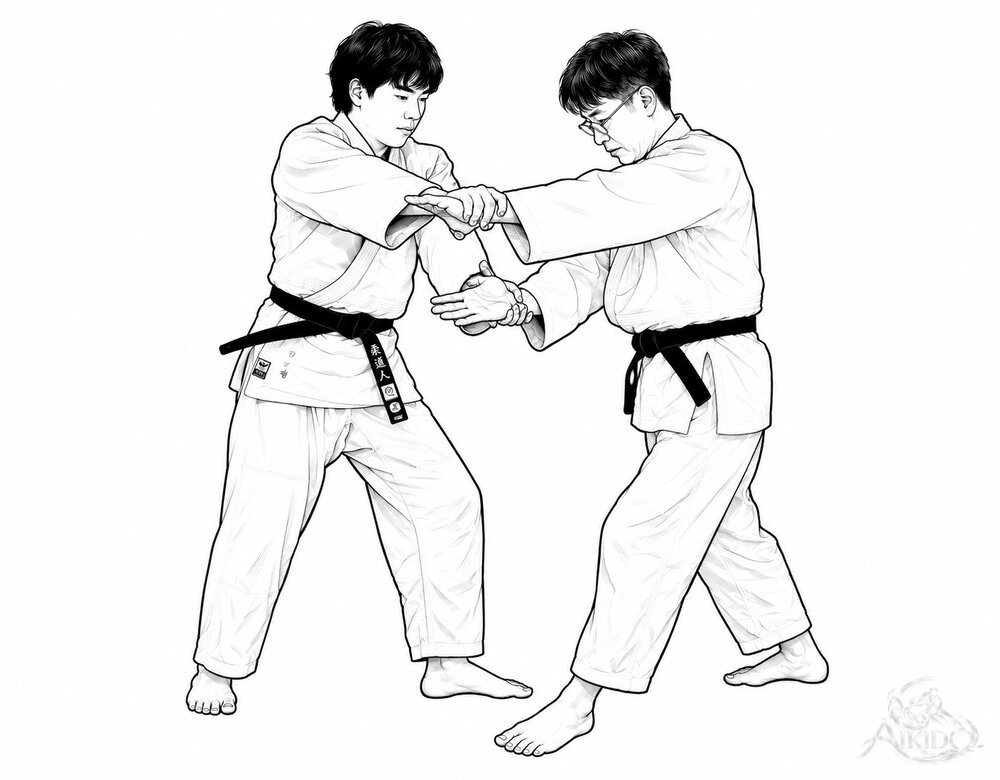
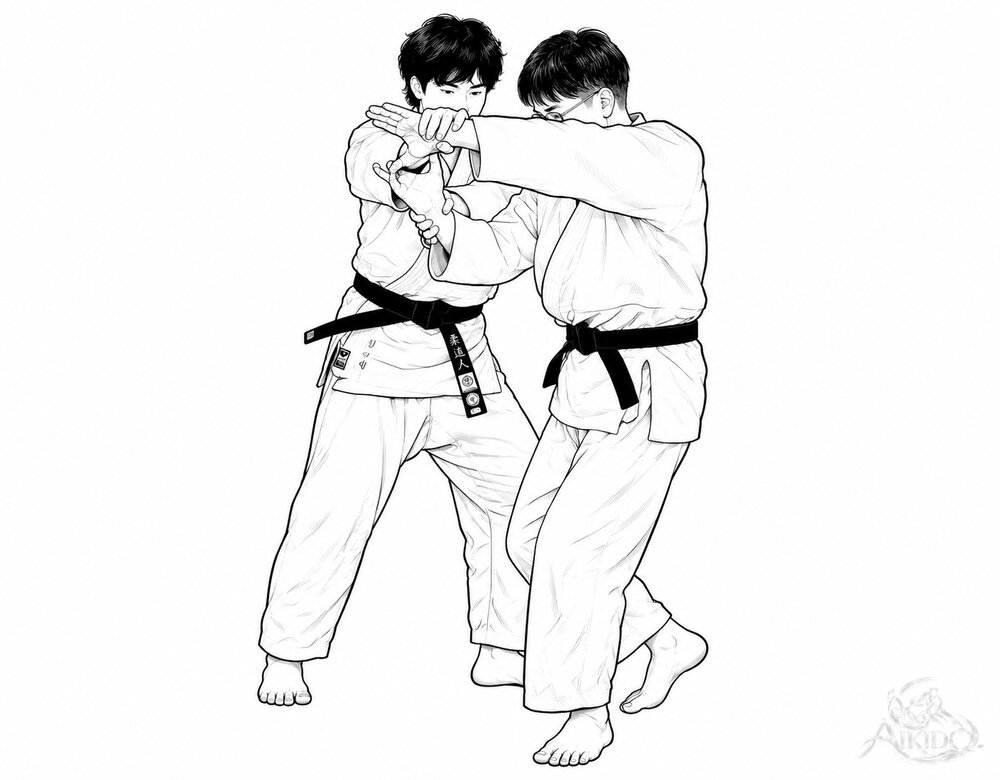
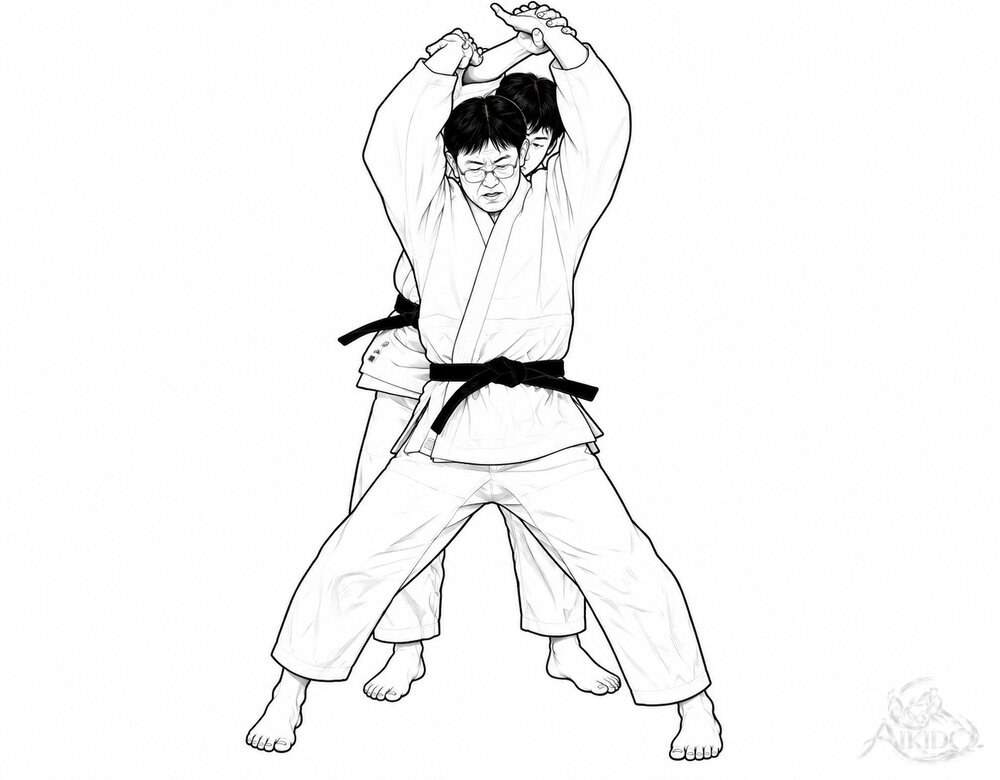
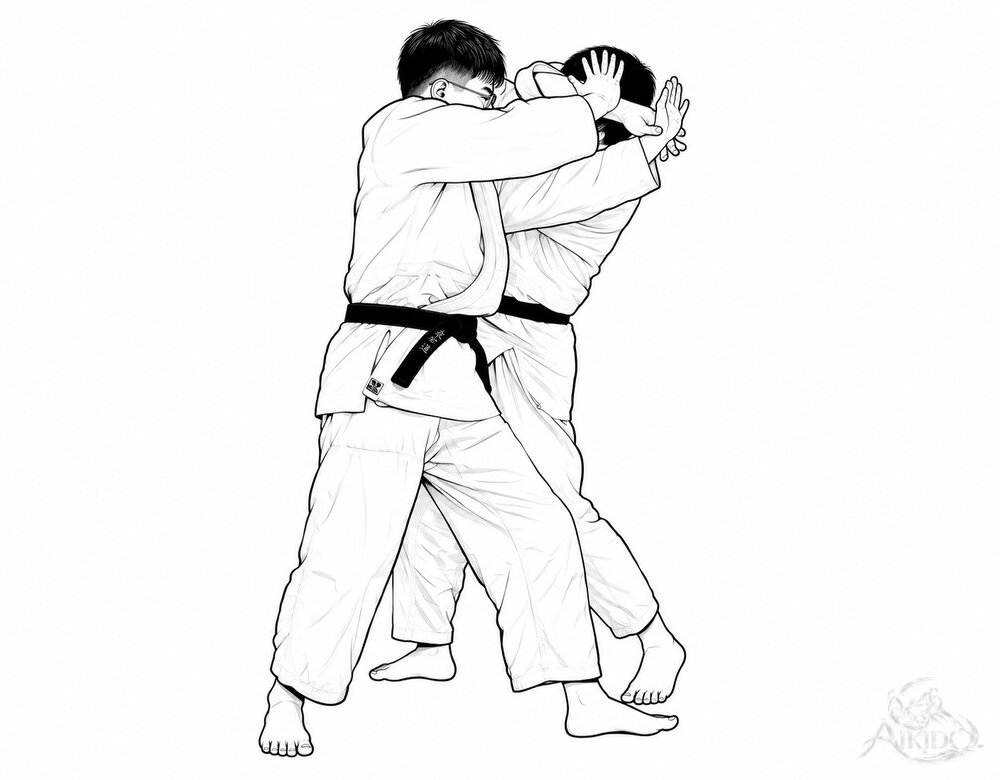
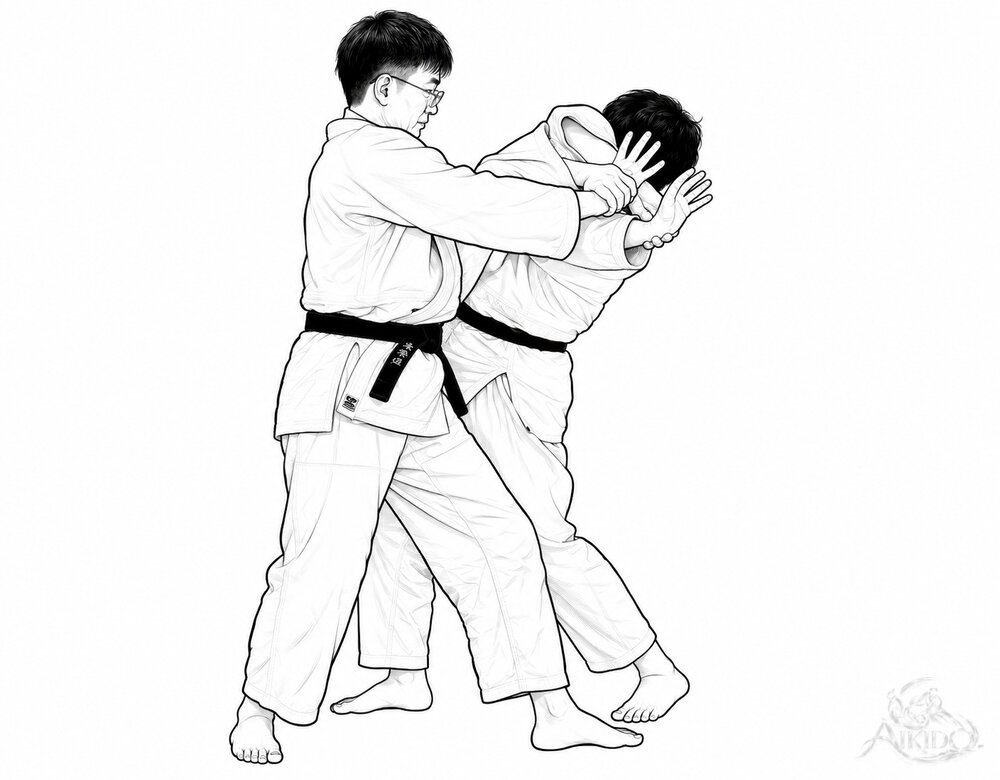
Actual body movement (shiho-giri, irimi). 1 Katate-dori → 2 Leading your partner with the tegatana, step out with the left foot → 3 Turn the body in tenkai-ashi → 4 Cut the tegatana down as you turn 180 degrees
- Match the turn of the hips and feet: The moment you step out with the back foot in ayumi-ashi, turn 180 degrees on both feet in tenkai-ashi. Keeping the feeling of a turn that begins in the feet, match the turning of the hips and the feet.
- Do not let your posture collapse: Always keep your center between both feet, in other words in the middle of the body. Keep the upper body upright and the body’s axis steady.
Footwork Combination 3 — Tenkan-ashi and Tenkai-ashi
Key point: The footwork combination used in the body movement of shiho-giri (tenkan).
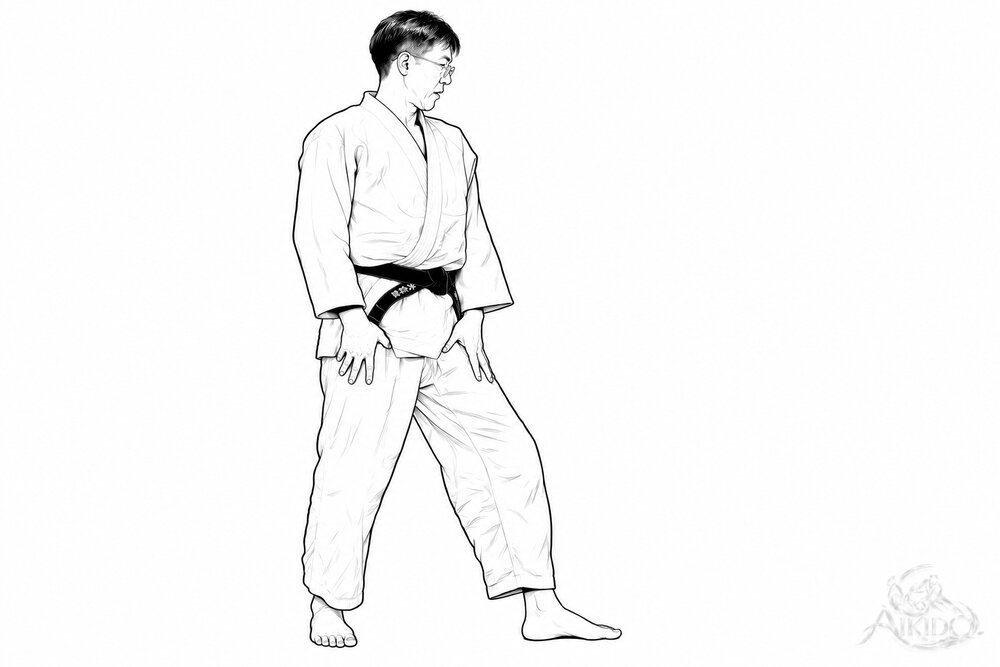
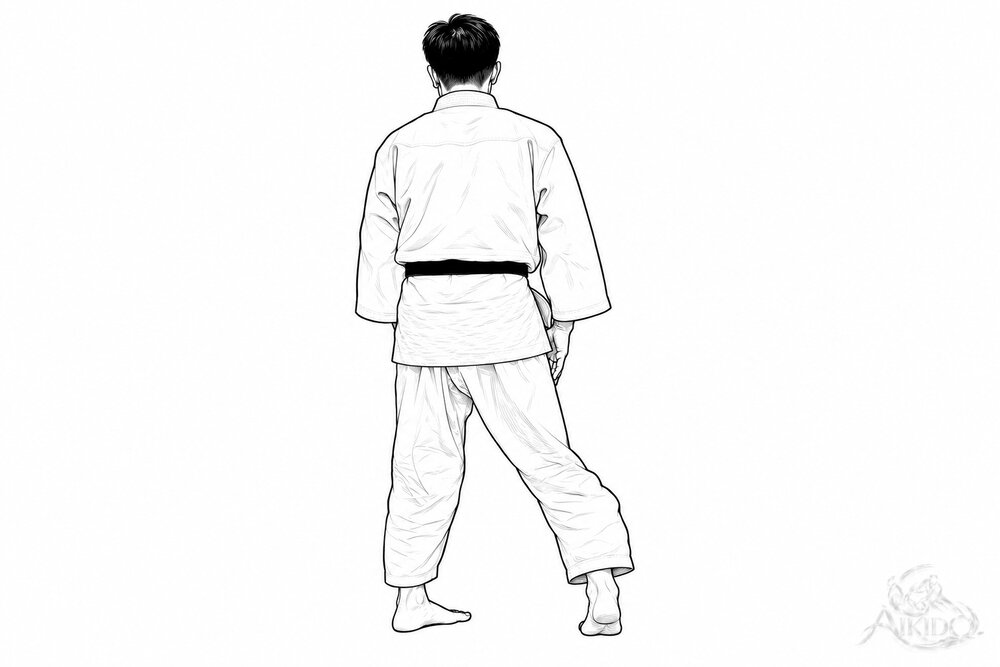
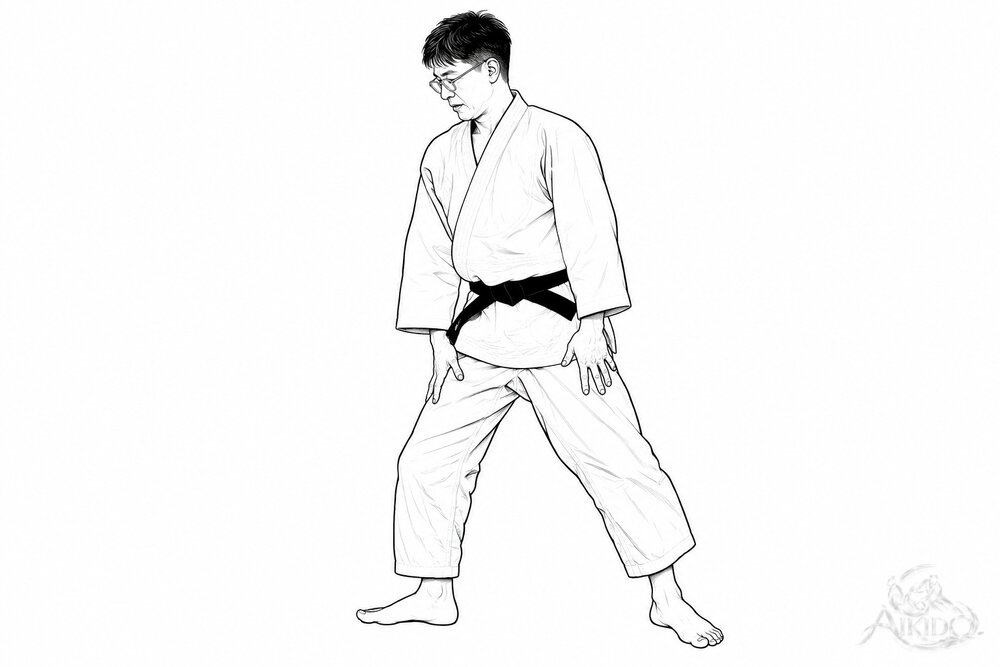
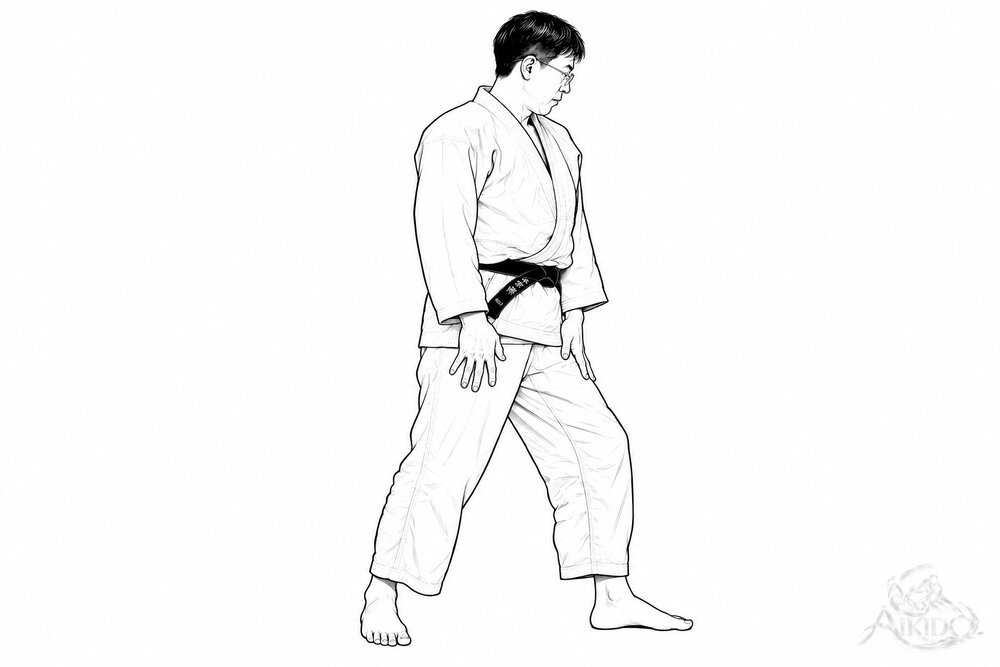
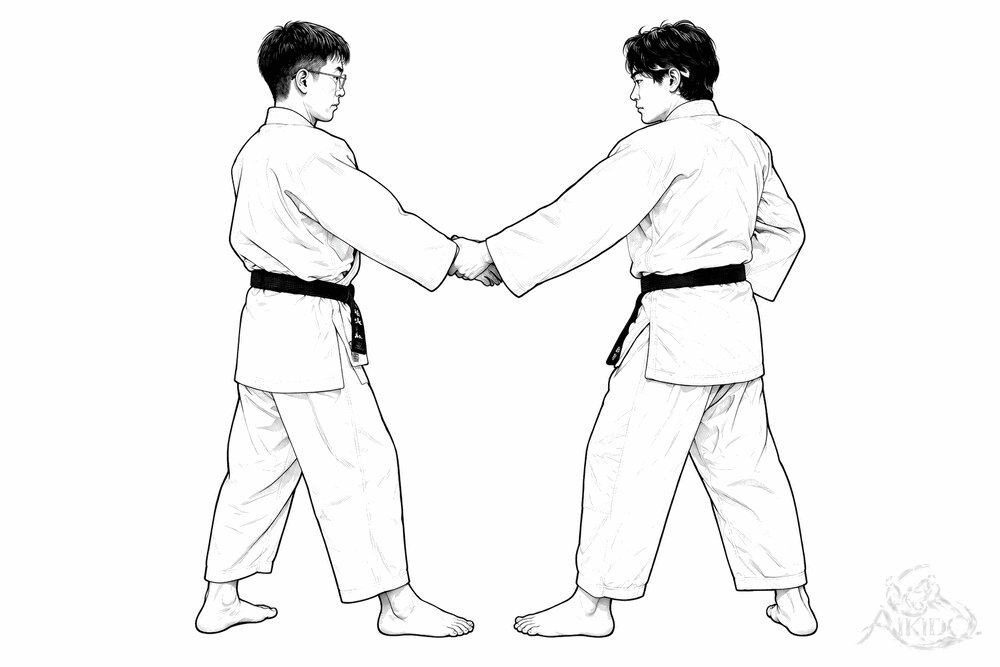
This is the footwork combination used in shiho-giri (tenkan). In migi hanmi, turn 180 degrees on the right foot in tenkan-ashi. At this point you are in migi hanmi. From here, turn another 180 degrees in tenkai-ashi to end in hidari hanmi. In effect you turn 360 degrees while moving one step and change your hanmi. Matching the movement of the upper body to this gives the body movement of shiho-giri (tenkan).
- Keep the body’s axis from wobbling: This combination turns the body 180 degrees twice in a row. To do it smoothly you must hold your axis firmly. A stable turn is the secret of success.
- Move the feet by turning the hips: In both tenkan-ashi and tenkai-ashi, the key is the feeling of moving the feet by turning the hips. If you are always aware of moving from the hips first, your balance becomes stable.
Grabbing 1 — Katate-dori (片手取り)
Key point: In aikido, the skill of uke, who receives the technique, also plays an important role.
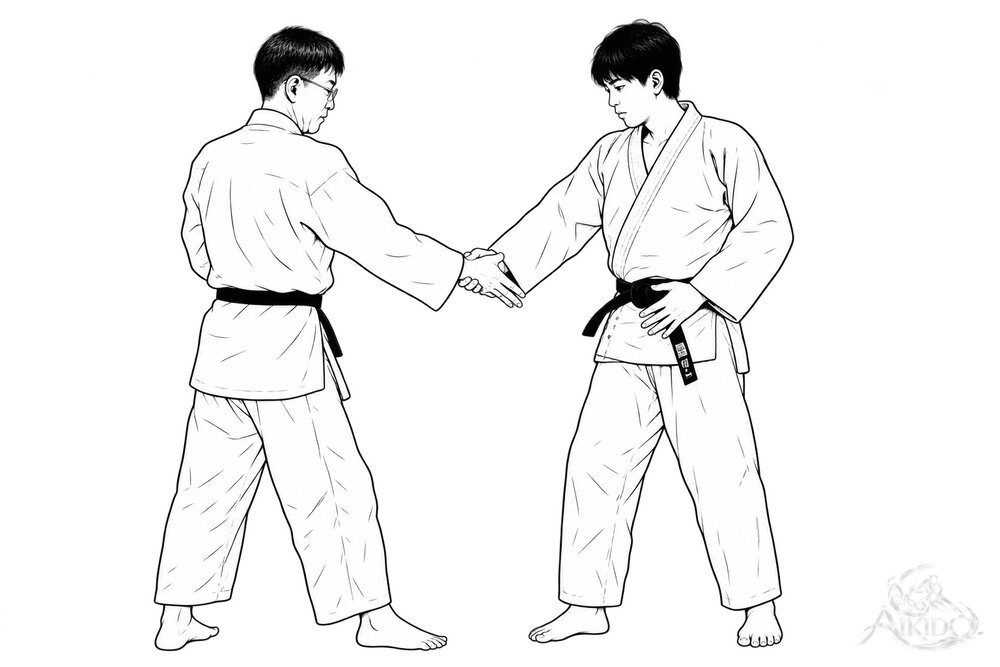
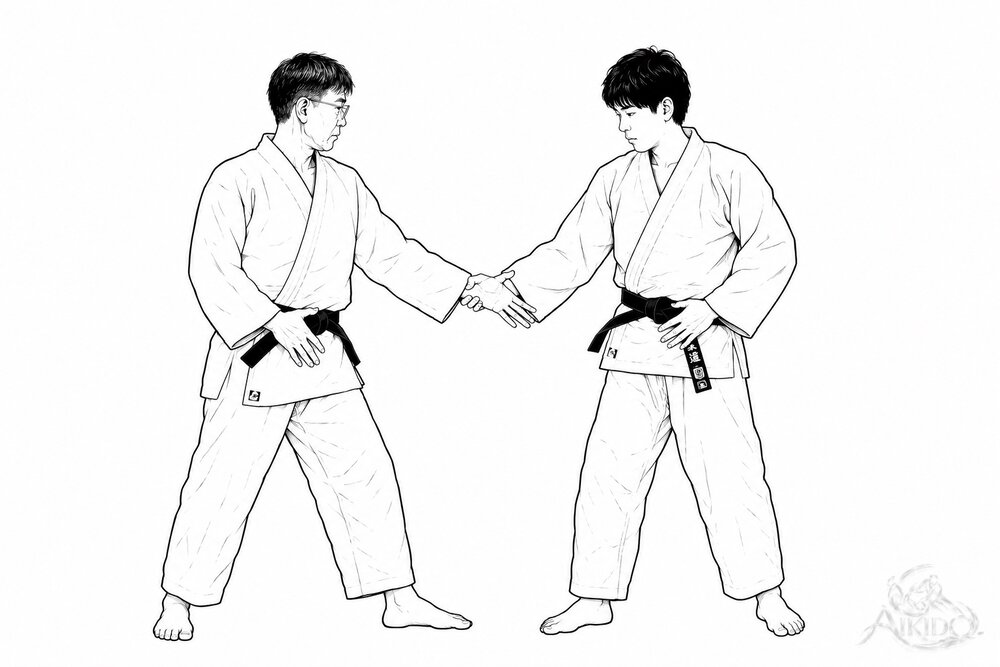
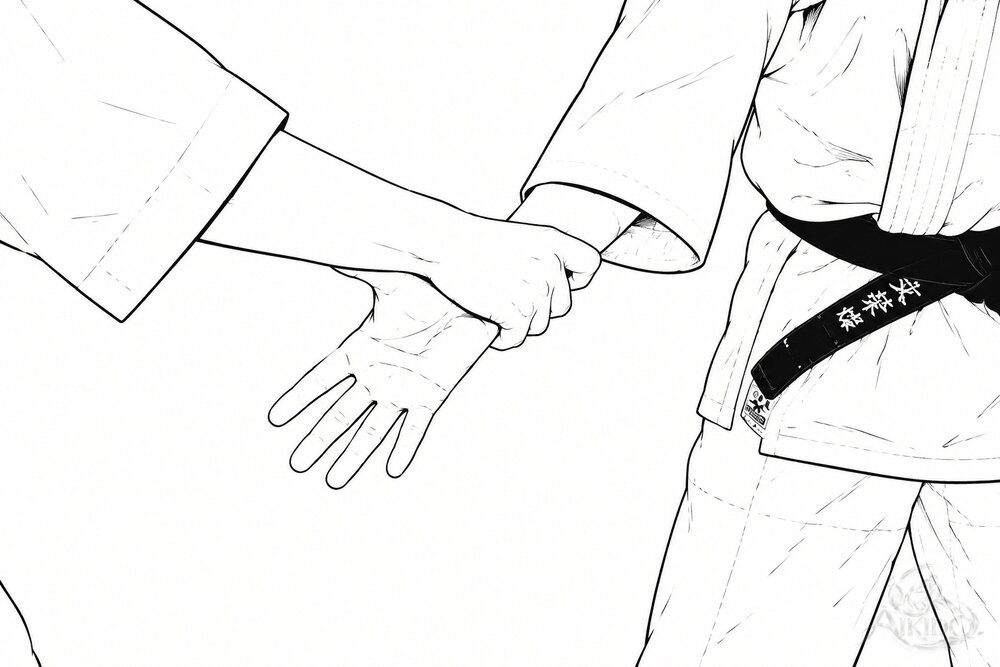
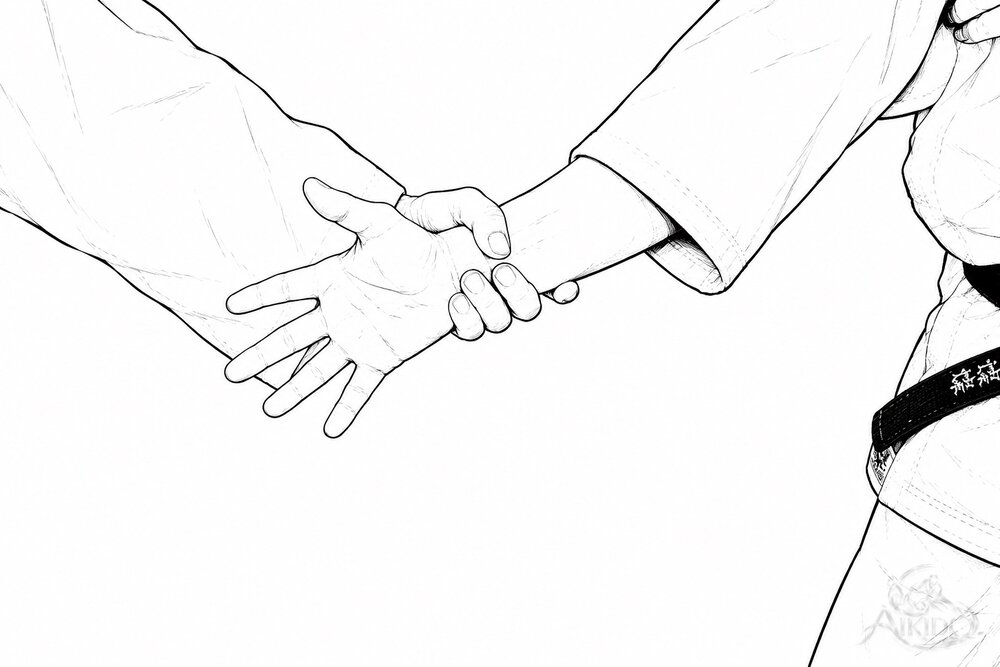
Left: ai-hanmi katate-dori. Right: gyaku-hanmi katate-dori
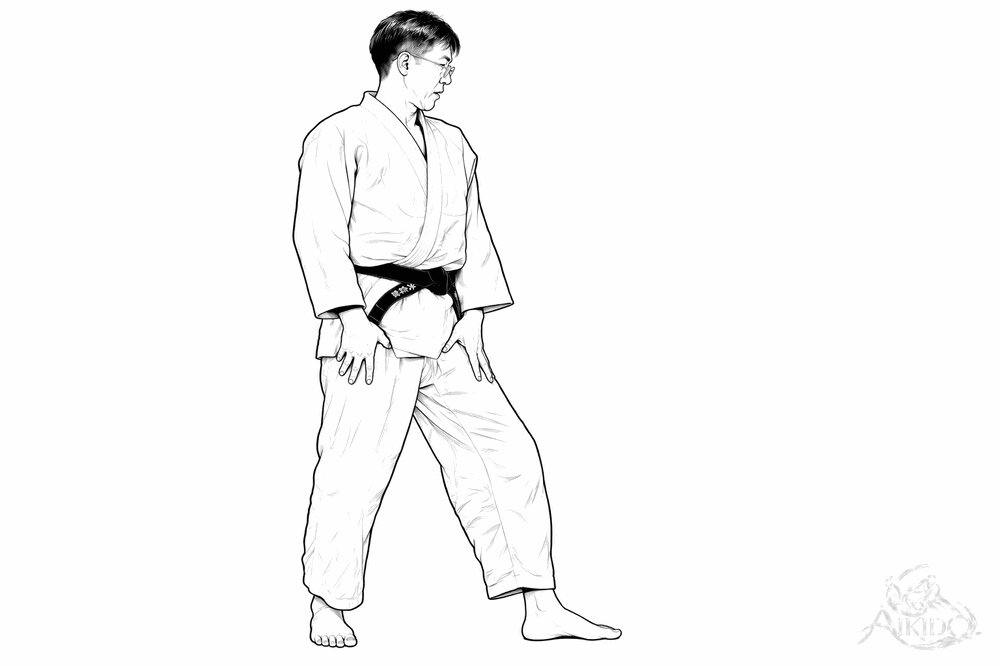
In aikido, tori (取り), who applies the technique, and uke (受け), who receives it, take turns in each role and polish each other’s technique. It is not enough to apply techniques; you must also learn correctly the skills of the receiving side so that your partner’s technique can improve. Katate-dori, grabbing your partner’s wrist with one hand, is one of the basic grabs in aikido. The way into a technique differs depending on whether you are in ai-hanmi (相半身) or gyaku-hanmi (逆半身), so learn both thoroughly.
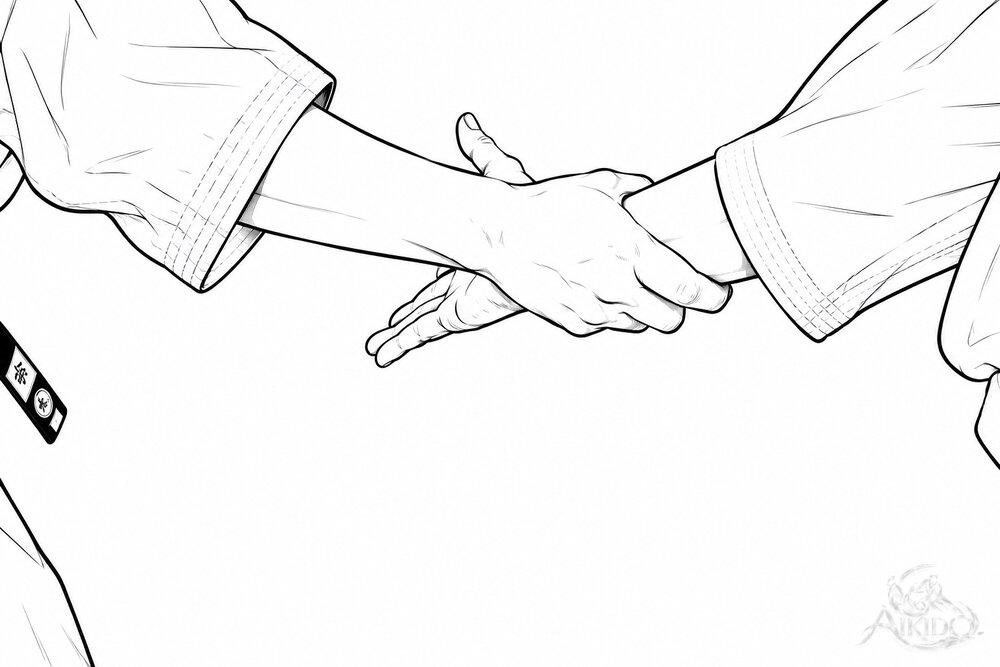
- Grab as if wrapping: When you grab your partner’s wrist, it is important first to take hold as if wrapping it. Let no gap form between your partner’s wrist and your palm, and tighten firmly from the little finger.
- Grip from the little finger: Close from the little finger, and tighten the thumb and little finger firmly. Holding this way lets you respond flexibly to any movement. If you put too much strength into all five fingers, the hand stiffens and actually slips off more easily.
Grabbing 2 — Ryote-dori (両手取り)
Key point: With the hips engaged and a correct posture, grab both of your partner’s wrists with both hands.
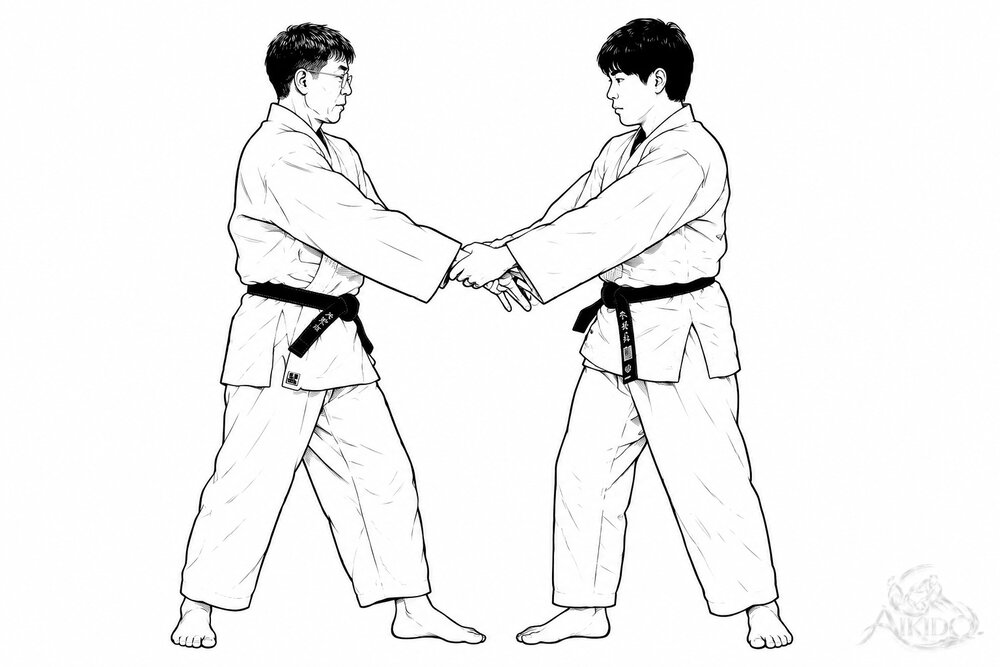
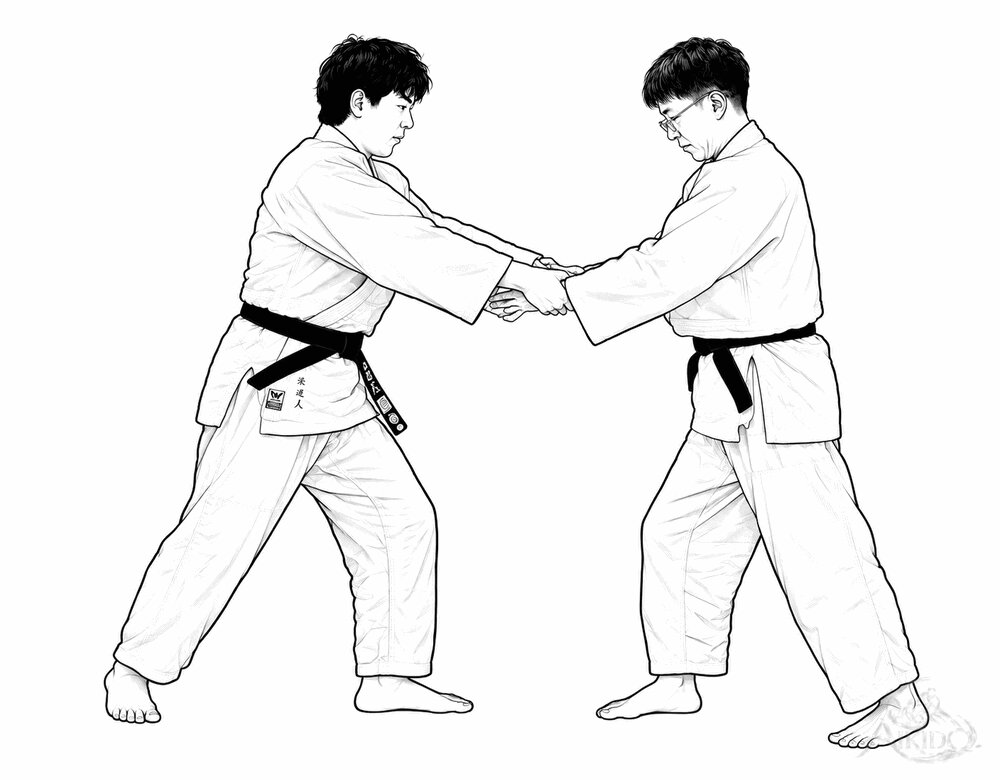
Like katate-dori, ryote-dori is a basic grab. Grab each of your partner’s wrists with each of your hands. Grip evenly on left and right so that strength does not lean into either hand; do not straighten the elbows too much or bend the upper body, and grab with the hips engaged in a correct posture. On both sides, tighten the thumb and little finger firmly and grip as if wrapping.
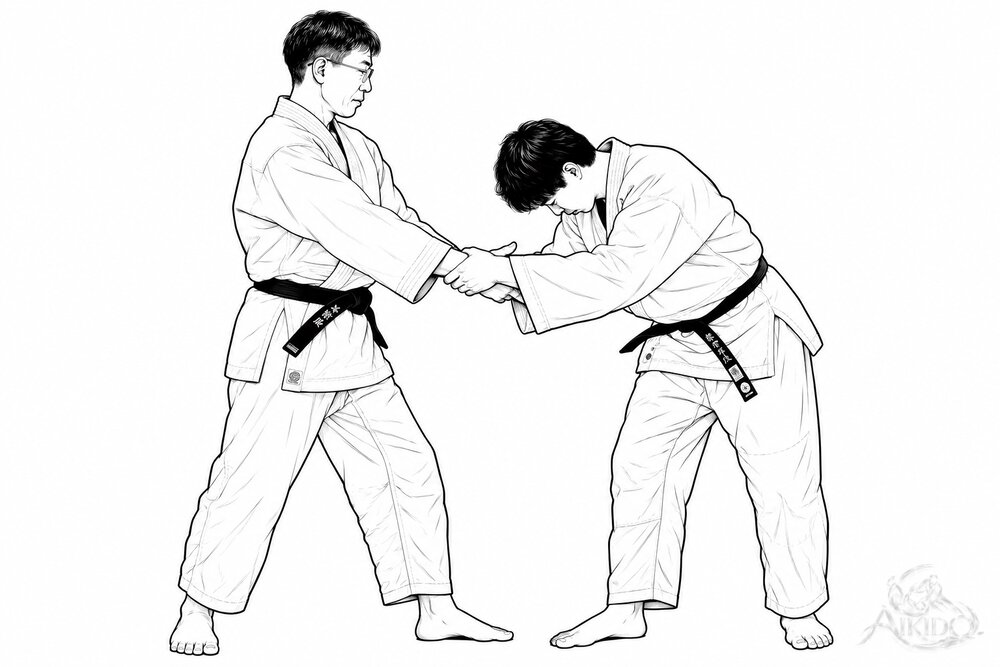
- Equal strength on both sides: If strength leans to one side, your posture collapses. Training in a poor posture does not improve your skill and helps neither you nor your partner. Let go of unnecessary strength and grab naturally.
- NG — Do not bend the upper body: Ryote-dori is usually done by entering from issoku no maai (一足の間合い), the distance you can cover in one step. If you are so intent on grabbing your partner’s wrists that your step in is too shallow, your upper body tends to lean forward. Then you cannot use the power of your lower body and end up relying on arm strength. Do not look only at the hands; keep the upper body upright and grab while looking at your whole partner.
- Grab with the power of the hips: The ideal is the feeling of grabbing with the power of the hips. Kokyu-ryoku (呼吸力, breath power), the power of aikido, is produced by the whole body, and conveying that power well to the upper body is the key to every technique. Point your navel at the center of your partner’s body and grab with the hips engaged in a correct posture.
Grabbing 3 — Morote-dori (諸手取り)
Key point: Grab one of your partner’s wrists with both hands, as if sandwiching it from above and below.
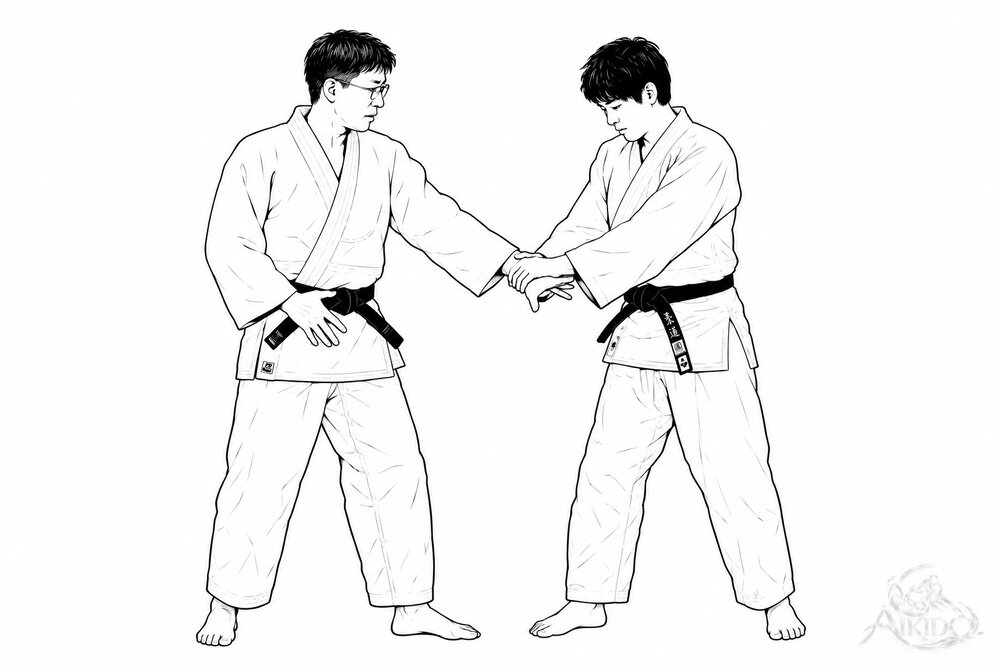
Morote-dori is a grab in which you hold one of your partner’s arms, left or right, with both hands as if sandwiching it from above and below. With one hand, take your partner’s wrist from above; with the other, take the arm just above it from below. Do not clutch your partner’s hand; put strength into the little and ring fingers so that you can respond flexibly to movement. Keep the armpits closed and the hips engaged in a correct posture, and grab with the power of the whole body, not arm strength.
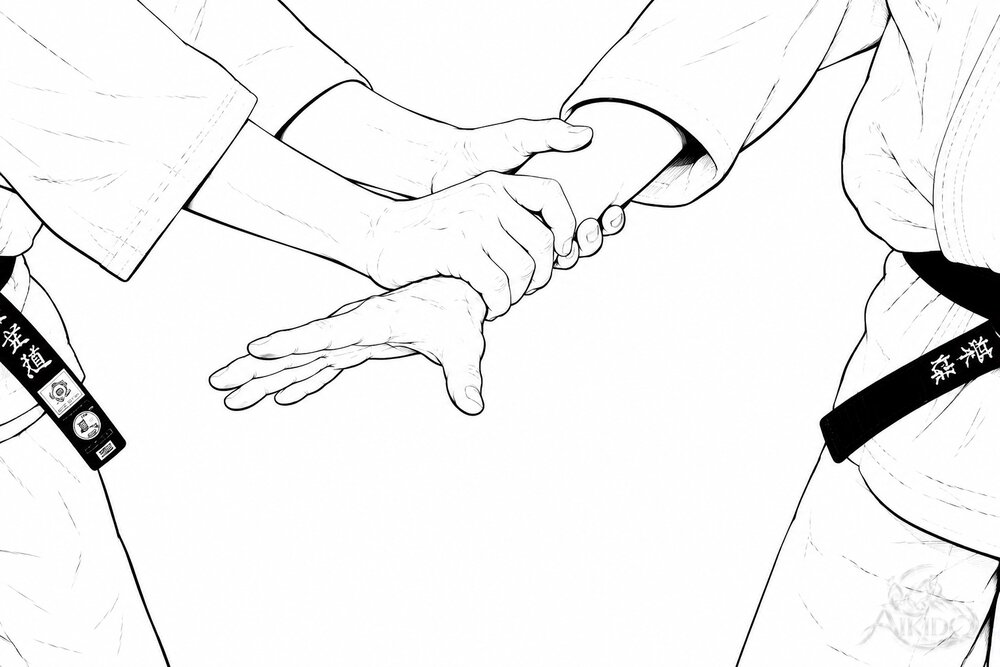
- NG — Do not straighten both elbows too much: If you straighten the elbows too much, your whole body stiffens and you lean your weight on your partner, so you cannot keep your center. Only with some give in the elbows can you grab properly.
- As if sandwiching from above and below: Do not press hard with all ten fingers; put strength in the little and ring fingers and leave the index-finger side relaxed. Gripping softly in this way actually makes your hold harder to slip.
- Close the armpits and grab with the hips: Close the armpits so that the body’s power does not leak, and engage the hips. Stabilize the lower body with your center between both feet, then grab with the power of the whole body.
Striking 1 — Shomen-uchi (正面打ち)
Key point: Raise the tegatana straight up and bring it down aiming at your partner’s forehead.
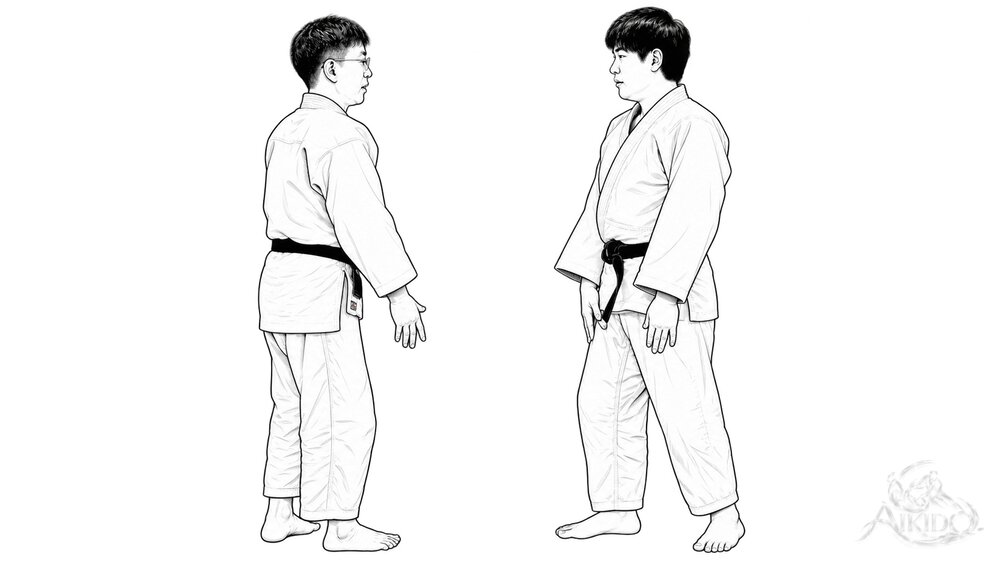
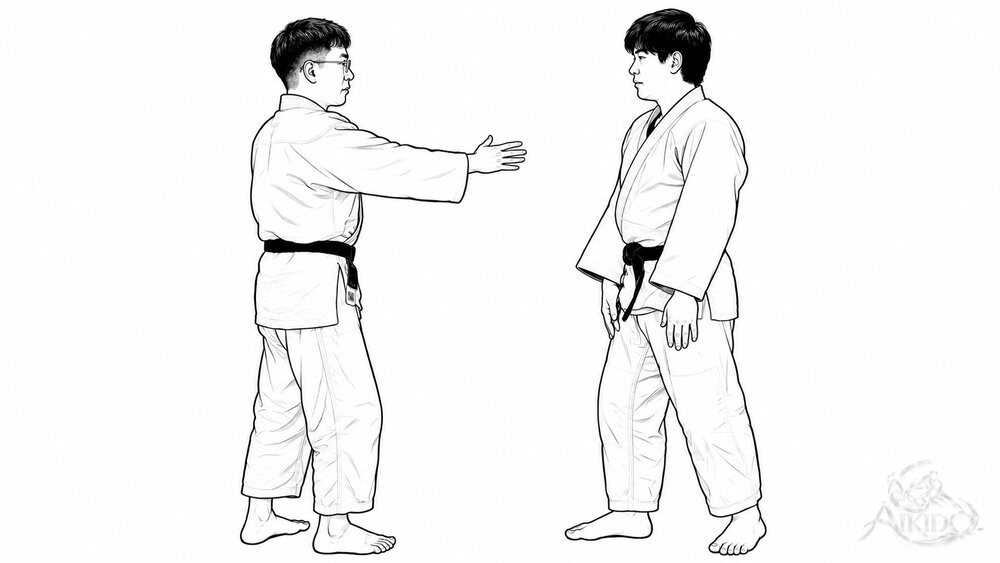
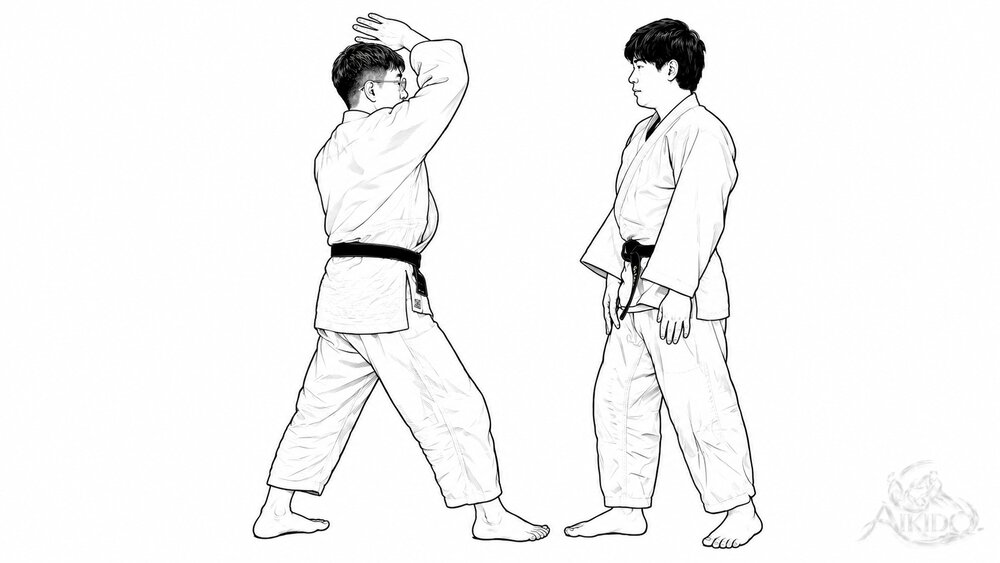
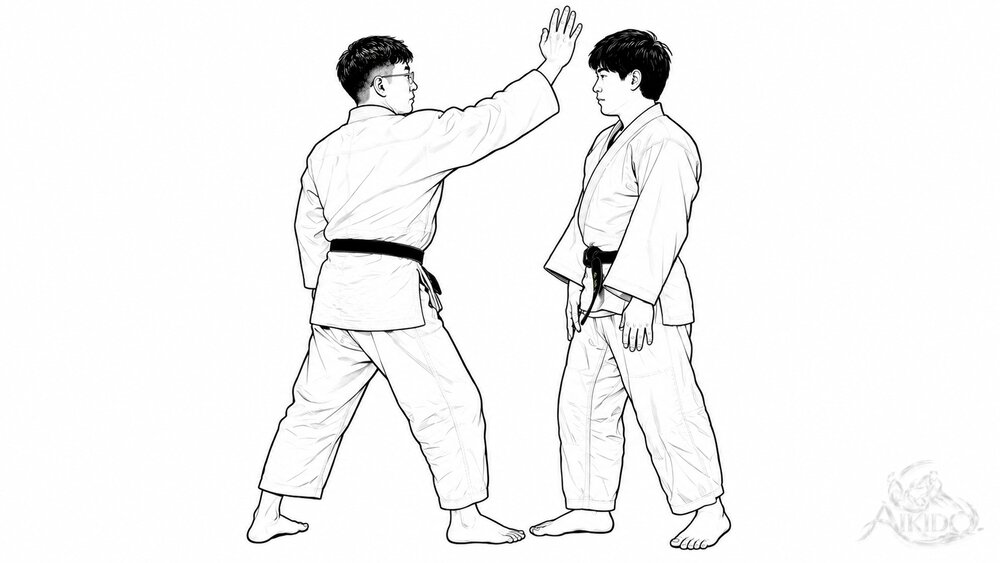
Striking is one of the basics uke needs. Shomen-uchi can be delivered from various distances, but at first it is easiest to practice at issoku no maai, the distance at which one step brings you to your partner. Raise the tegatana straight up and take a large step in with okuri-ashi toward the center of your partner’s body. As you quickly draw the back foot in, bring the raised tegatana straight down toward your partner’s forehead. The path of the tegatana follows the center line of your body, and you strike with the hips engaged in a correct posture.
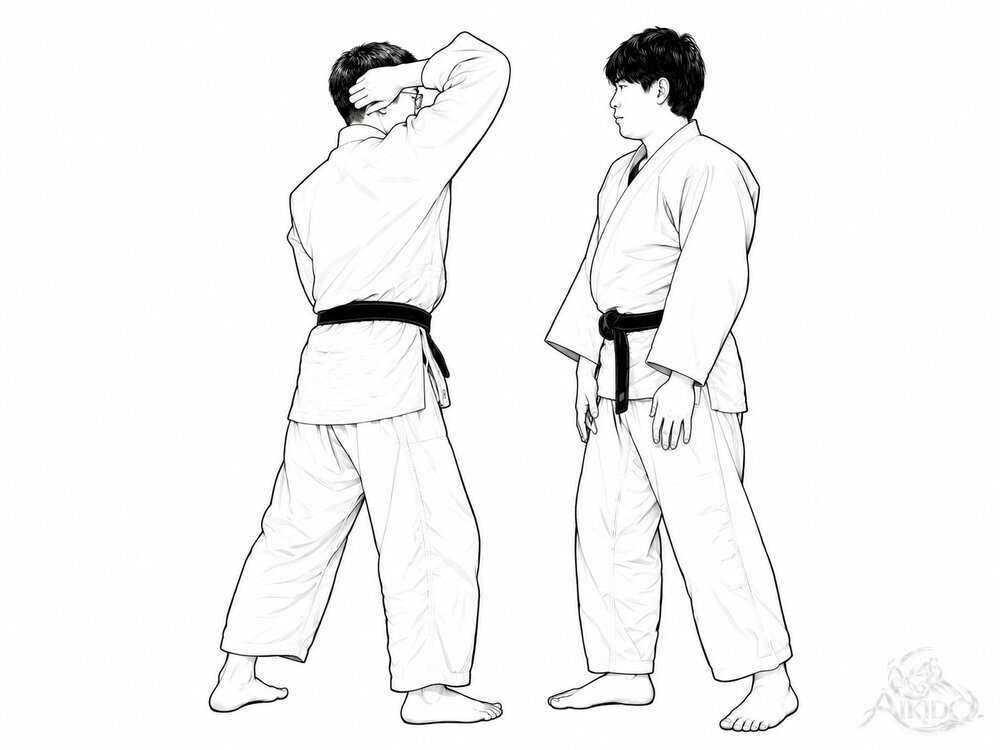
- Start at a close distance: As the basis of striking, first practice at a close distance. Then gradually increase the distance so that you can strike correctly from issoku no maai.
- NG — Do not bend the elbow too much: Raise the tegatana straight up along the center of the body. Do not bend the elbow too much as you do so. Rather than pulling it back behind you, raise it with the feeling of lifting it over the center of your own head.
- Raise it straight and strike: Shomen-uchi aims at your partner’s center line (seichusen, 正中線). So the one striking must also raise and lower the tegatana straight along the center of their own body. If it strays from this path, it misses the front of the head and becomes an incorrect strike.
Striking 2 — Yokomen-uchi (横面打ち)
Key point: Bring the tegatana down at an angle, aiming at your partner’s temple.
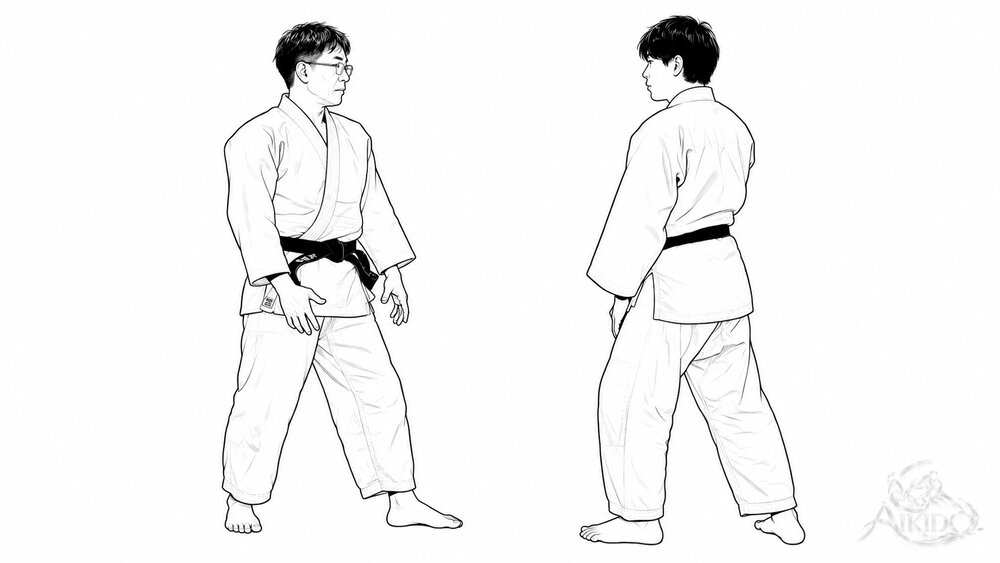
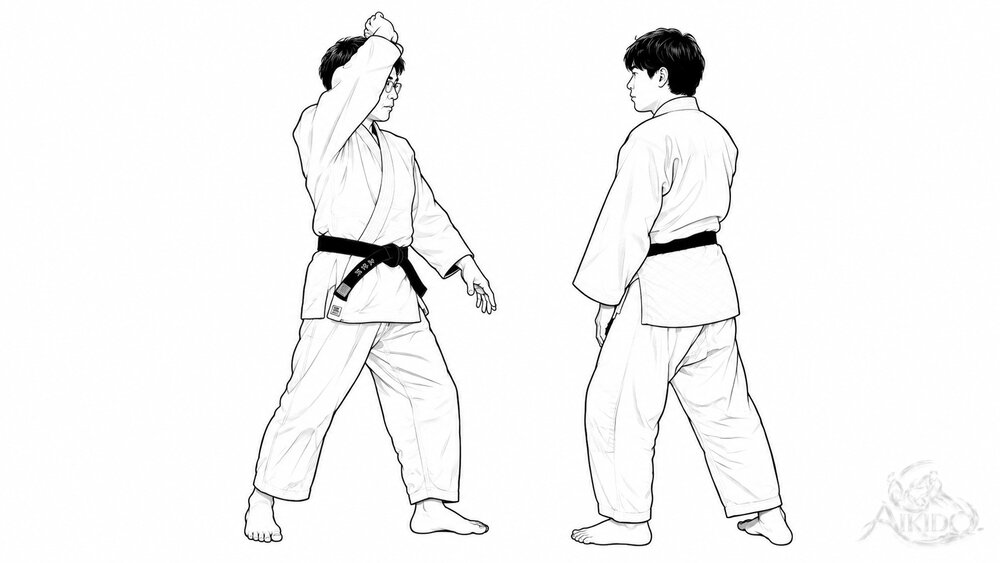
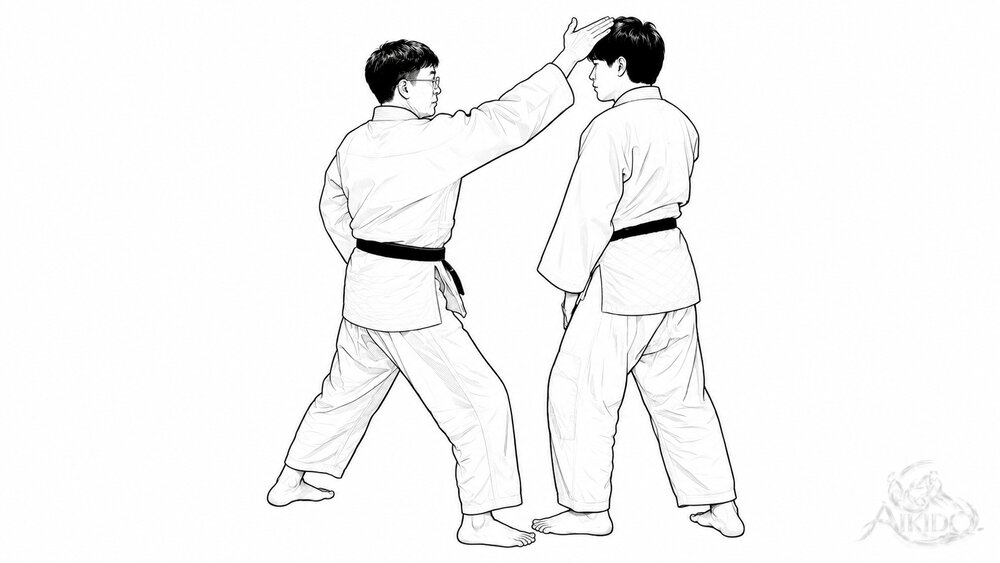
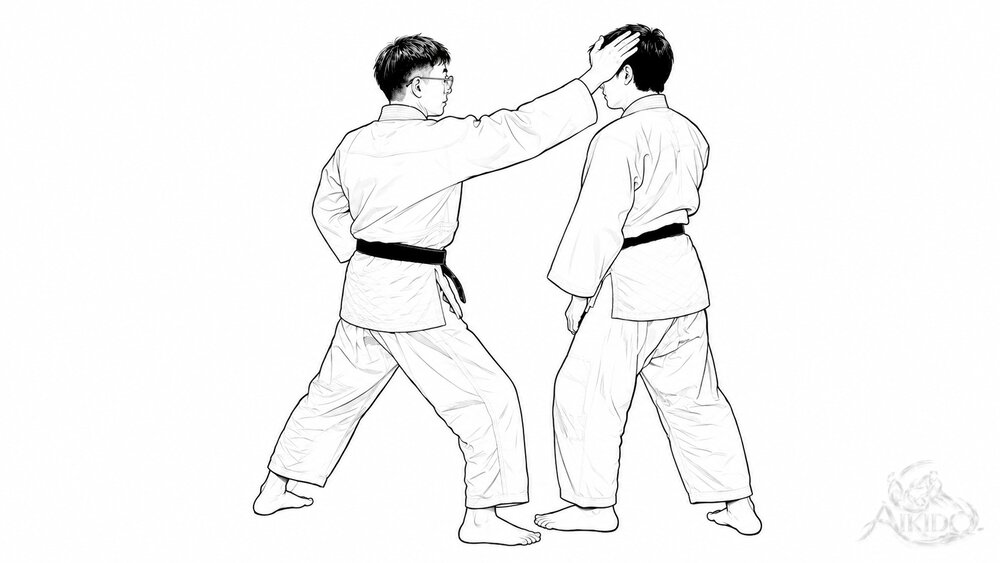
Unlike shomen-uchi, which enters to the center of your partner’s body and strikes the forehead, yokomen-uchi enters to the outside of your partner’s body and brings the tegatana down at an angle, aiming at the temple. From issoku no maai, take a large step with the back foot to the outside of your partner’s front foot in ayumi-ashi, and strike down on a diagonal path. Point your navel at the center of your partner’s body, and keep a correct posture with the hips firmly engaged. Be careful not to strike with the fingertips alone; strike sharply with the feeling of cutting diagonally at the temple.
- Enter outside your partner’s front foot: Where you enter is the key to yokomen-uchi. Enter with ayumi-ashi to the outside of your partner’s front foot. Arm length differs from person to person, so you must judge for yourself how deep to go. Check the position at which your descending tegatana reaches your partner’s temple. A person with short arms enters deep; a person with long arms enters shallow.
- Aim at the temple: Raise the hand straight up, then bring it down diagonally from the outside. The target is your partner’s temple. In time with your body’s movement, bring it down sharply with the feeling of cutting diagonally at the temple.
- Point your navel at your partner: Even though you enter to your partner’s outside, your center must face your partner’s body. Bring the tegatana down with your navel turned toward your partner, with the feeling of striking from the hips.
Last updated November 1, 2026 · This book continues to be revised after publication.
© 2026 Moon Young-chan. All rights reserved.
The text and images of this book are protected by copyright and may not be reproduced or distributed without permission.