
A Modern Martial Art Founded by Studying the Deepest Secrets (Ogi) of Traditional Japanese Martial Arts
Through Rigorous Spiritual Discipline
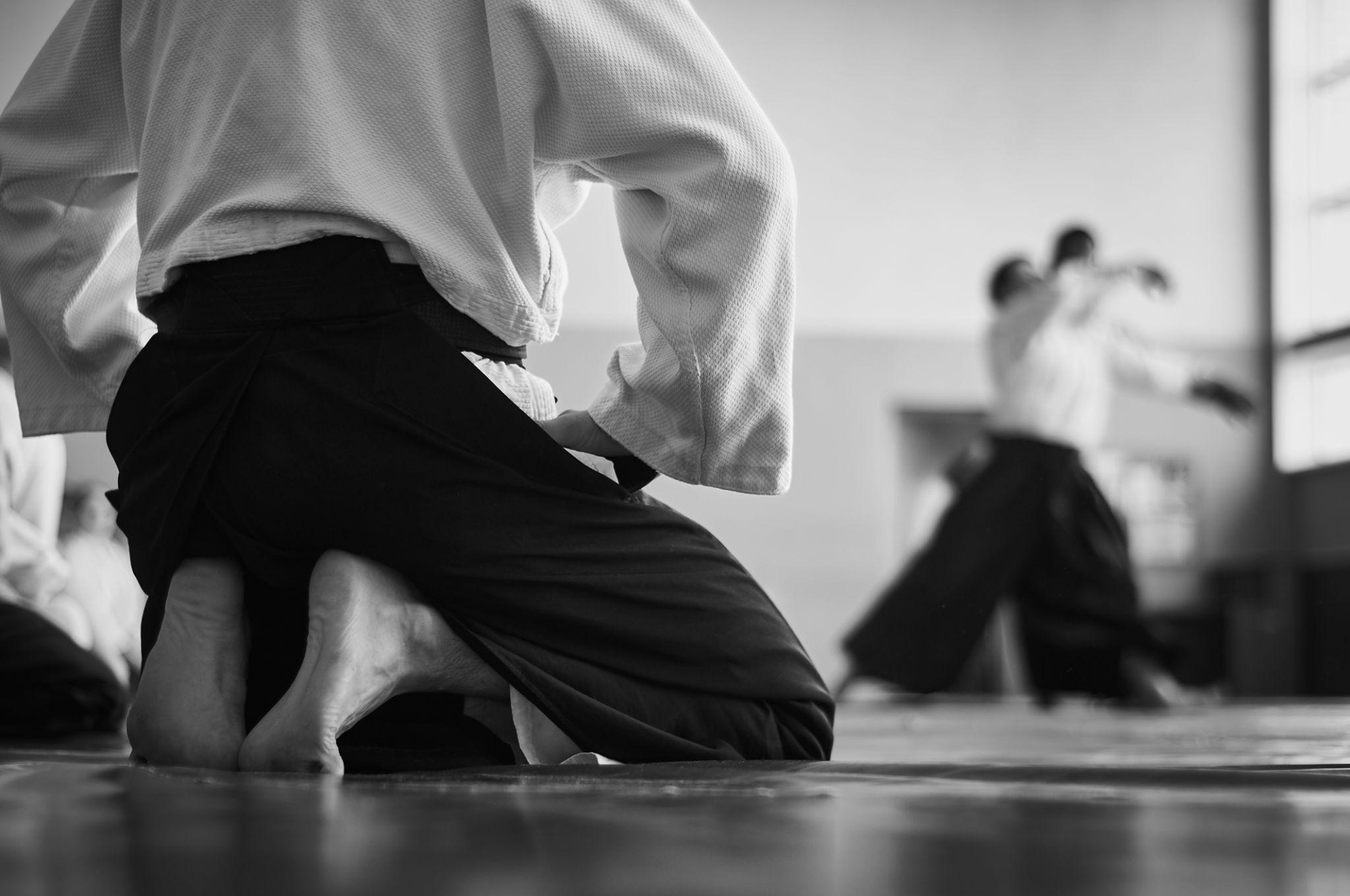
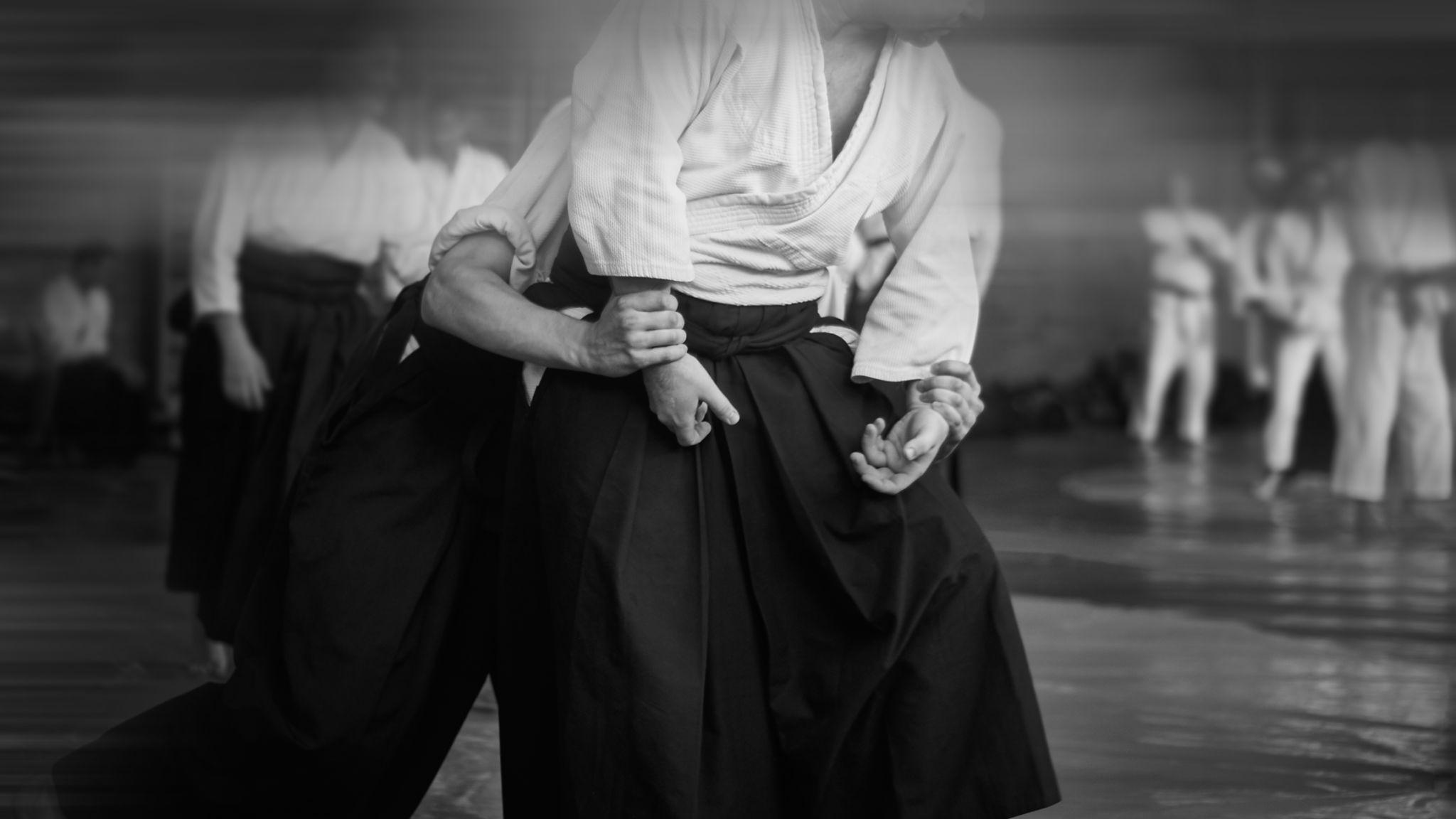
Aikido is a young martial art founded by Morihei Ueshiba (植芝盛平, 1883–1969), its founder (Kaiso), who studied the deepest secrets (Ogi, 奧義) of traditional Japanese martial arts and underwent rigorous spiritual discipline. It began in Japan in the 1920s and started spreading to the general public in the 1940s. Although its history is short, its philosophy and unique training system quickly drew worldwide attention.
In his early years, Morihei Ueshiba mastered jujutsu (柔術), swordsmanship, and spearmanship from various schools. After long years of training, Master Ueshiba arrived at the conclusion that martial arts are not for subduing and defeating an opponent, but merely a tool for loving all things (萬物) and reaching a state of oneness with the universe and nature.
It is undoubtedly ironic for a martial art to neither strike an opponent nor subdue them by brute force. Yet Aikido is unmistakably a thoroughly defense-oriented martial art, holding that one must never inflict fatal harm on an opponent.
Aikido is the art of harmonizing ‘self’ (我) and ‘other’ (他) — if an opponent tries to harm you through physical force, the technique turns that very force back upon them to bring about their own downfall. Furthermore, the spirit of Aikido is to help the opponent realize the futility of force and lead them onto the path of self-cultivation.
Aikido teaches that even in the most extreme situations of life and death, one must never lose infinite love for what is ‘not self’ (非我) — it is a martial art whose purpose is thoroughly rooted in self-cultivation. Since practitioners do not compete to prove superiority over one another, there are no ranked competitive matches or tournaments. For this reason, it is known in the West as “moving Zen” or “the martial art of peace.”
Founder of Aikido
Morihei Ueshiba
It is impossible to grasp what makes Aikido unique among all of Japan’s martial arts today without understanding its founder, Morihei Ueshiba. What makes Morihei such a fascinating figure is not only that he belonged to an era different from our own, but also that he was an extraordinary presence even within the time and culture in which he lived. The ideas of divine possession (神懸, spirit communion, being possessed by the divine) seen in Morihei were strongly influenced by the doctrines of the Omoto-kyo (大本敎) religion, and are difficult to understand even for Japanese people today. If the techniques of Aikido did not exist, understanding them would be far more hopeless still. But because the techniques exist, anyone — regardless of language or cultural differences — can walk the path to the true essence of Aikido.
Morihei Ueshiba, who would later become the founder of Aikido, was born on December 14, 1883, in Tanabe, a fishing port in Wakayama Prefecture. His father, Yoroku, was a man of means who served for several years as a village council member. Stories of Yoroku’s extraordinary strength still survive, suggesting that he himself was, from birth, someone skilled in the martial arts. After having three daughters, Yoroku’s joy was immense when he finally had a son. Because Morihei was sickly from early childhood, Yoroku tried various means to make him healthy, including having him undergo physical training. Morihei’s formal schooling ended after his first year of middle school. At age 17, he went to Tokyo to become a merchant, working at a stationery shop run by a wealthy relative. During this brief stay in Tokyo, he enrolled in the Tenjin Shin’yo-ryu (天神眞揚流, one of the schools that, along with Kito-ryu, formed the roots of Judo — translator’s note) and trained at night. This was Morihei’s first step toward serious martial arts training.
Later on, an event took place that had a decisive influence on the birth of Aikido: a fateful encounter with the jujutsu master` Sokaku Takeda( ).
Sokaku Takeda had been living in Hokkaido for several years before Morihei, traveling around the region teaching jujutsu. Morihei first met Sokaku in February 1915, in Engaru (遠輕). At the time, Morihei was 32 years old, had awakened to his talent for martial arts, and was already an accomplished martial artist in his own right. Yet against Sokaku, who was then at the very peak of his powers as a martial artist, Morihei was simply no match. Captivated by Sokaku’s overwhelming strength and the intricate techniques of Daito-ryu (大東流, Daitoryu), Morihei spared neither time nor expense to learn from him, even going so far as to have Sokaku stay at his home so he could receive private instruction. The tuition fees for Sokaku’s lessons were covered by remittances from his father in Tanabe.
Having become one of Sokaku’s foremost disciples, Morihei sometimes accompanied him as he traveled around the region. During this time in Hokkaido, Morihei received from Sokaku the <Hiden Mokuroku (秘傳目綠, Catalog of Secret Teachings)> and mastered most of the techniques of Daito-ryu. Daito-ryu contains several hundred kinds of intricate jujutsu techniques, including joint locks and pinning techniques. Sokaku was also highly skilled in swordsmanship, throwing blades (shuriken), the iron fan, and other weapons arts. It is no exaggeration to say that Daito-ryu Aiki-jujutsu had a decisive influence on Morihei, becoming the foundation for what would later become the techniques of Aikido.


