
Aikido Etiquette (Reiho, 礼法)
The most important thing in aikido is respect for the partner you train with. Etiquette is that respect given a visible form. Always bow before you ask a partner to train with you.
Zarei (座礼) — The Seated Bow
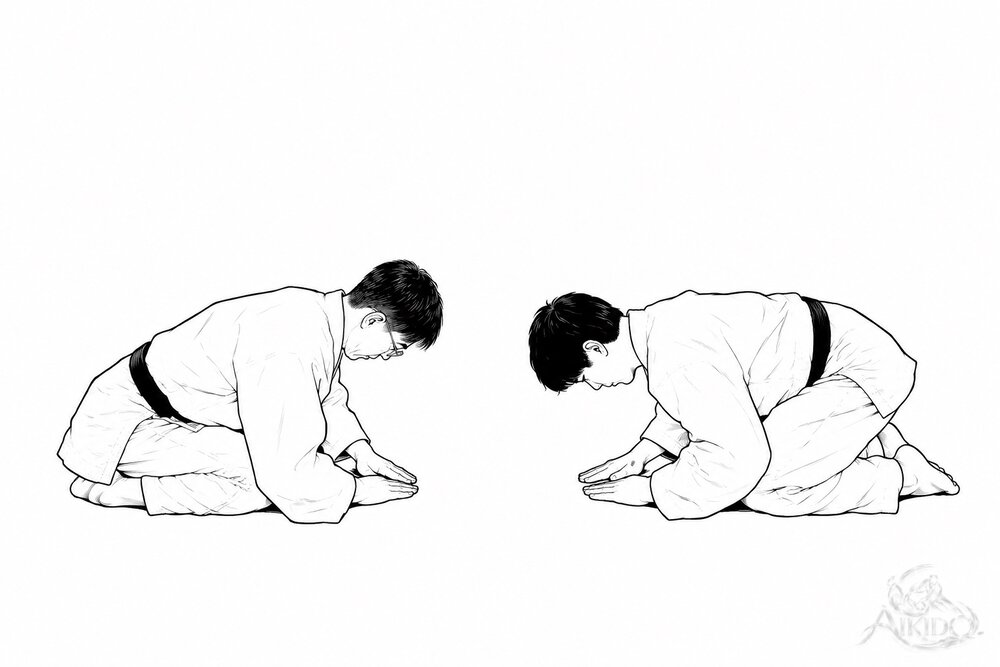
Zarei is a bow made while sitting in seiza (正座), and it is the most basic form of etiquette in aikido.
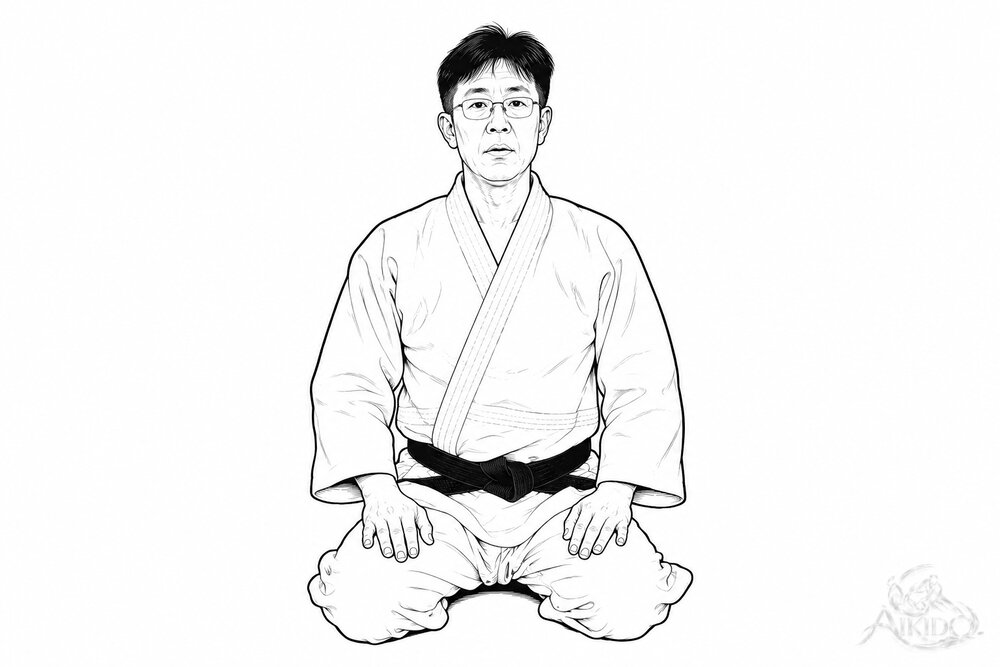
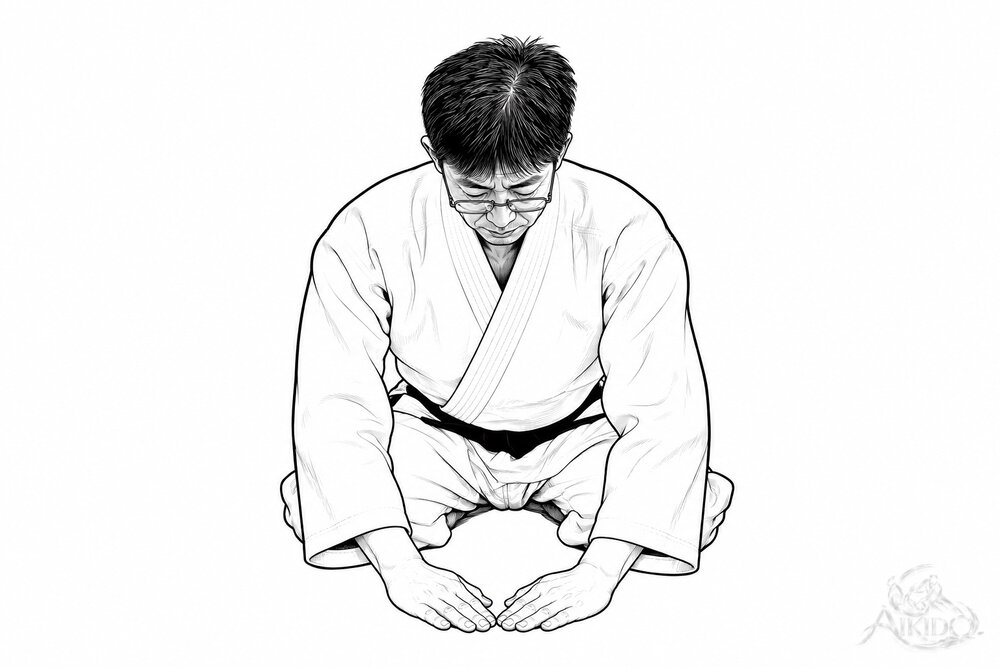
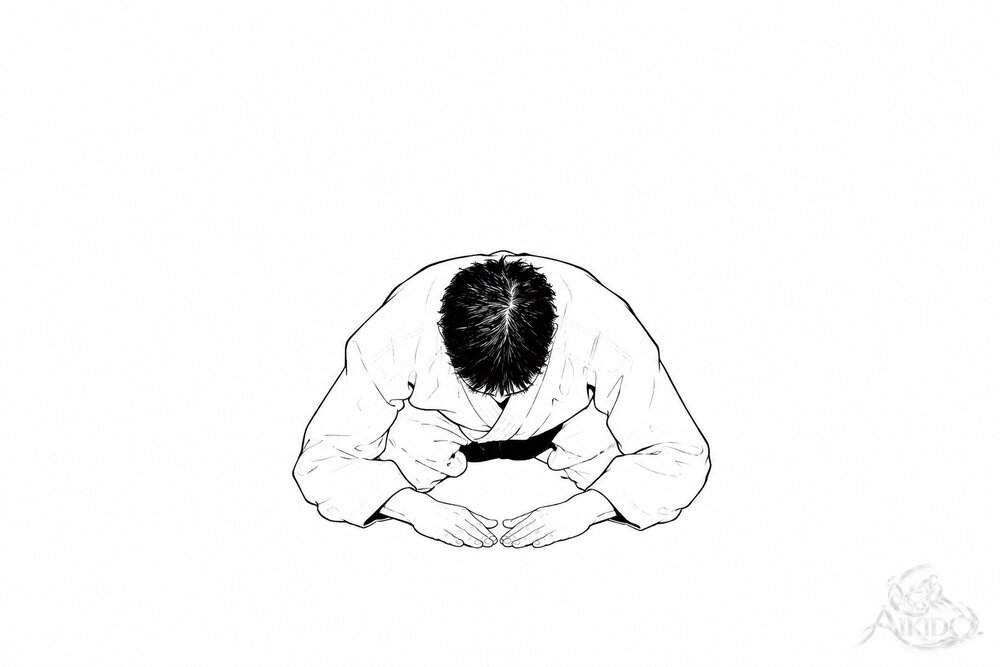
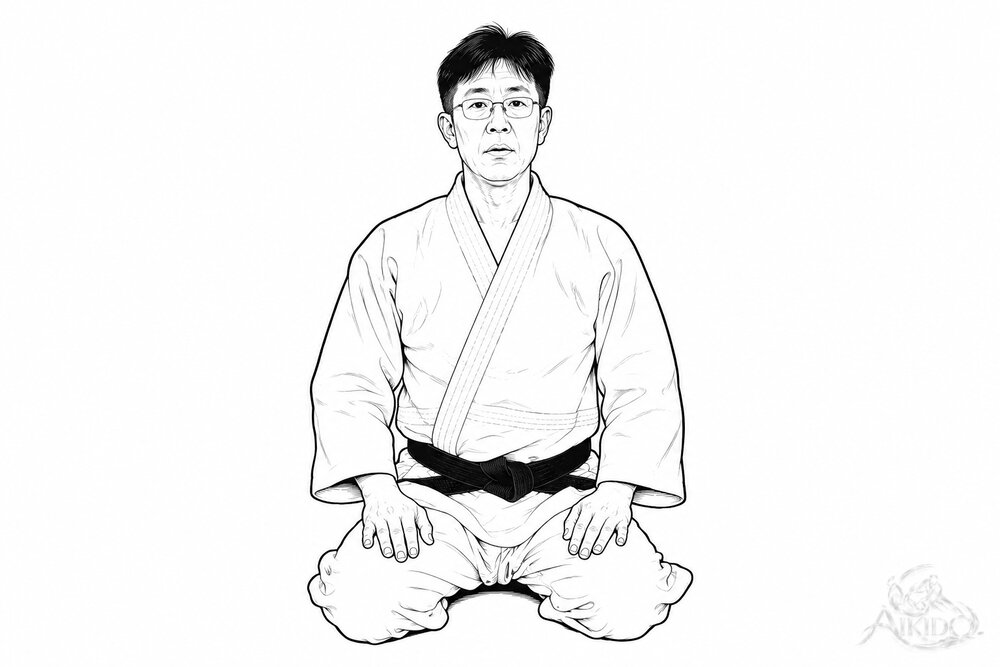
- Sit upright in seiza.
- Bring both hands together on the floor in the shape of the character 八.
- Keeping your back straight, slowly lower your head and pause where your back is level with the floor.
- Slowly return to the starting position.
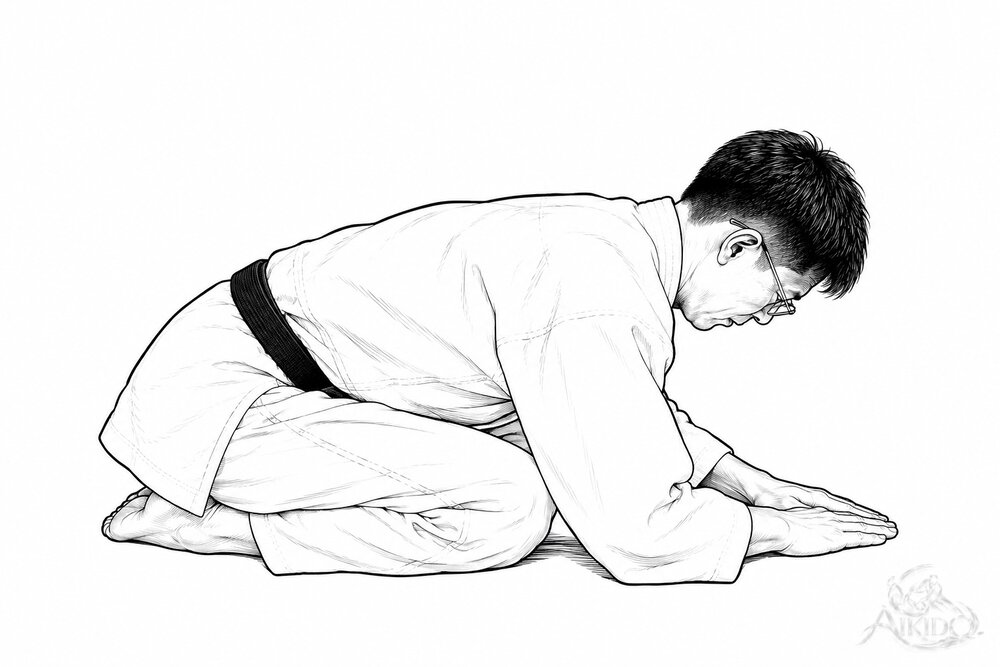
Do not rush; make each movement slowly. If you just bob your head or your hips lift, it is not a proper bow.
Ritsurei (立礼) — The Standing Bow
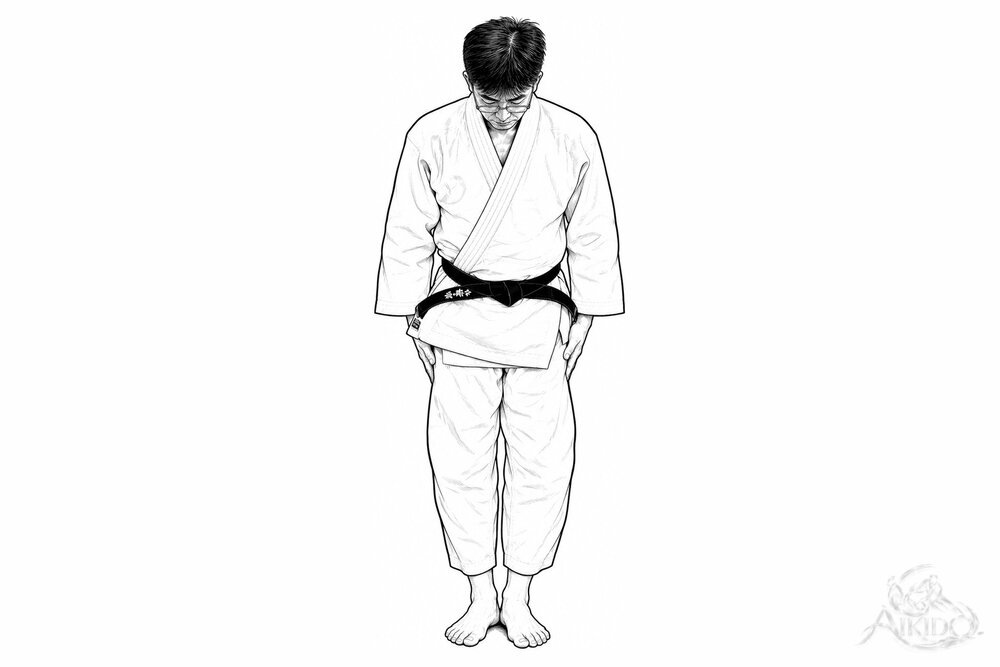
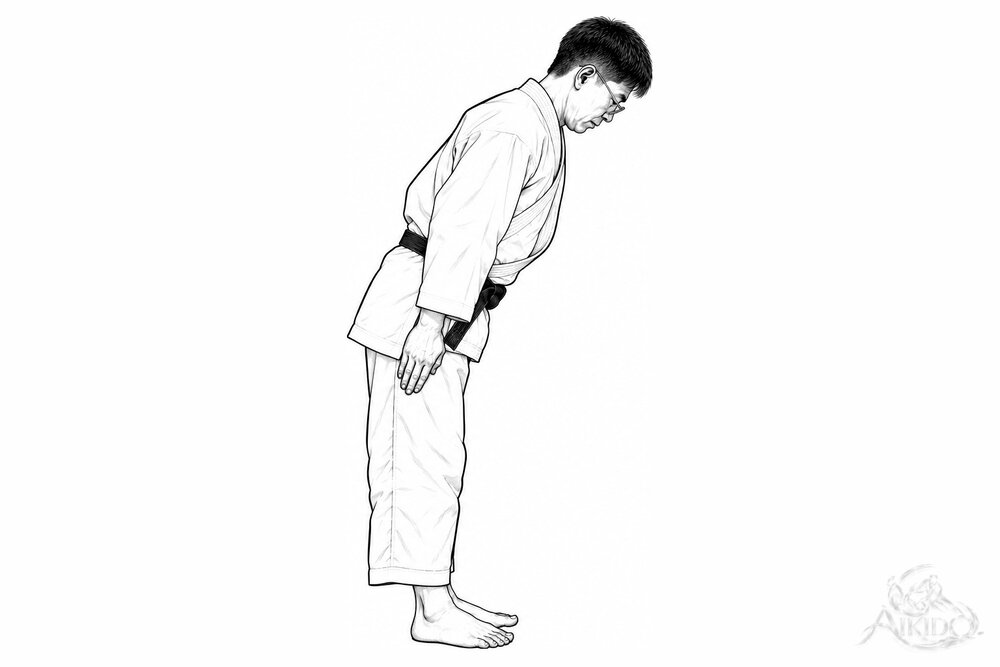
Ritsurei is a bow made while standing. You make it when entering and leaving the dojo, and when you face a partner while standing during practice. Stand upright with your heels together, keep your hands against the sides of your thighs, and lean your upper body forward about 30 degrees in a light bow. It is simpler than zarei, but carries the same respect for your partner.
Entering the Dojo and Beginning and Ending Practice
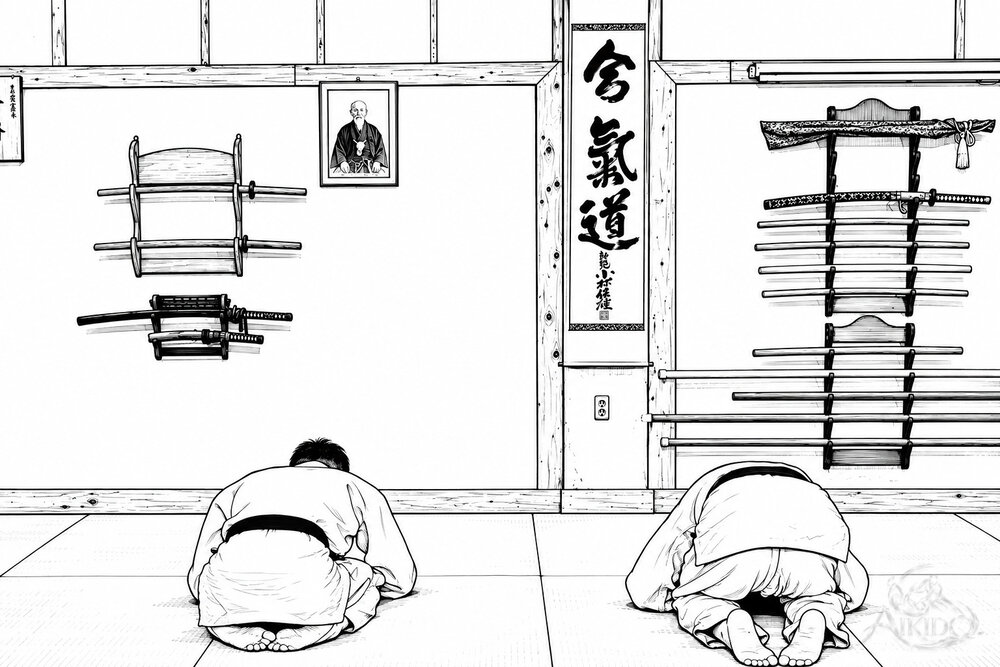
The front wall of the dojo (道場) is called shomen (正面). When you enter and leave the dojo, make a standing bow toward shomen. At the beginning and end of practice everyone sits in a line and makes a seated bow toward shomen, and then exchanges bows with the instructor.
Jeju Oseung Dojo is made up of adult members with jobs and families. So if you have to arrive late or leave early, it is not a problem. If you arrive late, come in quietly, bow to shomen and to the instructor, and join the practice. Basic courtesy toward one another is all that is needed.
Courtesy Toward Your Training Partner
Aikido cannot be practiced without a partner. So the person you train with is not a rival but someone who is kindly helping you.
When you pair up to begin training, face each other, bow, and say “Please train with me.” When you finish, bow again and say “Thank you.” Beginning with a bow and ending with a bow is the foundation of aikido training.
At our dojo we greet each other in Korean. At gatherings where people from many countries train together, such as international seminars, it is fine to use Japanese (“Onegaishimasu,” “Arigato gozaimashita”) or English.
Last updated October 31, 2026 · This book continues to be revised after publication.
© 2026 Moon Young-chan. All rights reserved.
The text and images of this book are protected by copyright and may not be reproduced or distributed without permission.