
Basic Pinning Techniques (Katame Waza, 固め技)
Ai-hanmi Katate-dori Ikkyo Omote (相半身片手取り第一教 表)
Key point: A basic pin that controls your partner by pressing the elbow and wrist.
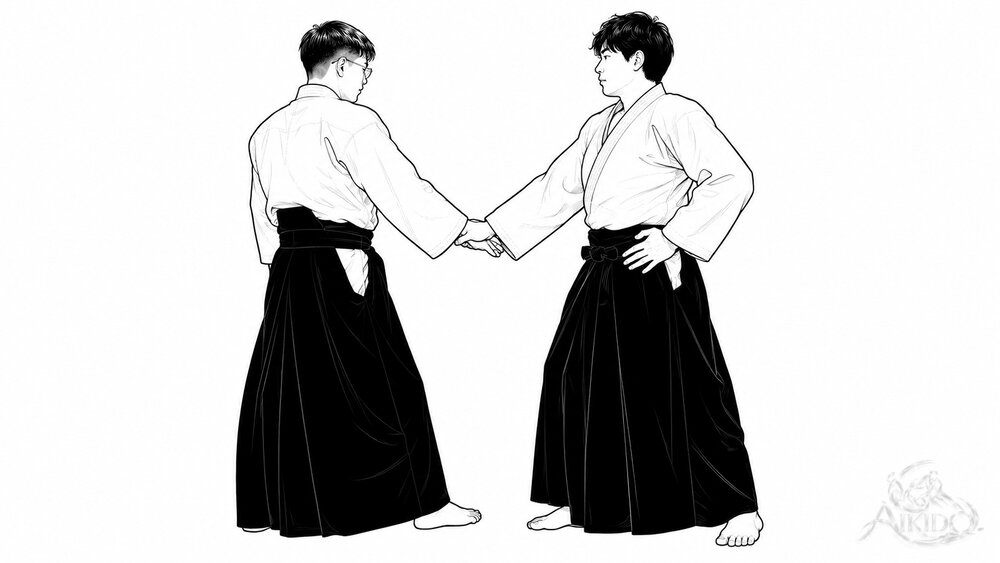
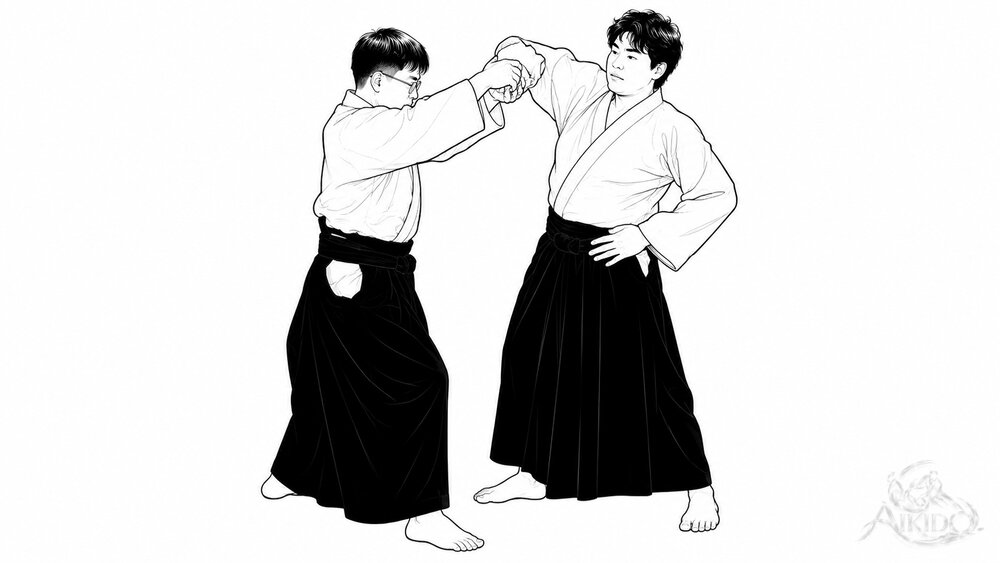
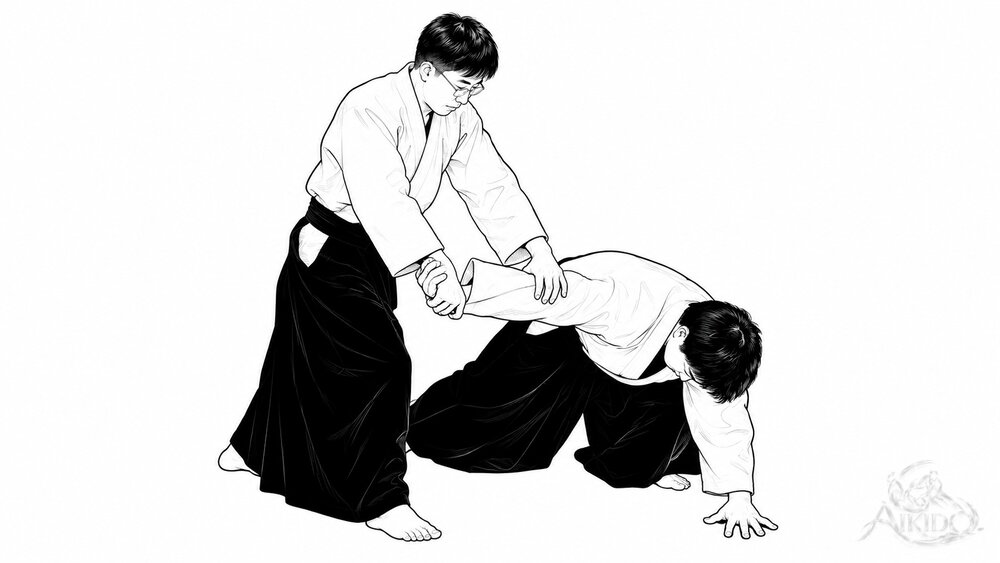
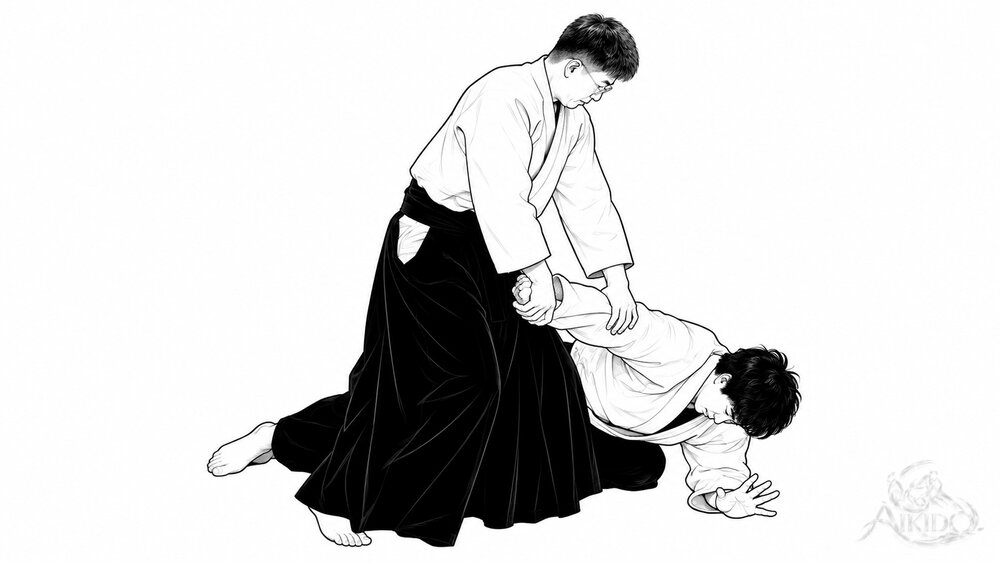
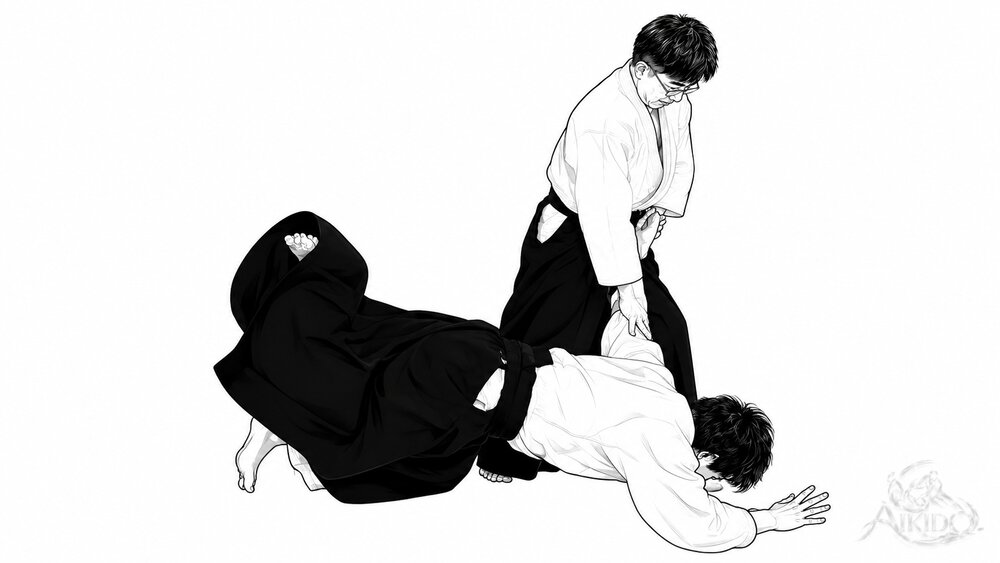
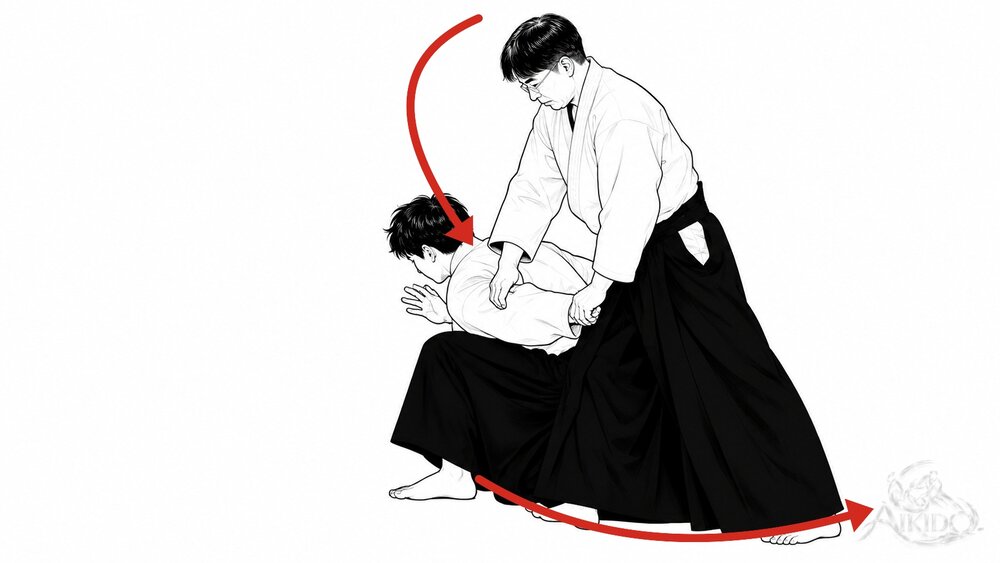
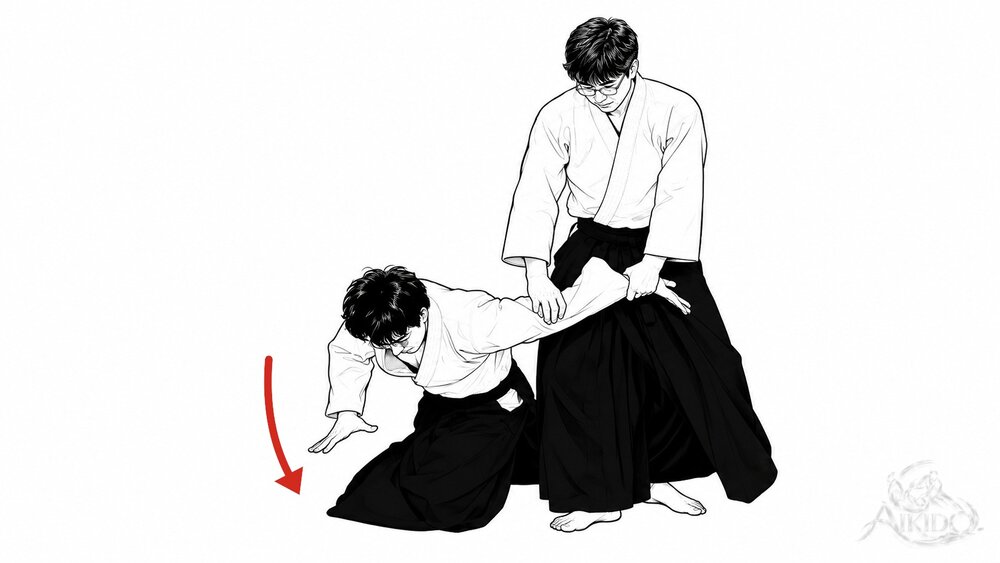
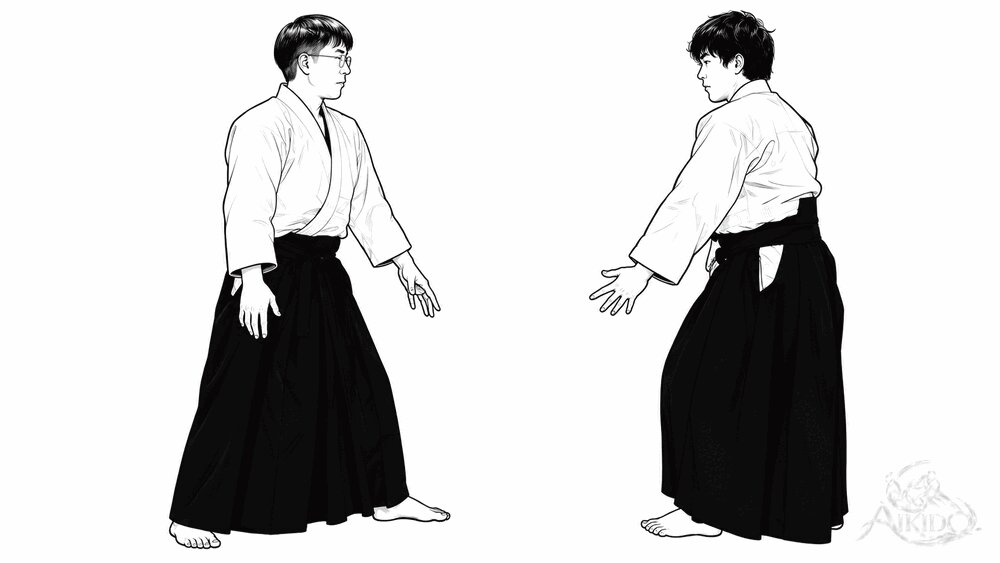
Ai-hanmi katate-dori ikkyo (第一教) omote is a pin in which you enter to your partner’s side and, advancing, cut down and press your partner’s elbow and wrist. In migi ai-hanmi katate-dori, cut the right tegatana up in a large arc to lead your partner’s elbow upward. Then take your partner’s elbow from below with the left hand and cut the tegatana down with the feeling of dropping the elbow forward. In time with this movement, advance, then kneel on both knees to control the joints of your partner’s wrist and elbow.
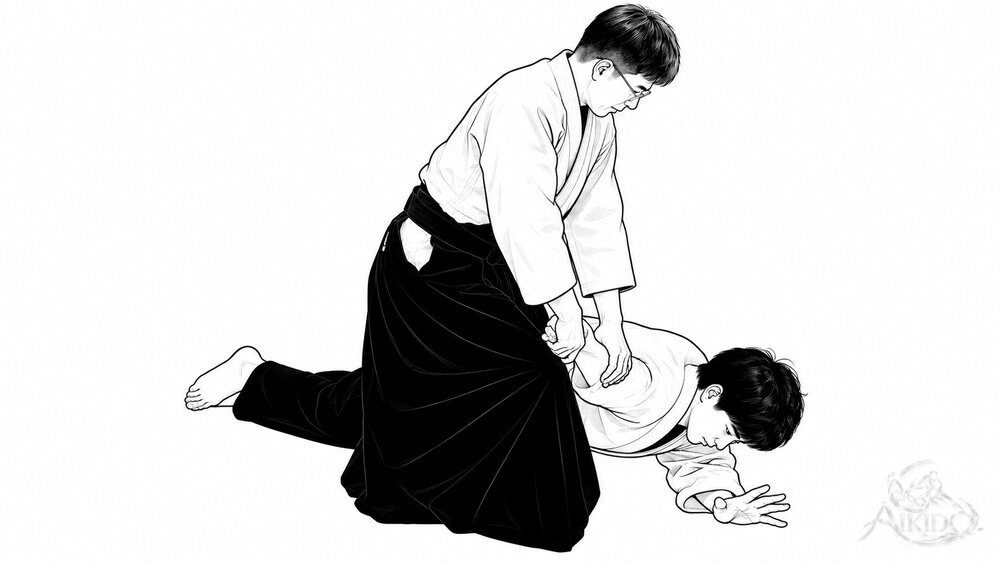
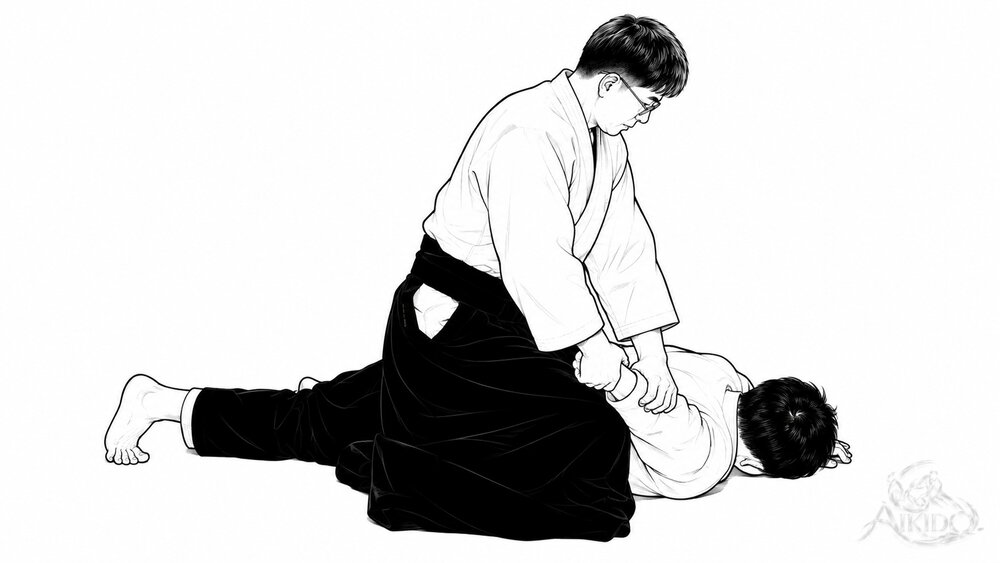
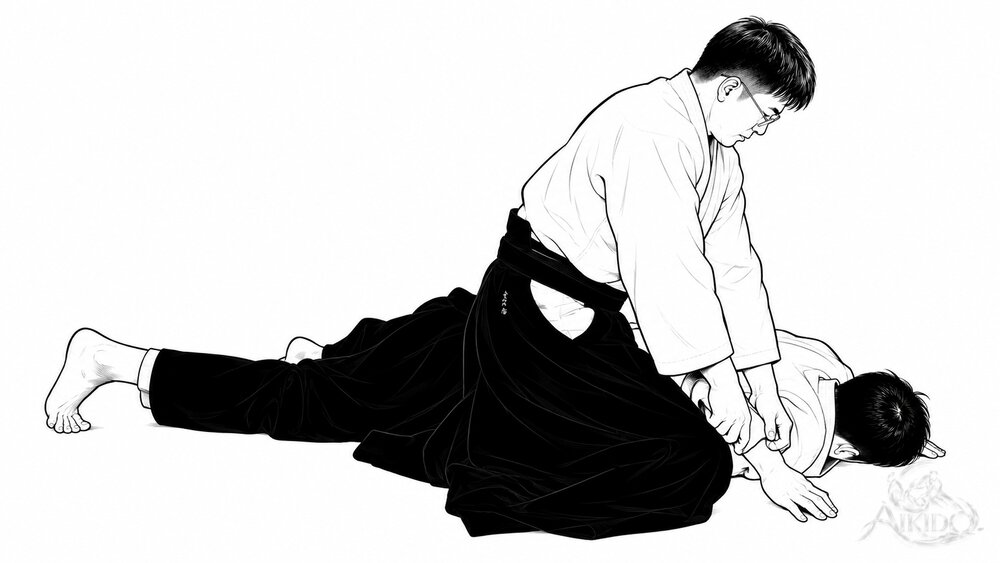
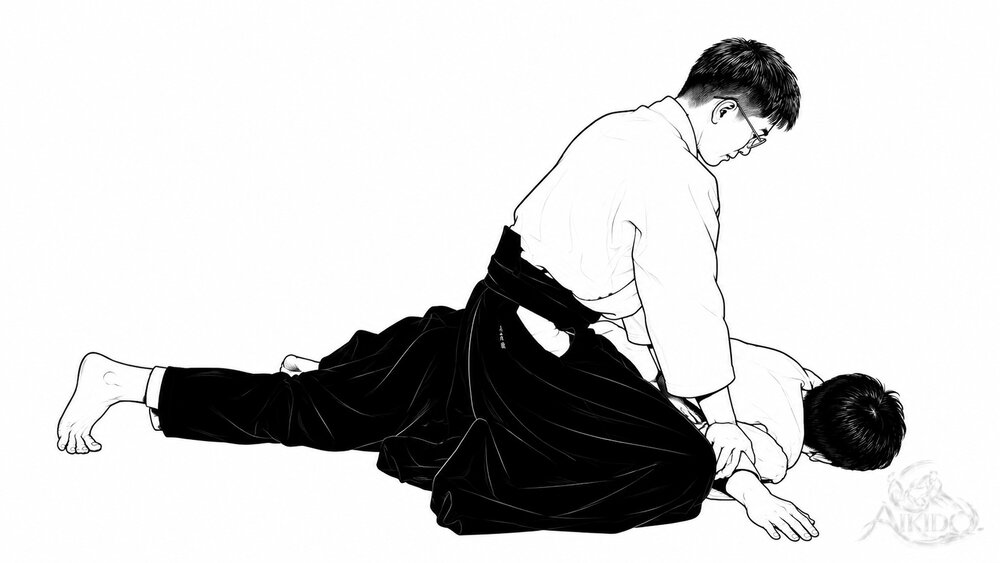
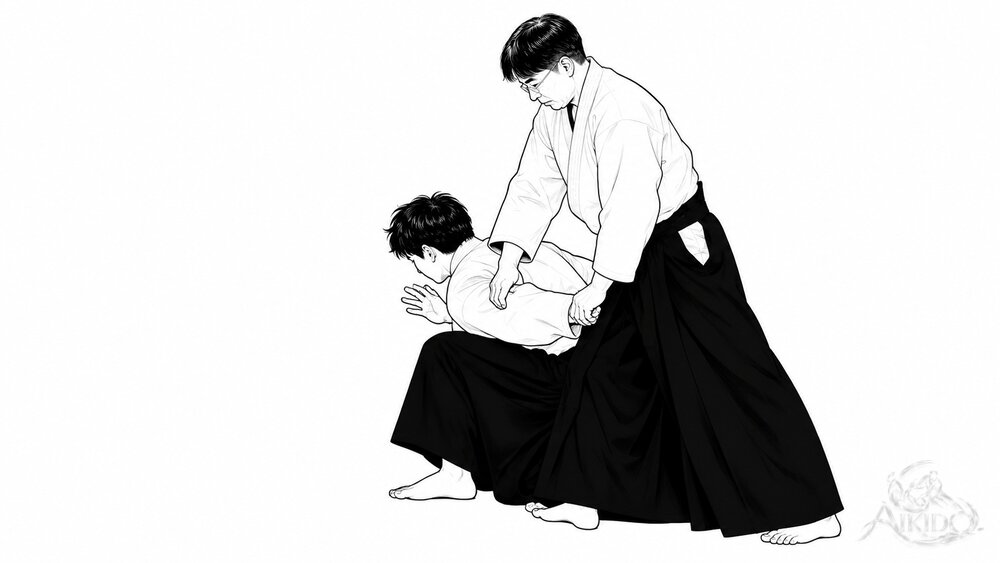
5 Pressing the elbow and wrist, advance further → 6 When your partner is face down, kneel → 7 Keep your partner’s shoulder on the floor and press the elbow and wrist → 8 Sit with your back straight: feet in kiza with the toes tucked under, belly facing your partner’s elbow, the gripping hands tightened from the little finger. Kneel on both knees and lower your center
- Control the elbow joint: Once you have cut the tegatana up, take your partner’s elbow from below with the other hand. Then cut the elbow straight down and forward. The key is to add power together with the cutting down of the tegatana.
- Cut the tegatana down in a large arc: Cut the tegatana down in a large arc. Picturing circular rather than straight-line movement is the way to use the tegatana effectively.
Key Points of the Pin
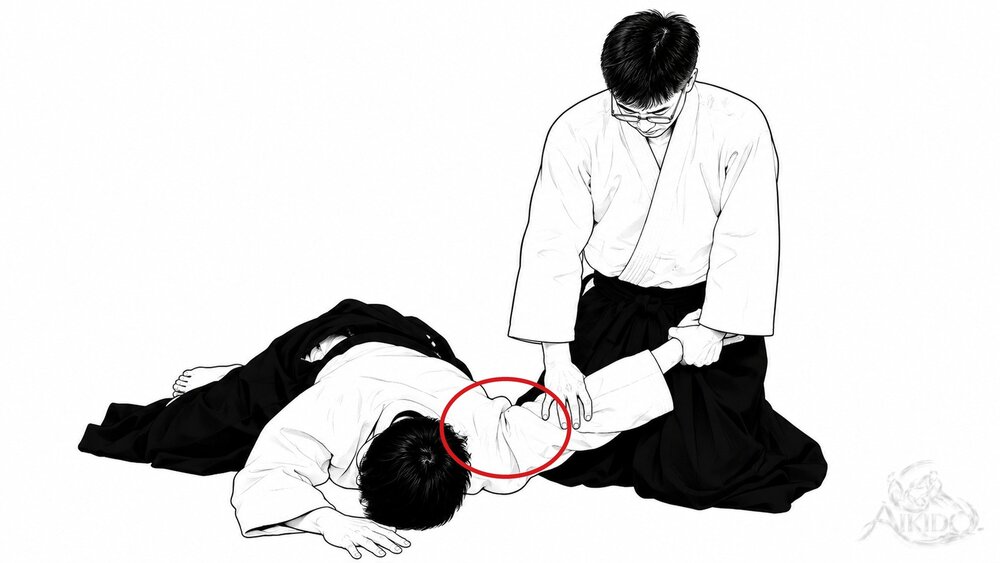
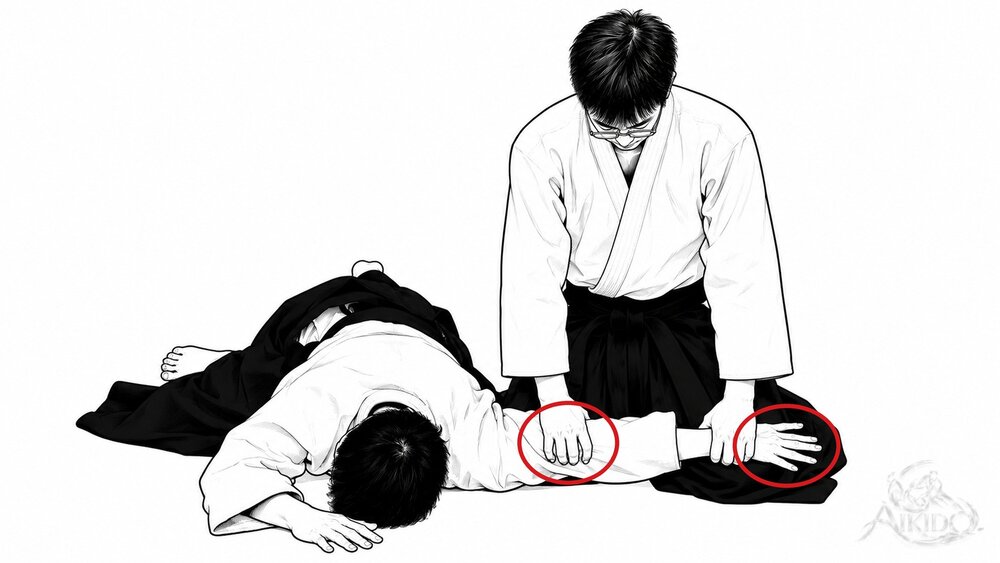
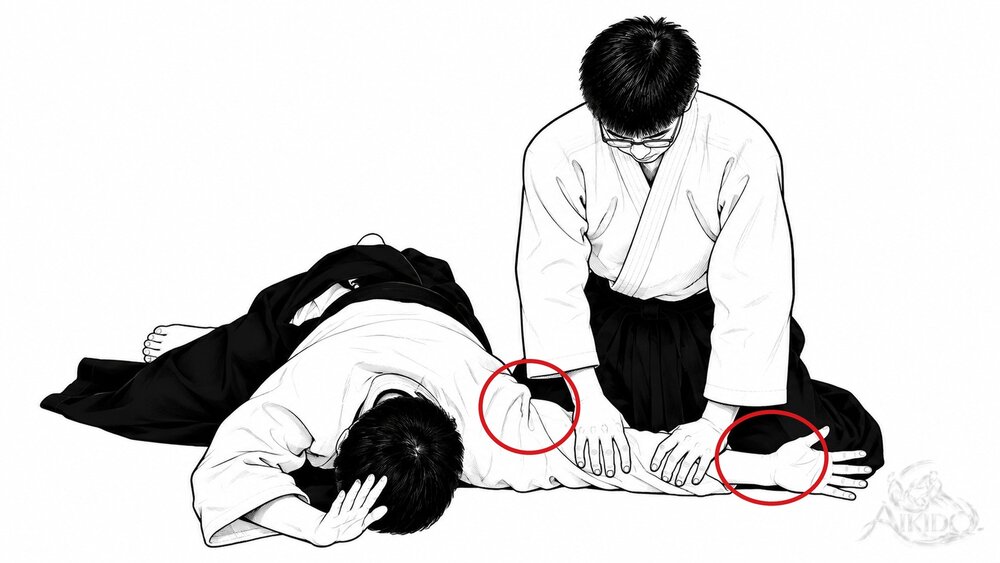
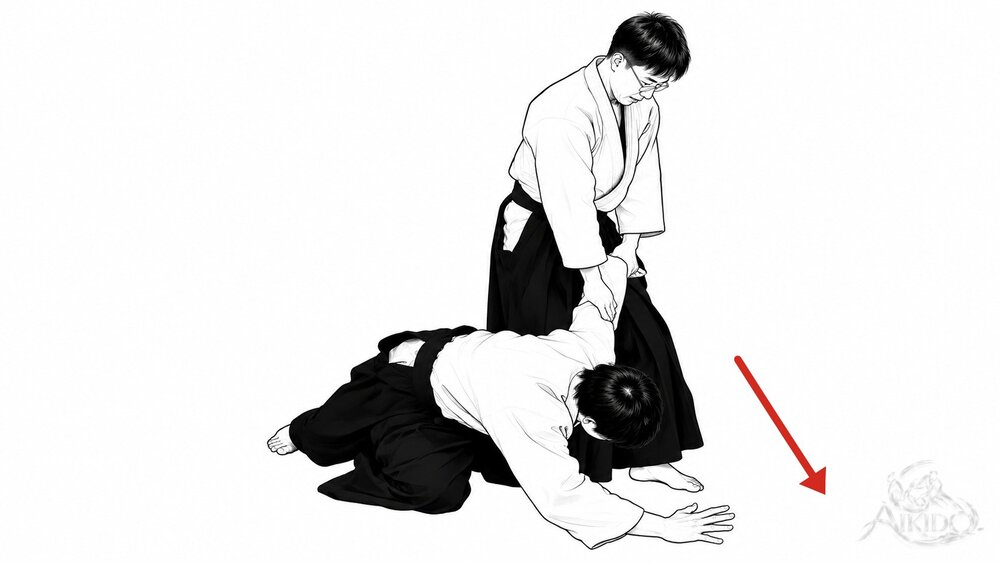
- Keep your partner’s shoulder on the floor: When pressing the wrist and elbow, the most important thing is to keep your partner’s shoulder on the floor. If the shoulder lifts off the floor, the power escapes and you cannot pin securely.
- Press the elbow, palm facing up: When pinning, turn your partner’s palm upward and keep the arm firmly straight so that the elbow does not bend. Tighten the gripping hands from the little finger and press securely.
- One knee at the armpit, one at the wrist: To pin your partner you need the support of your knees, not just your hands. Turn your belly toward your partner’s elbow joint and place one knee against the wrist and the other against your partner’s armpit so that the power does not escape.
Uke’s Ukemi
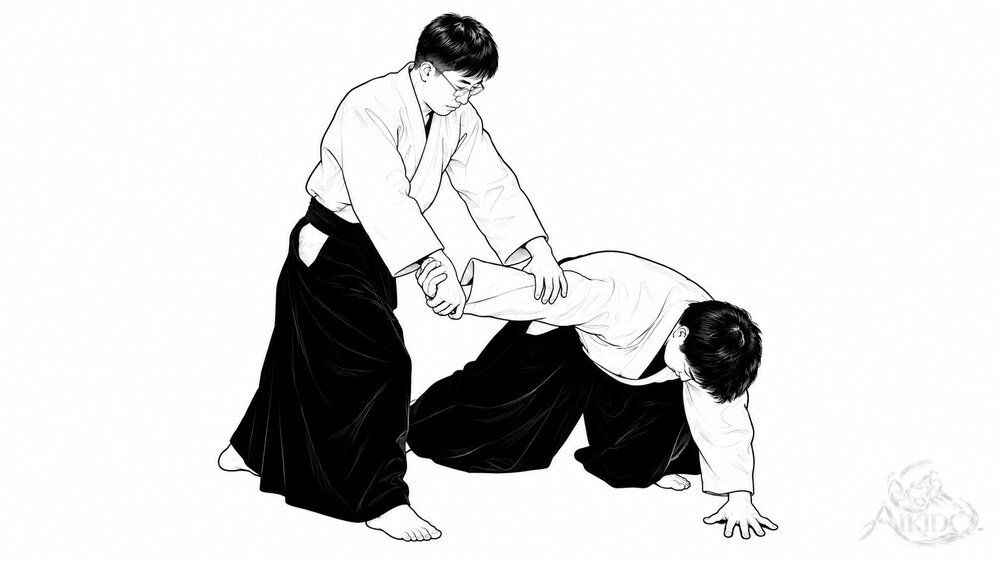
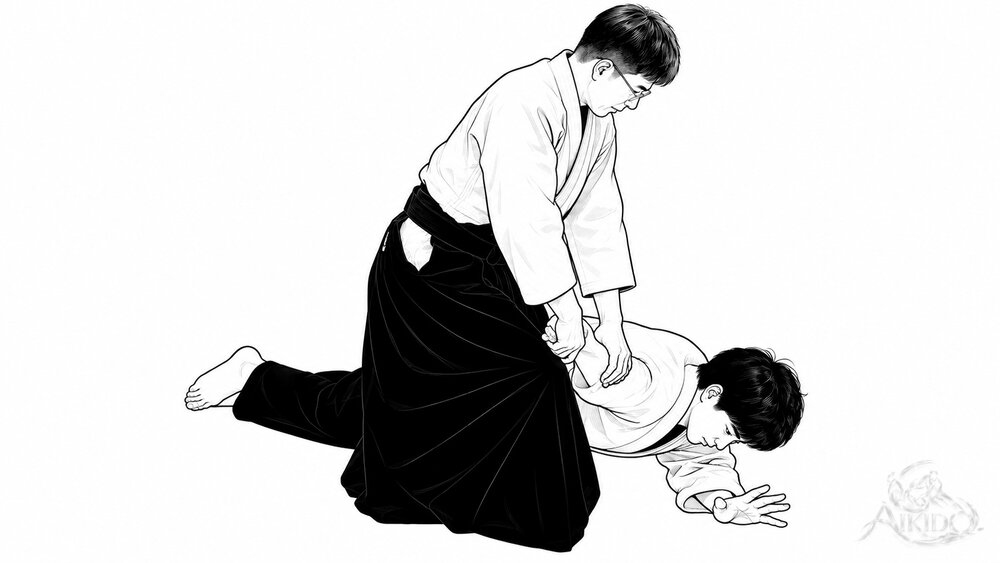
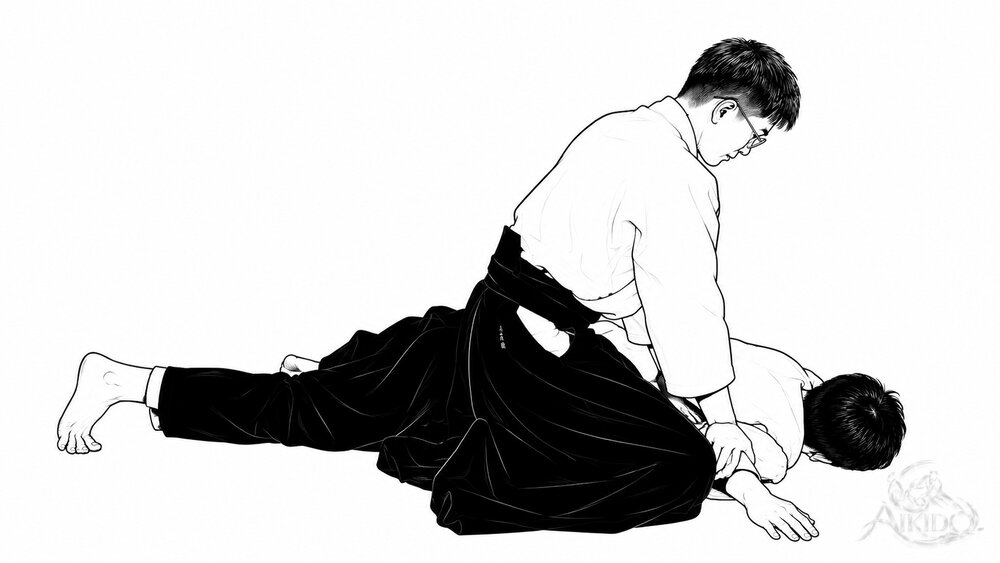
Put the free hand on the floor → Kneel → Lie face down
When uke’s arm is cut down and they fall forward, they do not walk forward but set a supporting leg and put a hand on the floor to keep their balance. Then they kneel, and finally lie face down. It is also important always to keep their attention on tori. Receiving incorrectly can lead to injury, so learn this thoroughly.
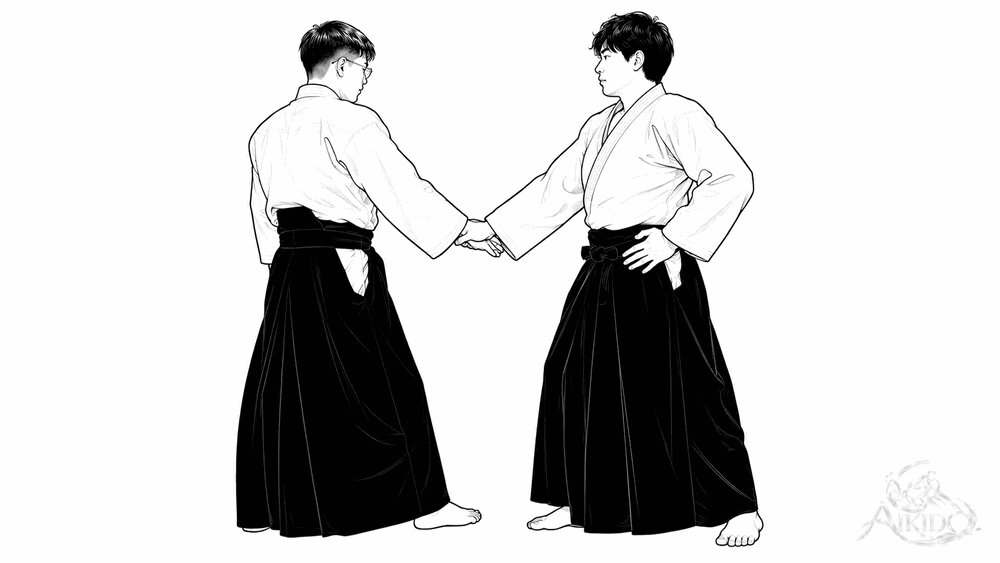
Ai-hanmi Katate-dori Ikkyo Ura (相半身片手取り第一教 裏)
Key point: Turning with tenkan to your partner’s side, wind your partner down with the turn.
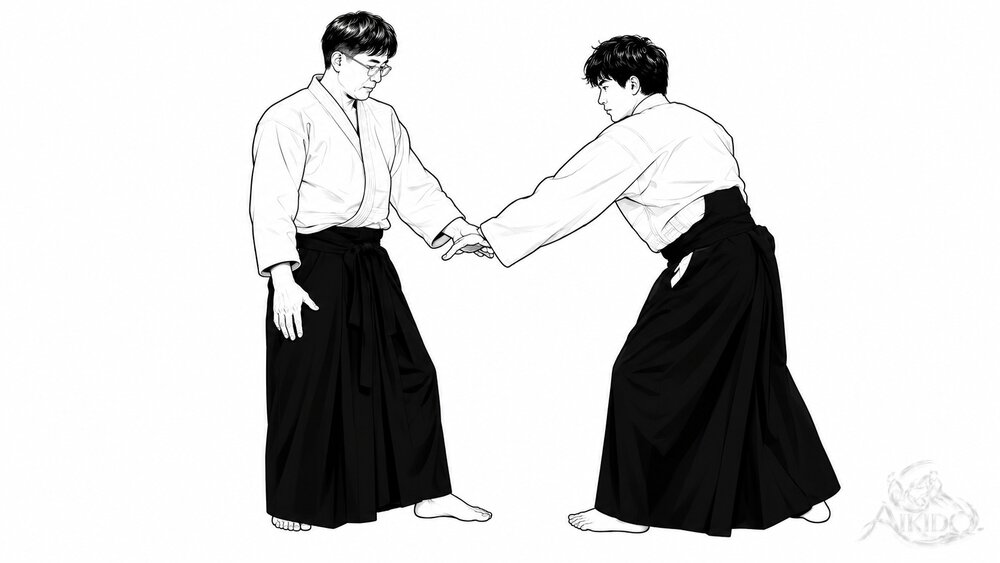
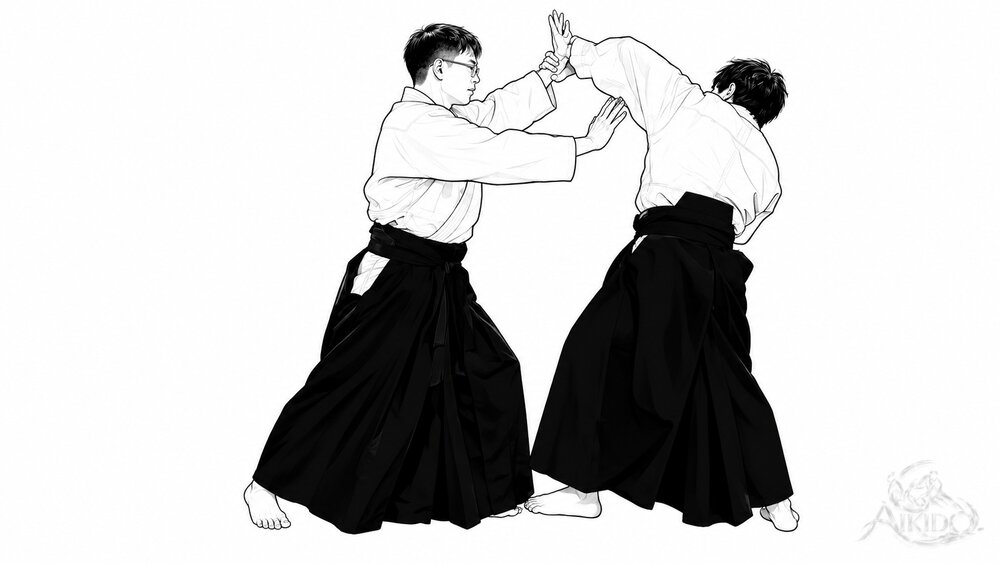
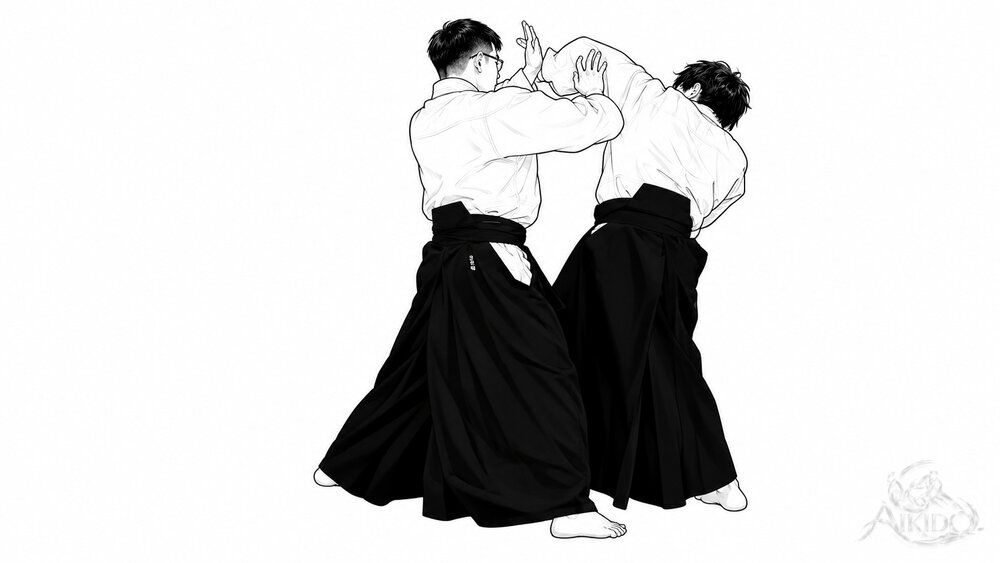
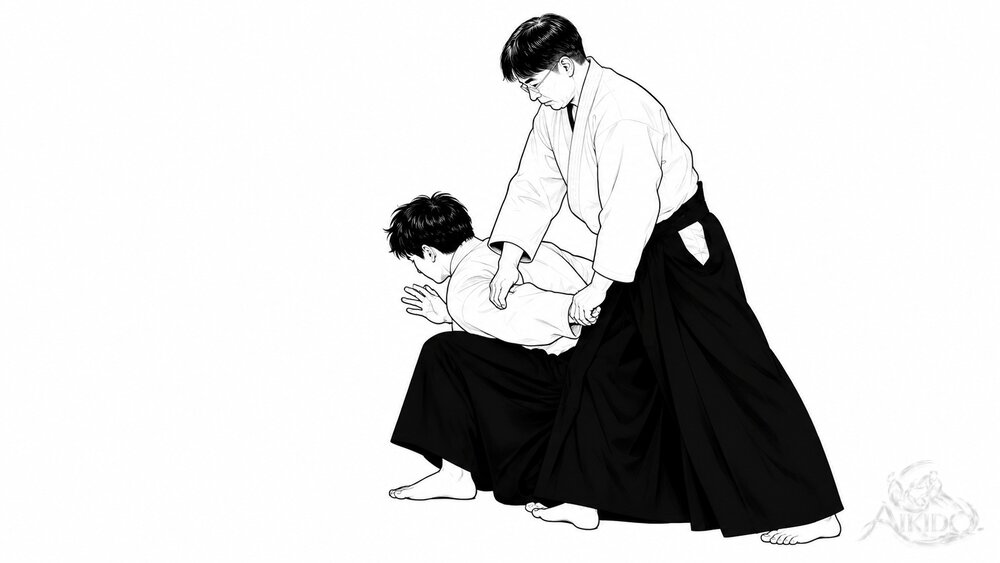
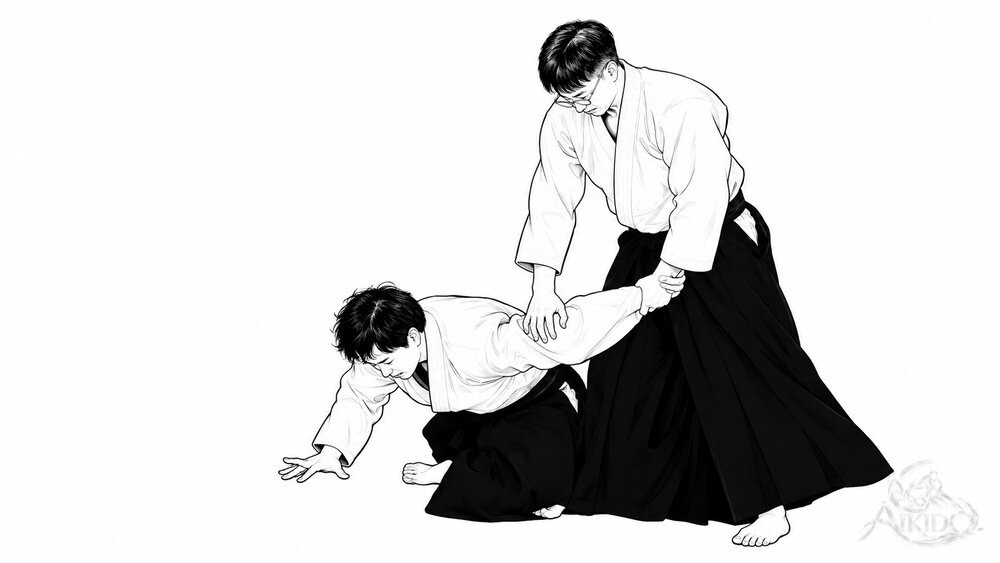
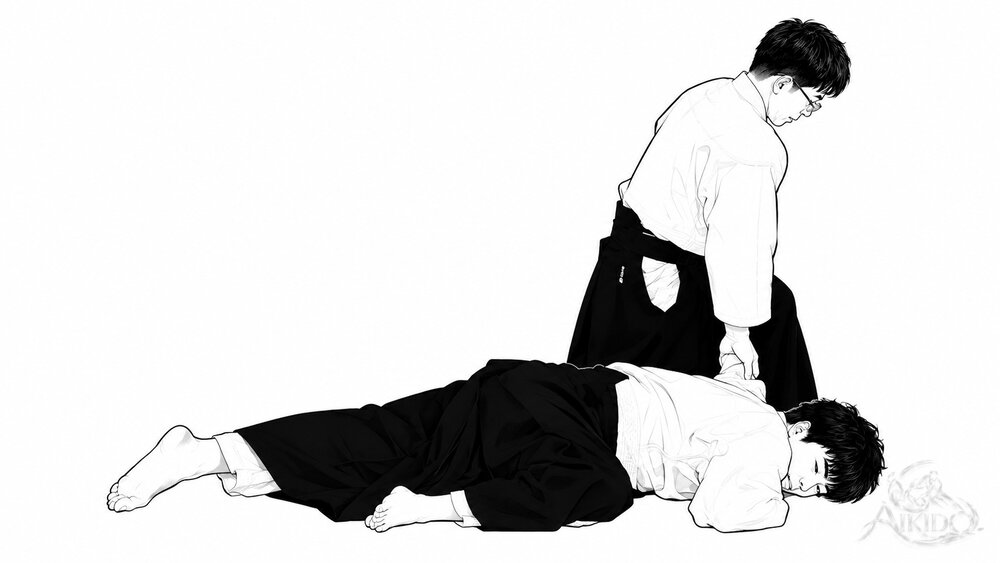
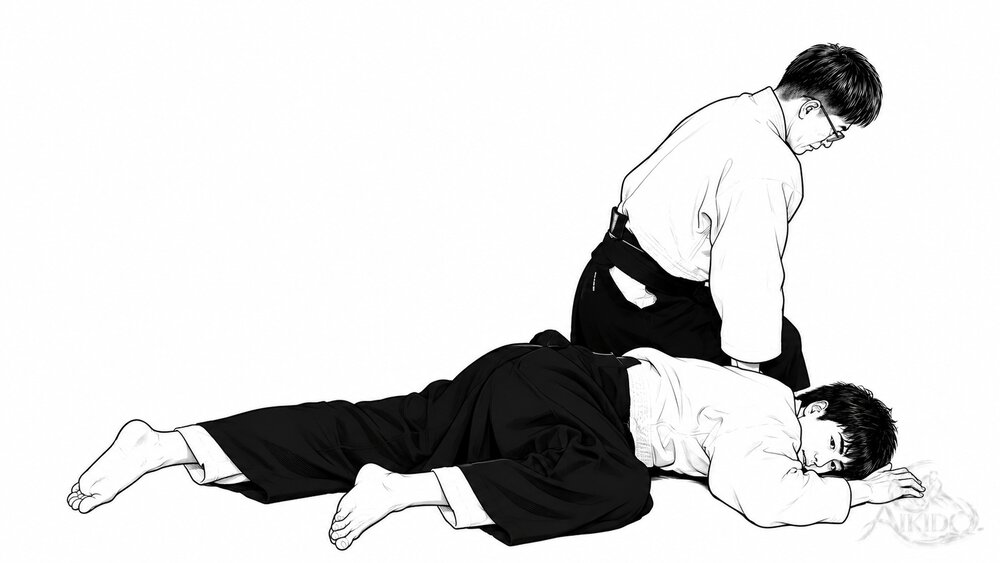
Ai-hanmi katate-dori ikkyo ura is a pin in which you first enter to your partner’s side, then turn with tenkan and bring your partner down as if winding them in with the turn. The pin after bringing your partner down is the same as in omote. In hidari ai-hanmi, cut the left tegatana up as you step in with the right foot, entering to your partner’s side. Taking your partner’s elbow from below with the right hand, lead the left tegatana down, and at the same time turn with a large tenkan on the right foot, bringing your partner down as if winding them in.
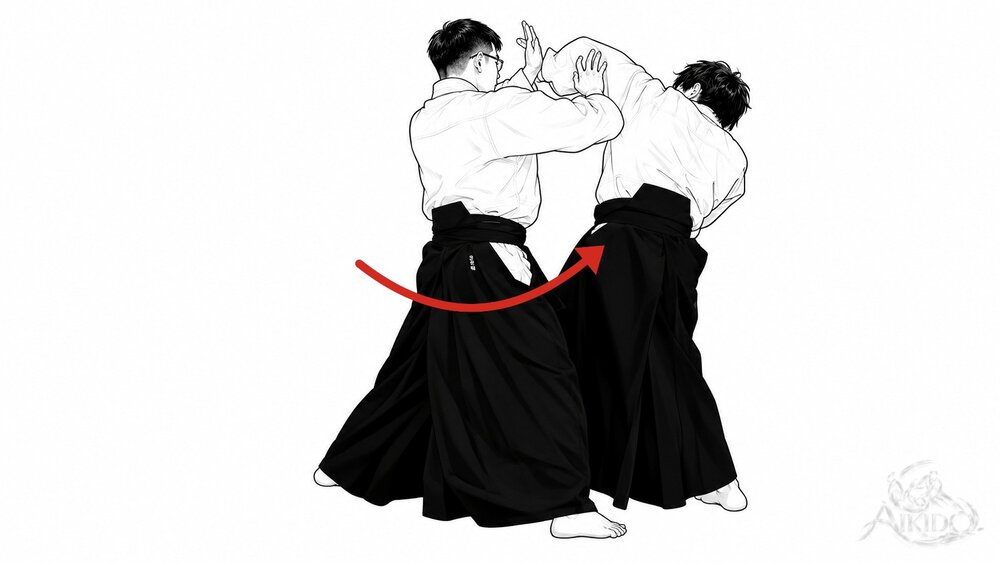
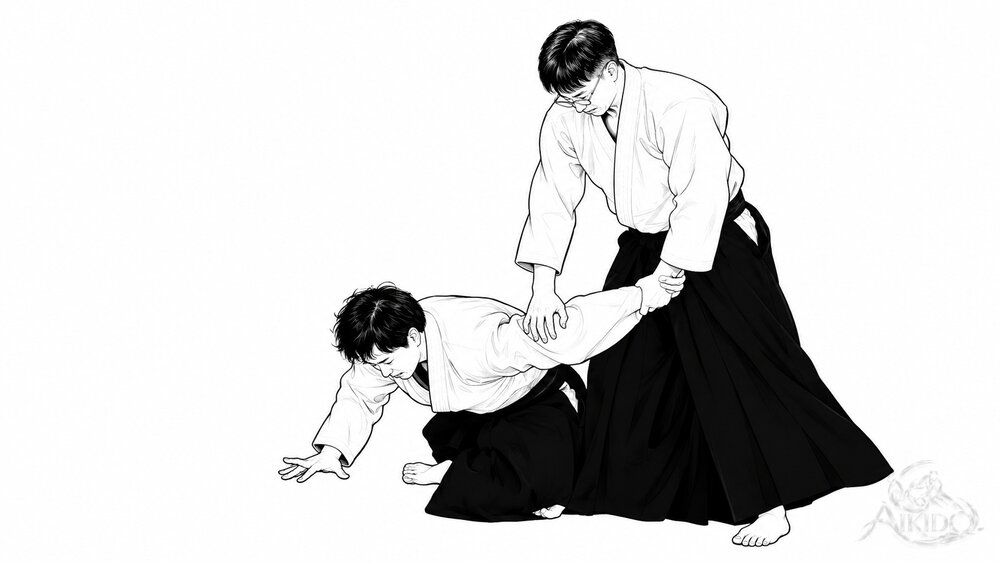
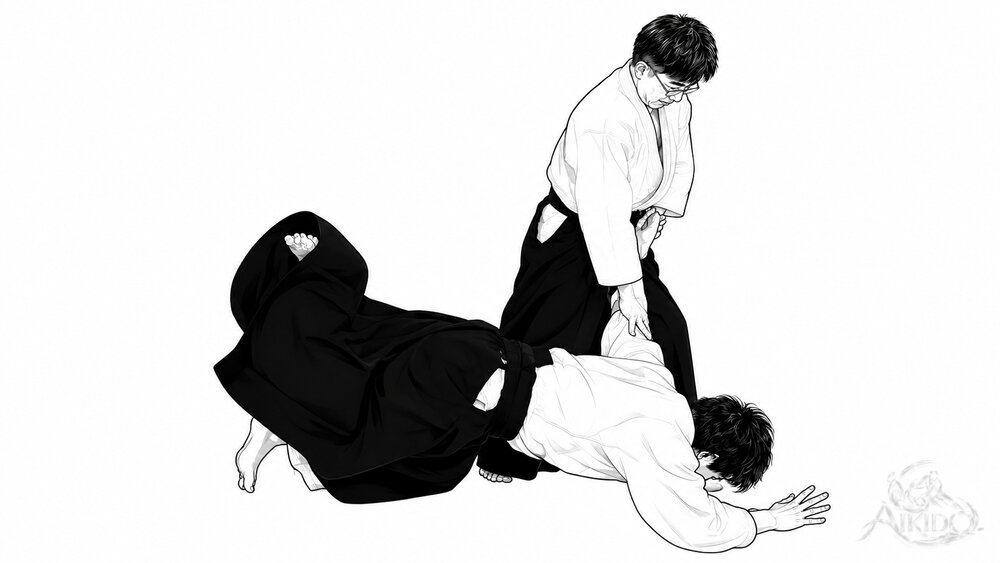
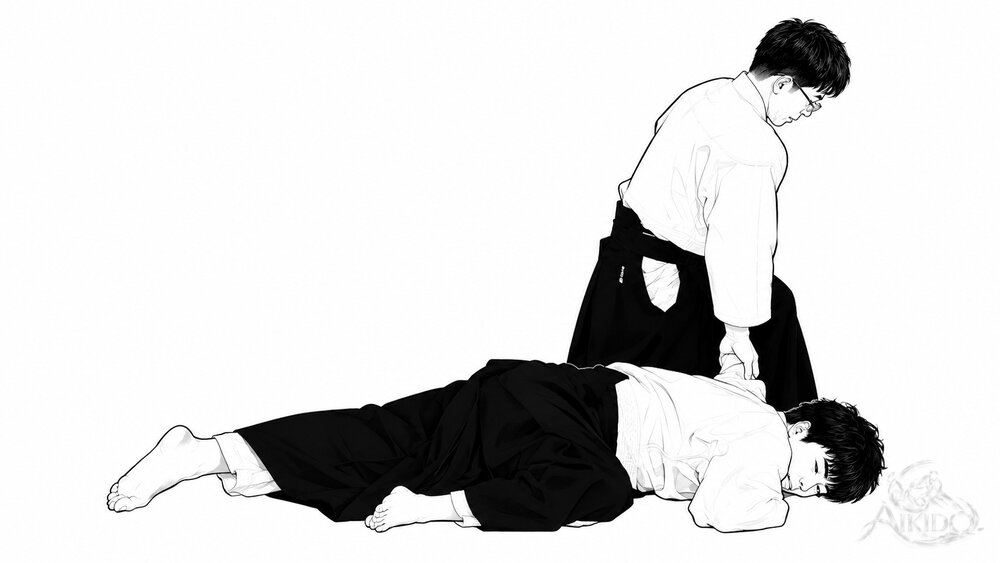
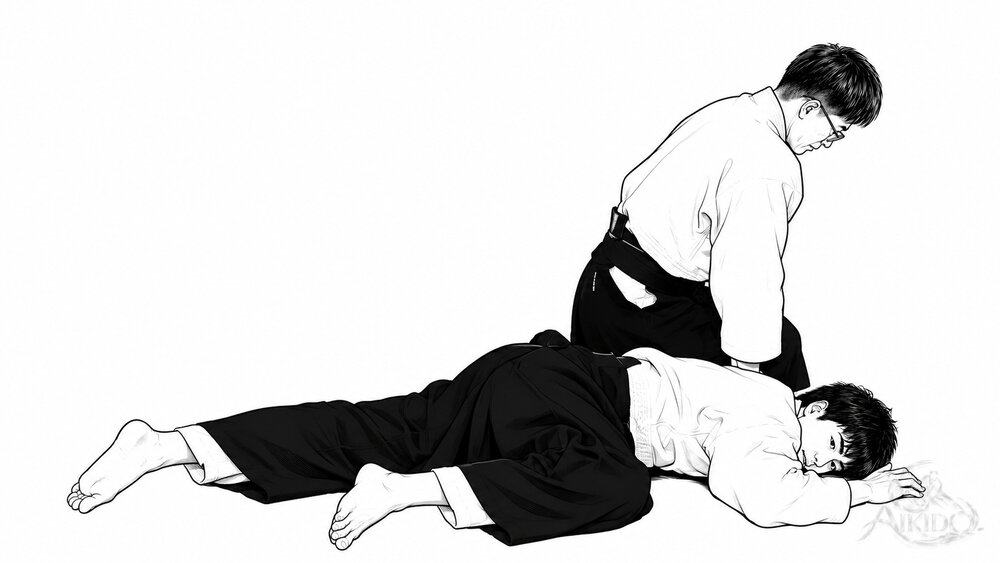
Ukemi for ura. 1 Inside knee to the floor first → 2 Put a hand down → 3 Turning the body → 4 Lie face down → 5 Receive the pin with the shoulder on the floor
- Cut the tegatana down as you turn: In time with the turning movement, cut down the tegatana you raised as you entered. The key is to cut it down in a large arc, not in a straight line. At the same time, take your partner’s elbow with the other hand.
- Ukemi for ura: Unlike the ukemi for omote, put the inside knee on the floor first, then put a hand down, and then turn the body as you fall forward, face down.
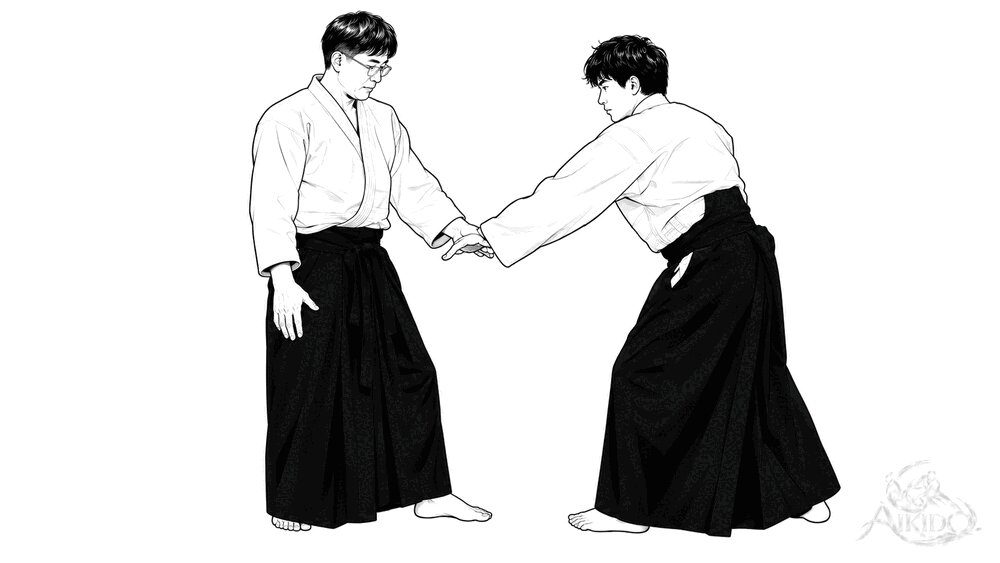
Shomen-uchi Ikkyo Omote (正面打ち第一教 表)
Key point: Control your partner’s shomen-uchi with the tegatana and cut down as you advance.
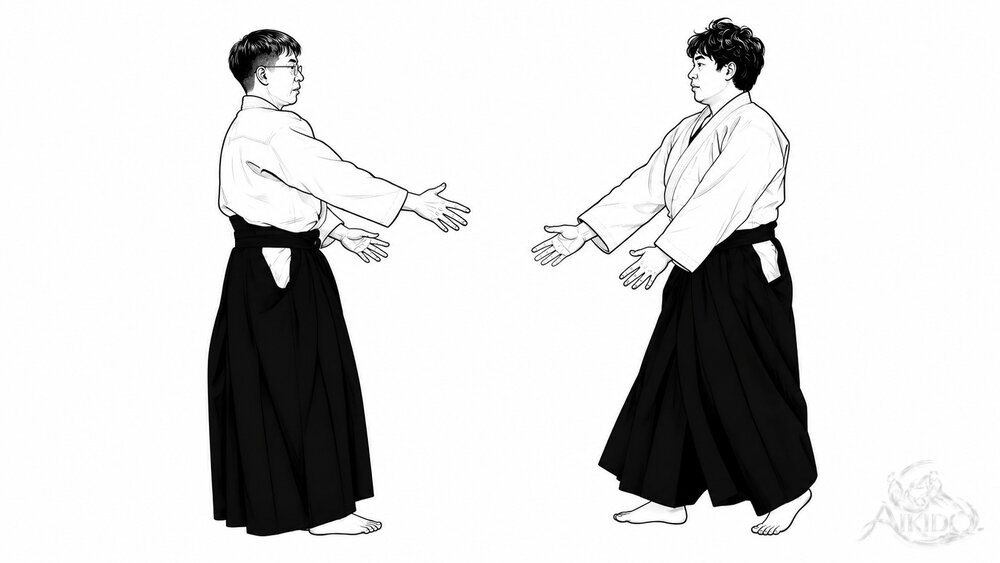
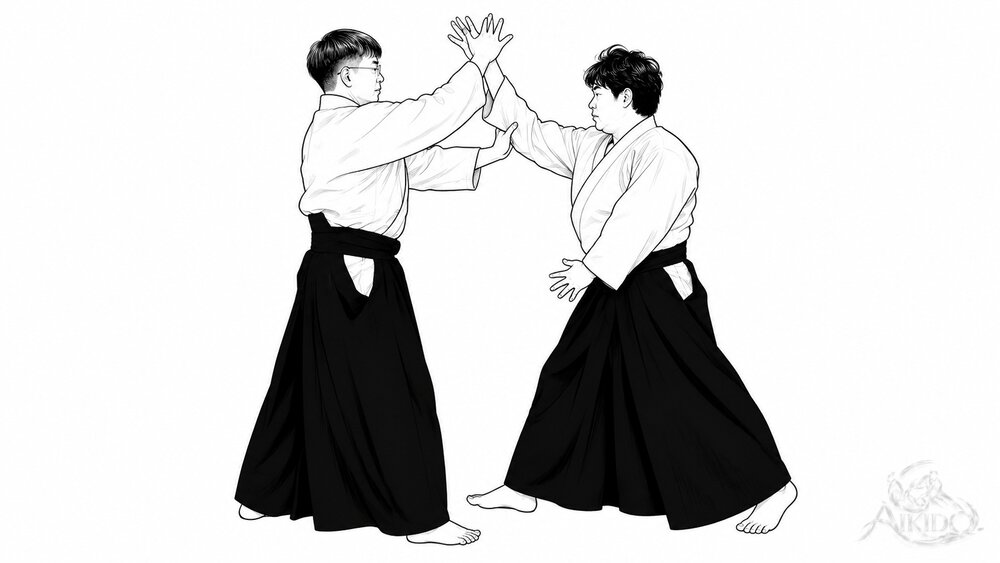
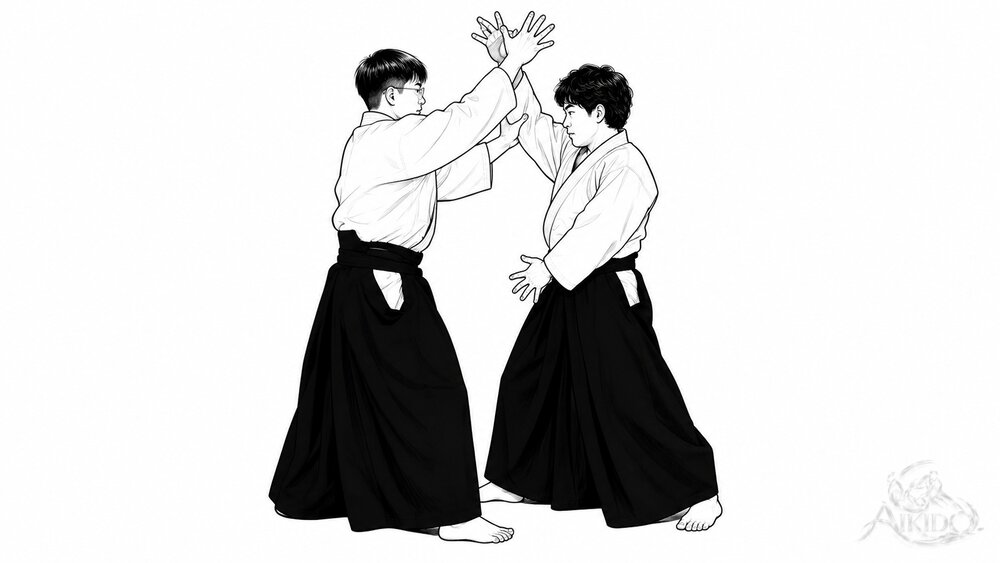
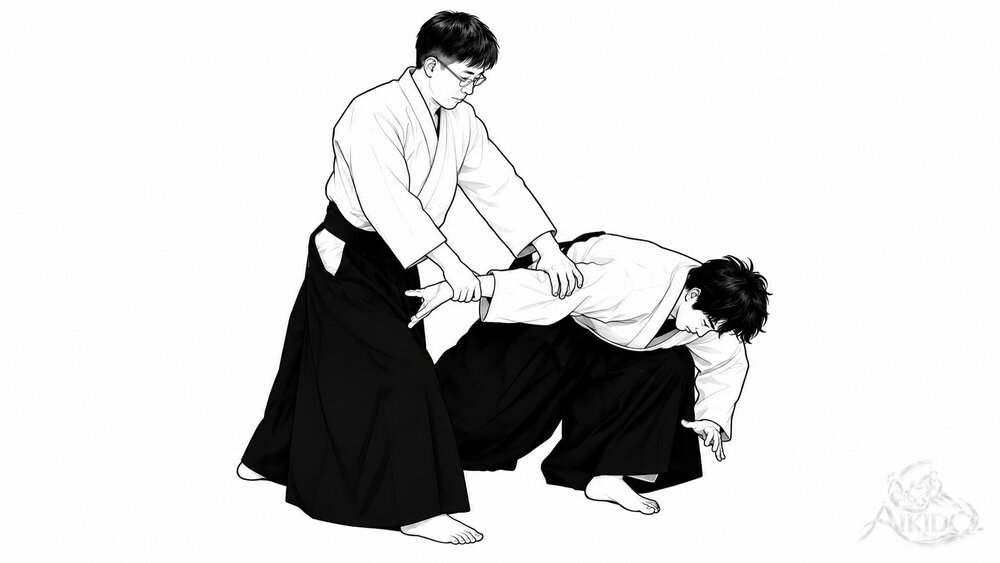
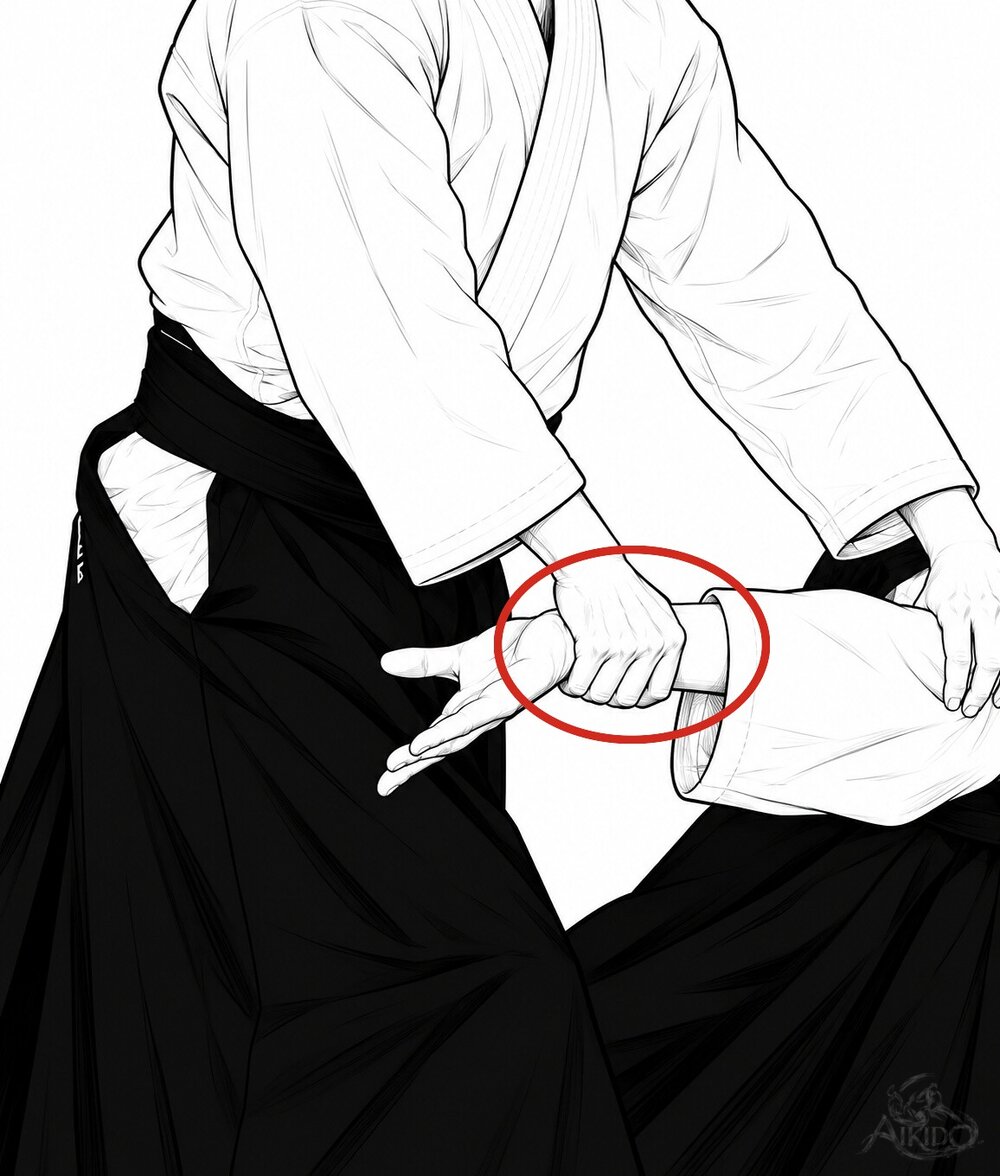
Shomen-uchi ikkyo omote is a pin in which you control your partner’s shomen-uchi with the tegatana and bring your partner down as you advance. In migi ai-hanmi, control your partner’s shomen-uchi with the right tegatana while taking your partner’s elbow with the left hand. Cut the right tegatana down with the feeling of turning that elbow forward. Once you have led it all the way down, take the inside of your partner’s wrist with the right hand, and advance with ayumi-ashi to bring your partner down. Finish with the same pin as katate-dori ikkyo.
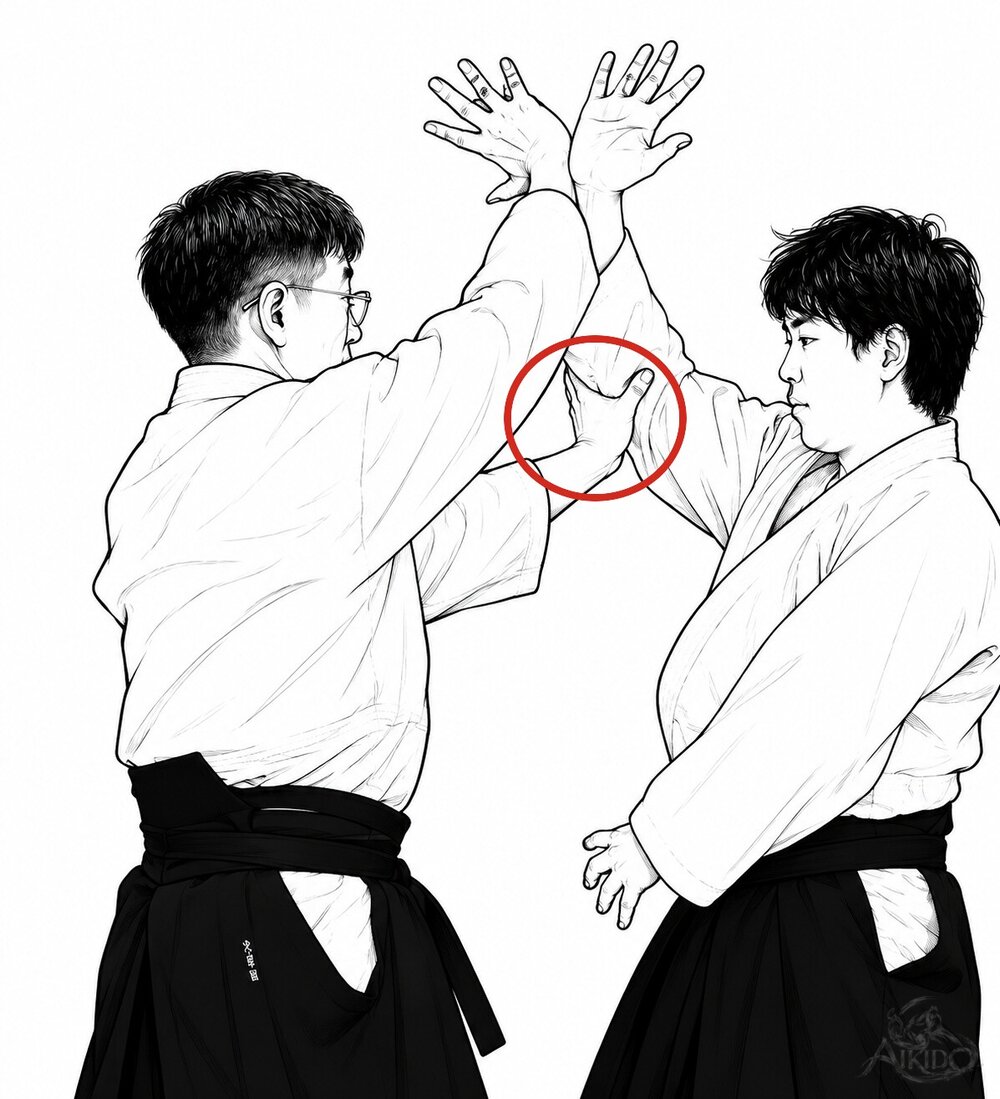
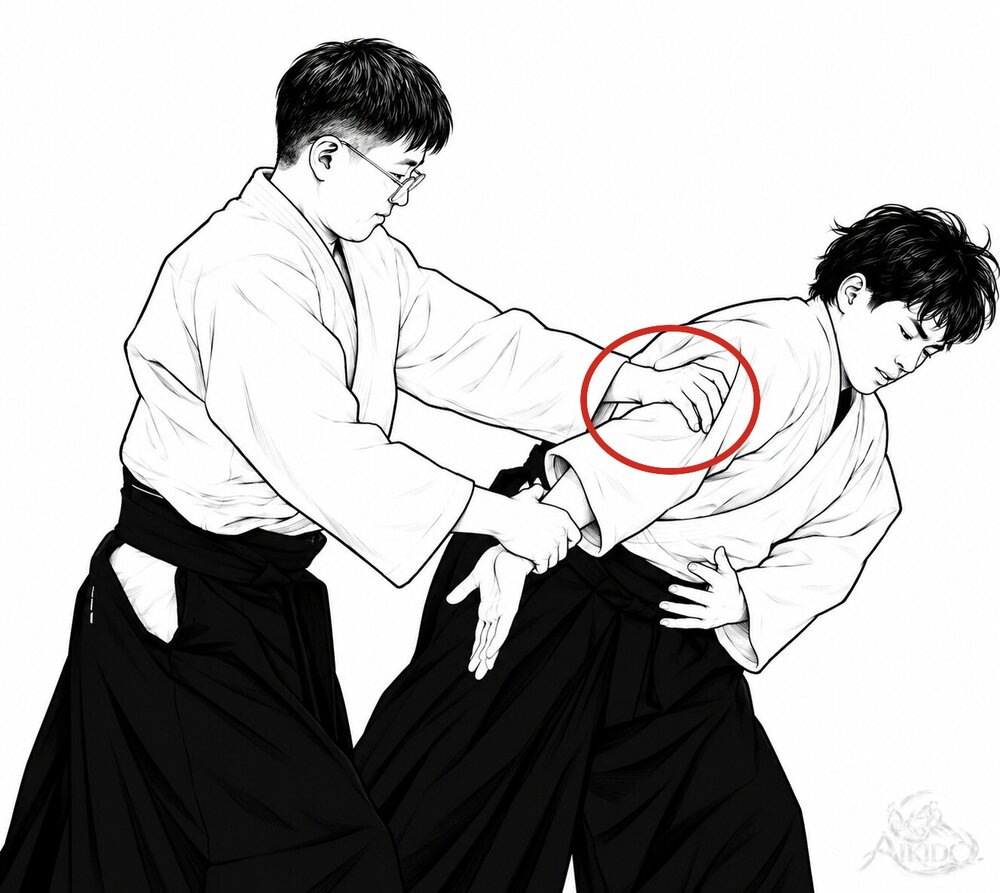
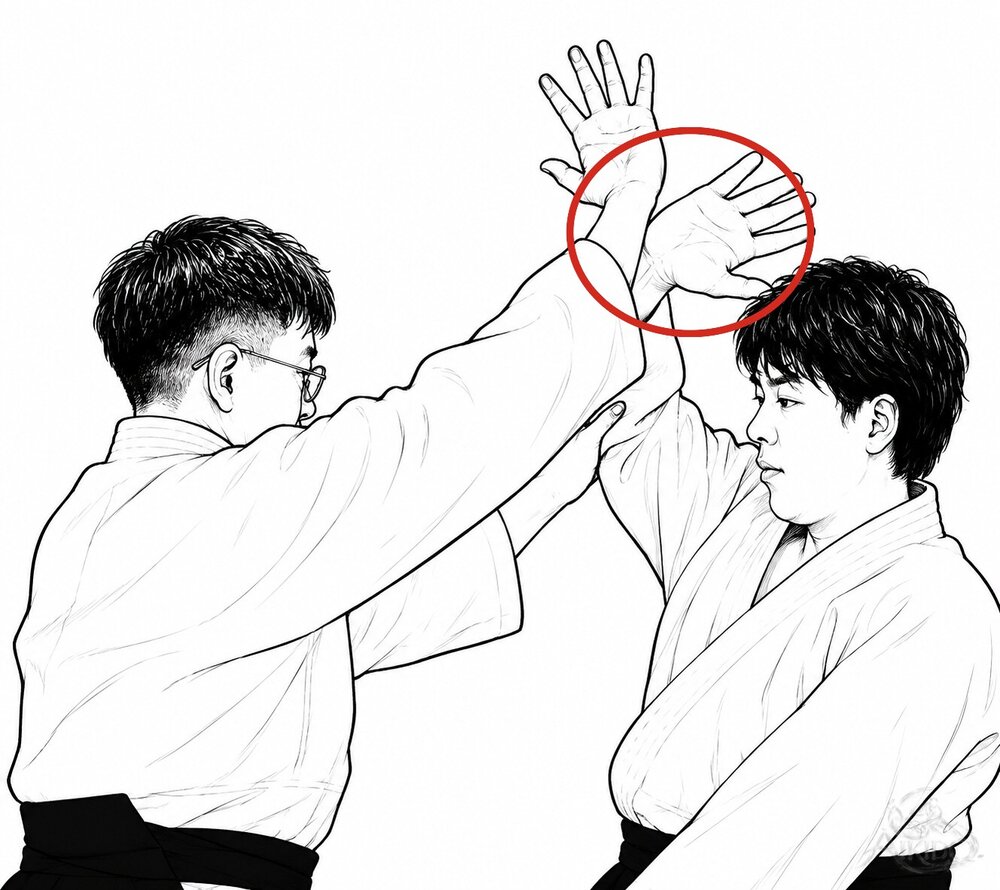
- Turn the elbow as you cut down: When controlling the elbow joint, do it with the feeling of turning the elbow forward. Only when you have clearly turned your partner’s elbow over can you move smoothly into the ikkyo pin.
- Take the inside of the hand: When you have controlled your partner’s shomen-uchi with the tegatana, do not take the wrist immediately. If you cut down in that state, you will have to change your grip when you pin with ikkyo. The key is to turn your partner’s elbow as you cut down, and to take the inside of the wrist once your partner’s hand has turned over far enough.
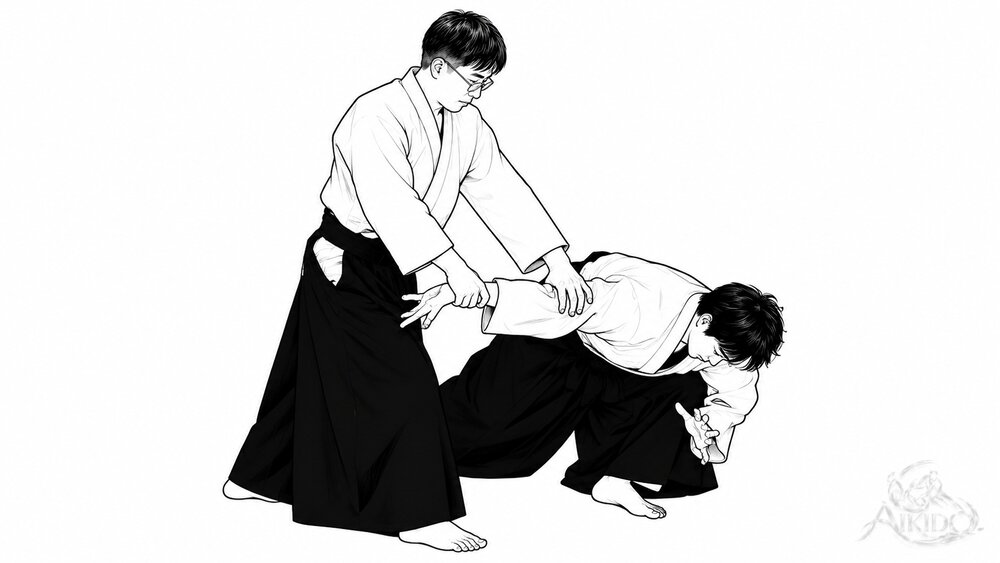
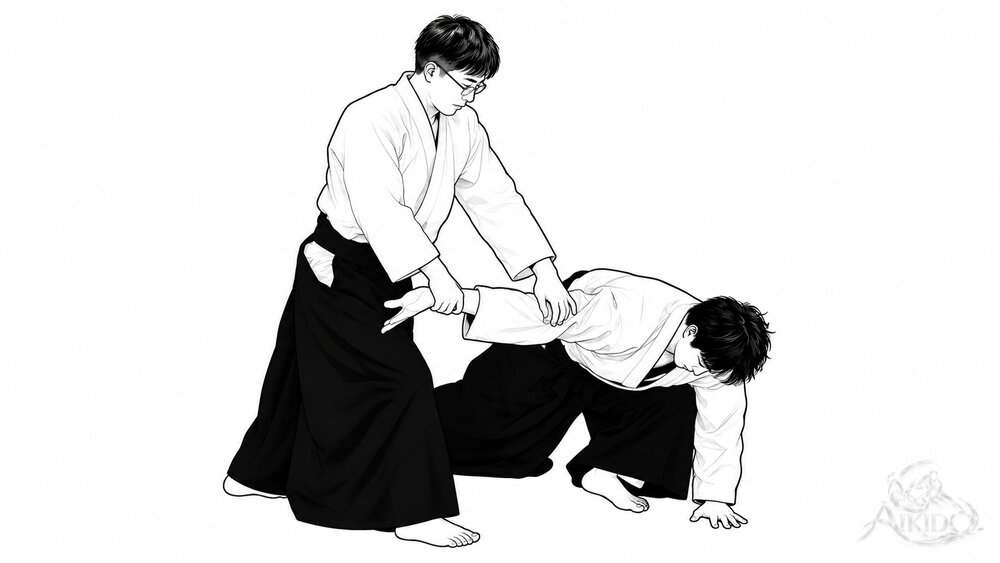
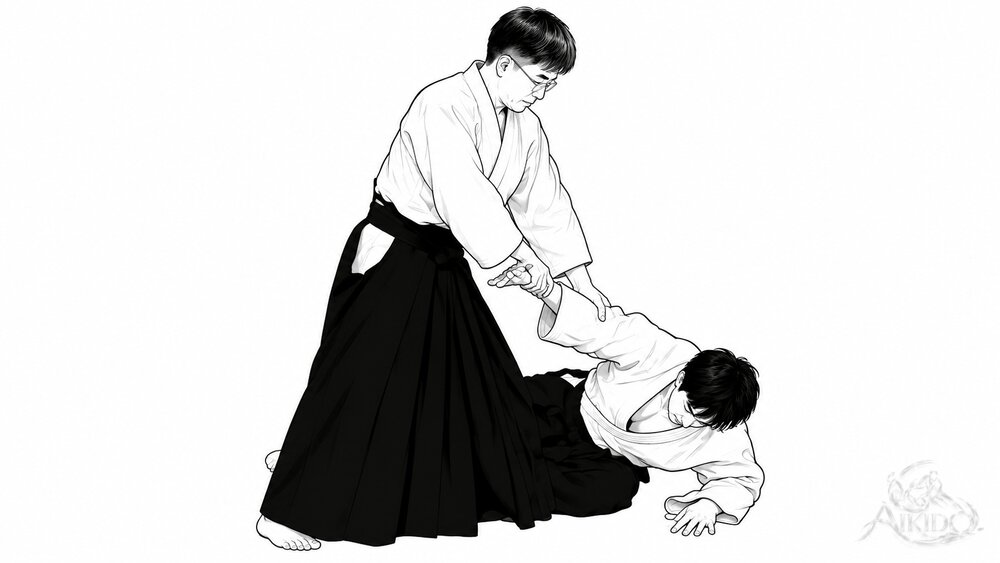
5 Turn your belly toward your partner’s elbow and advance with ayumi-ashi → 6 Kneeling, press your partner’s elbow down to control it → 7 Hold your partner’s wrist and elbow firmly from the little finger, lower your center with your back straight, and set both knees against your partner’s wrist and armpit
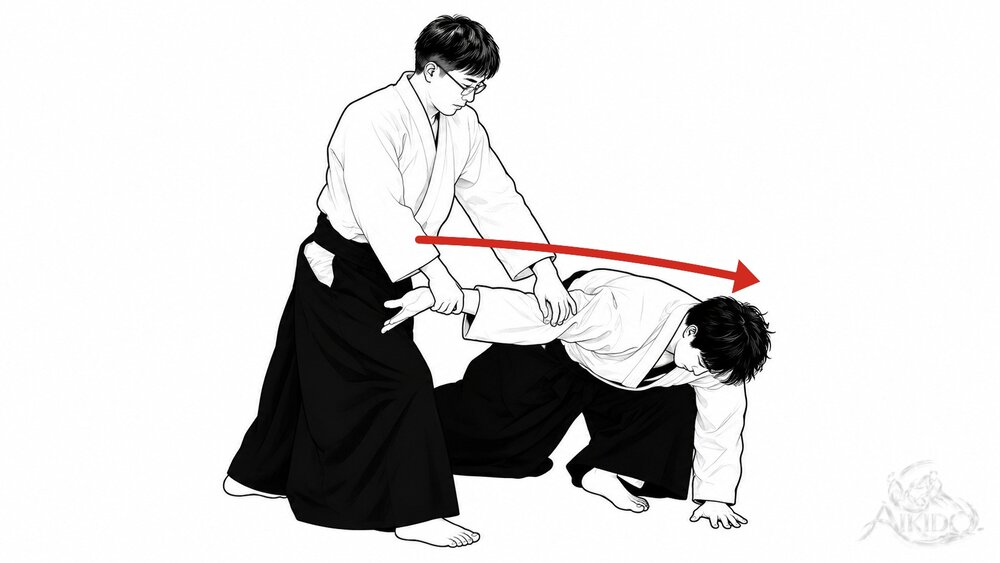
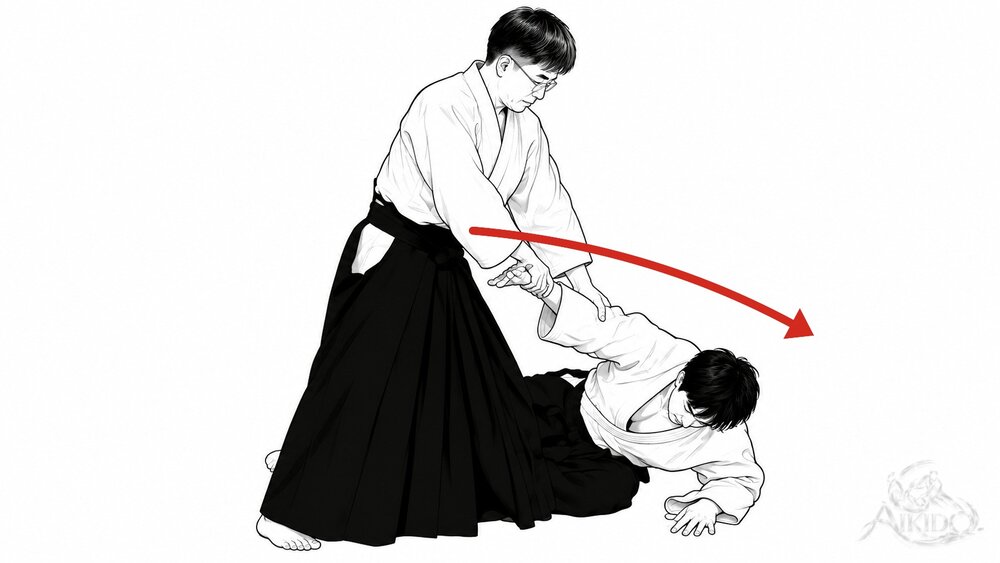
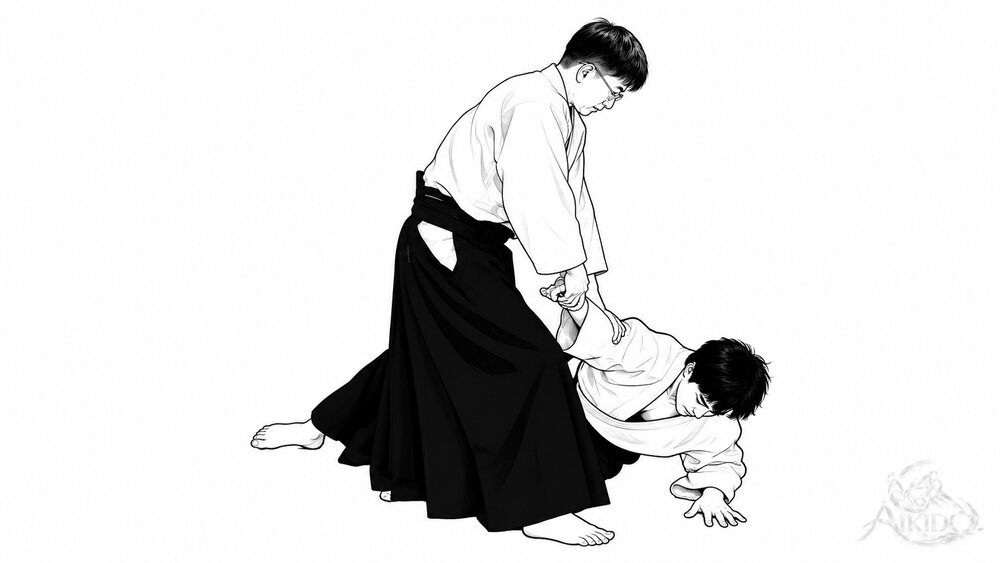
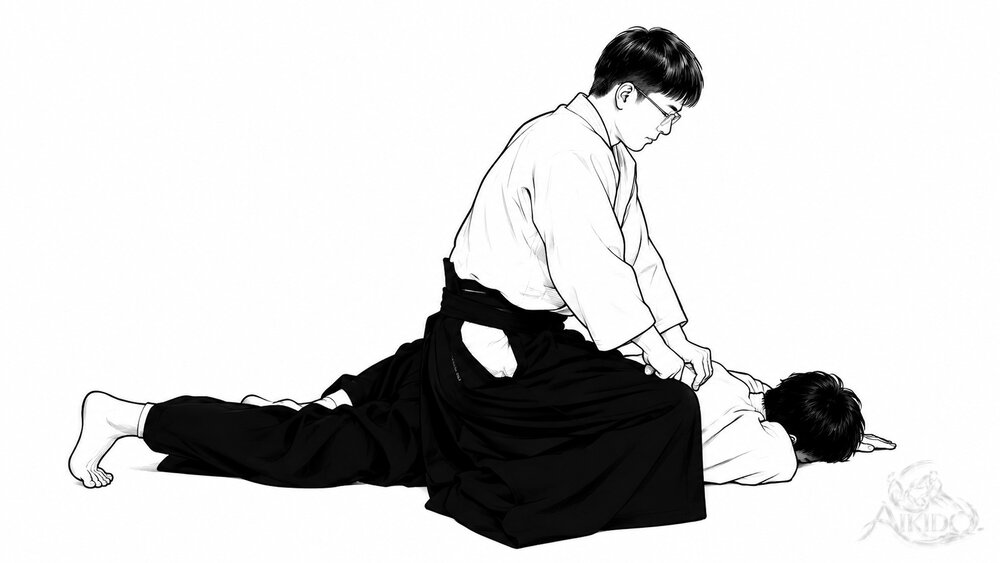
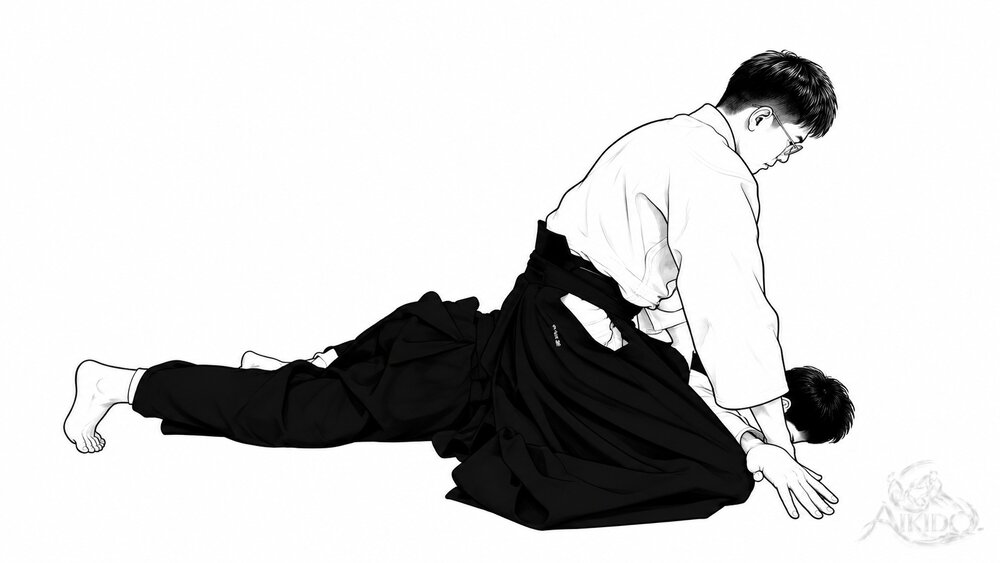
Ukemi for shomen-uchi ikkyo omote. Put the free hand on the floor → Kneel on the same side → Lie face down
- Control with the power of the belly: When controlling the elbow and bringing your partner down, it is important to advance firmly with ayumi-ashi and to do it with the hips engaged in a correct posture. Turn your belly toward your partner’s elbow and take care that your upper body does not lean forward.
- Uke’s ukemi: In shomen-uchi ikkyo omote, uke falls forward as tori cuts down. First put the free hand on the floor, then kneel on the same side. Next put the elbow down, and finally lie face down. Receive correctly, lowering your posture one step at a time, so as not to be injured.
Shomen-uchi Ikkyo Ura (正面打ち第一教 裏)
Key point: Control your partner’s shomen-uchi with the tegatana and cut the elbow down as you turn with tenkan.
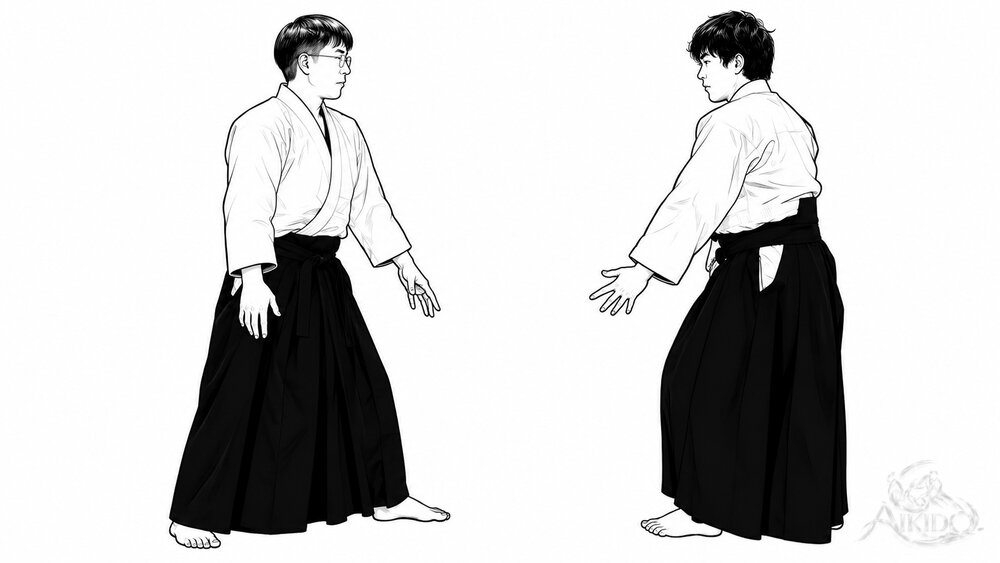
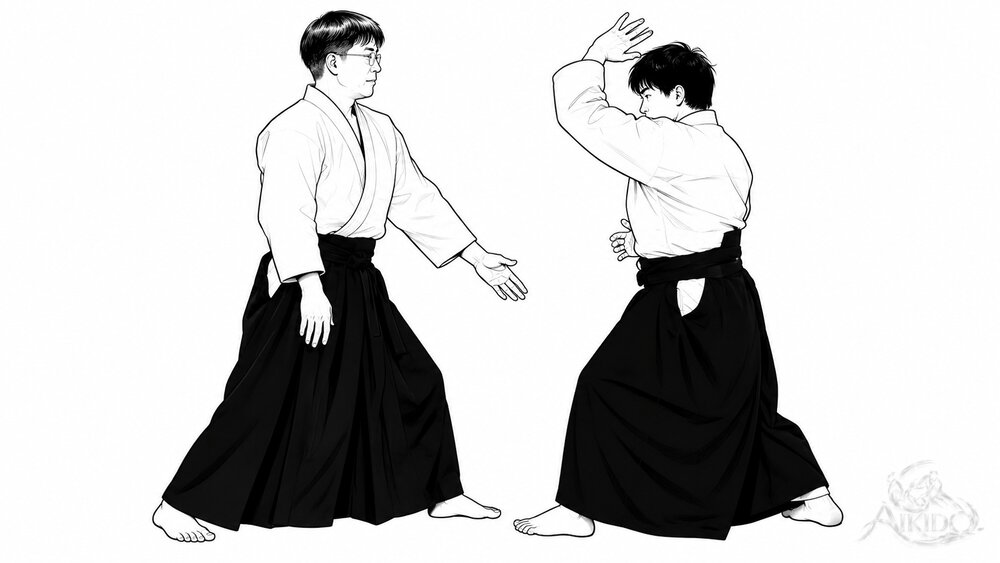
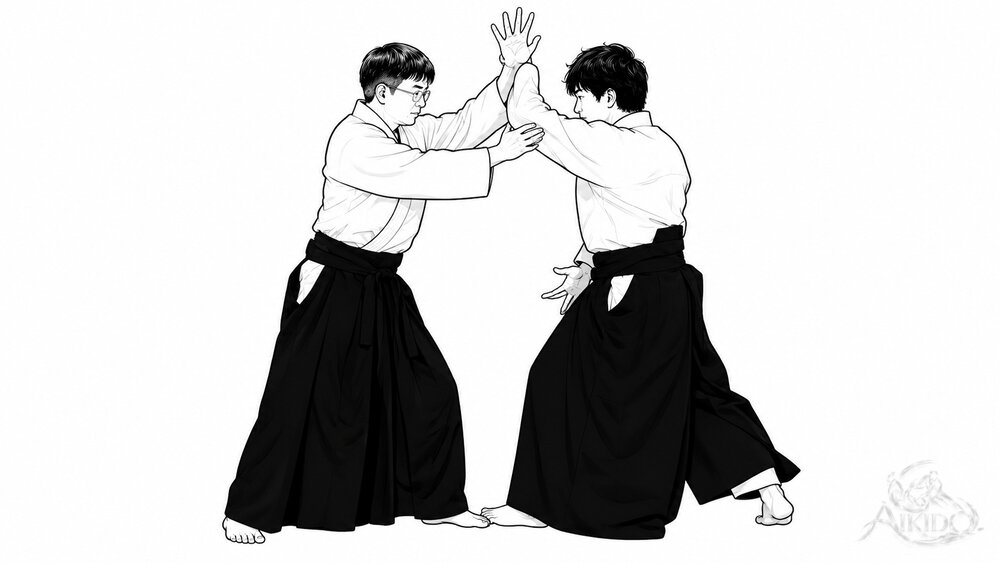
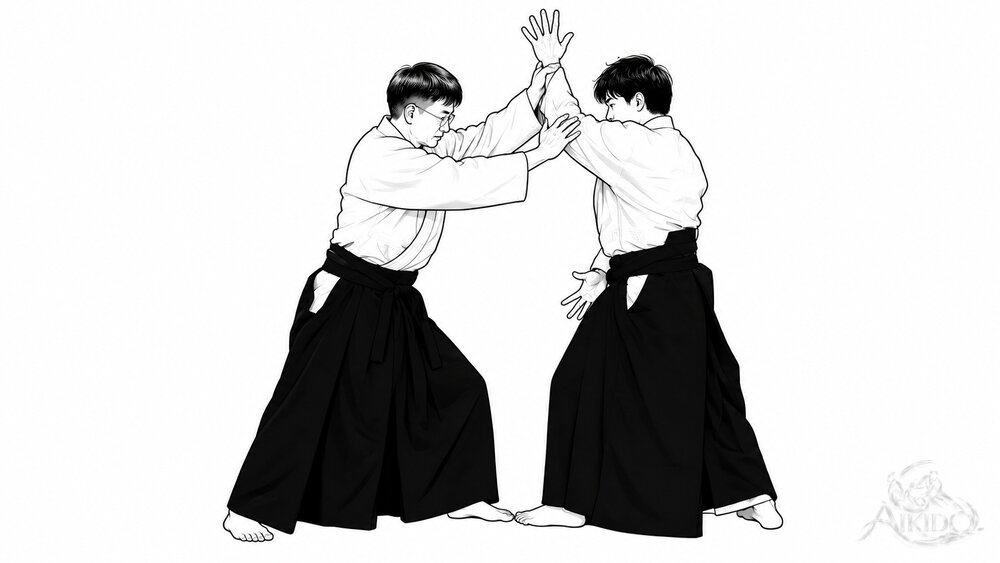
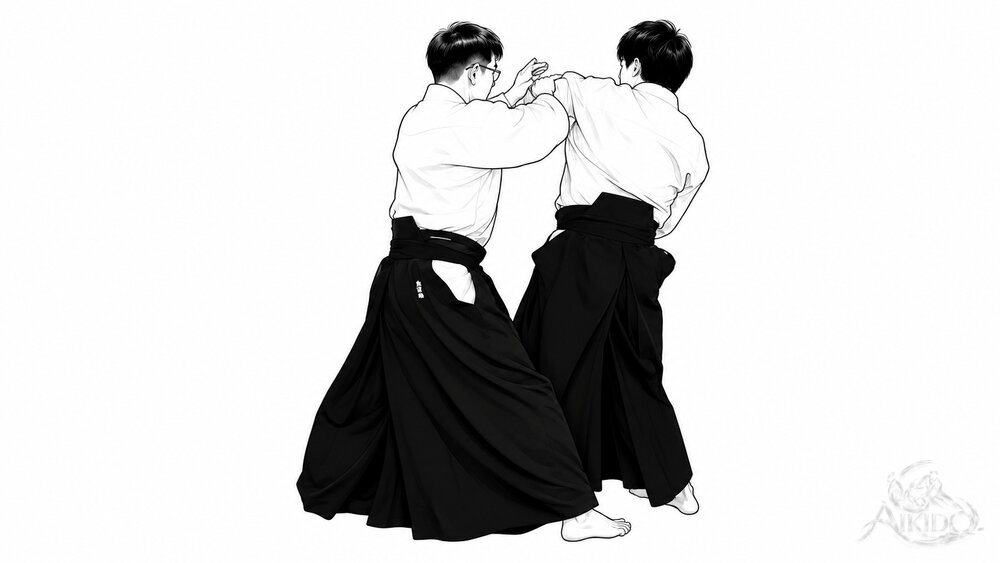
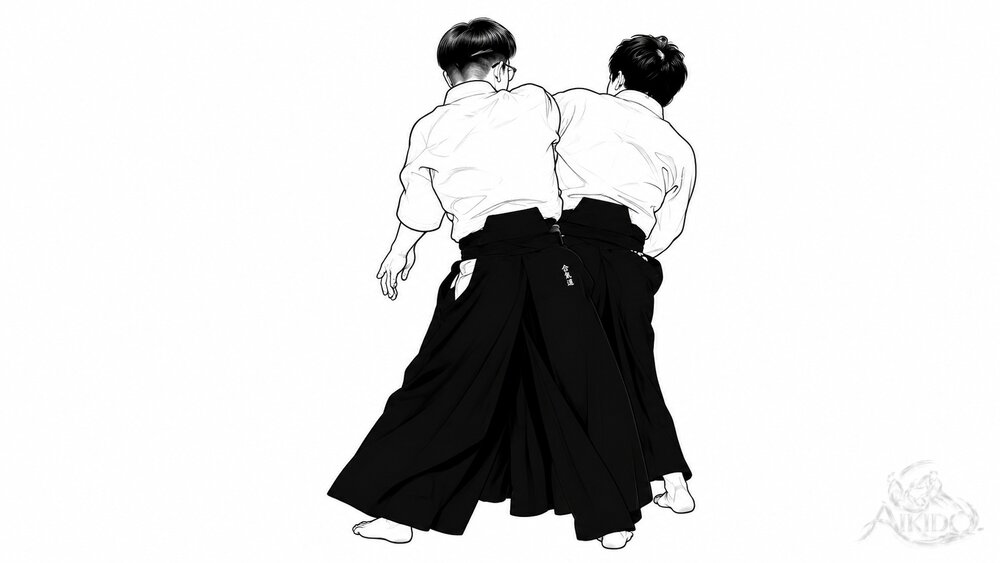
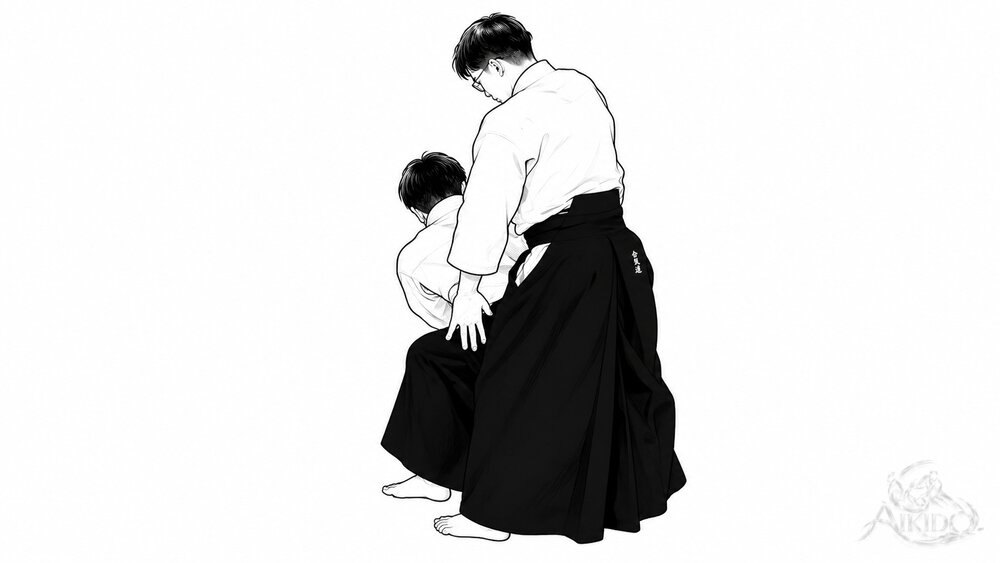
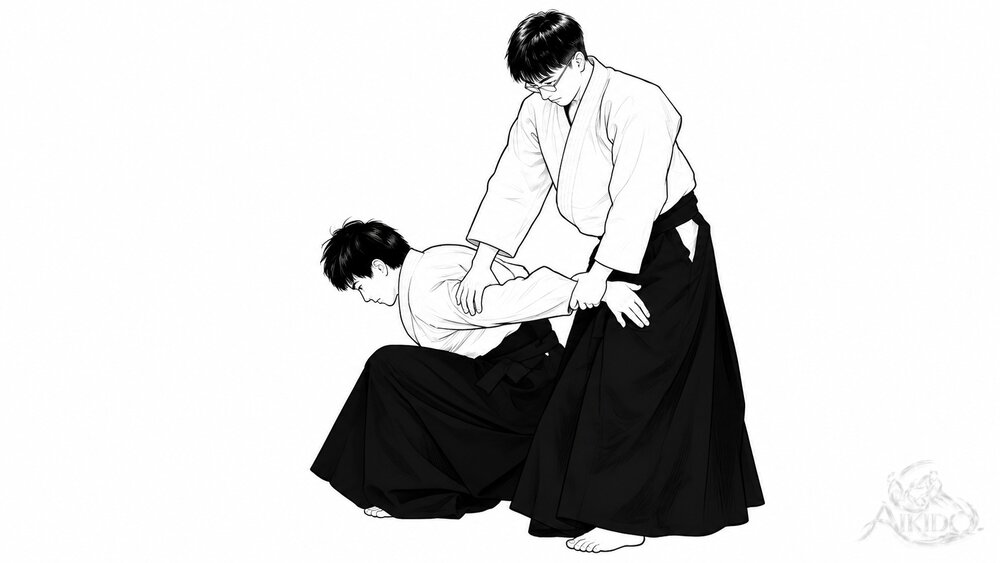
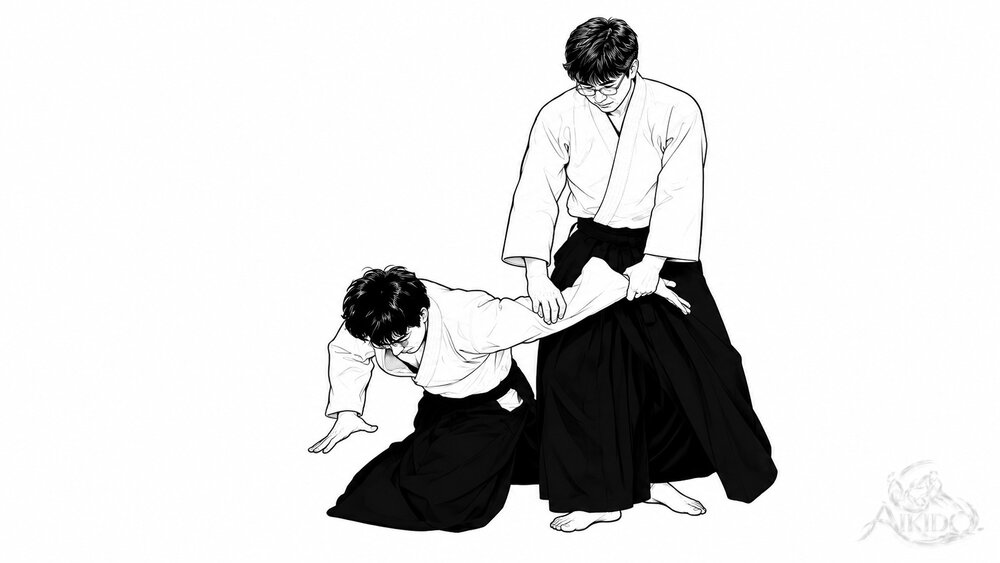
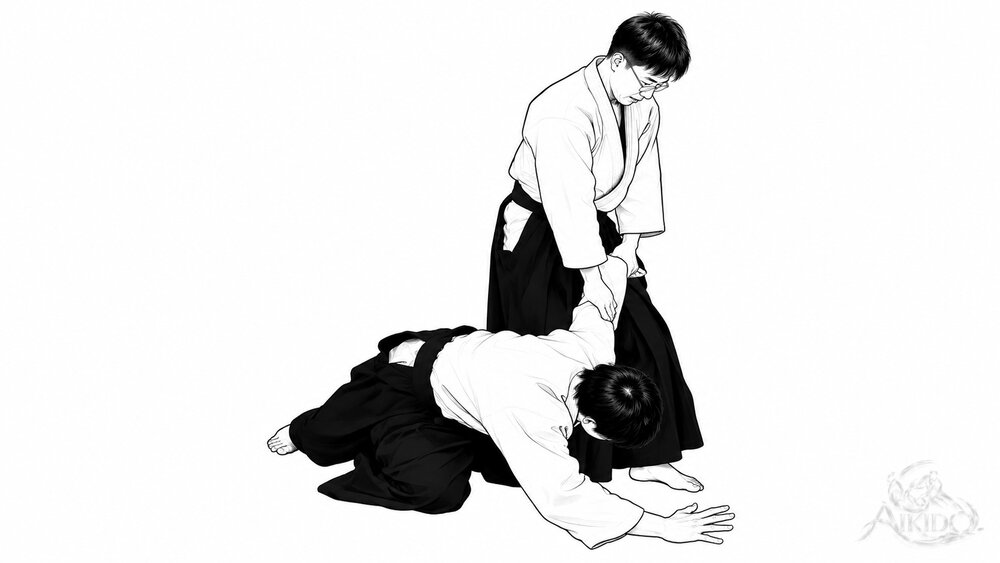
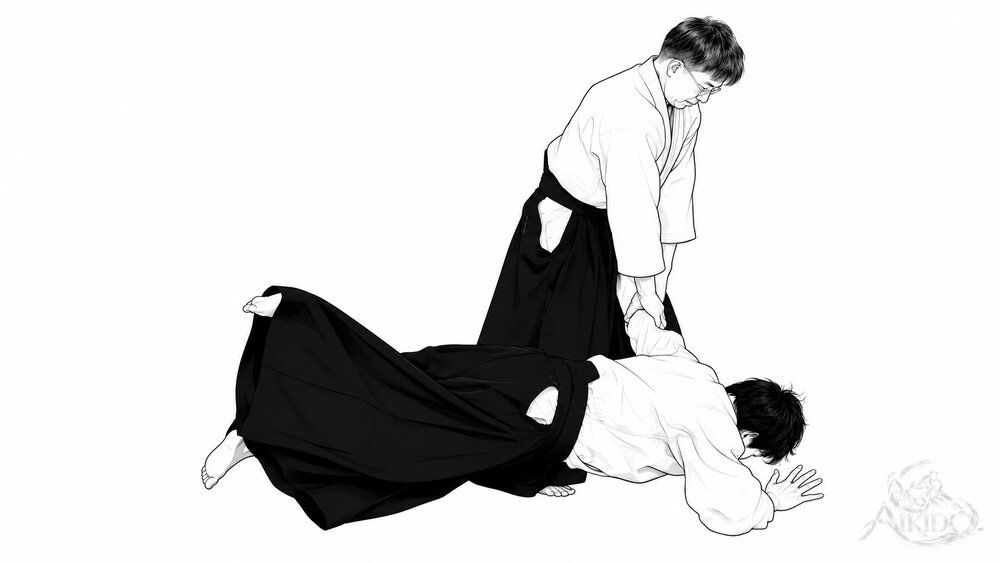
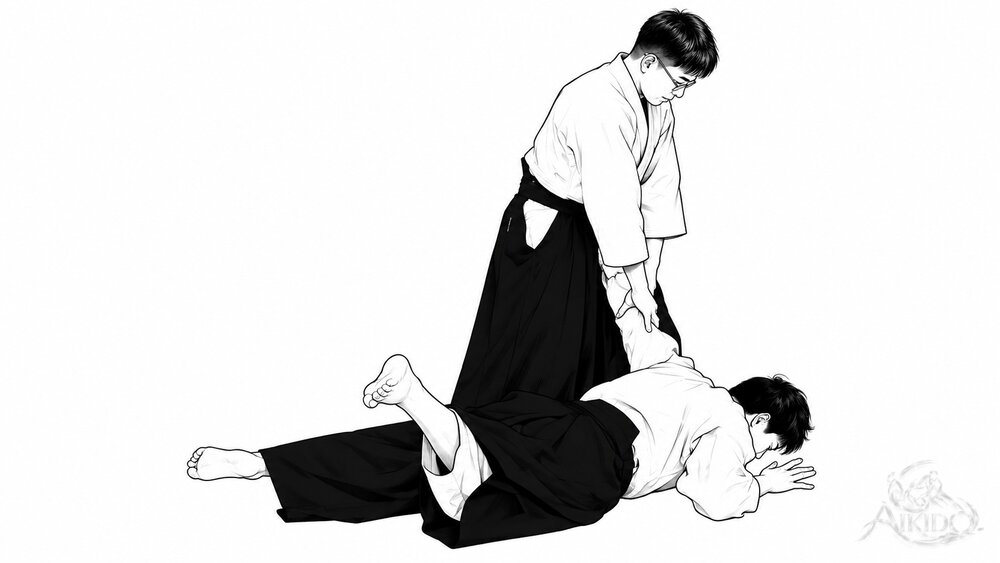
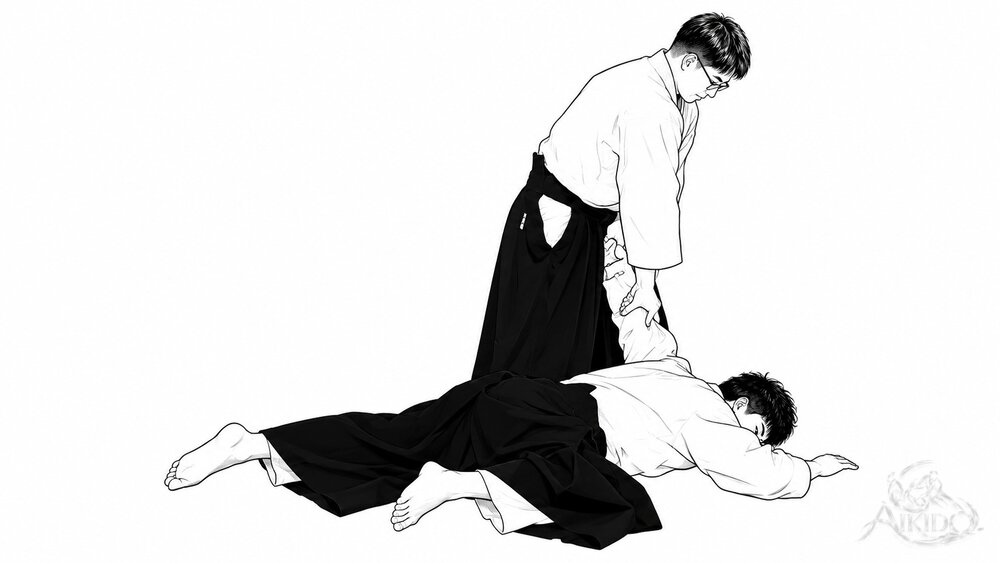
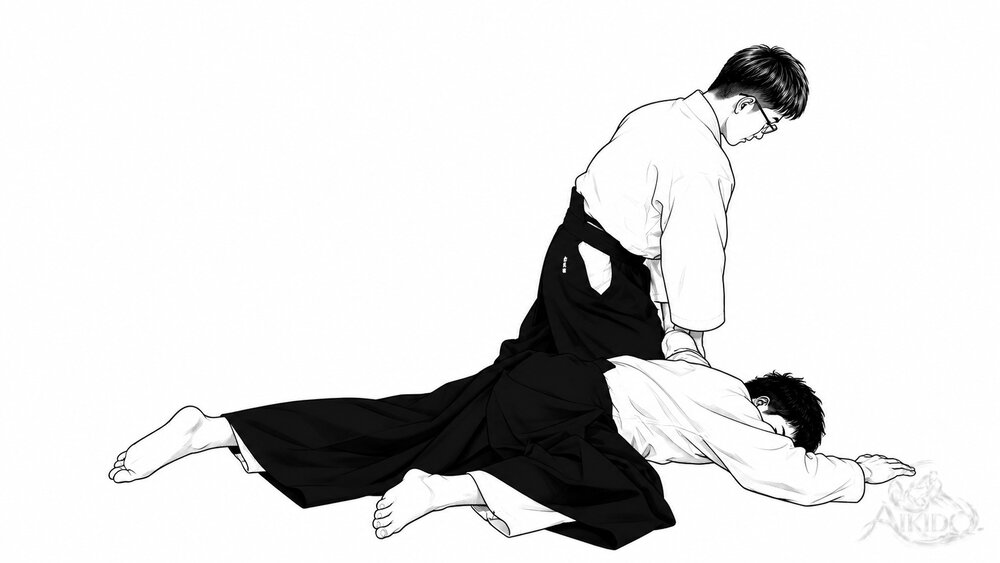
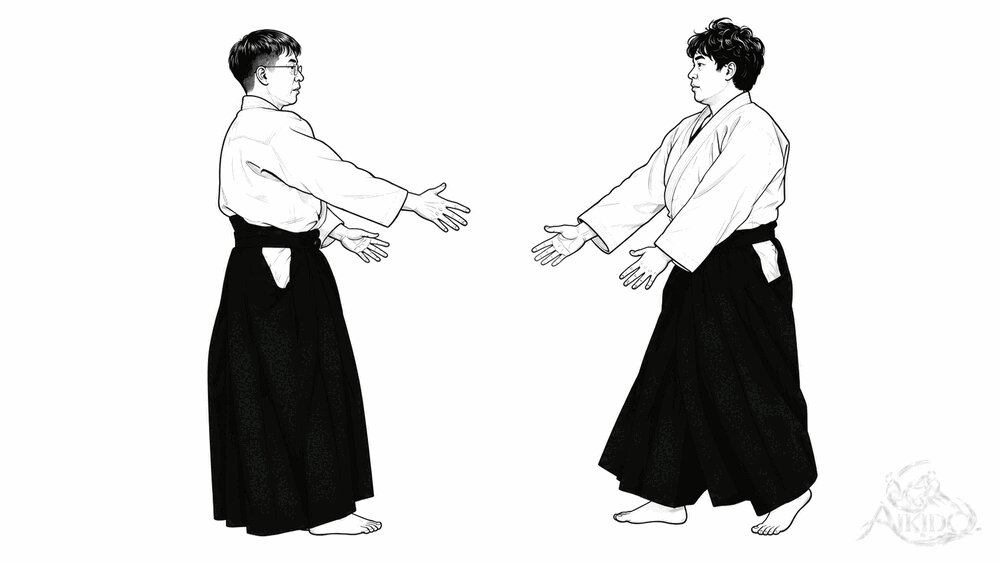
Shomen-uchi ikkyo ura is a pin in which you receive the shomen-uchi with irimi into tenkan and lead your partner’s arm down as if winding it in. In hidari ai-hanmi, control your partner’s shomen-uchi with the left tegatana while taking your partner’s elbow with the right hand. At the same time, step in with the right foot to enter to your partner’s side, and with that foot as the pivot draw the left foot far back to turn with tenkan. In time with the turn of your body, cut your partner’s elbow and wrist down, and finish with the same pin as omote.
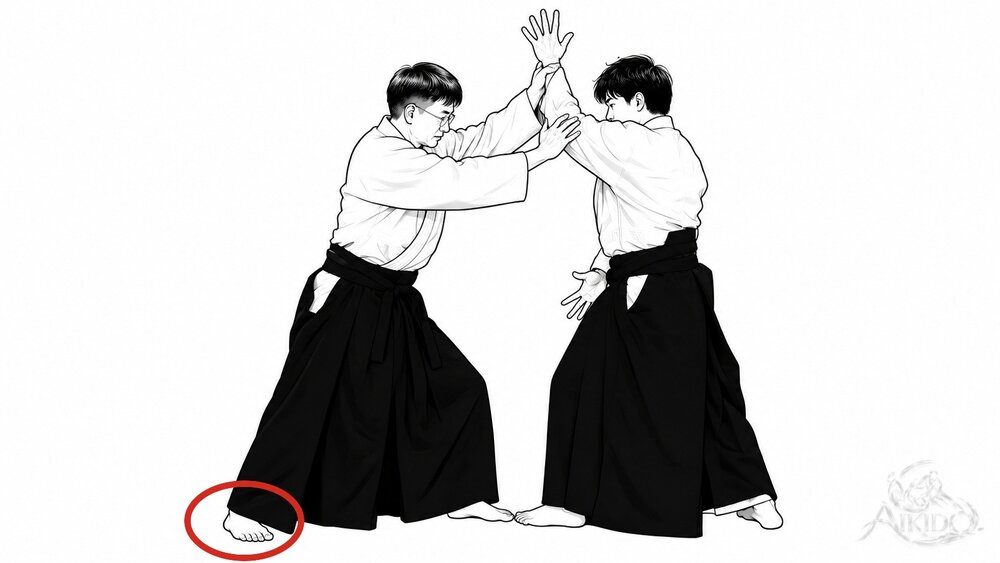
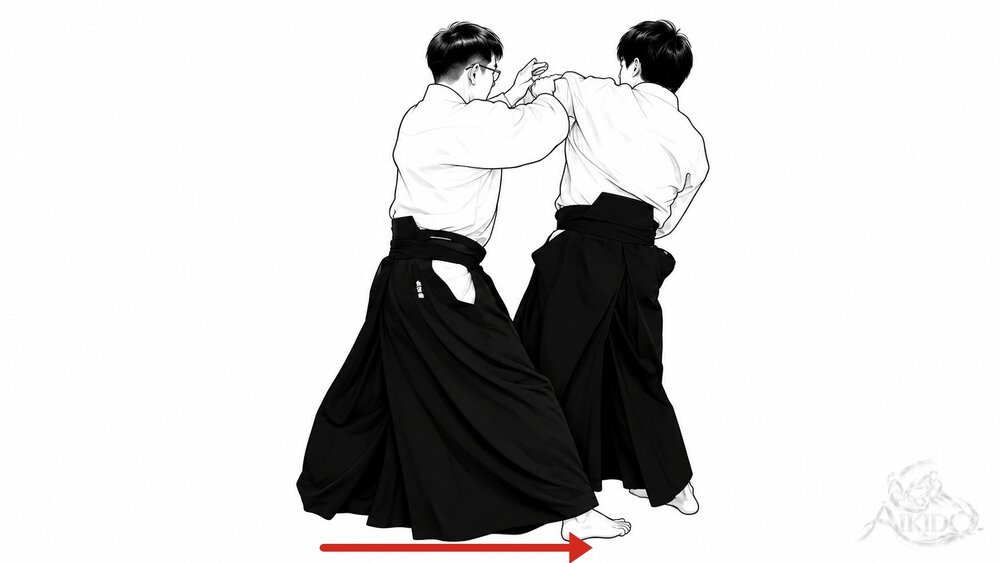
- Back foot outside your partner’s front foot: As you control your partner’s shomen-uchi with the tegatana, enter to your partner’s side at the same time. Enter with ayumi-ashi, back foot first, to the outside of your partner’s front foot. As you step, take your partner’s elbow with the other hand.
- Sit in a correct posture: After bringing your partner face down with tenkan, pin your partner in kiza (跪座, seiza with the toes tucked under). When you sit, do not lean forward; do it with the hips engaged in a correct posture.
- Ukemi for ura: In ura, a rotation is added because of the turning body movement. Uke kneels, puts a hand down, and from there goes into the face-down position. Understand how this differs from omote.
Last updated November 1, 2026 · This book continues to be revised after publication.
© 2026 Moon Young-chan. All rights reserved.
The text and images of this book are protected by copyright and may not be reproduced or distributed without permission.