
Learning the Feel of Technique Through the Basics
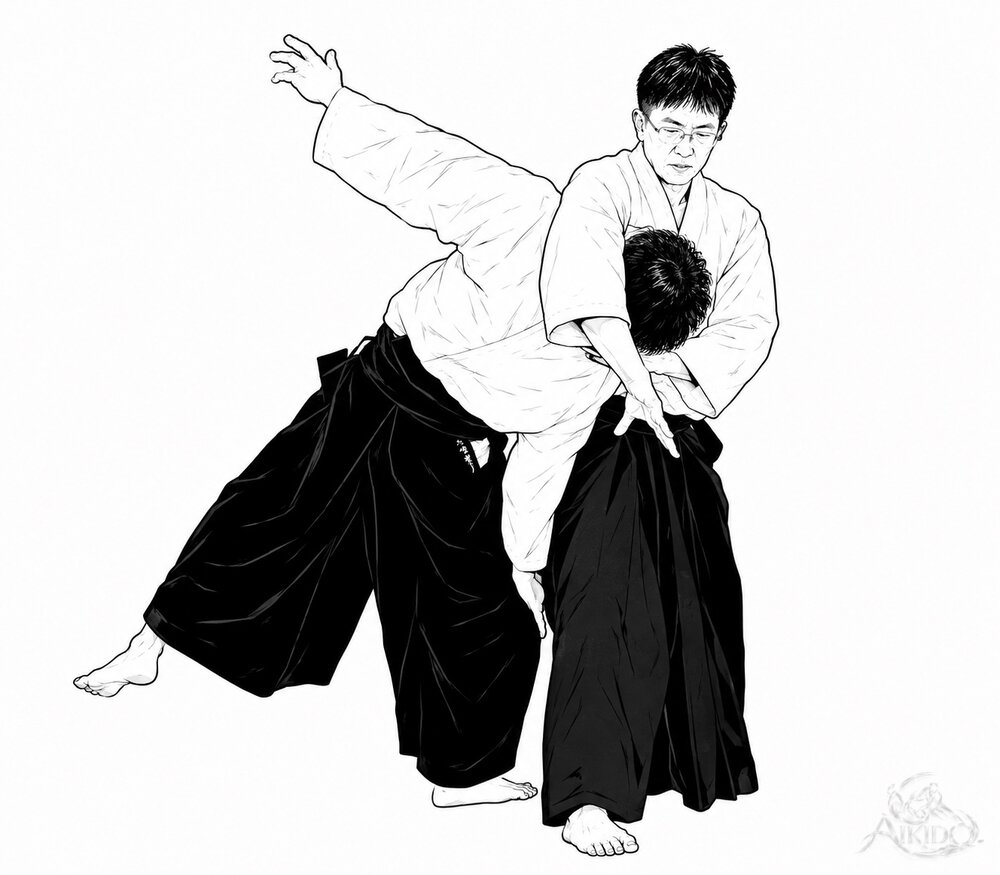
Aikido techniques change with the situation and conditions of the moment. Your partner may attack with shomen-uchi, or grab one hand or both hands. The movement you respond with also differs depending on whether you are in ai-hanmi or gyaku-hanmi, and on whether it is the left or the right side.
These many techniques fall broadly into nage waza (投げ技, throwing techniques) and katame waza (固め技, pinning techniques). They are also divided into tachi waza (立ち技), done standing, and suwari waza (座り技), done kneeling. And even the same technique is divided into two forms depending on how you enter.
- Omote (表) — techniques that enter in front of the partner
- Ura (裏) — techniques that enter behind the partner
Aikido techniques are deep, and to someone learning them for the first time they can feel very difficult. But however complex a technique may be, it rests on the basic techniques. In this chapter we have chosen as basic techniques the throws and pins a beginner should learn first. By training (keiko, 稽古) in these techniques again and again, you make the feel of technique part of your body one step at a time: timing, how to use power, and how to match your breathing with your partner.
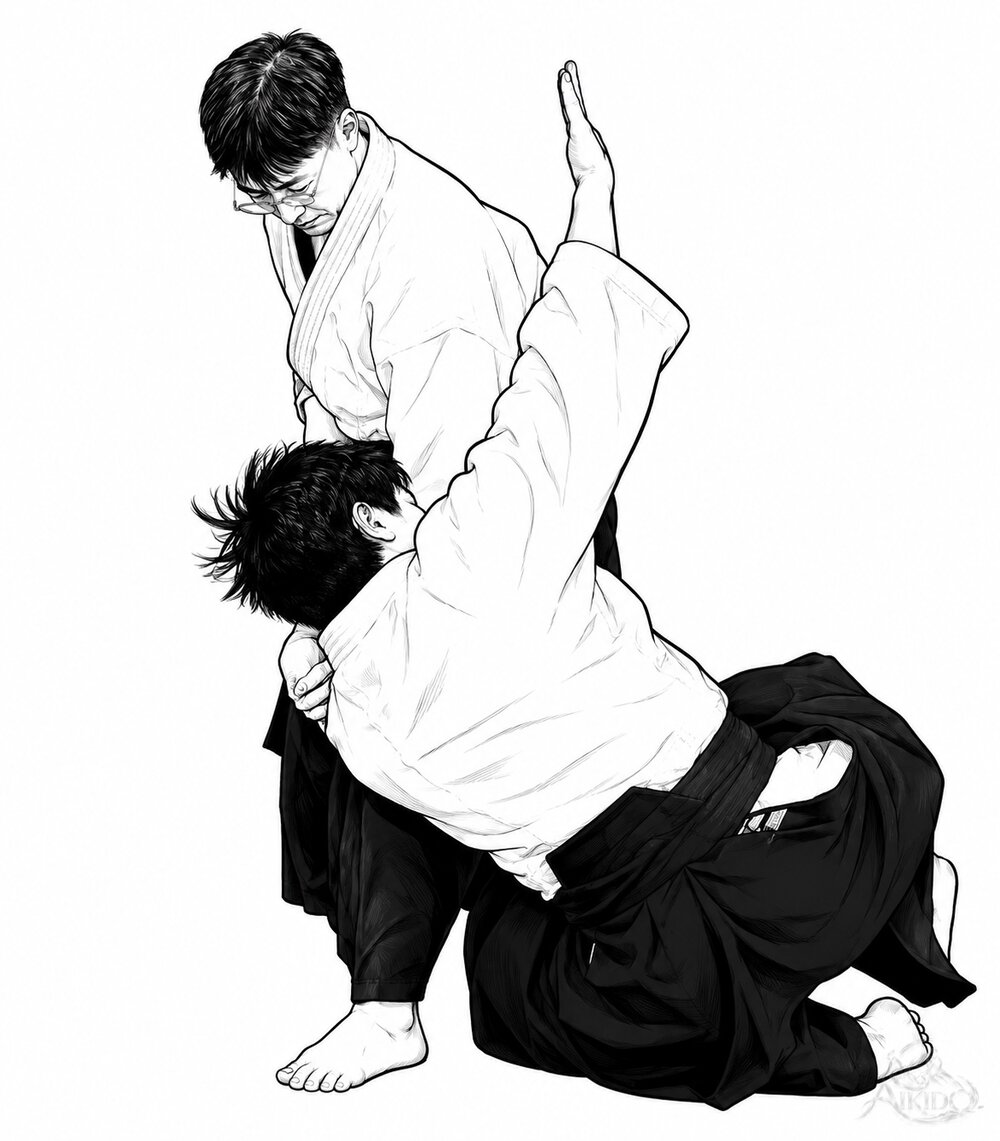
Throws first: As the first step into actual techniques, you learn throws that use irimi and tenkan, the most basic of the basic body movements (tai sabaki, 体さばき). You learn four in all: irimi nage from katate-dori and from shomen-uchi, and shiho nage in its omote and ura forms.
Developing kokyu-ryoku with pins and kokyu-ho: Using the power you have efficiently is called kokyu-ryoku (呼吸力, breath power). After learning the basics of pinning techniques, you learn kokyu-ho (呼吸法), the conditioning exercise that develops this kokyu-ryoku.
Last updated November 1, 2026 · This book continues to be revised after publication.
© 2026 Moon Young-chan. All rights reserved.
The text and images of this book are protected by copyright and may not be reproduced or distributed without permission.