
Tanren-ho (鍛錬法) — Conditioning Exercises
Morote-dori Kokyu-ho Omote (諸手取り呼吸法 表)
Key point: Convey the power produced by the legs and hips to your partner through the tegatana.
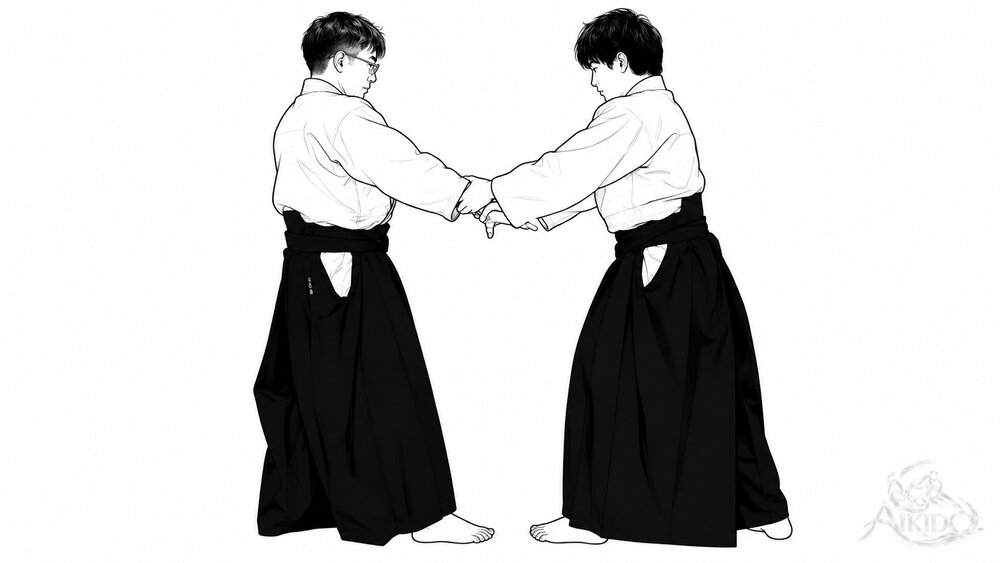
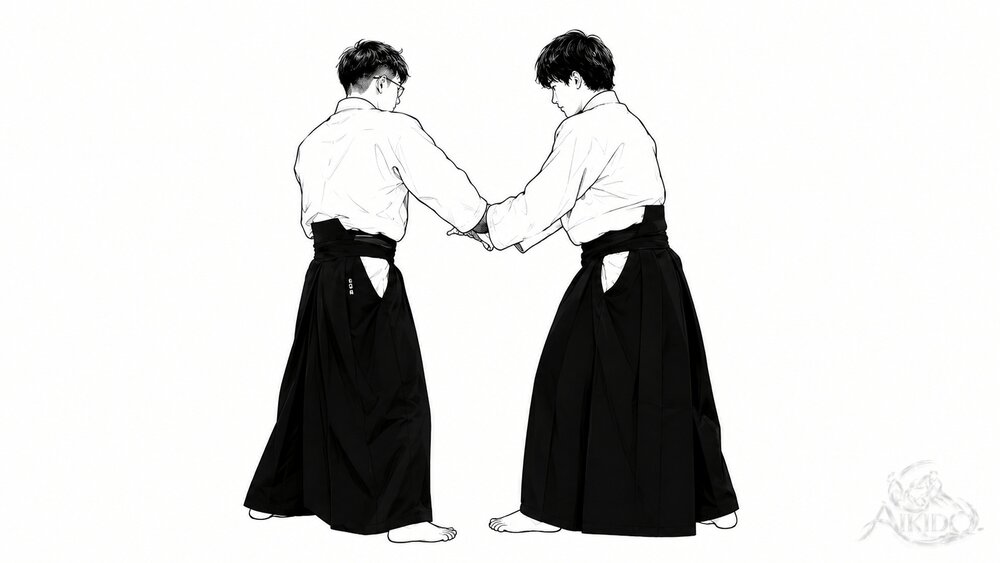
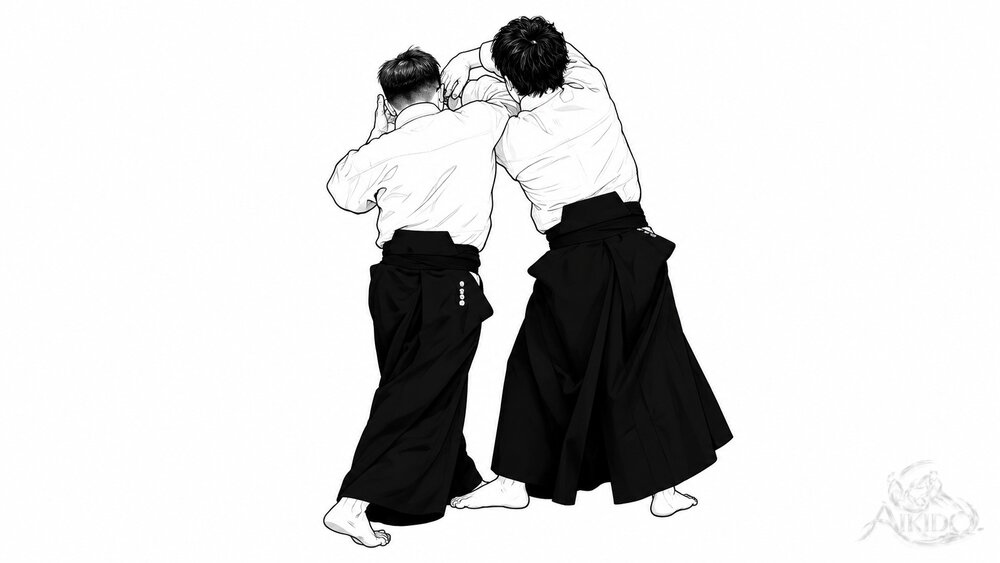
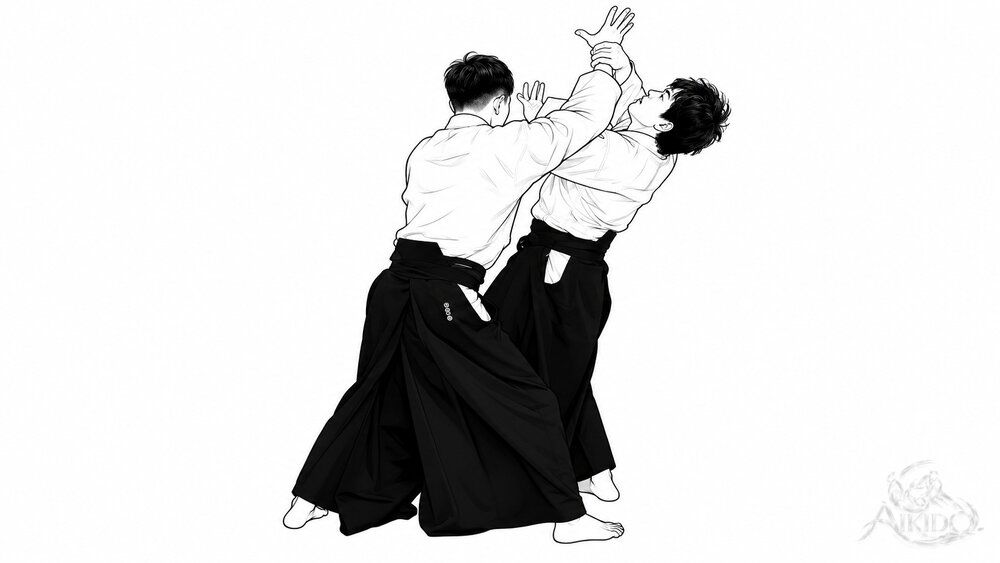
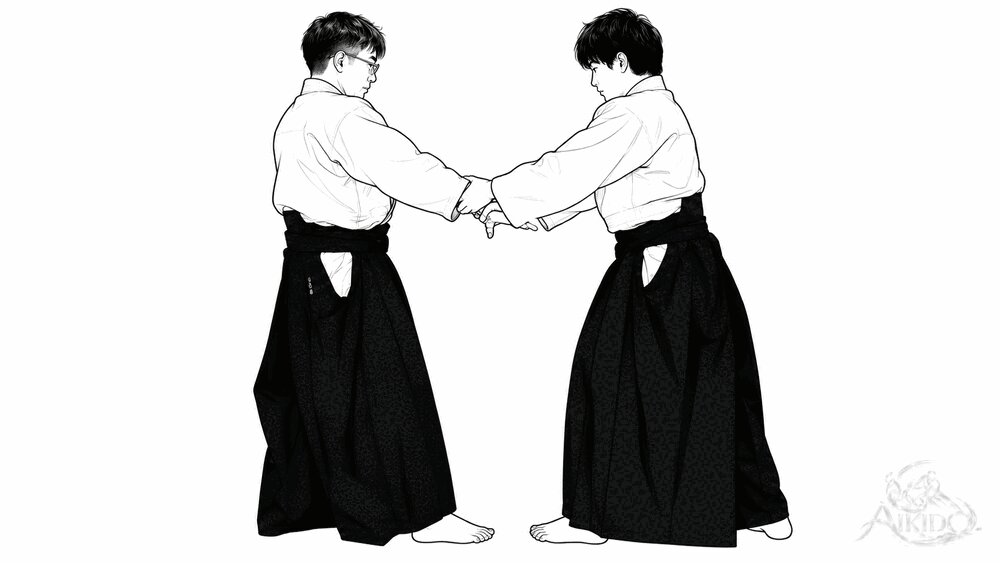
Migi gyaku-hanmi; your partner comes to grab your hand → Morote-dori → Enter in front of your partner, left foot first, cutting the tegatana up along your center → Step the right foot to your partner’s side, drawing a large arc with the tegatana
Kokyu-ho is training that develops kokyu-ryoku: gathering the power of the whole body and releasing it efficiently. In morote-dori kokyu-ho omote, from morote-dori you enter in front of your partner and cut the tegatana straight up along the center of your body. Then, stepping to your partner’s side, you cut down in a large arc with the feeling of delivering to your partner the power gathered at your center. In kokyu-ho the most important thing is to feel the flow of power.
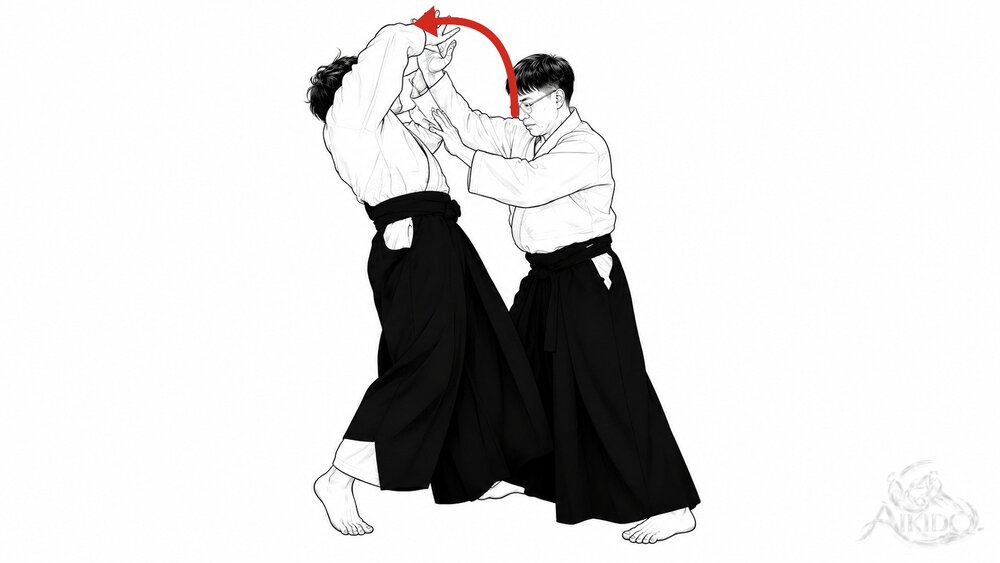
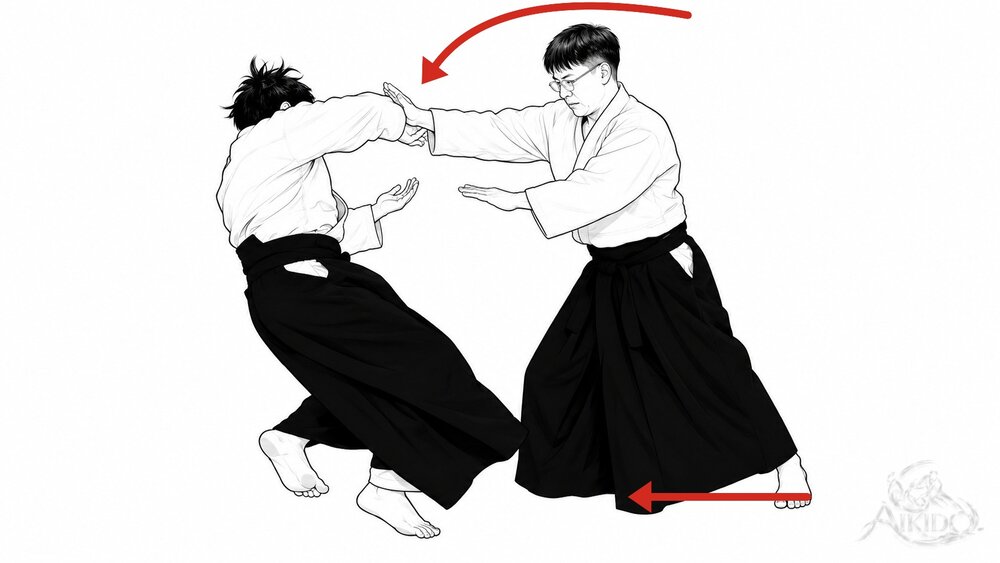
- Cut the tegatana up along your center: Using the power of irimi as you step in front of your partner, cut the tegatana up from the center of your body. Develop the feeling of conveying the power produced by your whole body to the tegatana and breaking your partner’s posture.
- Put the power of the legs and hips into your partner: Having cut the tegatana up as you entered, now cut down in a large arc as you step to your partner’s side. What matters is the feeling of cutting down while putting into your partner the power that has traveled from the legs and hips to the upper body and on into the tegatana. Do not break the movement that continues from the cut up; keep the power flowing as you cut down.
Morote-dori Kokyu-ho Ura (諸手取り呼吸法 裏)
Key point: Gather the power created by tenkan at the center of the body and send it out.
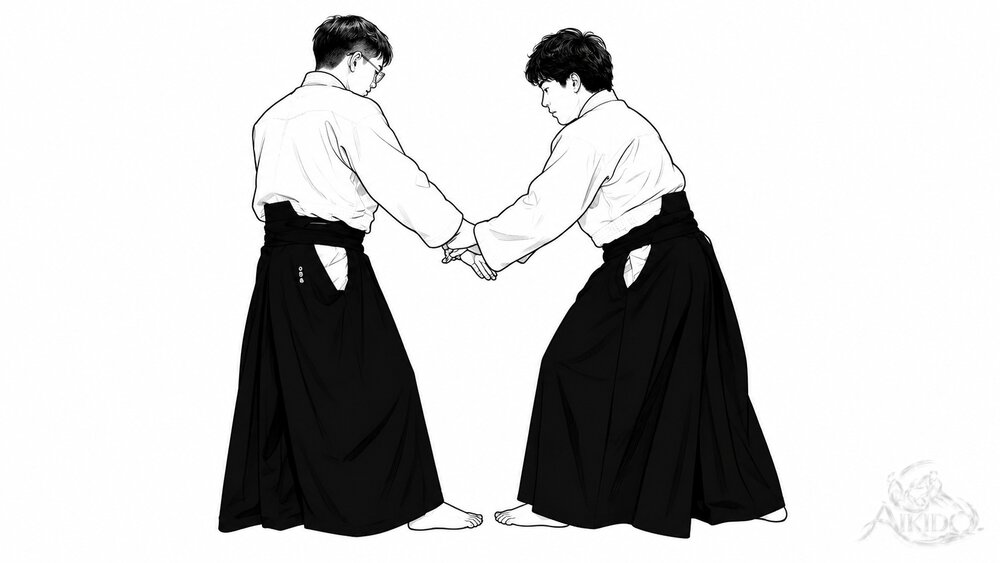
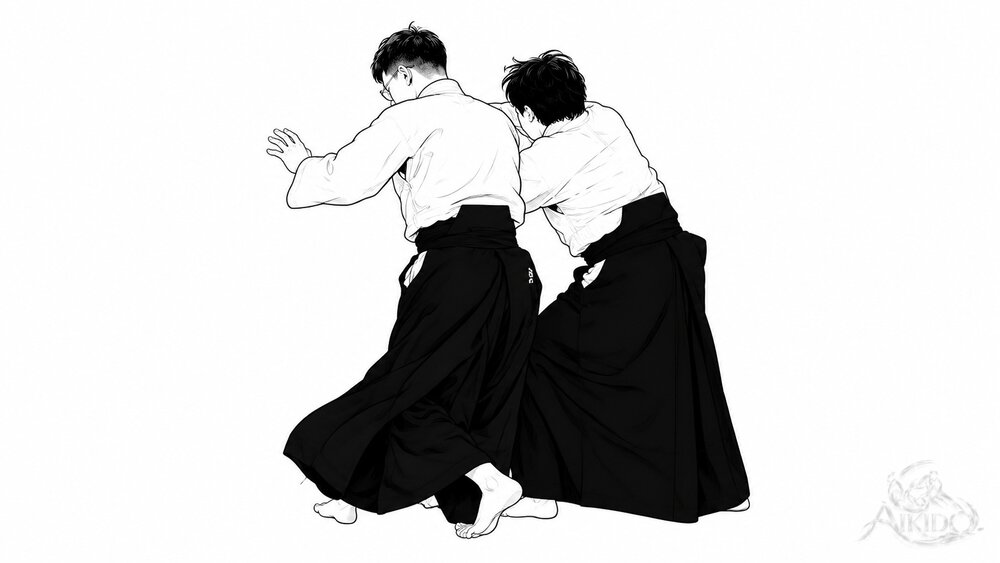
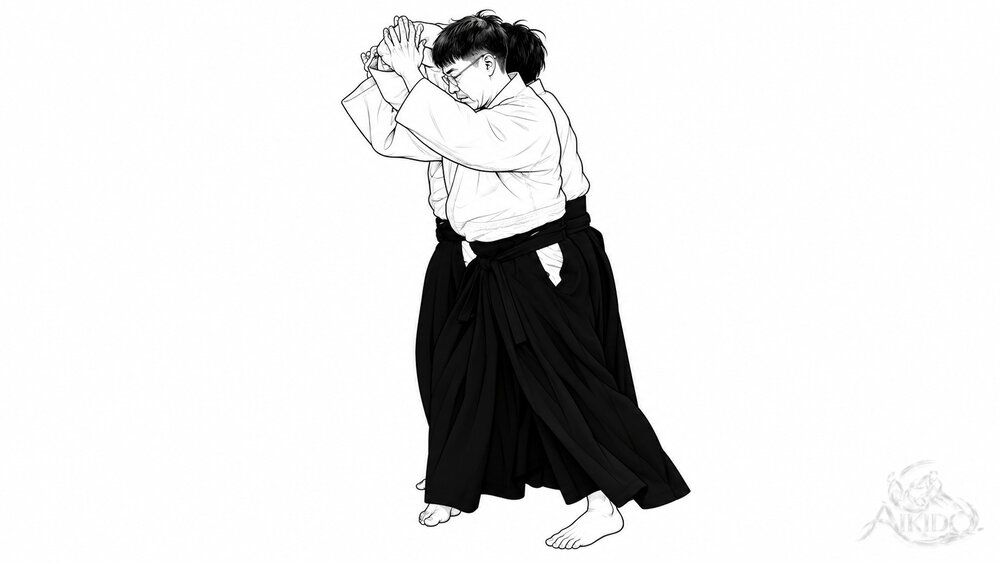
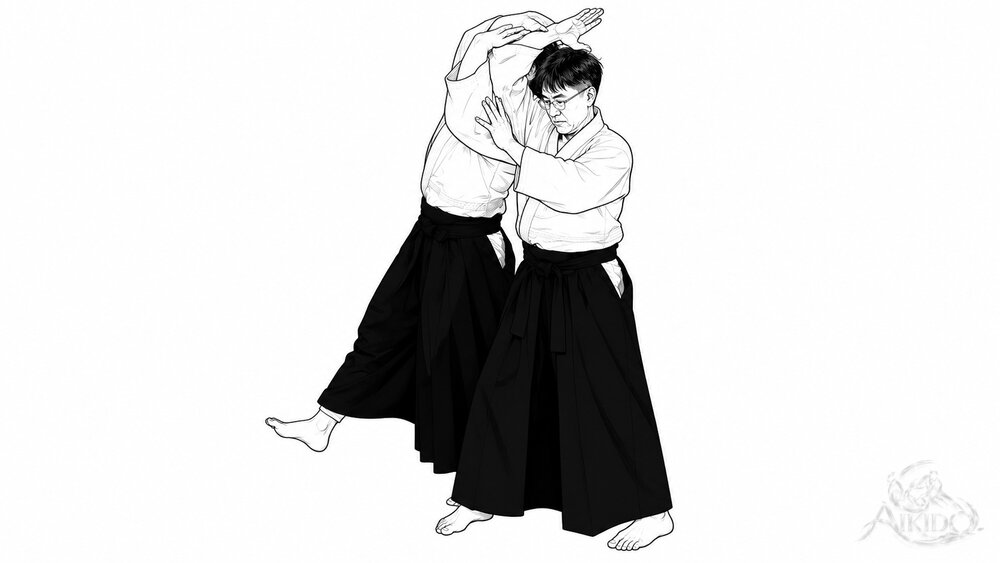
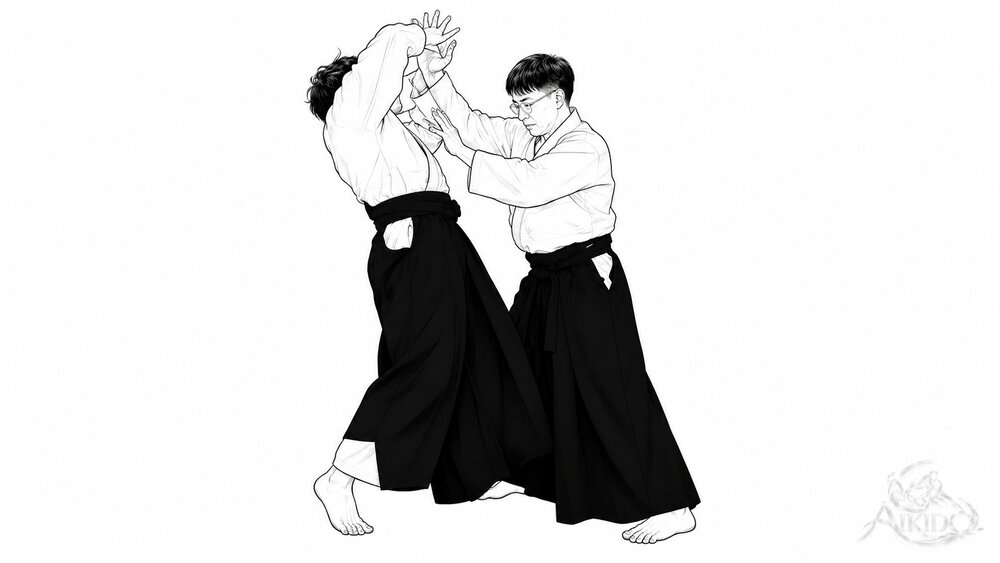
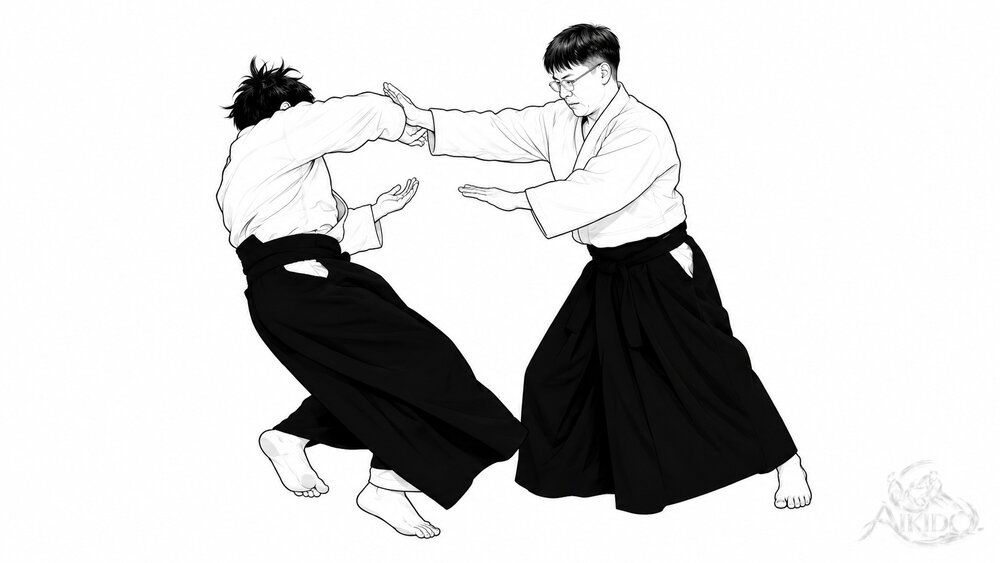
Morote-dori kokyu-ho can also be done with the tenkan body movement. From morote-dori, step one step in with the front foot and turn with tenkan, turning the body 180 degrees. In time with this movement, cut the tegatana up as if gathering the power created by tenkan at the center of your body. Then, so as not to break the flow of power, step behind your partner and at the same time cut down in a large arc. Here too, the feeling of delivering your power to your partner is important.
- Produce power from the legs and hips: When breaking your partner’s balance, do not rely on arm strength; make use of the whole-body power created by the tenkan body movement. Doing the movement of the lower body together with the cutting up of the tegatana gathers the power of the whole body into the tegatana.
- Turn with tenkan and gather power at the body’s center: Entering to your partner’s side with the tenkan body movement, establish the center of your body. Focus your attention on this center and cut the tegatana up with the feeling of gathering the power of the whole body there. From there, step behind your partner and cut down in a large arc, putting the gathered power into your partner.
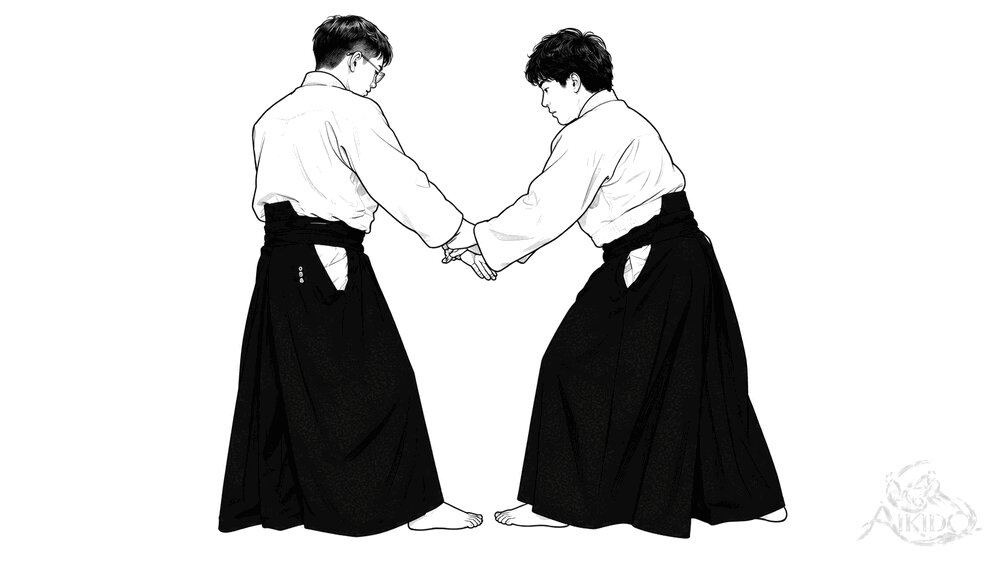
Suwari Waza Kokyu-ho (座り技呼吸法)
Key point: From a seated position, make use of the power of the hips to cut the tegatana up and cut it down.
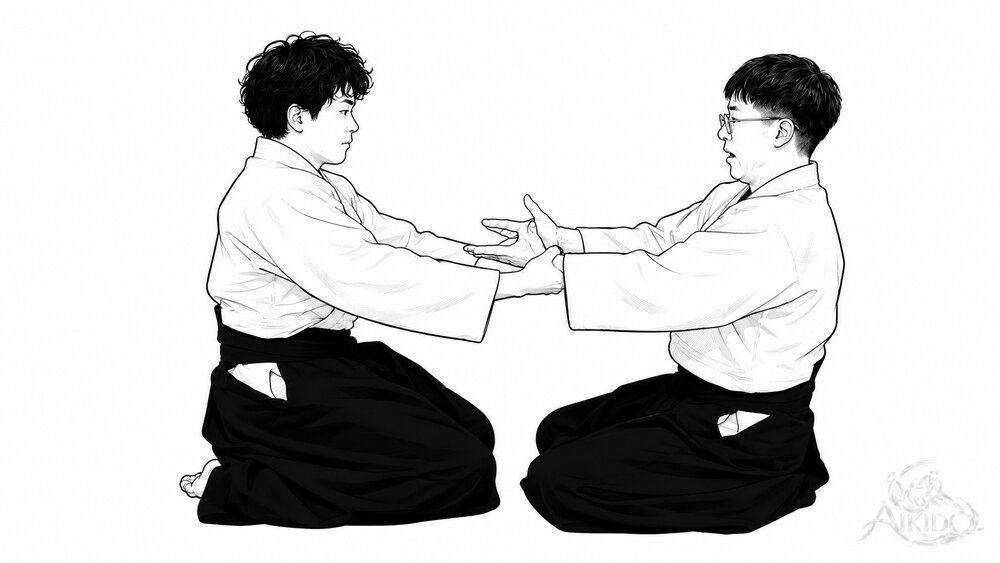
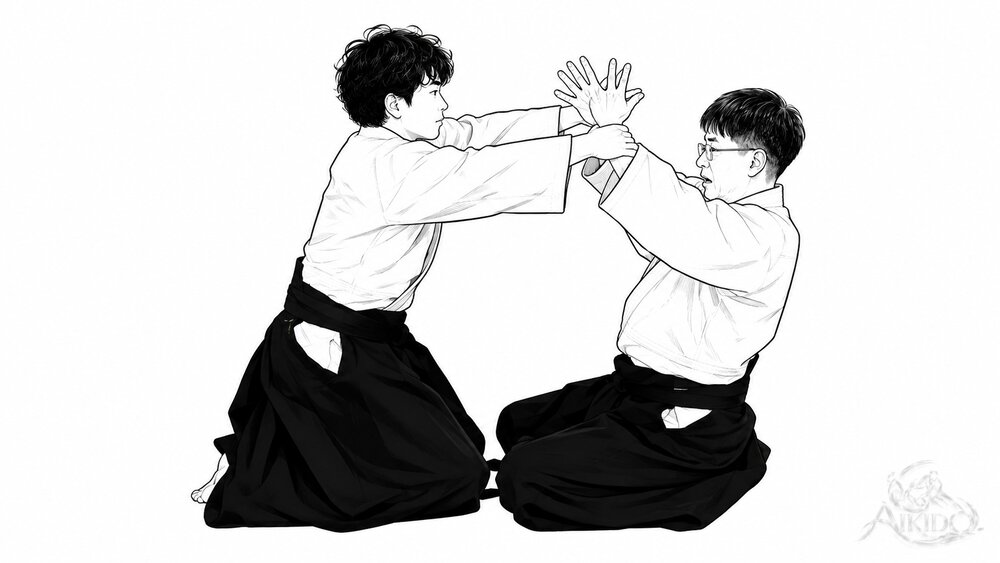
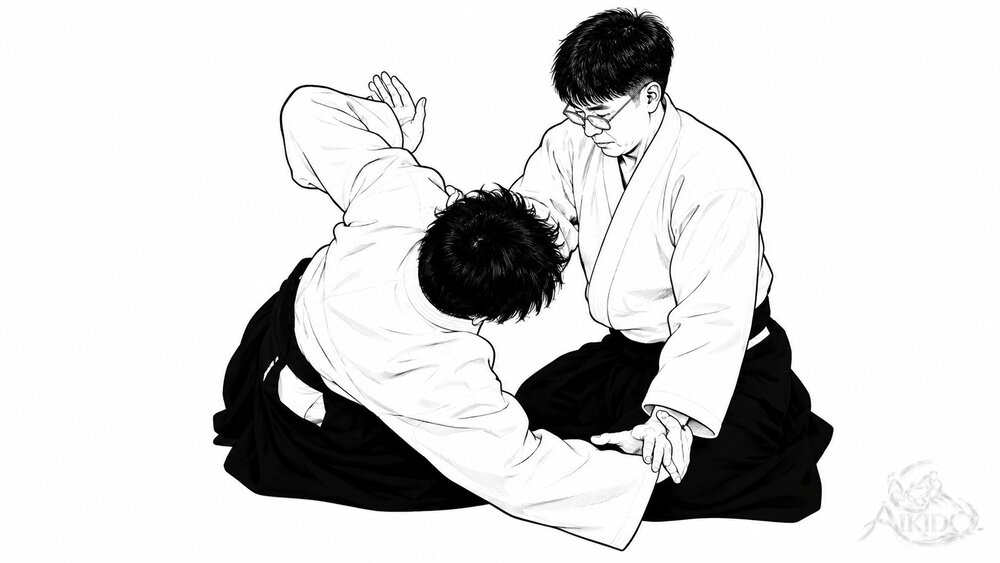
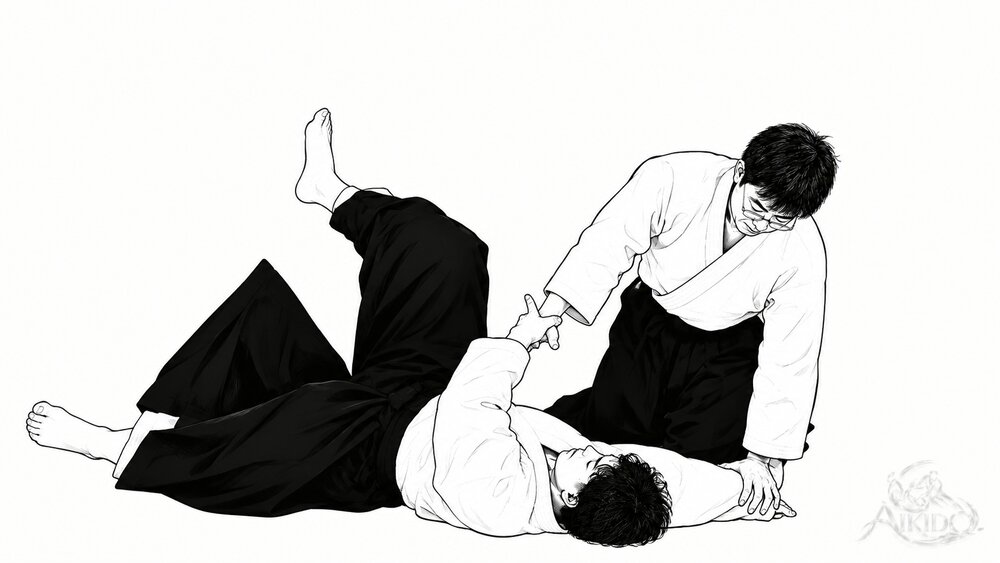
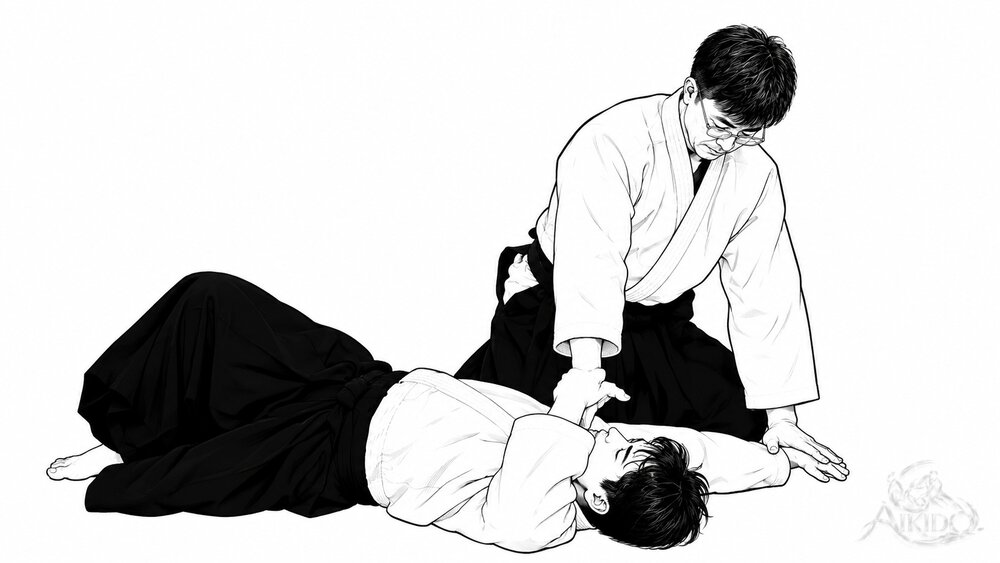
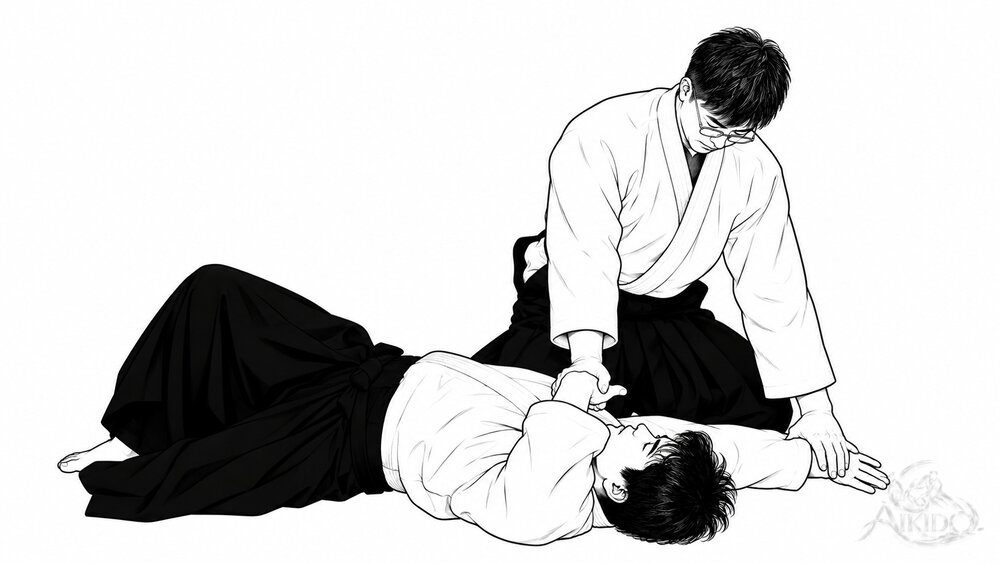
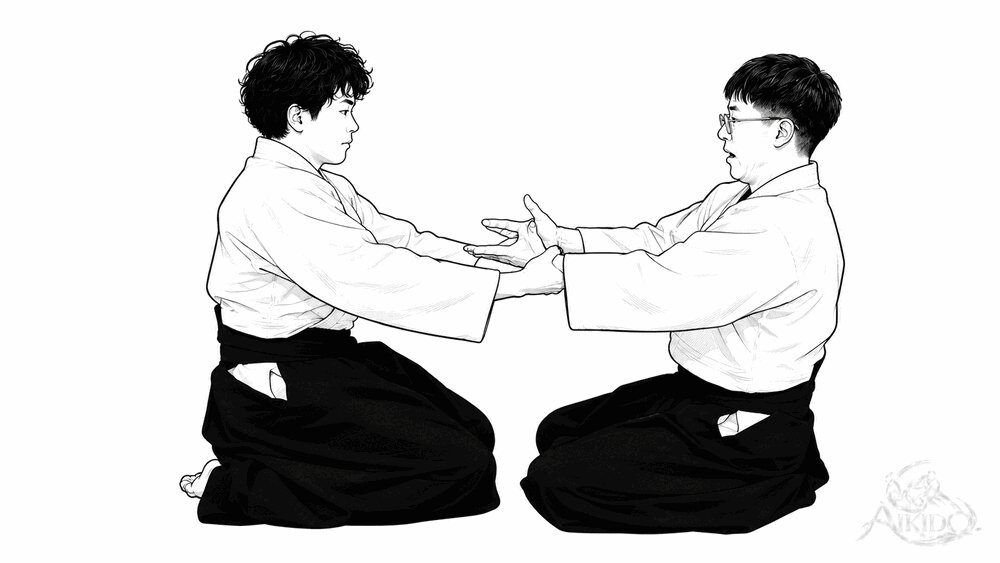
Suwari waza kokyu-ho begins with both partners facing each other in seiza, in the form of ryote-dori (Chapter 3). Tori cuts both tegatana up, making use of the power of the hips. As you do so, turn both tegatana inward as if drawing a spiral, cutting up so that your partner’s armpits open. From there, step diagonally forward to the left or right and at the same time lead both tegatana down. Bring your partner down with the feeling of gathering power at the center of your body, and step in with shikko (膝行) to pin.
- Convey the power of the hips to the tegatana (photo 2): When cutting the tegatana up, do not force them up with arm strength; use the power of the hips. If you keep the hips upright and cut up while turning both tegatana in a spiral, your partner’s elbows rise and the armpits open.
- Turn your belly toward your partner (photos 3–6): To make effective use of the power of the hips, you must always be facing your partner. Both when you step diagonally forward to bring your partner down and when you follow with shikko to pin, your belly faces your partner. If it does not, the power goes astray.
- Uke does not let go and stays aware of their partner (photos 3 and 6): So that the flow of power is not broken, uke does not let go of the wrists until the end, both while falling and after being pinned to the floor. It is also important not to take your attention off your partner. If you let your attention go, the power flows away.
Last updated November 1, 2026 · This book continues to be revised after publication.
© 2026 Moon Young-chan. All rights reserved.
The text and images of this book are protected by copyright and may not be reproduced or distributed without permission.