
Applied Techniques Also Rest on the Basics
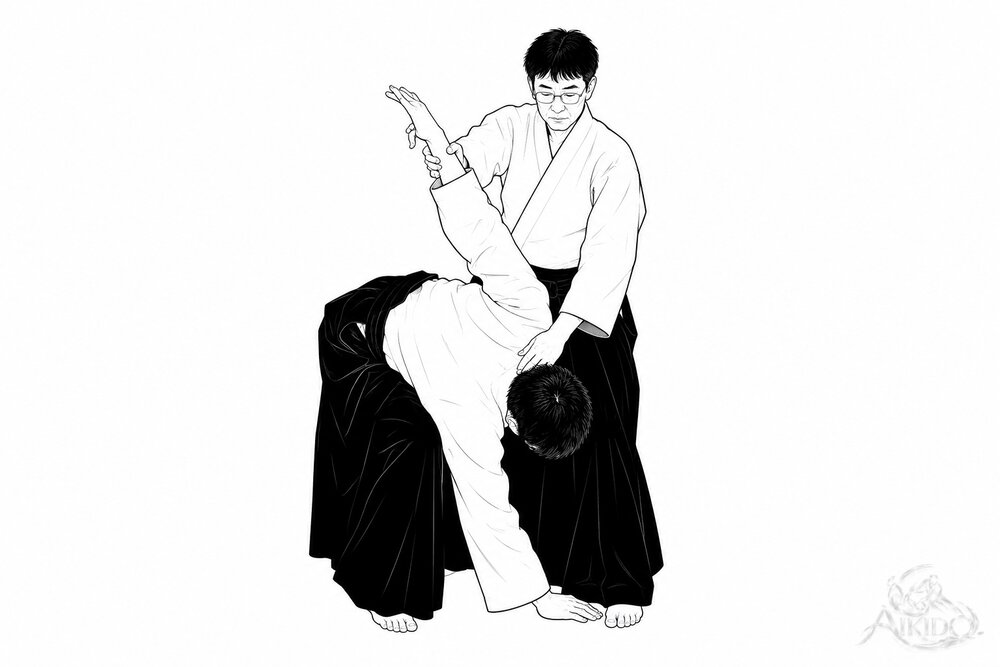
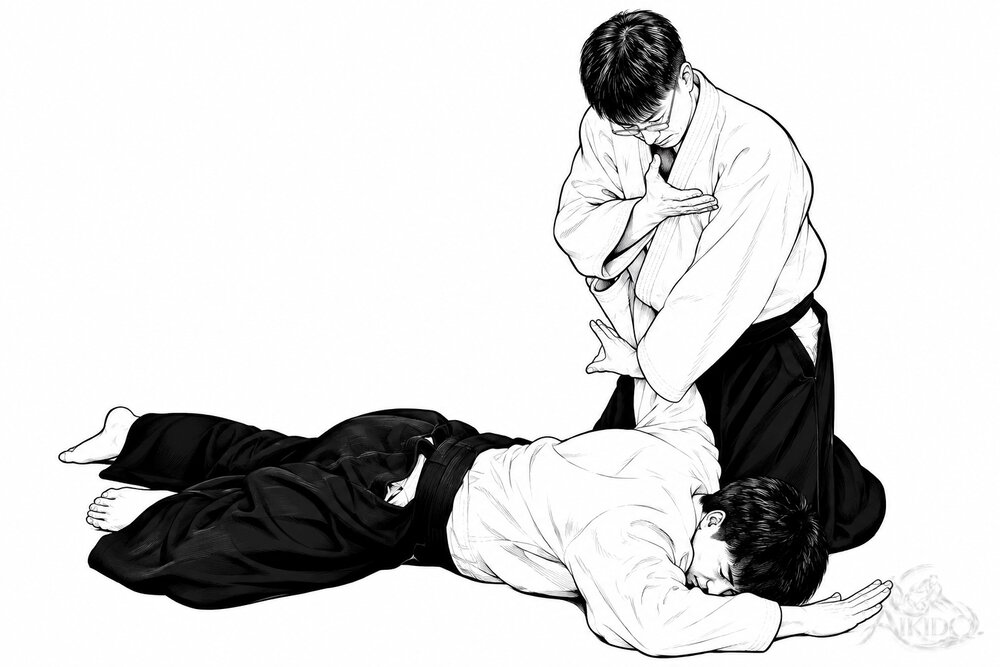
Building on the feel of technique you developed with the basic techniques in the previous chapter, you now take a step forward into applied techniques. In this chapter, besides techniques that use the irimi and tenkan body movements (tai sabaki, 体さばき), we add tenshin, which opens the body to the side, and suwari waza (座り技), kneeling techniques that use shikko (膝行). In the pinning techniques (katame waza, 固め技), too, the higher you go, to nikyo and sankyo, the more fine technique there is, such as controlling the wrist or changing your grip in an instant. Sometimes the technique does not work if the angle is even slightly off, so the difficulty rises considerably compared with the basic techniques.
At first glance these applied techniques look difficult, but in fact they are combinations of the basic movements you have learned so far. The movements used in technique, such as using the tegatana, footwork, and body movement, are all the same. So if you cannot perform the basic movements accurately, you cannot make applied techniques part of your body. Before you take on applied techniques, check once more that you can perform the contents of the earlier chapters accurately.
- In throws, a stable sense of balance is the key: Starting with yokomen-uchi shiho nage, which makes use of the tenshin body movement, the throws in this chapter involve more complex body movement than the basic techniques. That is why it is essential to keep your body’s axis firmly stable.
- In pins, do not let the angle and position of control drift: A pin loses its effect if the angle or position of control is off. We look closely at how to use the hands and the key points of the pin.
Last updated November 2, 2026 · This book continues to be revised after publication.
© 2026 Moon Young-chan. All rights reserved.
The text and images of this book are protected by copyright and may not be reproduced or distributed without permission.