
Applied Pinning Techniques (Katame Waza, 固め技)
Suwari Waza Shomen-uchi Ikkyo Omote (座技正面打ち第一教 表)
Key point: From a seated position, advance in shikko and pin your partner.
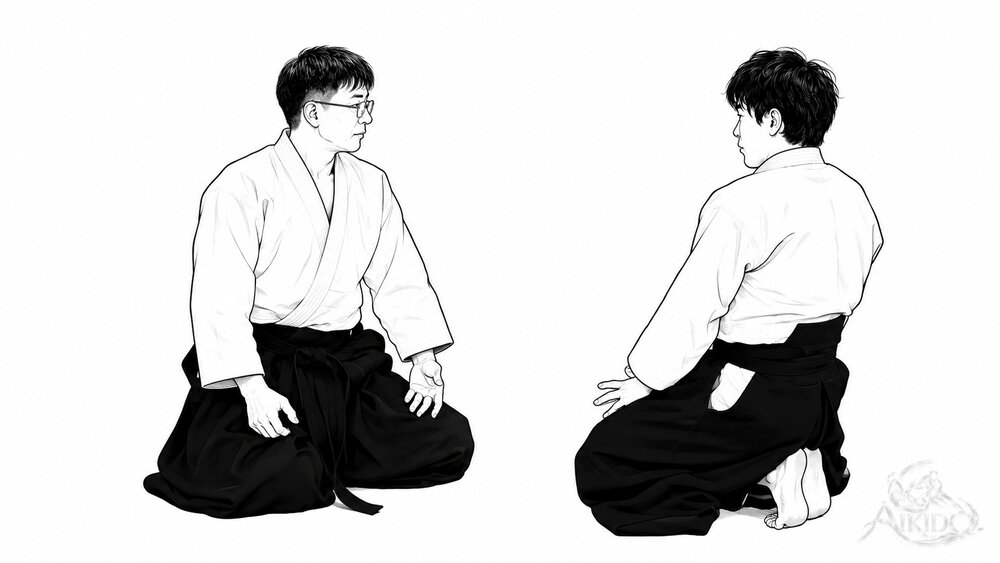
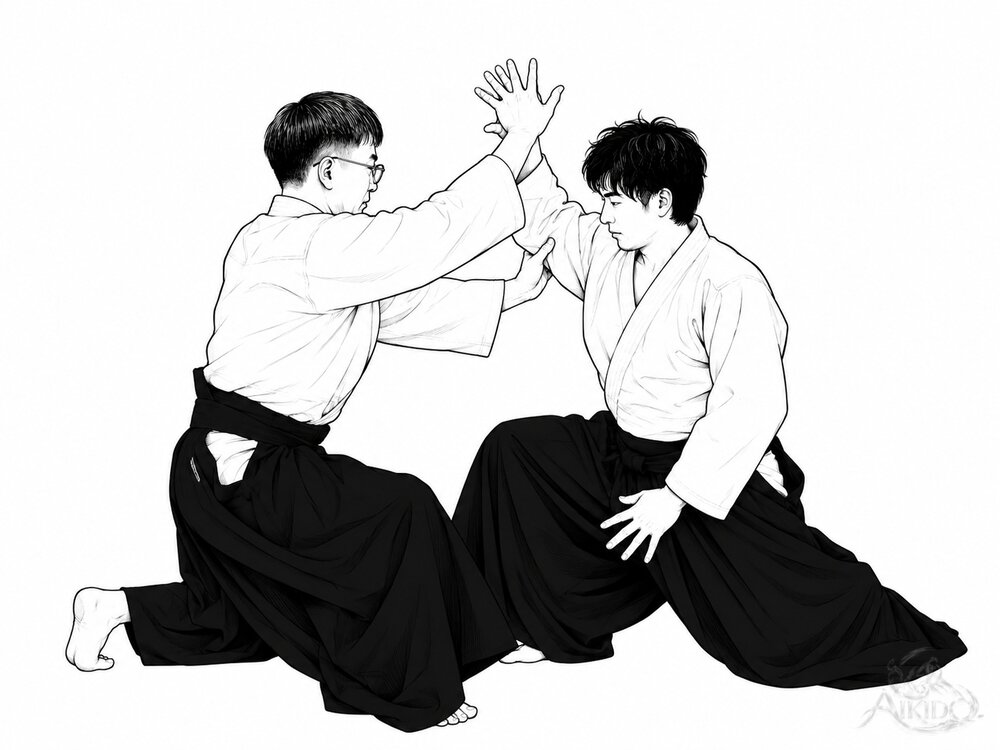
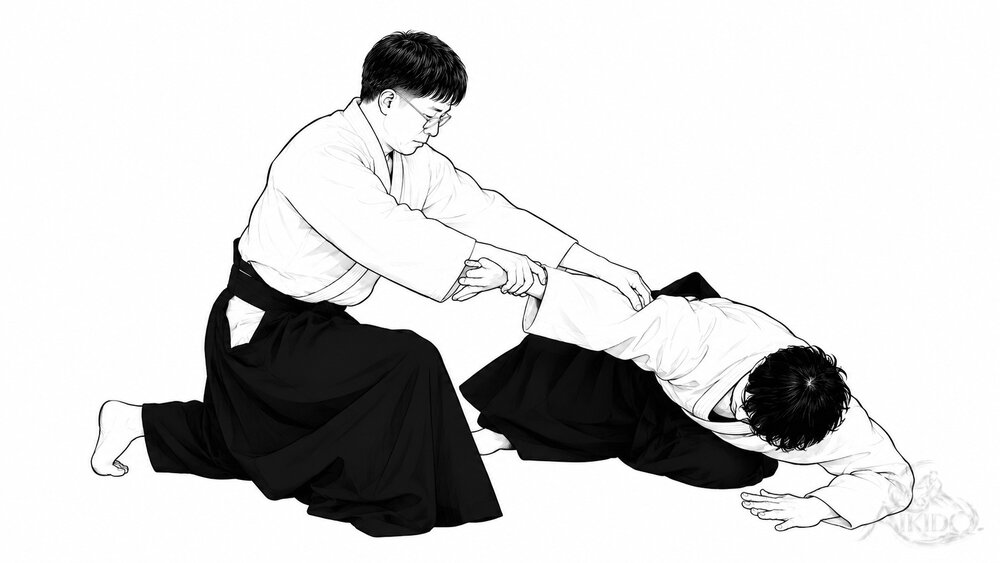
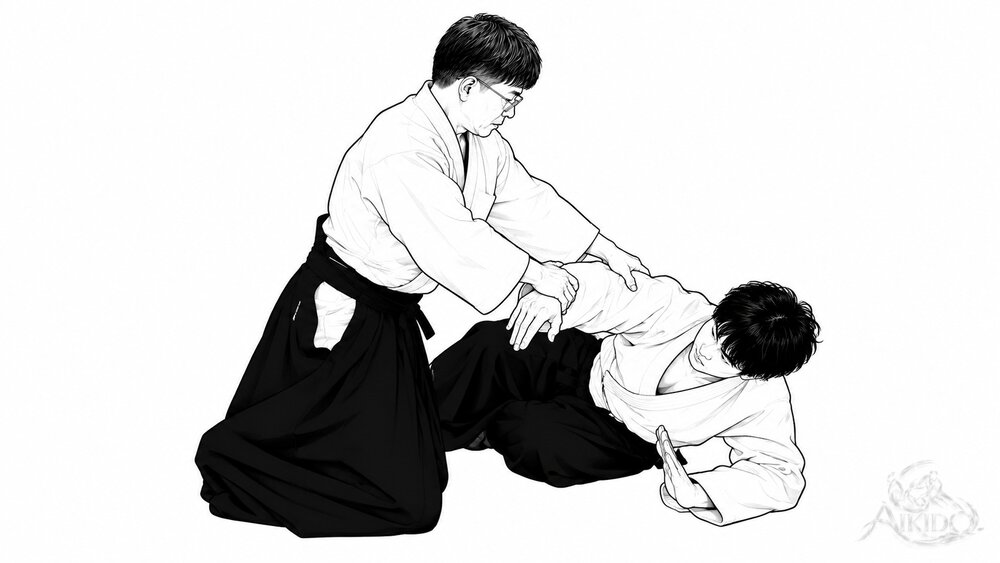
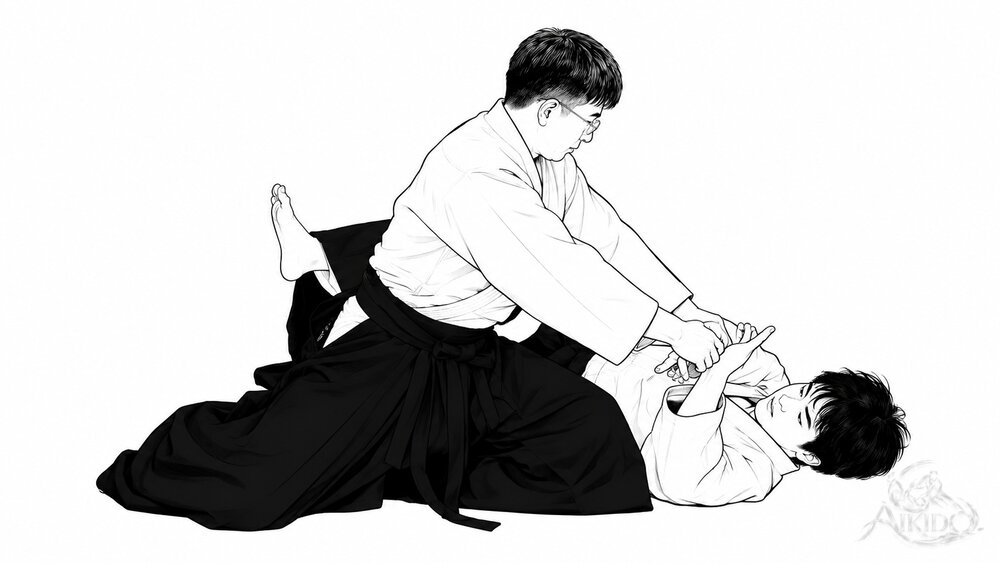
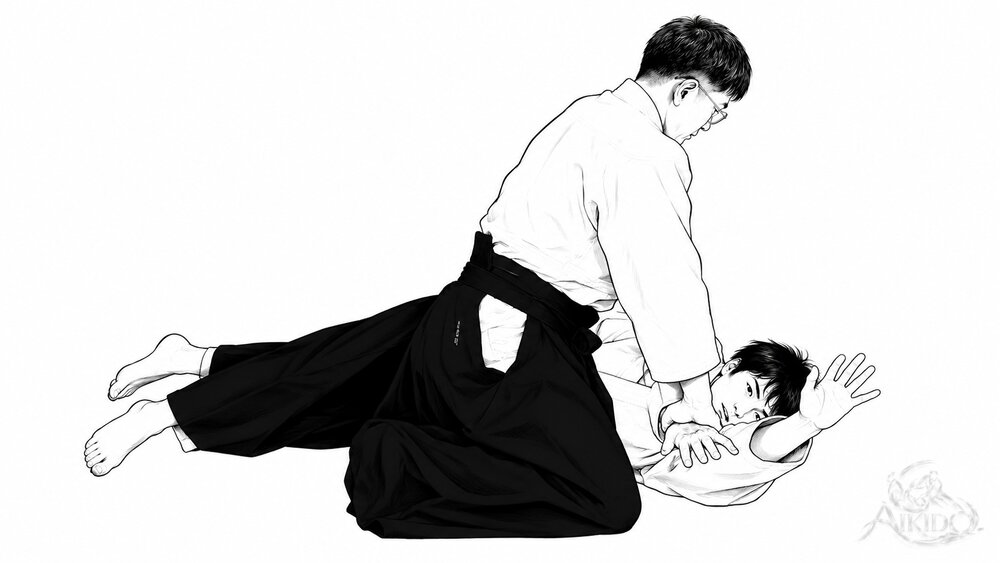
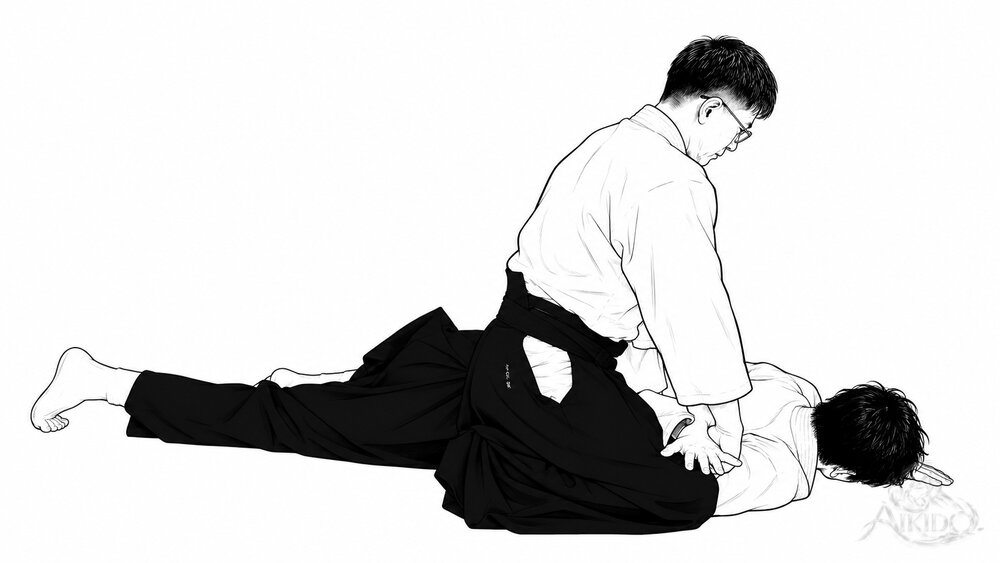
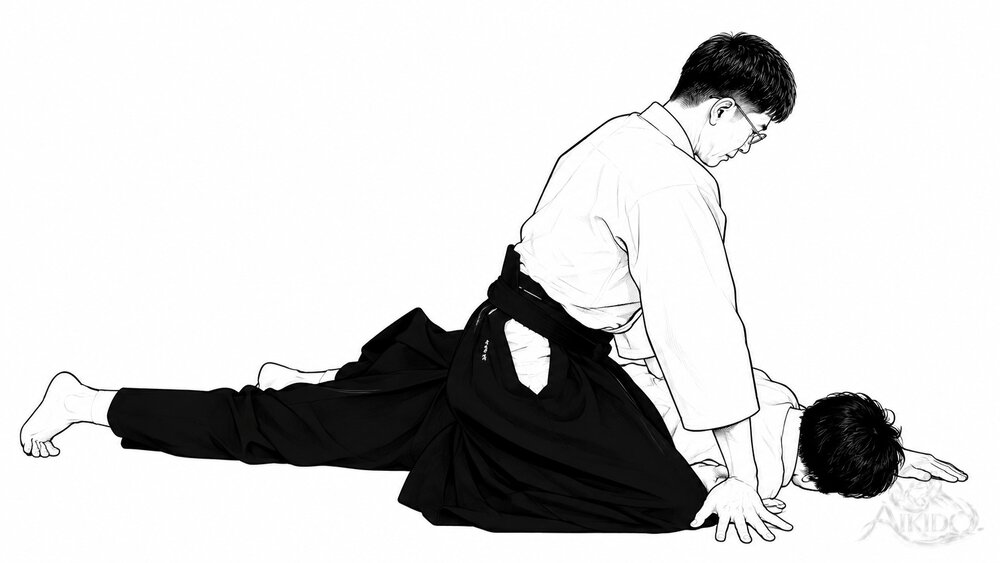
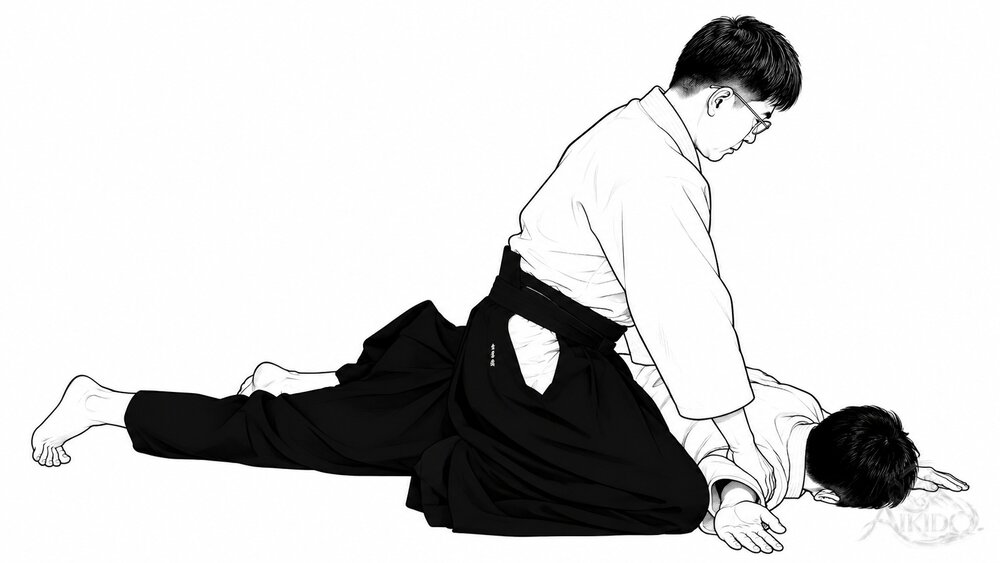
This is shomen-uchi ikkyo omote done from a seated position. In Chapter 4 we looked at tachi waza; suwari waza, which demands that you make use of the power of the hips, is important training that also helps your tachi waza improve. With both of you sitting in seiza, rise onto your knees and control your partner’s shomen-uchi with the tegatana. As in tachi waza, take your partner’s wrist and elbow and cut them down as you advance in shikko. It is important to pin with the hips engaged in a correct posture.
- Turn the elbow as you cut down: When leading your partner down with the tegatana and the other hand holding the elbow, cut down as if turning your partner’s elbow. So while the arm is up, do not clutch the wrist or elbow; hold softly so that you can respond to the turn.
- Engage the hips firmly with shikko: What matters in suwari waza is shikko (Chapter 3). Most important is to advance firmly in shikko as you lead your partner down, and to pin while keeping the hips engaged in a correct posture. Uke, too, enters toward their partner’s center in shikko when striking shomen-uchi. Take care not to lean forward.
Suwari Waza Shomen-uchi Ikkyo Ura (座技正面打ち第一教 裏)
Key point: Using tenkan done in shikko, cut your partner down as if winding them in.
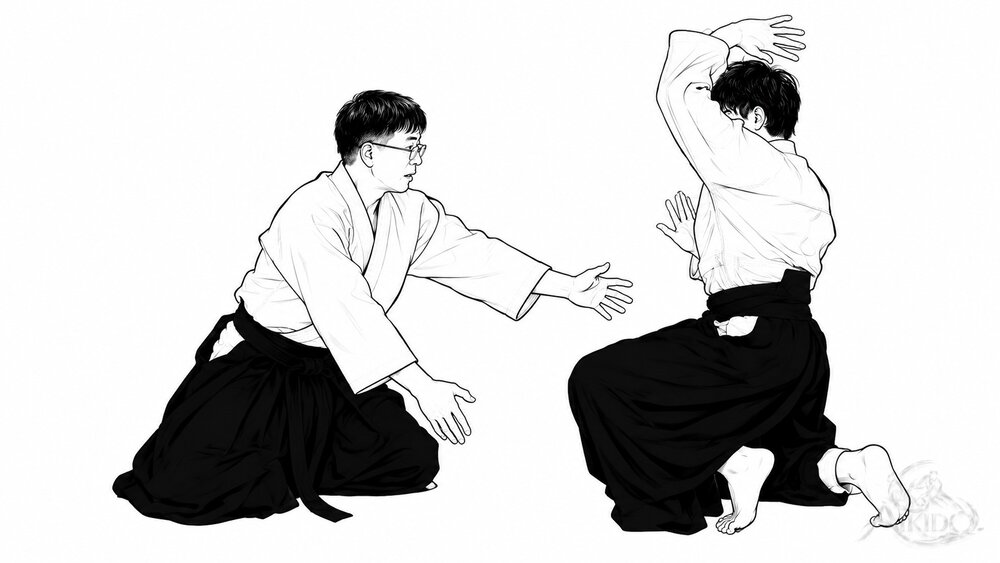
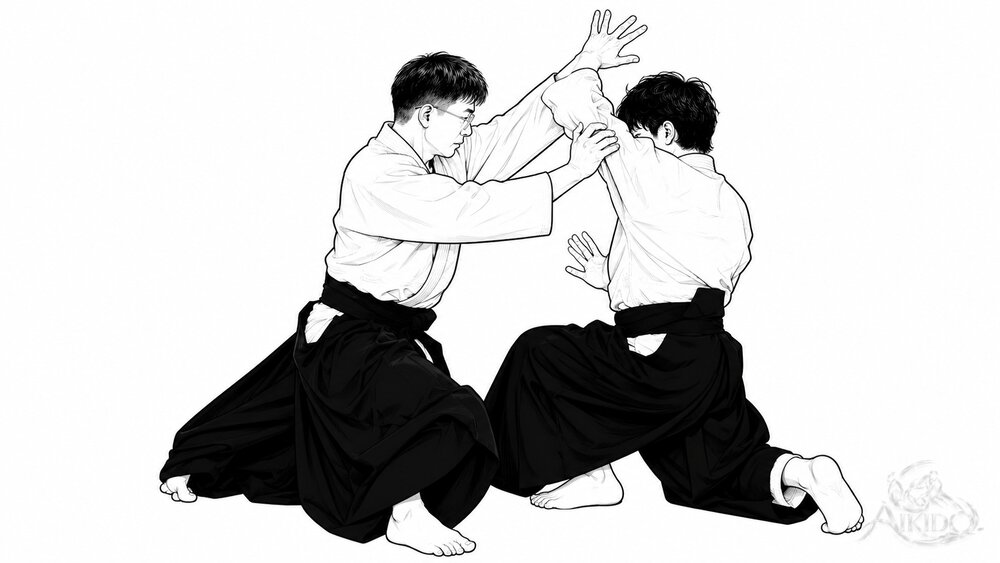
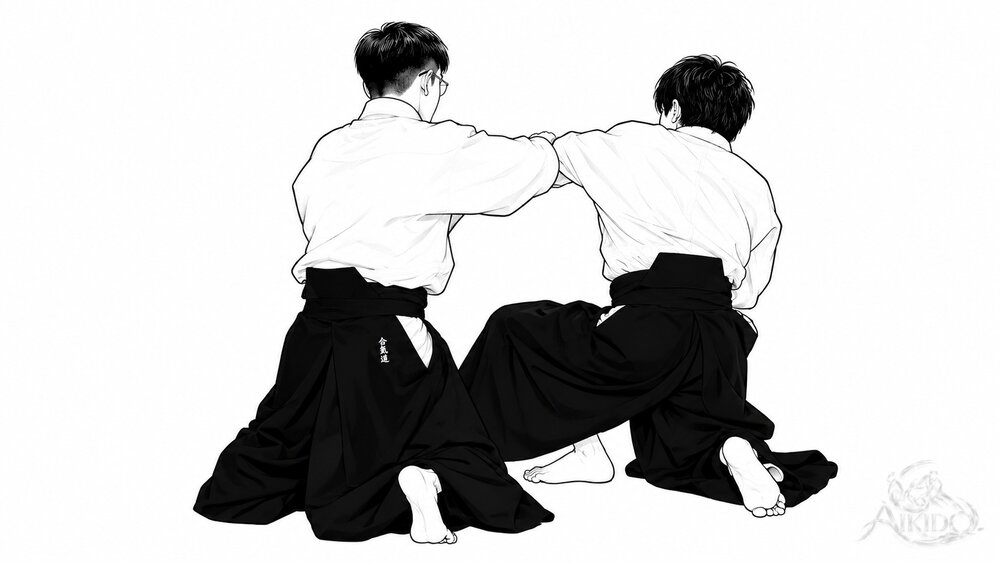
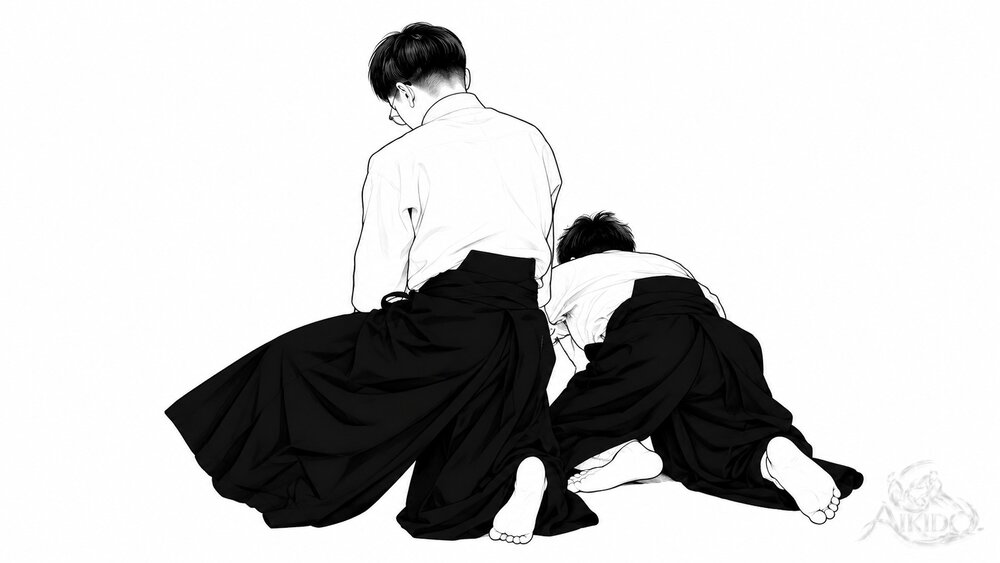
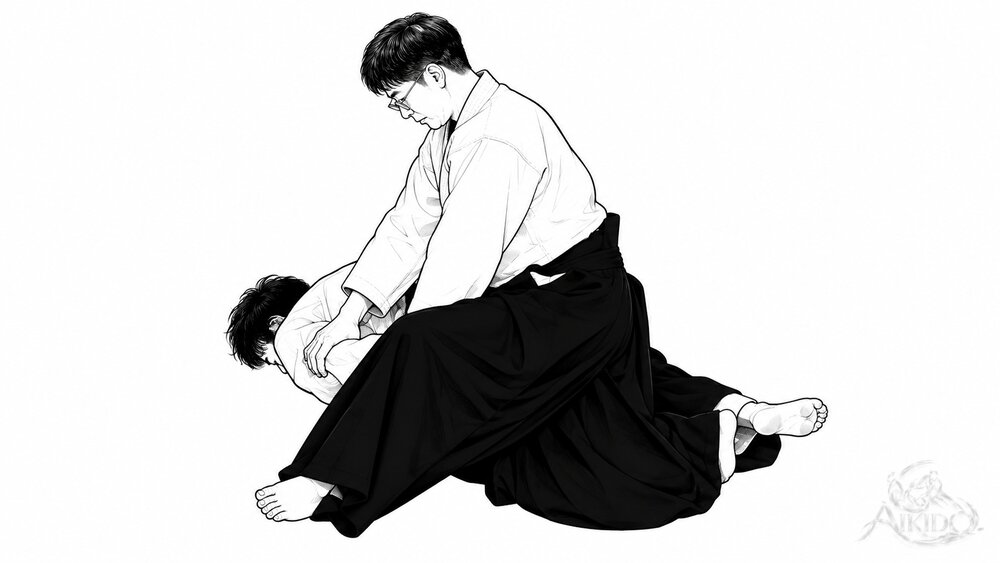
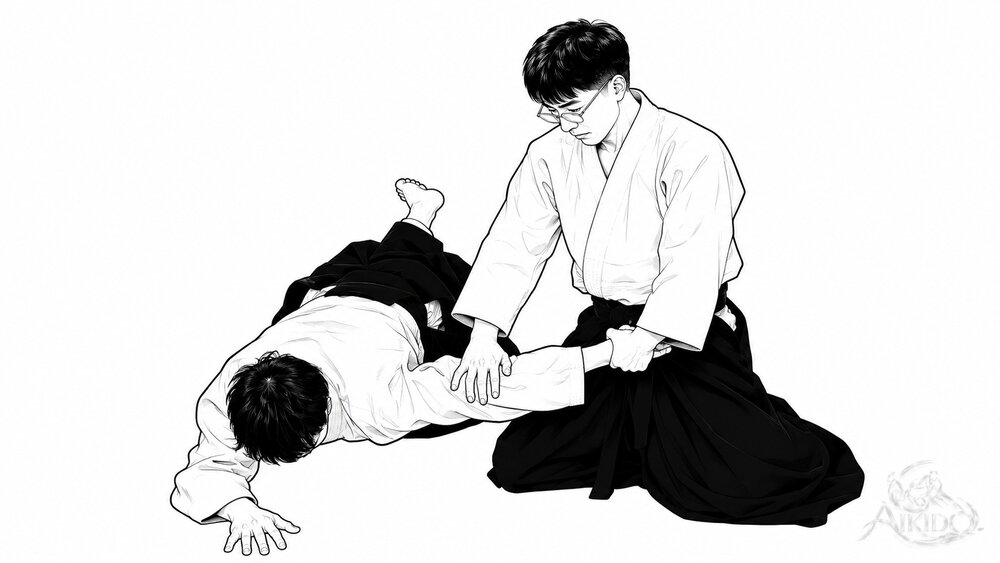
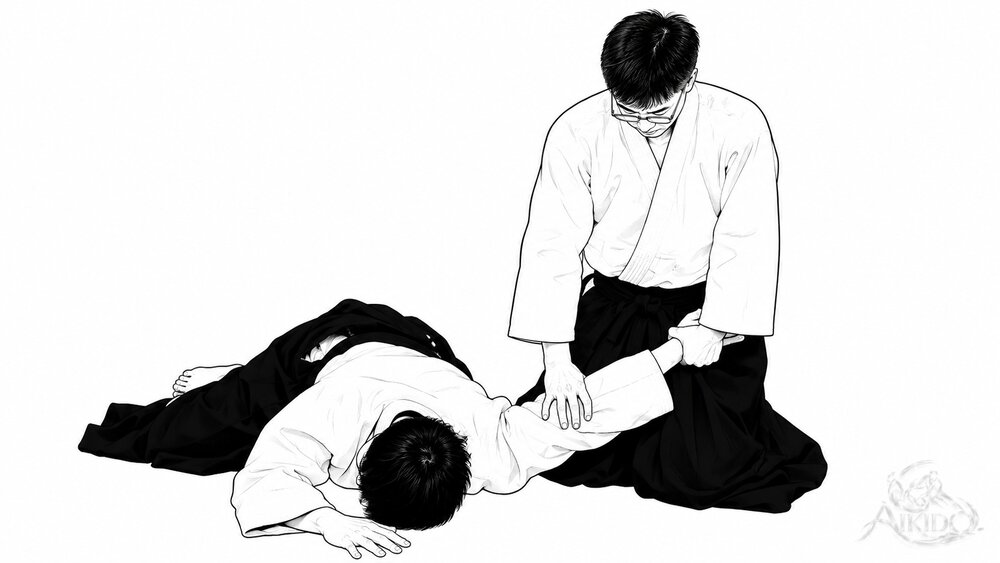
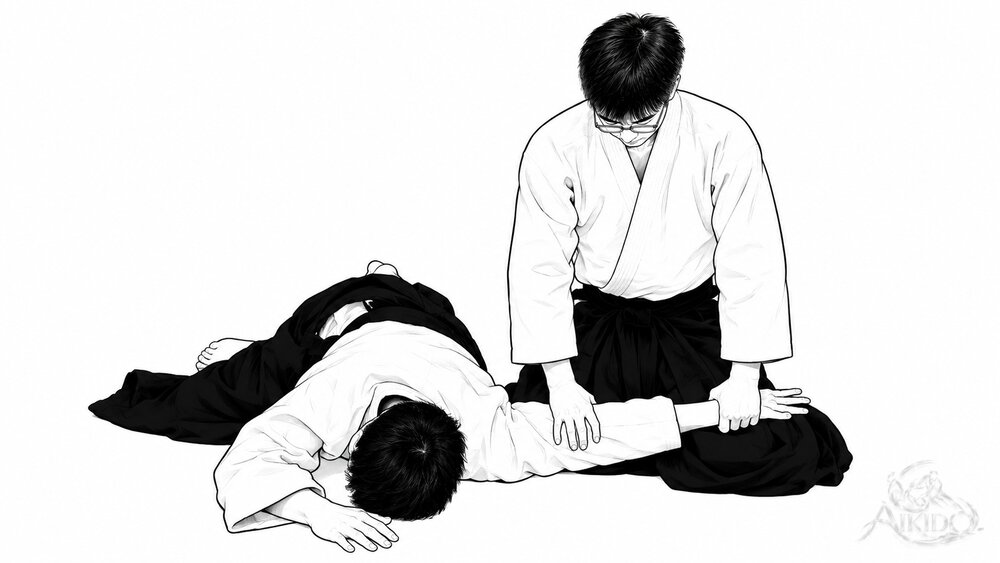
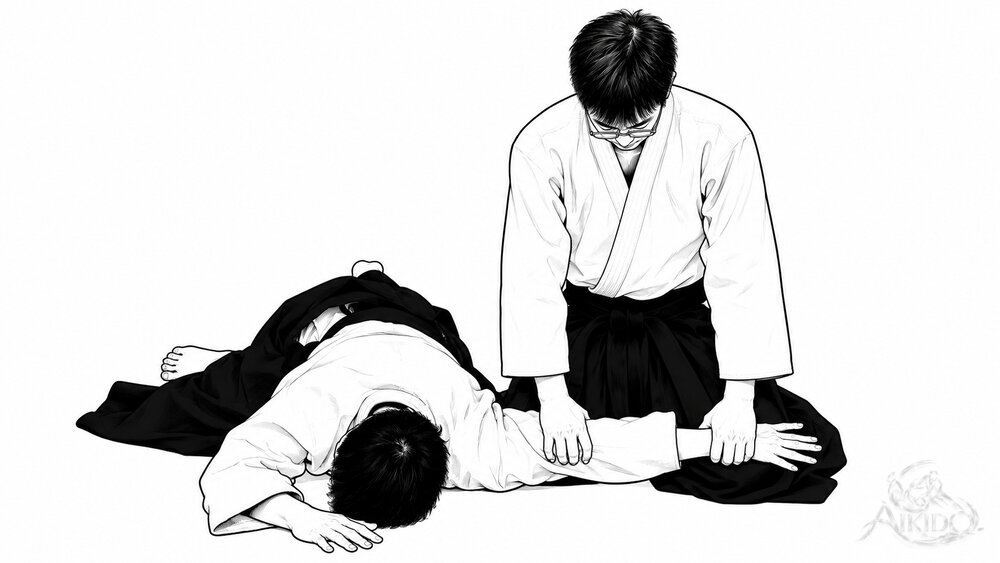
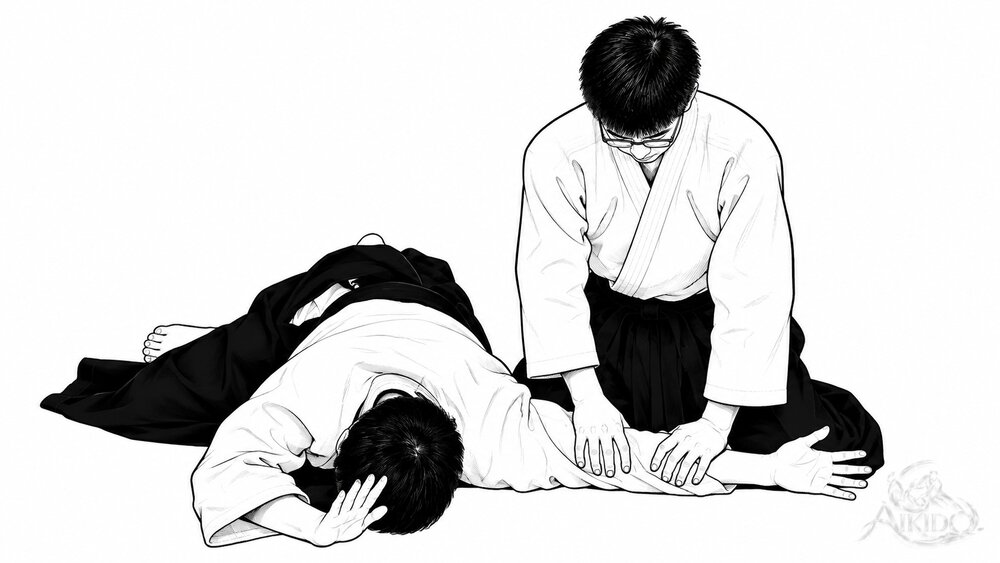
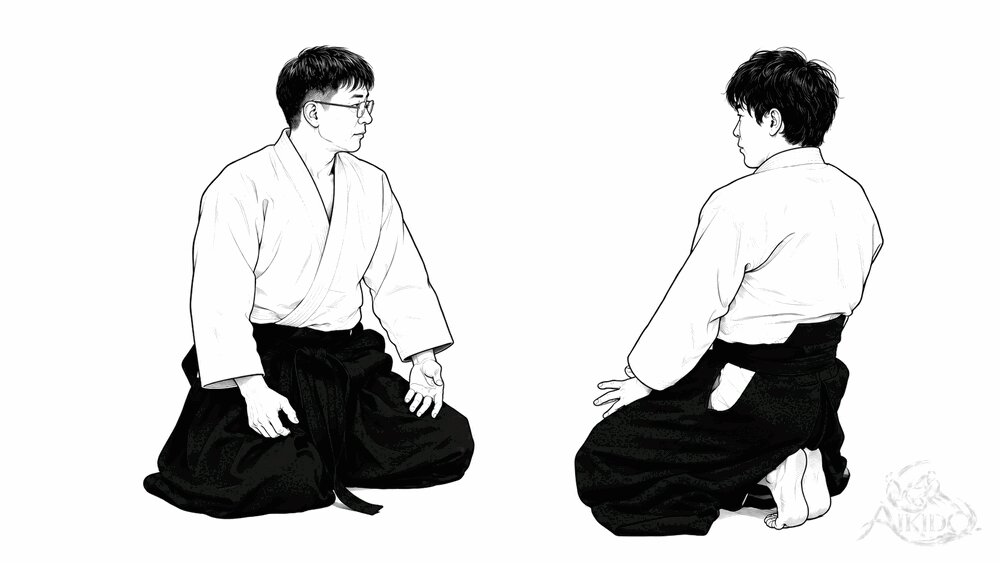
Suwari waza shomen-uchi ikkyo ura is a pin that uses the tenkan body movement done in shikko. Omote breaks your partner’s balance by advancing in shikko, but in ura, as in tachi waza (Chapter 4), the key is to use the turning of the body. The use of the hands is the same as in tachi waza, but the greatest feature of this technique is that the tenkan is done in shikko. As we saw in Chapter 3, turn the body quickly with the knee as the pivot. In time with this movement, bring your partner down as if winding them in, and pin.
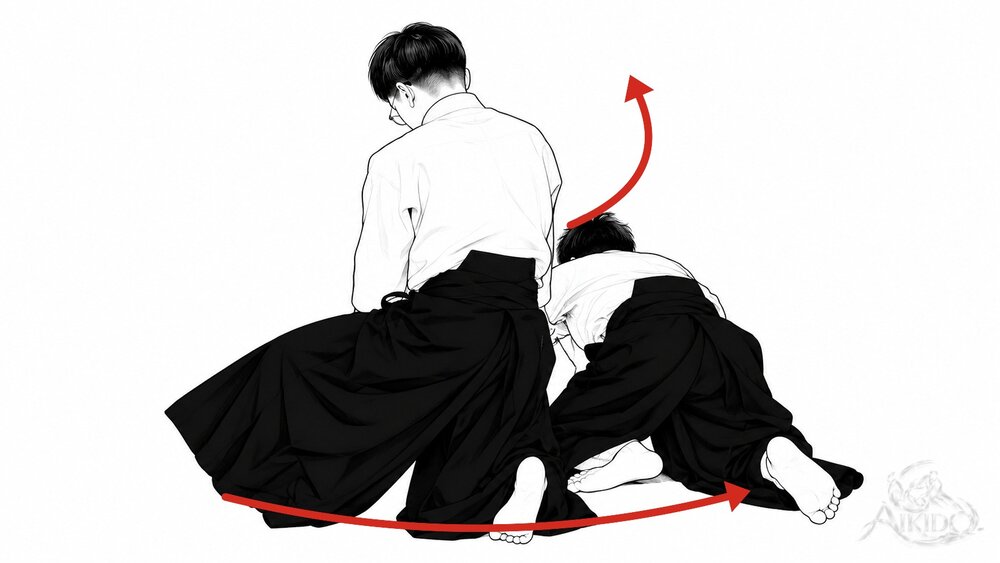
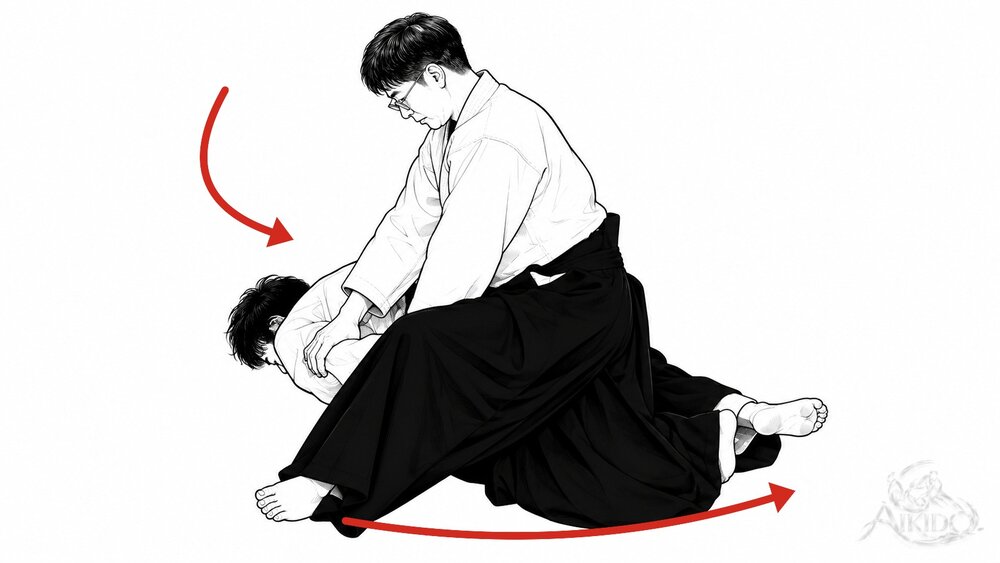
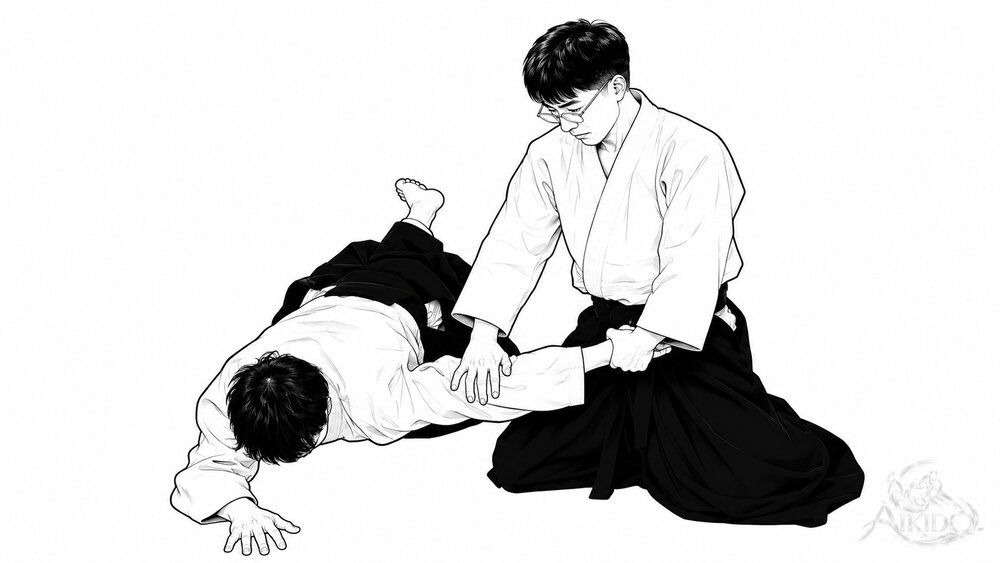
- Lead your partner as you turn: Control your partner’s shomen-uchi with the tegatana, and immediately take your partner’s wrist and elbow and lead them down. Here, making effective use of the turning power of tenkan, cut your partner down as if winding them in.
- Tenkan in shikko: The core of this technique is the tenkan body movement done in shikko. Using the turn in shikko (Chapter 3), turn the body on the knee of the front leg you stepped out with. In time with the turn, draw the back foot far back and quickly form kiza. Lead your partner down as if winding them in, then pin as in omote.
Gyaku-hanmi Katate-dori Nikyo Omote (逆半身片手取り第二教 表)
Key point: A compound movement that combines tenshin, cutting down with the tegatana, and controlling the wrist.
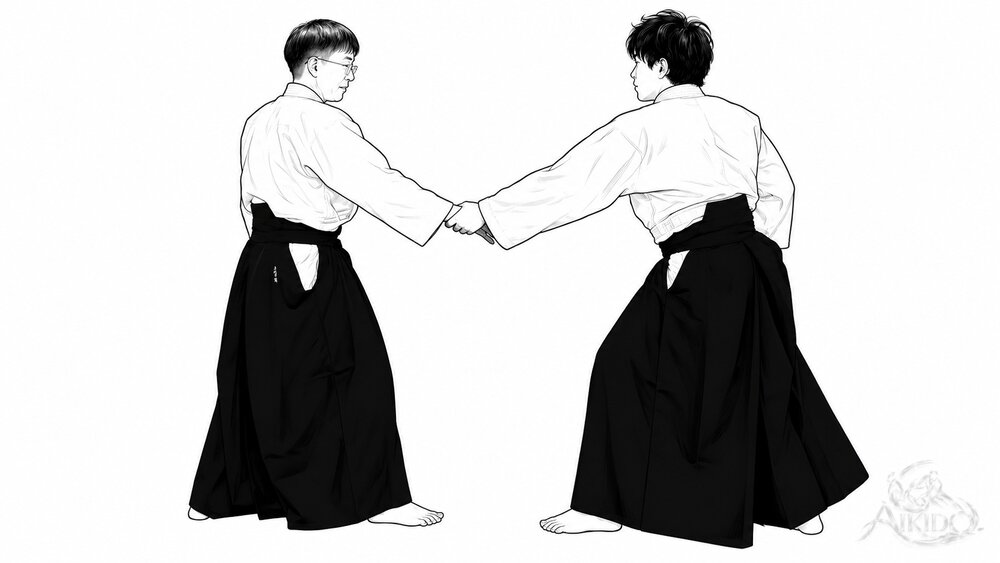
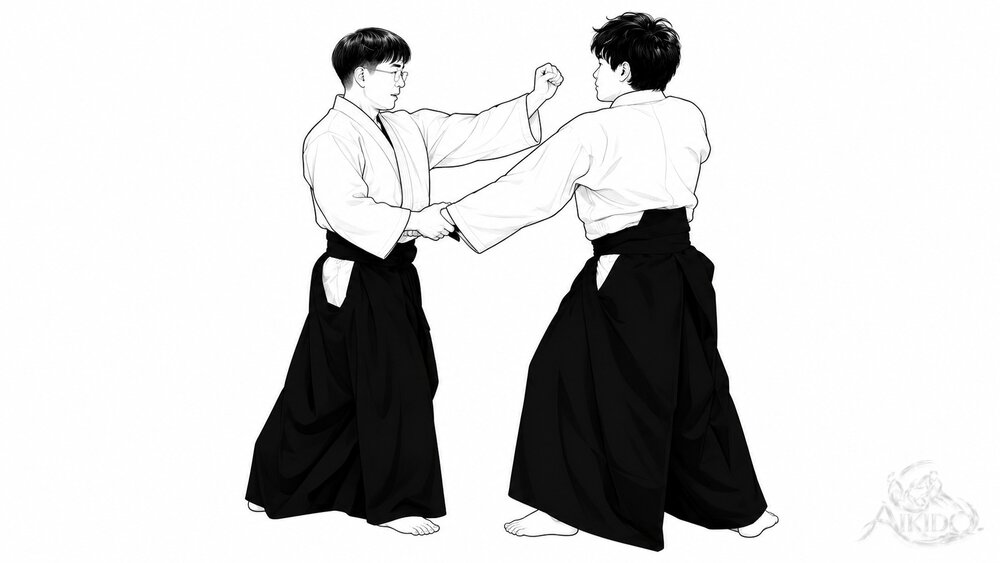
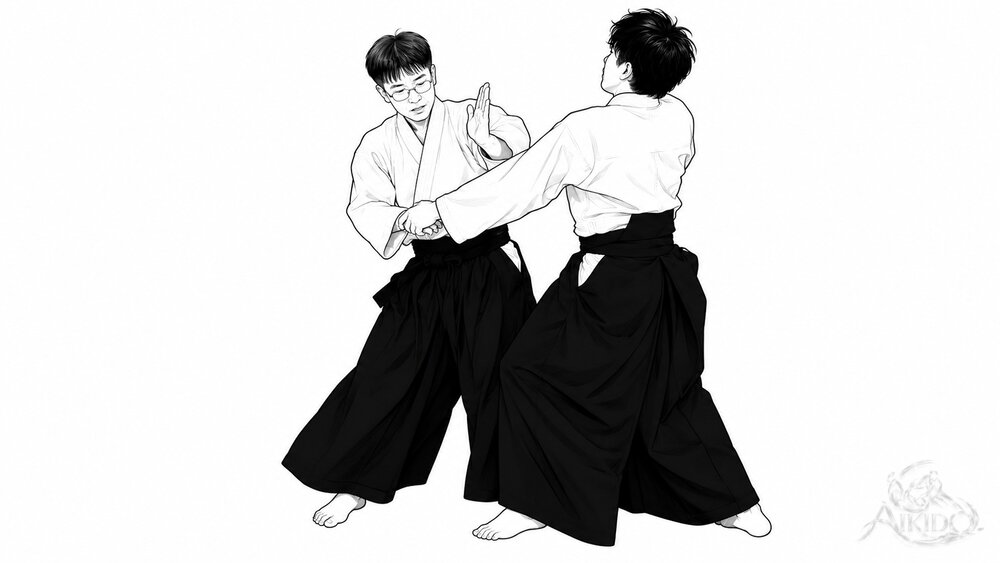
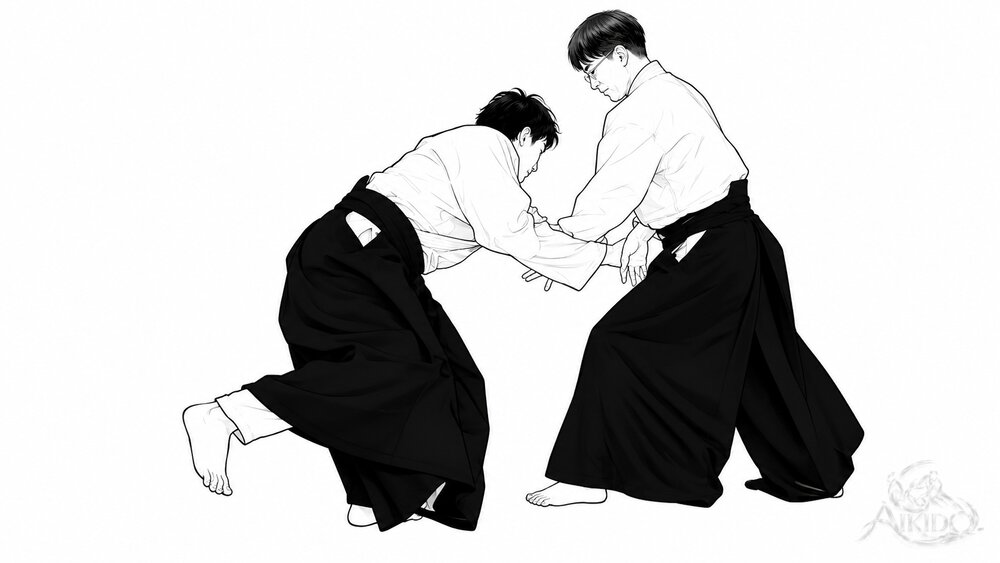
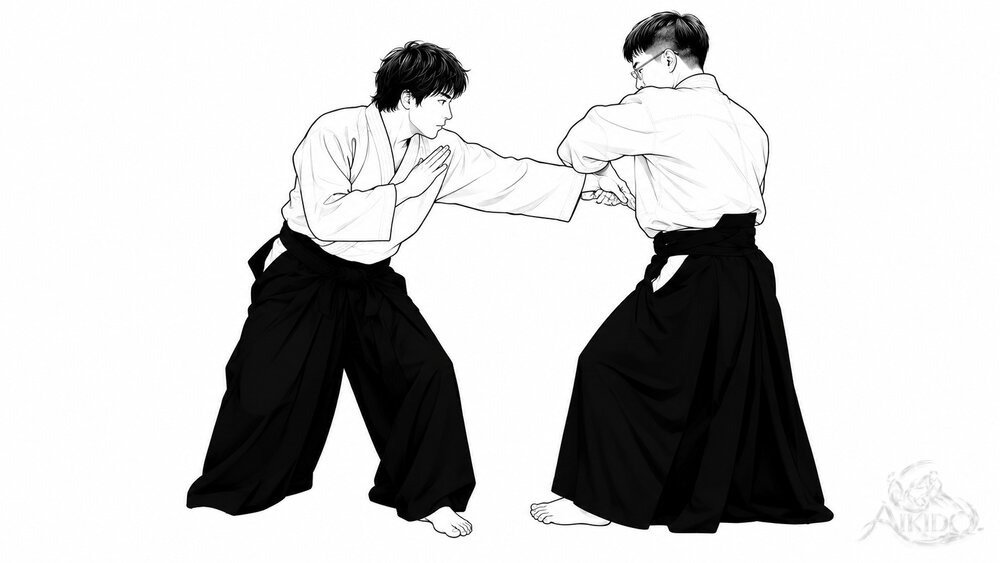
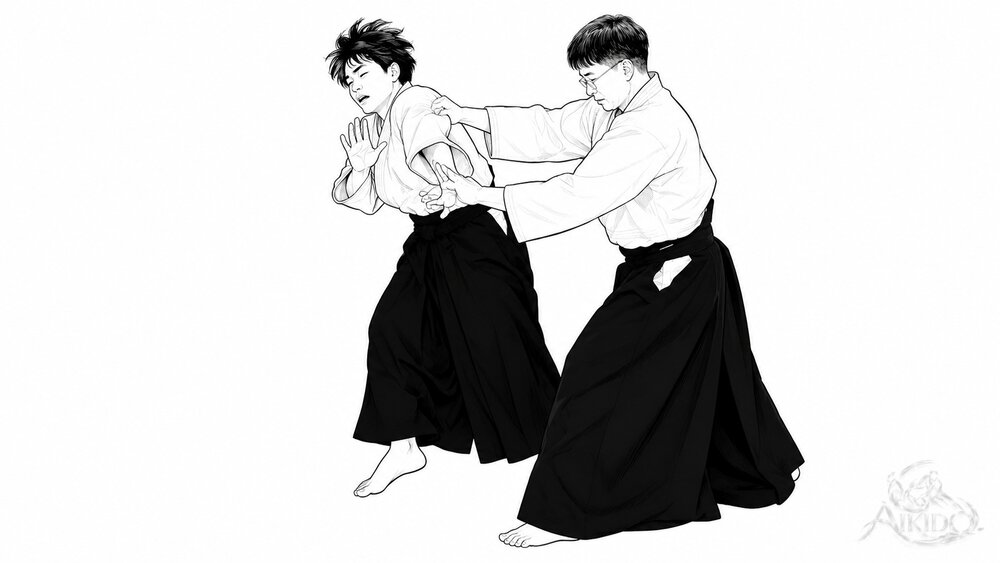
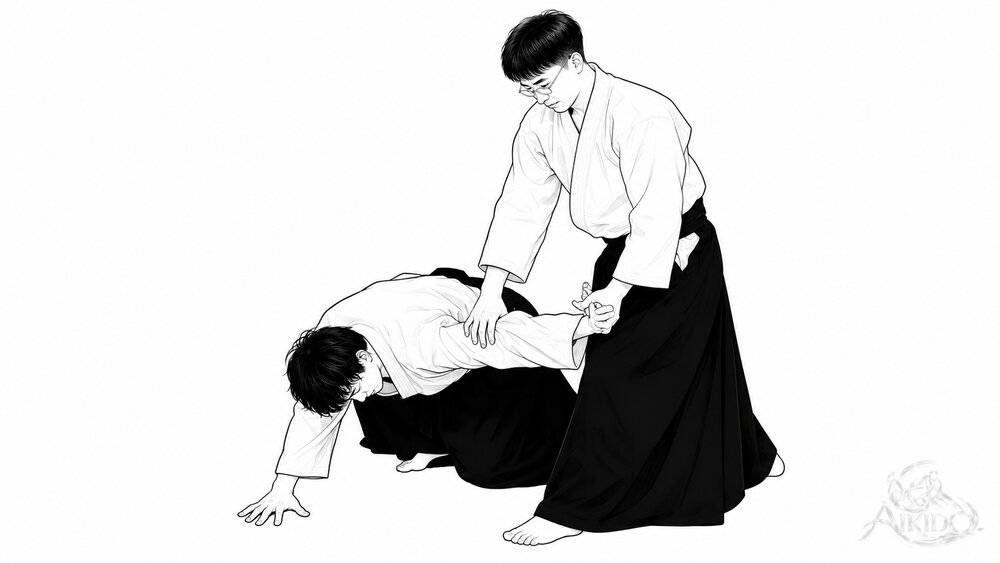
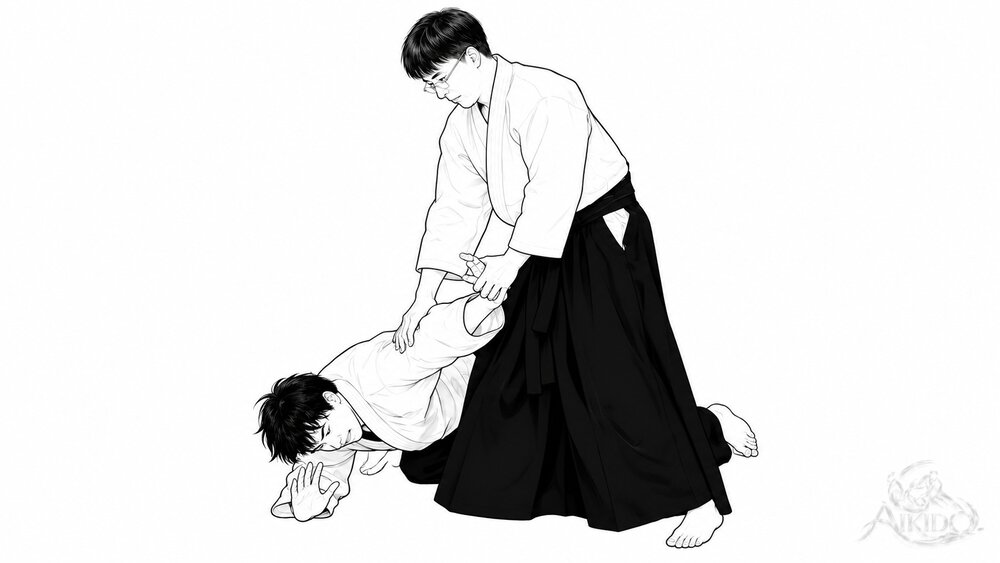
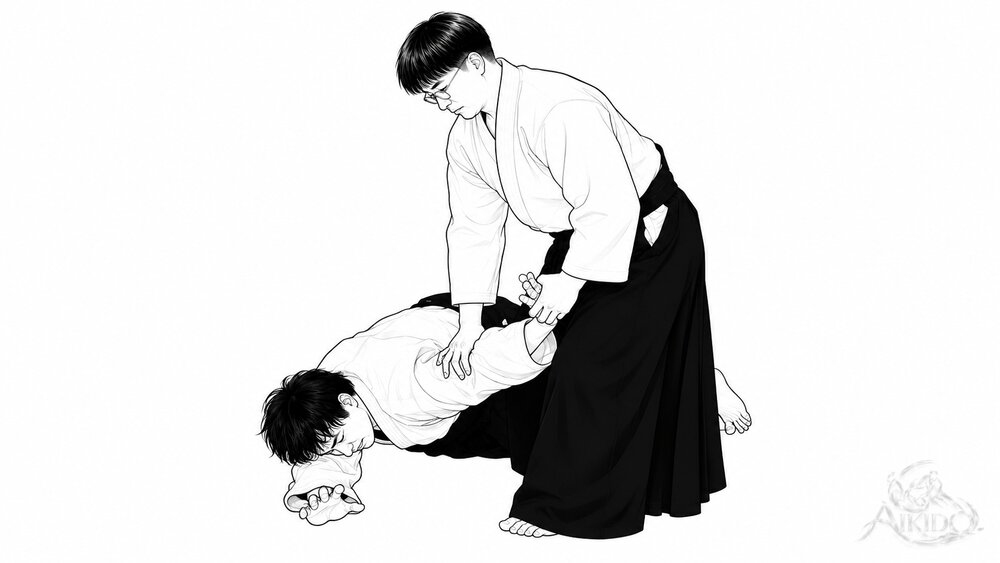
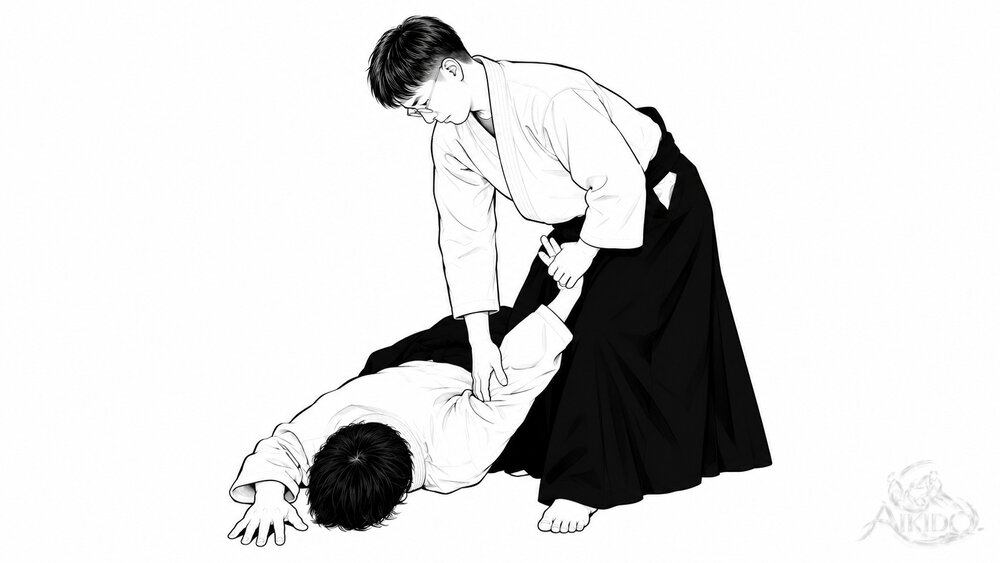
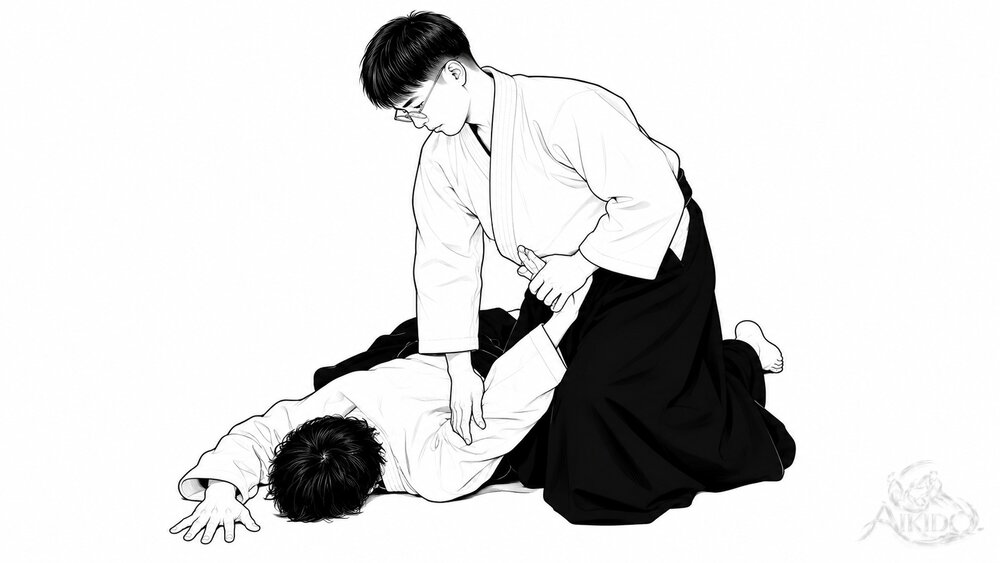
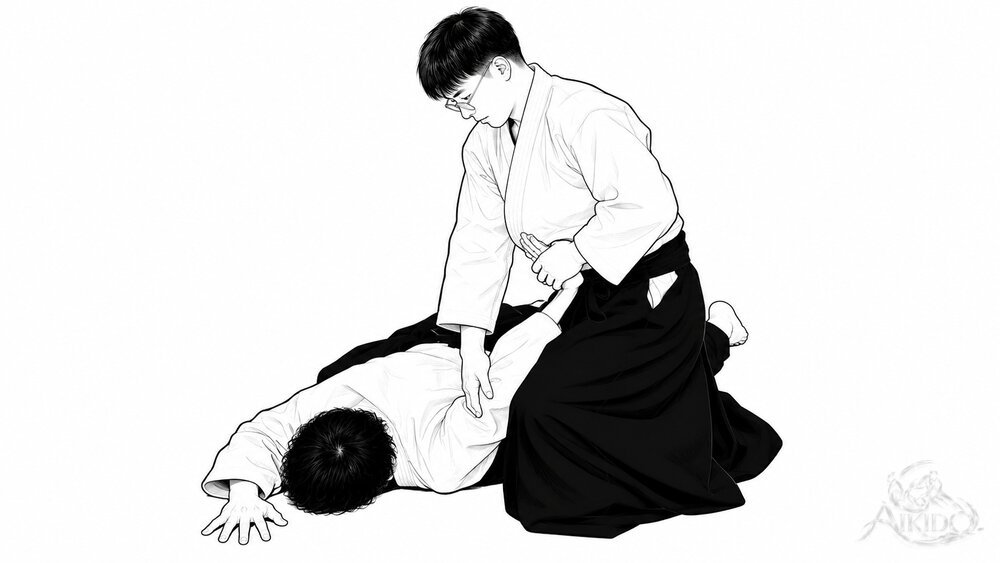
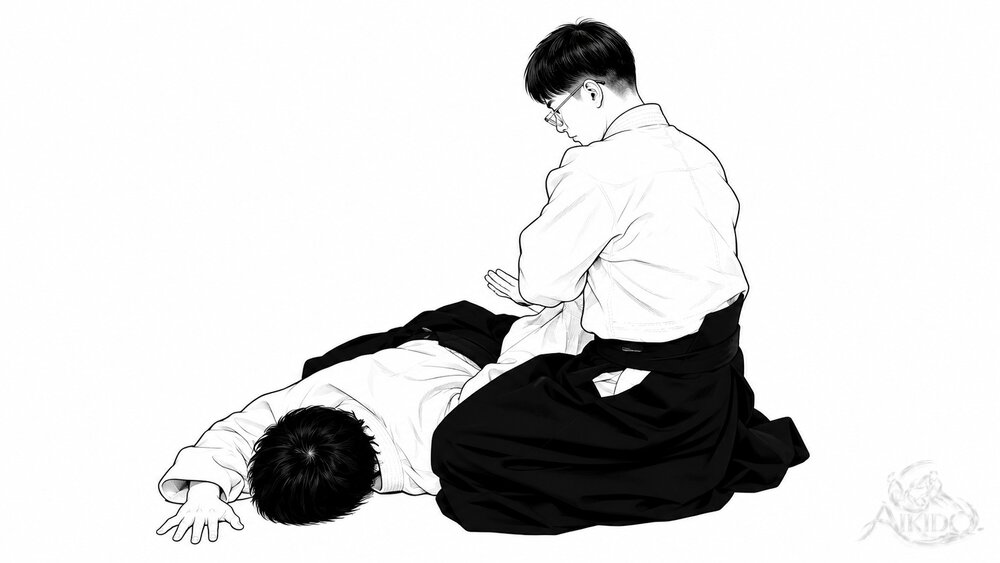
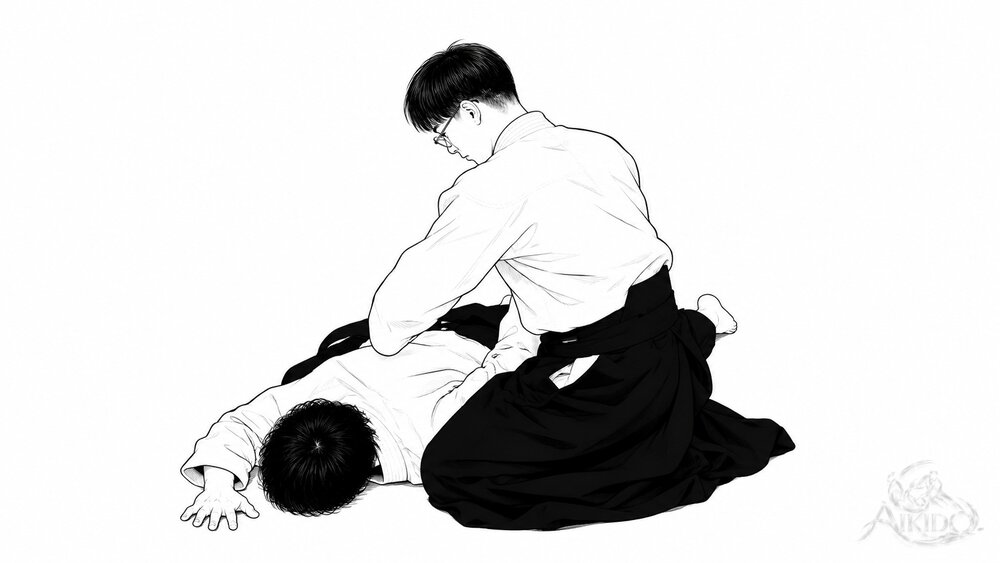
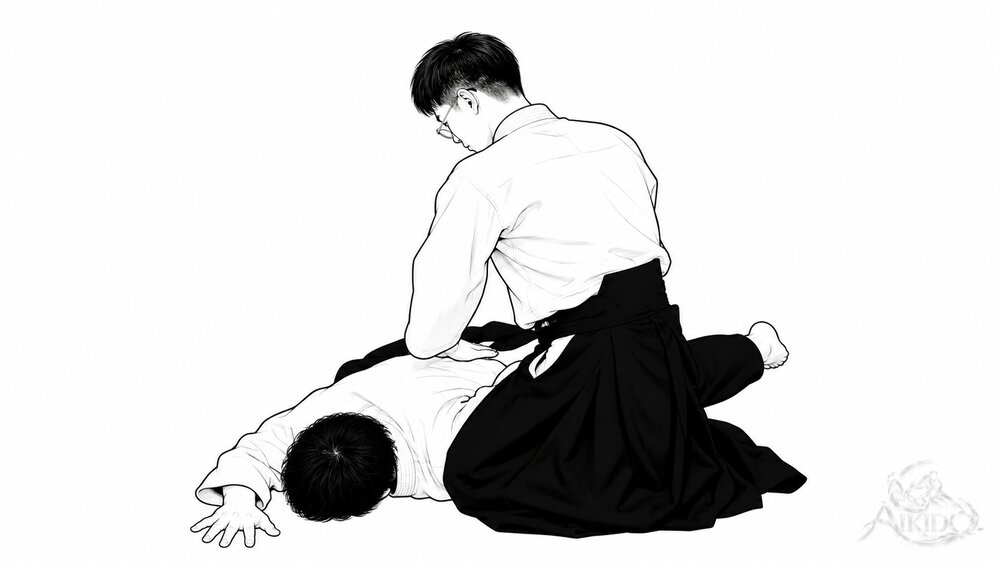
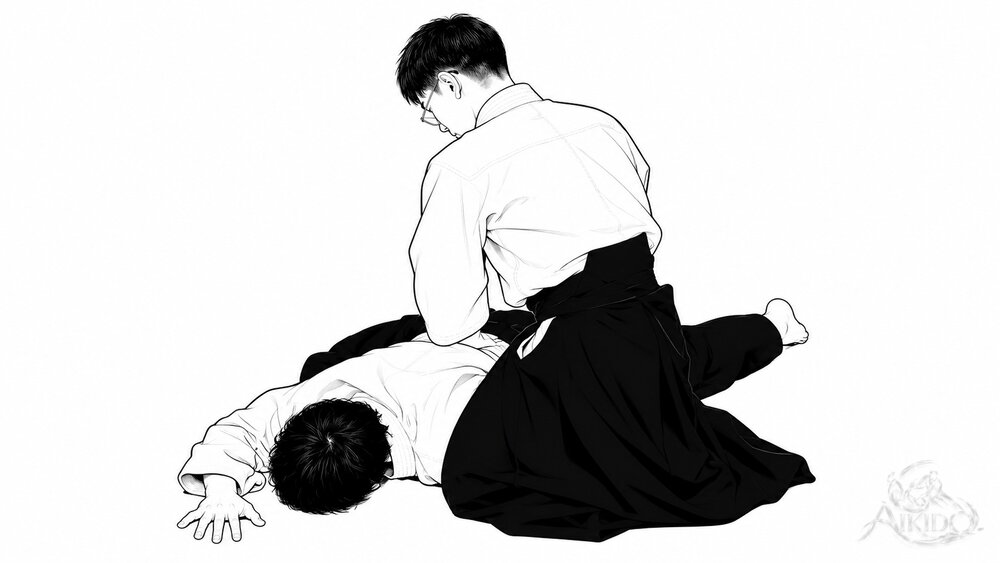
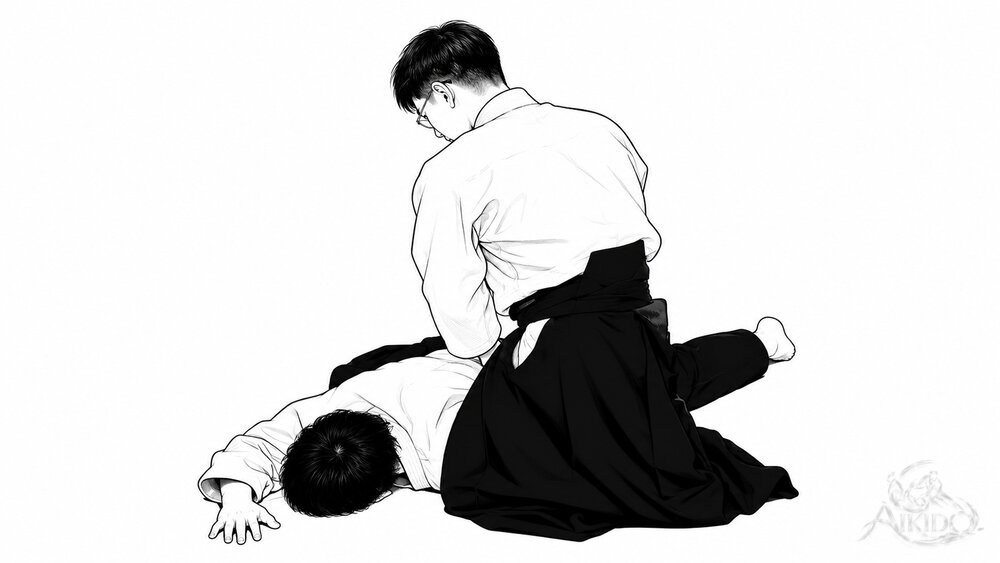
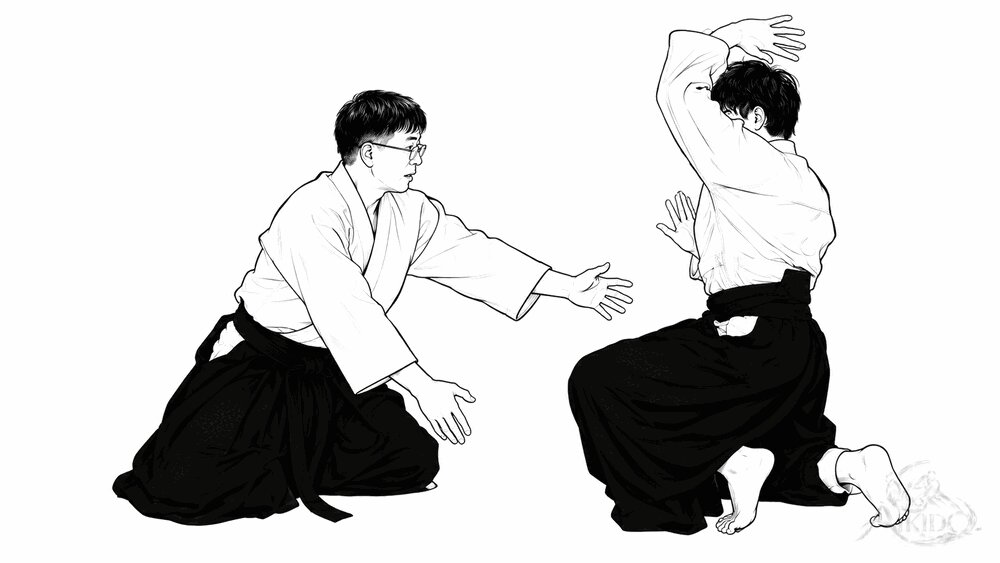
In migi gyaku-hanmi katate-dori, first open the body to the left with the tenshin body movement while leading your partner’s hand toward your belly. Then take the back of your partner’s hand with the left hand, sliding it down from your partner’s elbow. With that hand, cut up as if drawing an arc, and at the same time take the elbow with the right hand. Lead your partner’s elbow and wrist down and advance, bringing your partner face down. Finally, fix your partner’s shoulder with both knees, hold your partner’s arm firmly with both hands, and lower your center to control.
- Break your partner’s balance with tenshin: Katate-dori nikyo breaks your partner’s balance with the tenshin body movement. In migi gyaku-hanmi, open the left foot to the left while leading your partner down with the right tegatana, and put the left tegatana on your partner’s elbow to cut down in the same direction.
- How to take the wrist: Having led it down with the left tegatana on your partner’s elbow, slide the hand down and change your grip to the wrist. Wrapping from the back of the hand, put your thumb on the base of your partner’s thumb and take the little-finger side of your partner’s hand with the other four fingers. While blocking the power of your partner’s fingertips, cut that hand up in an arc to break your partner’s balance further.
- Close both armpits and hold firmly: Once your partner is face down, kneel by the head. Move the wrist you have been holding to your other arm and wind it in. Then release the hand that first held the wrist, form it into a tegatana, and put it on the arm. It is important here to close both armpits and hold firmly so that your partner’s hand does not slip out.
- Lean forward without breaking your axis: With your partner’s shoulder fixed between both knees and your partner’s arm held in both hands, lean the body forward to control the joint. The key is not to break your body’s axis. If you sway left and right or your back rounds, you cannot control your partner even by leaning forward. Keeping your axis, control your partner with the feeling of resting your belly on your partner’s shoulder.
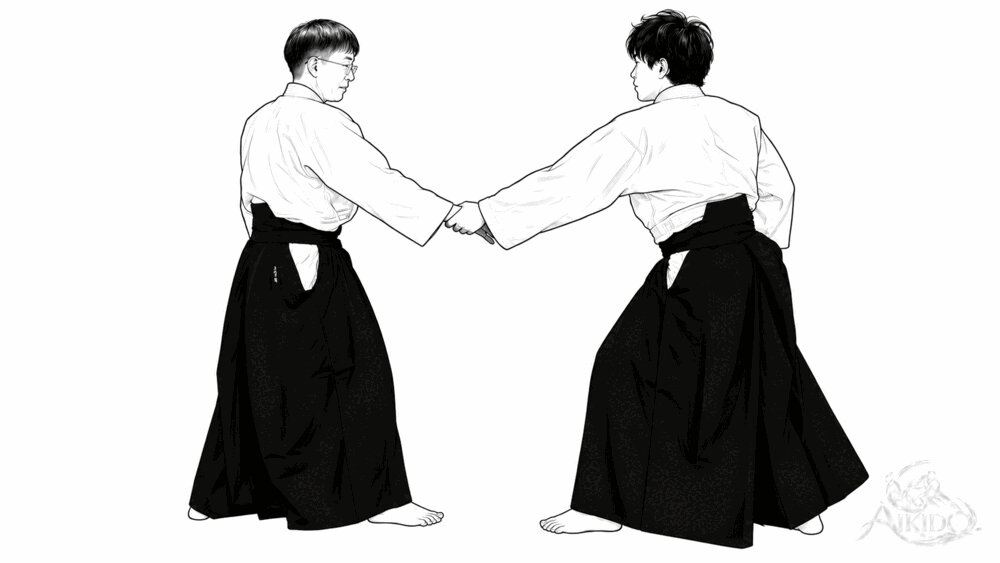
Gyaku-hanmi Katate-dori Nikyo Ura (逆半身片手取り第二教 裏)
Key point: Turn with tenkan, lead your partner’s hand in front of your shoulder, and control the wrist to bring your partner down.
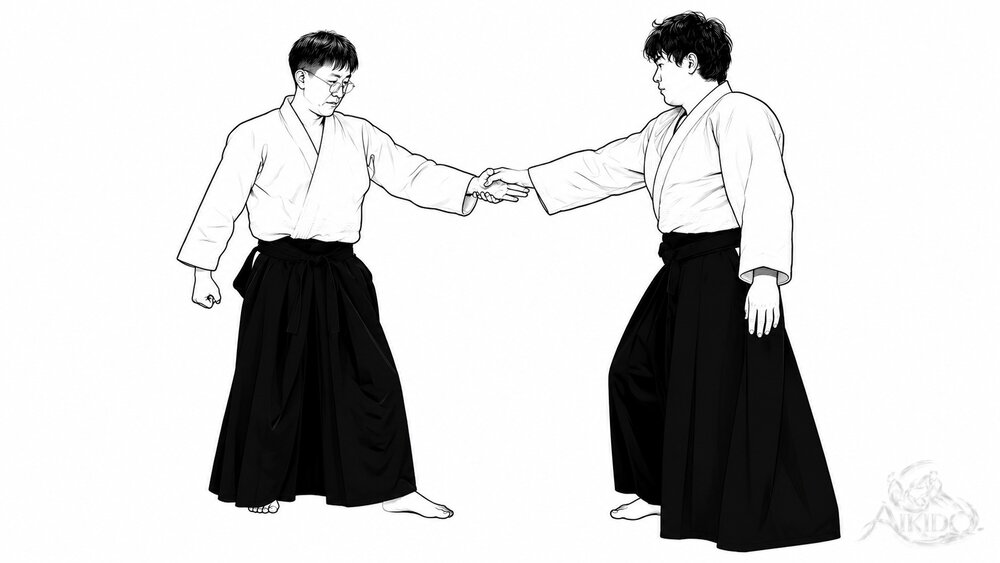
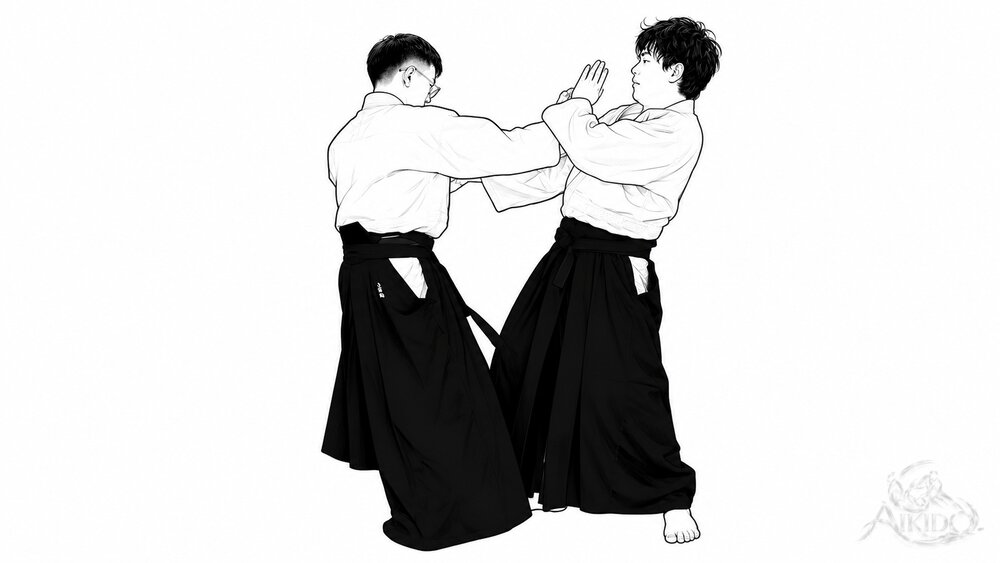
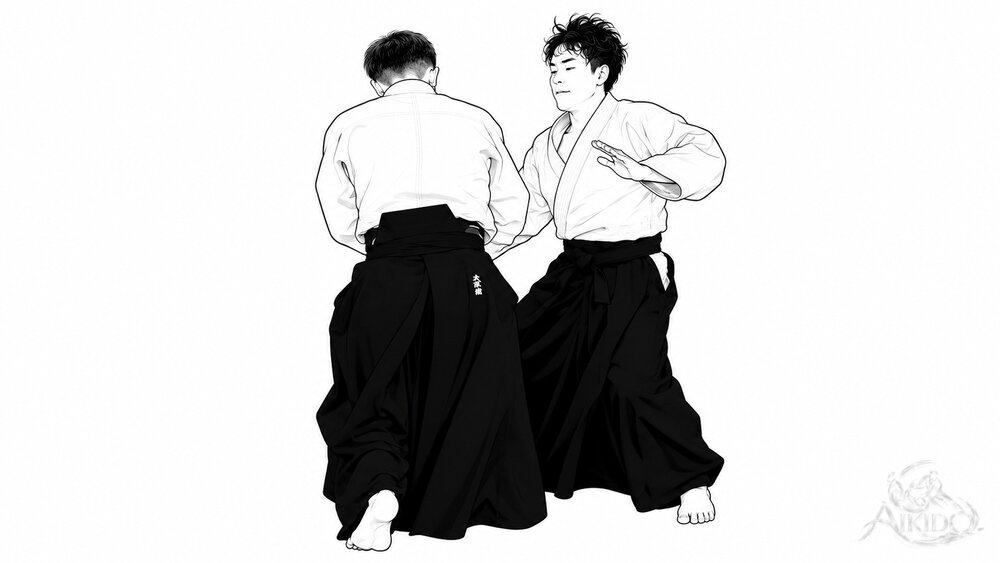
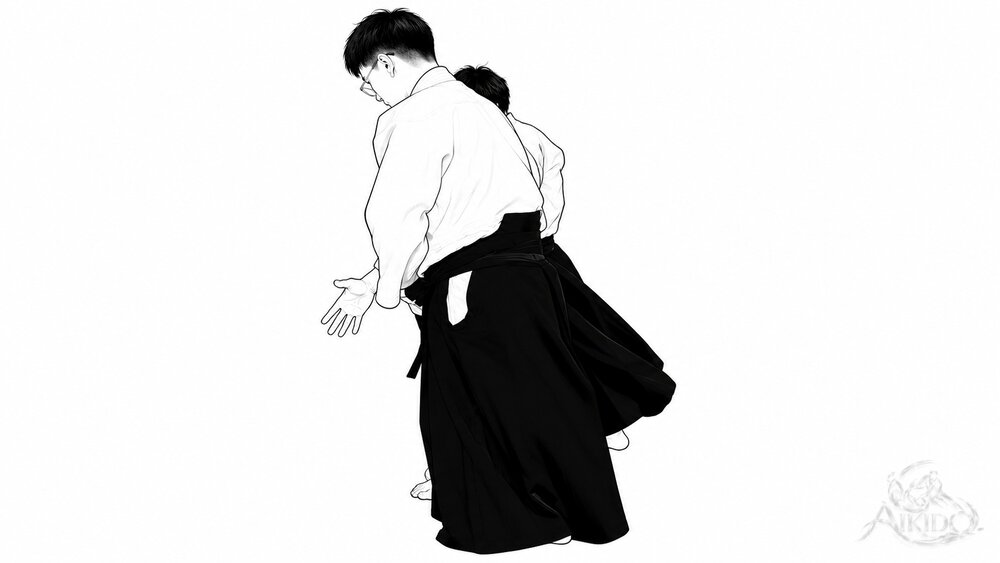
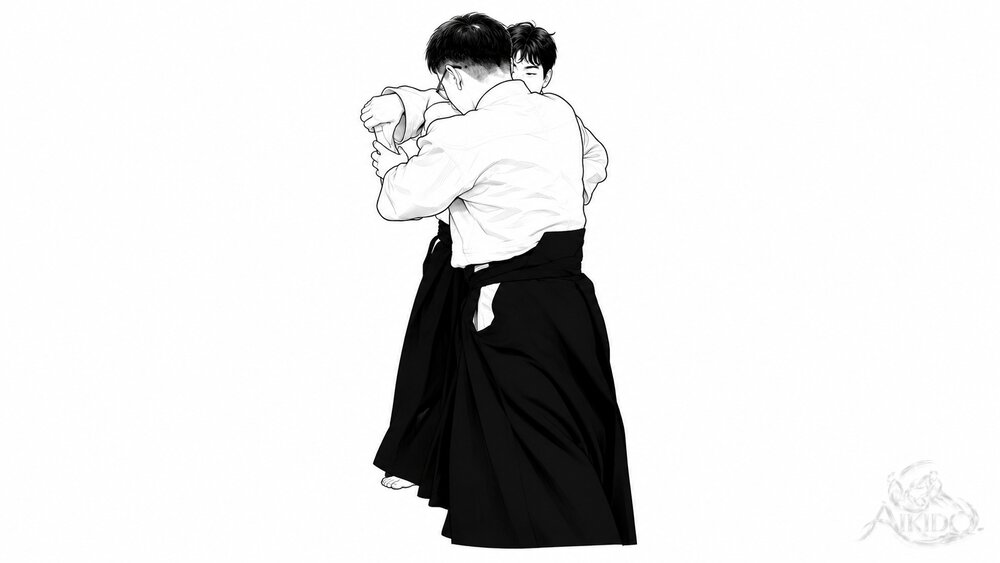
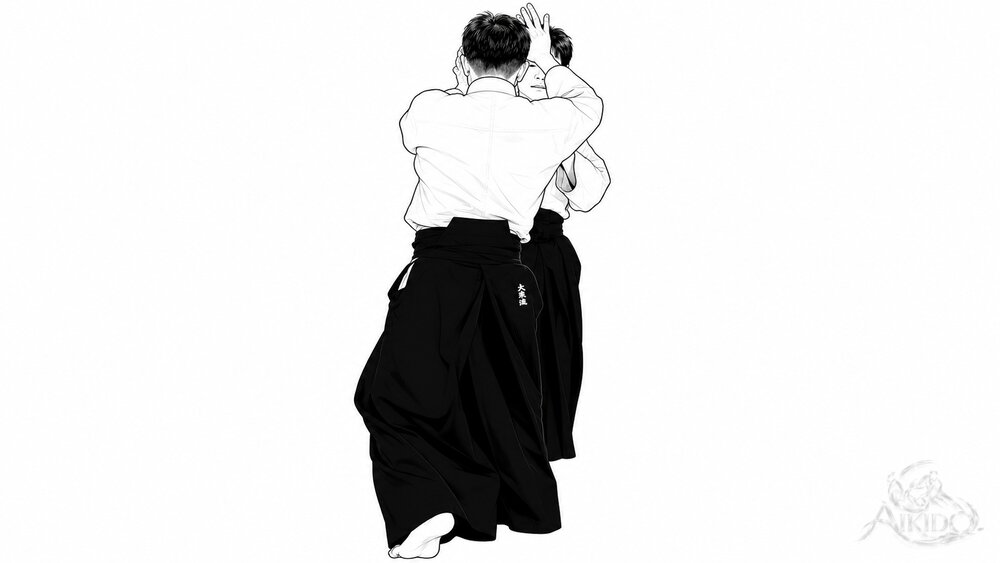
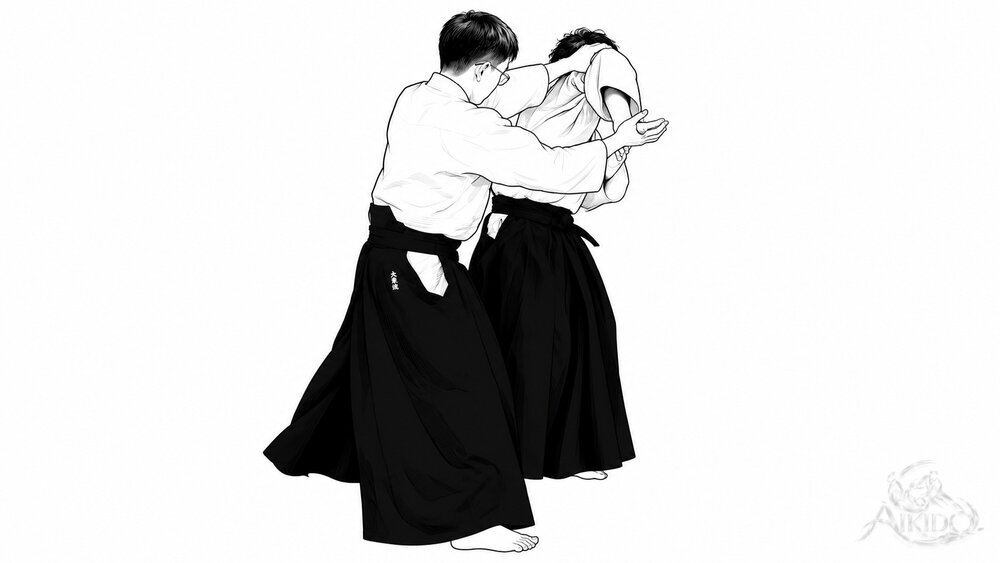
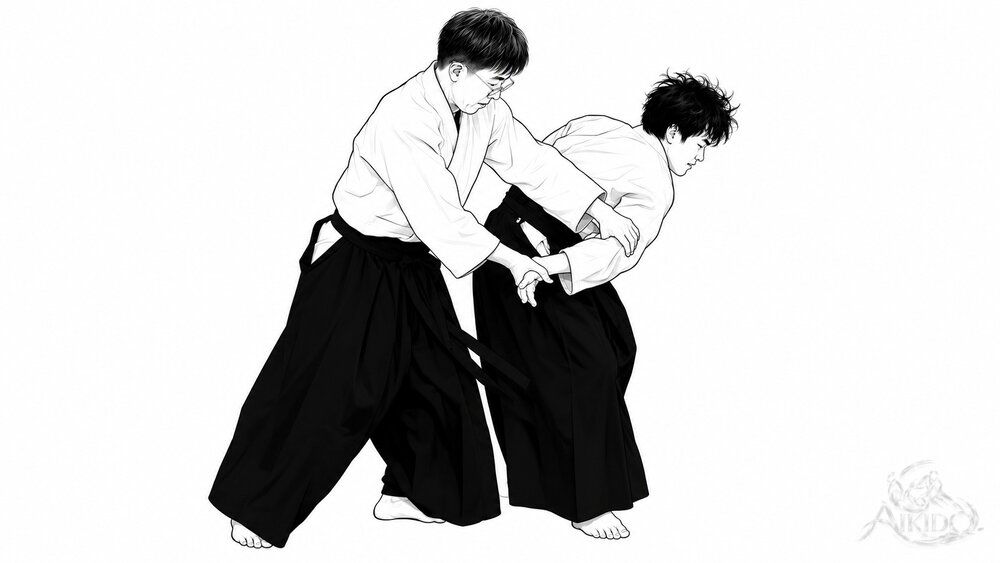
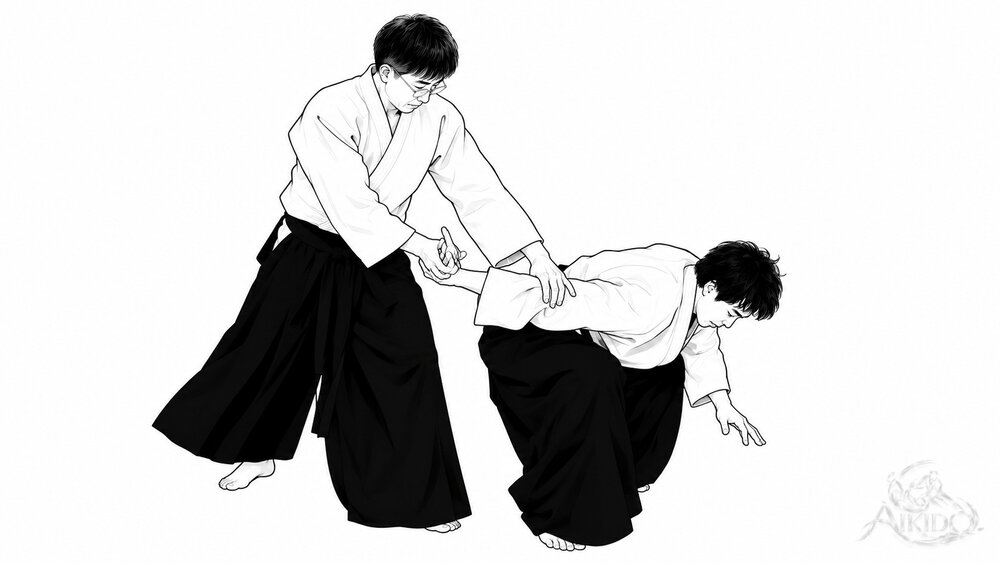
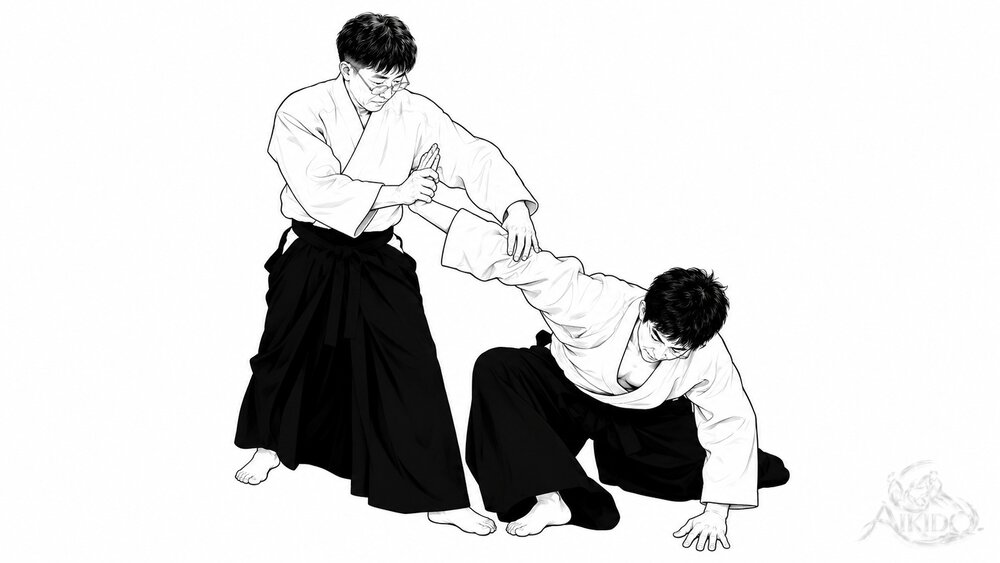
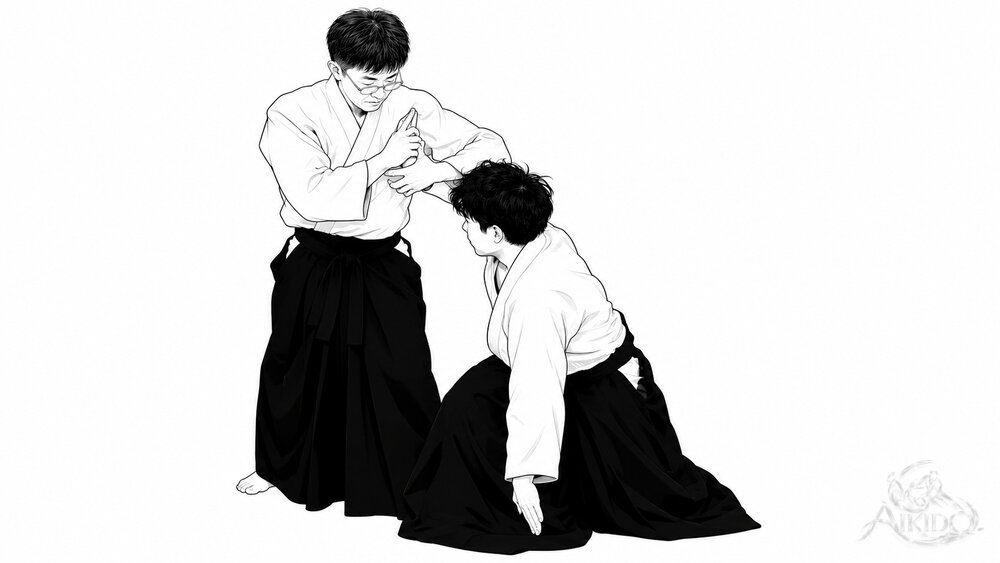
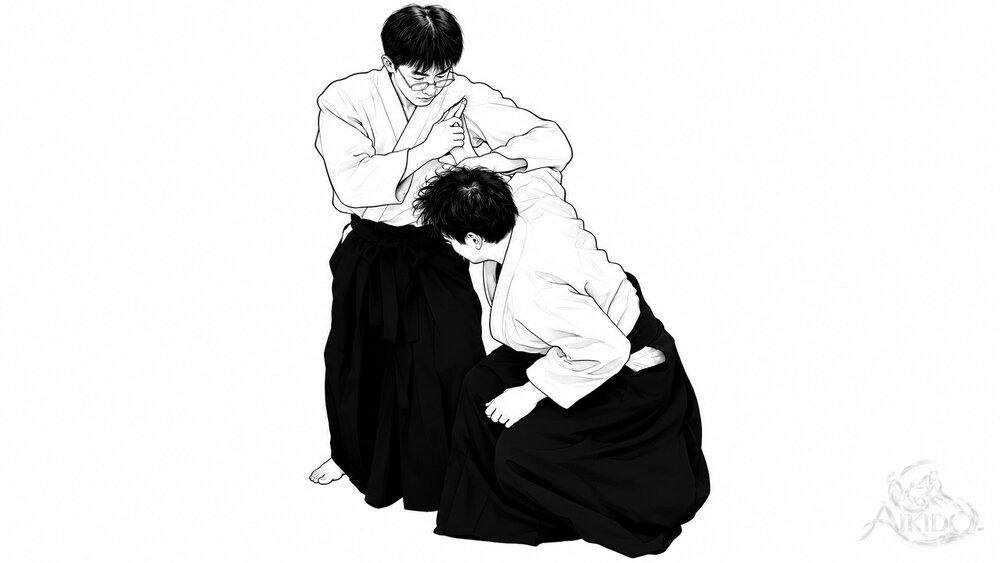
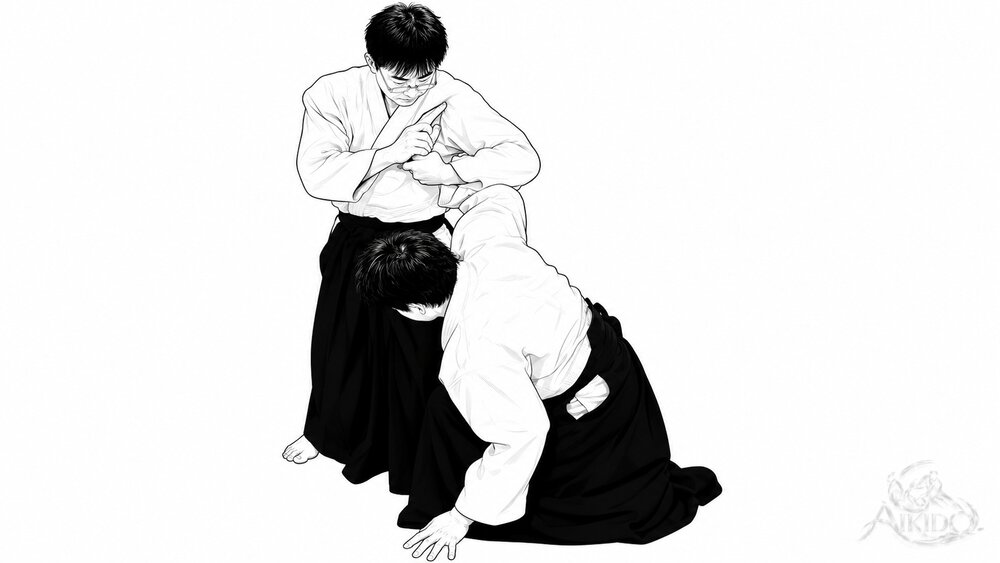
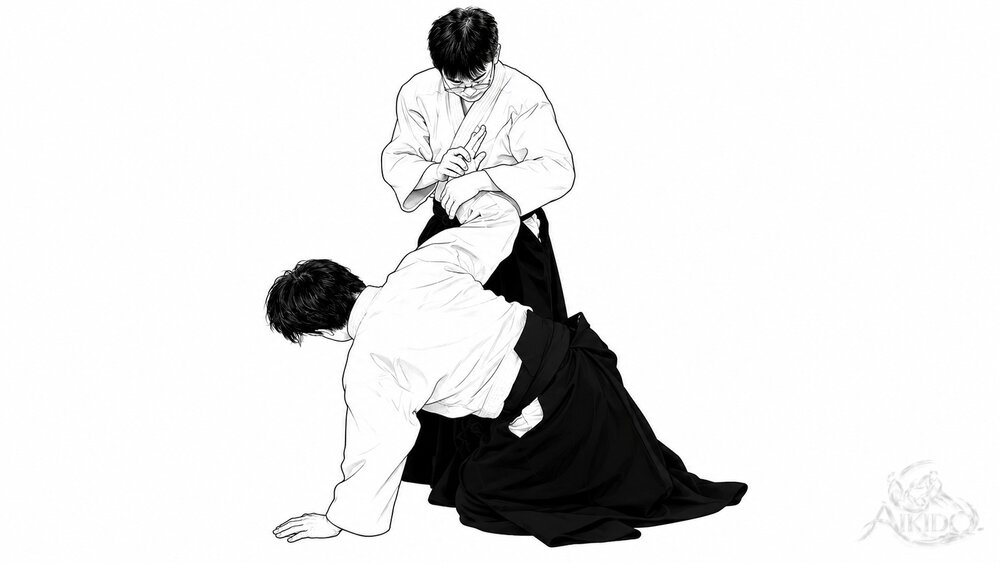
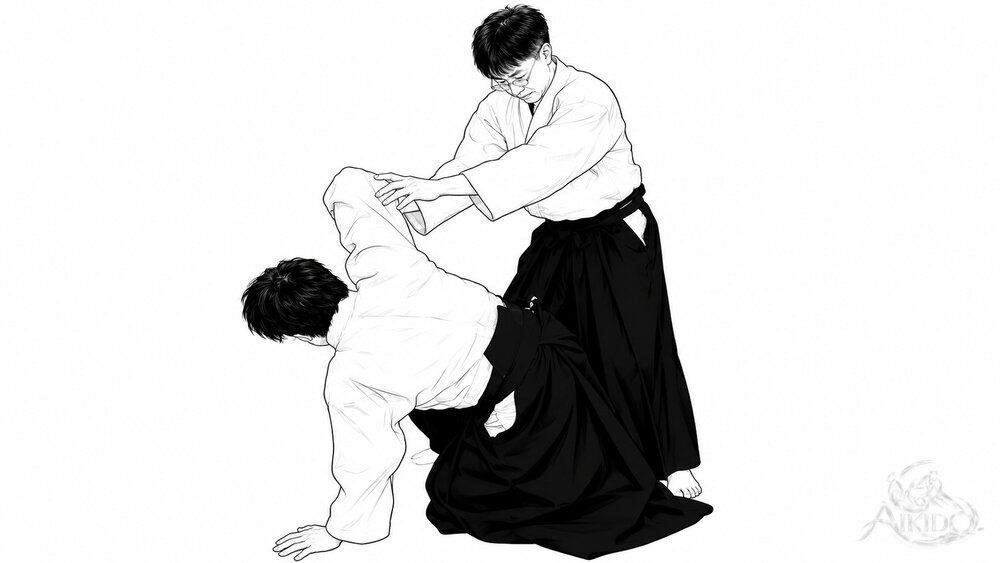
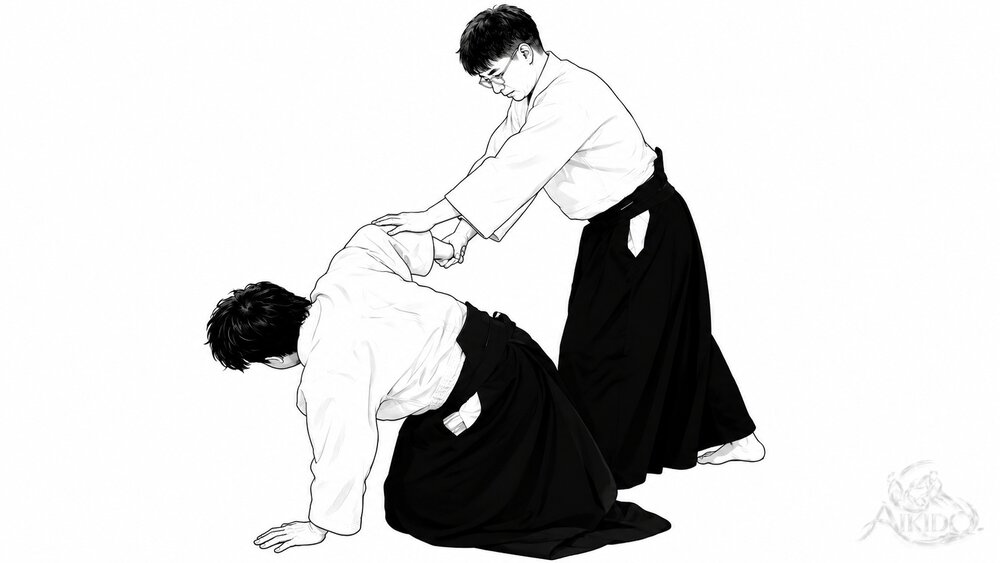
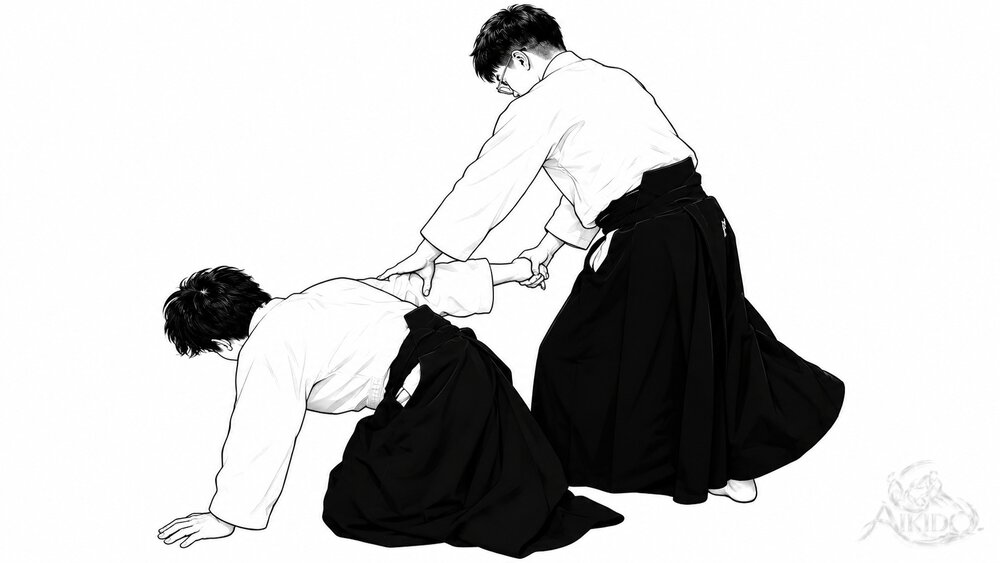
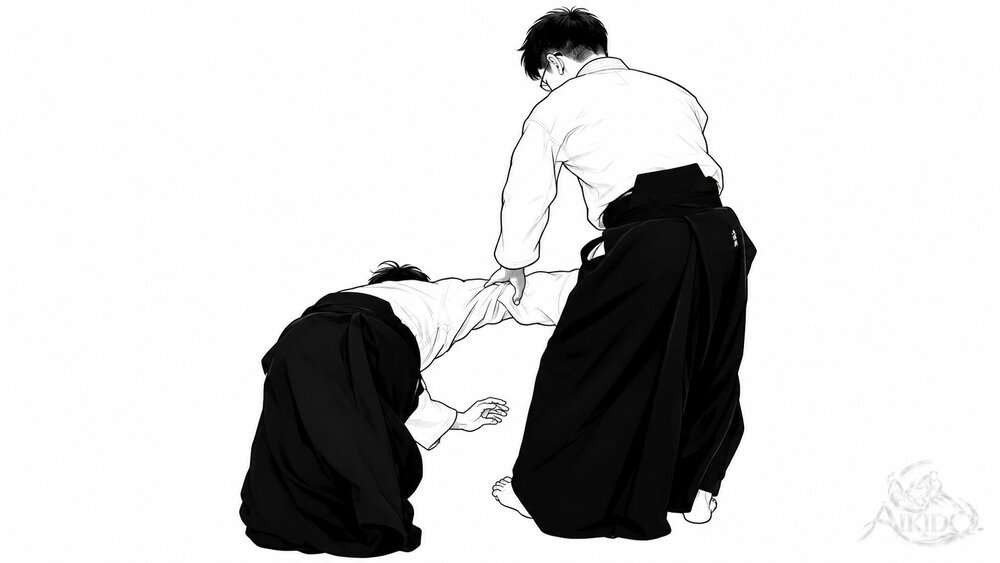
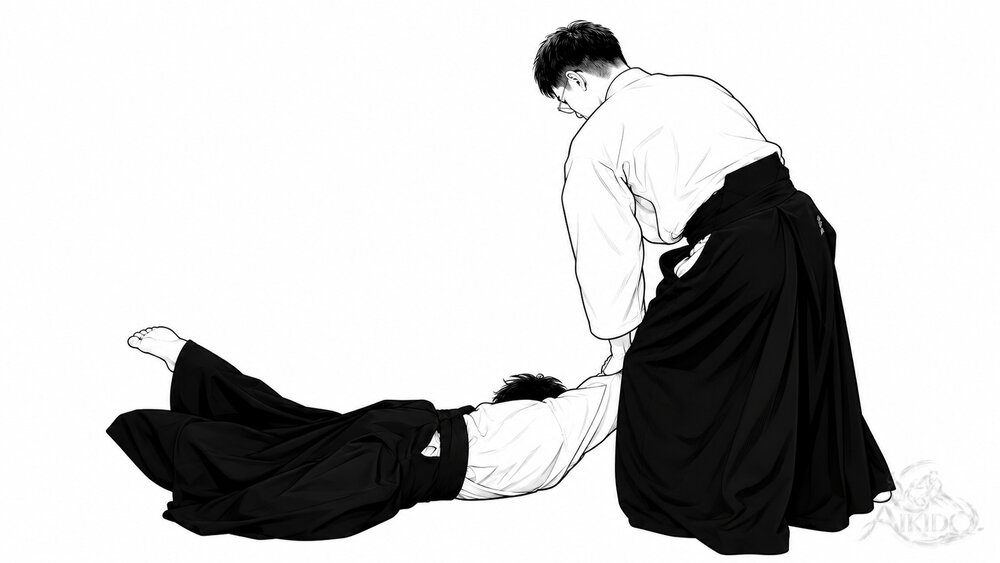
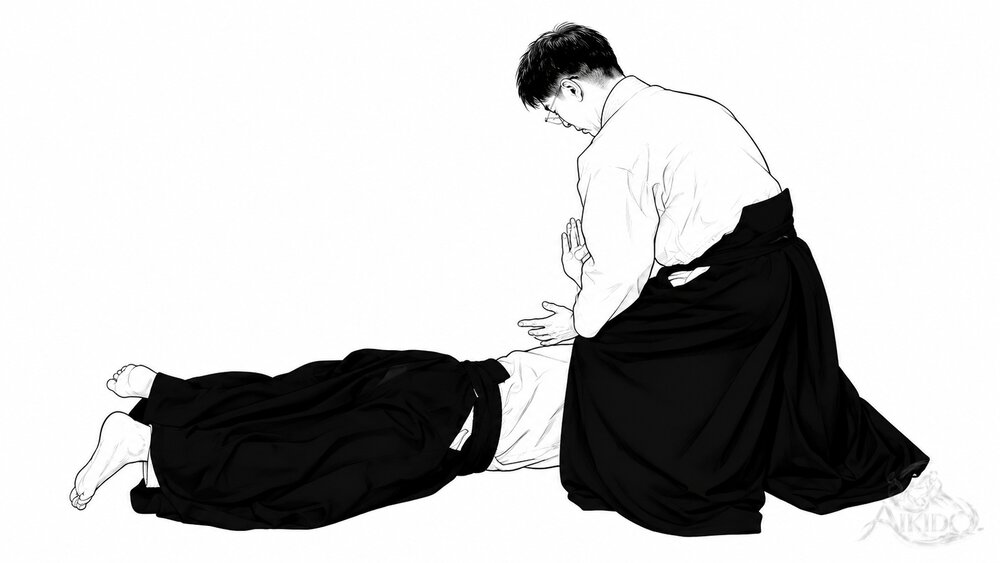
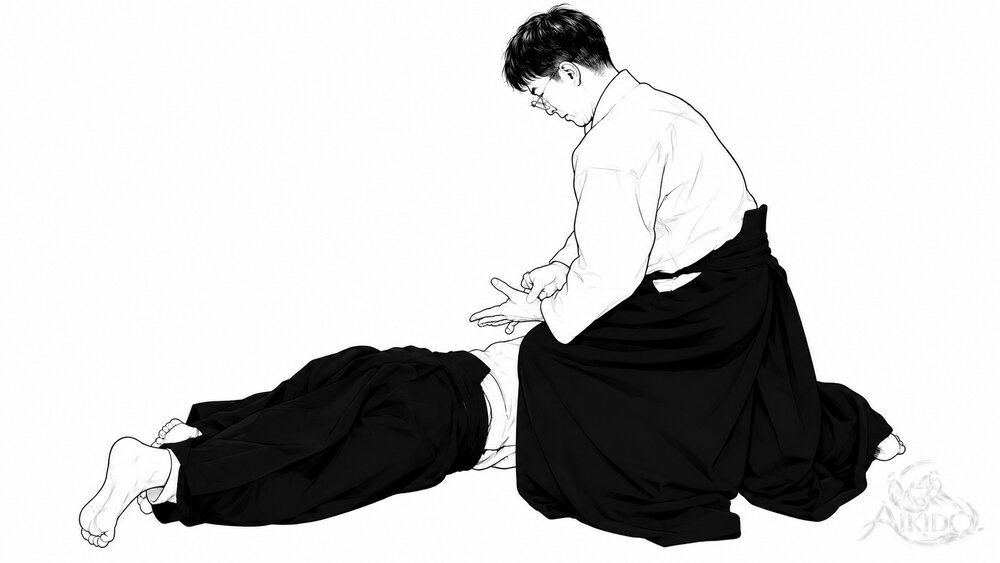
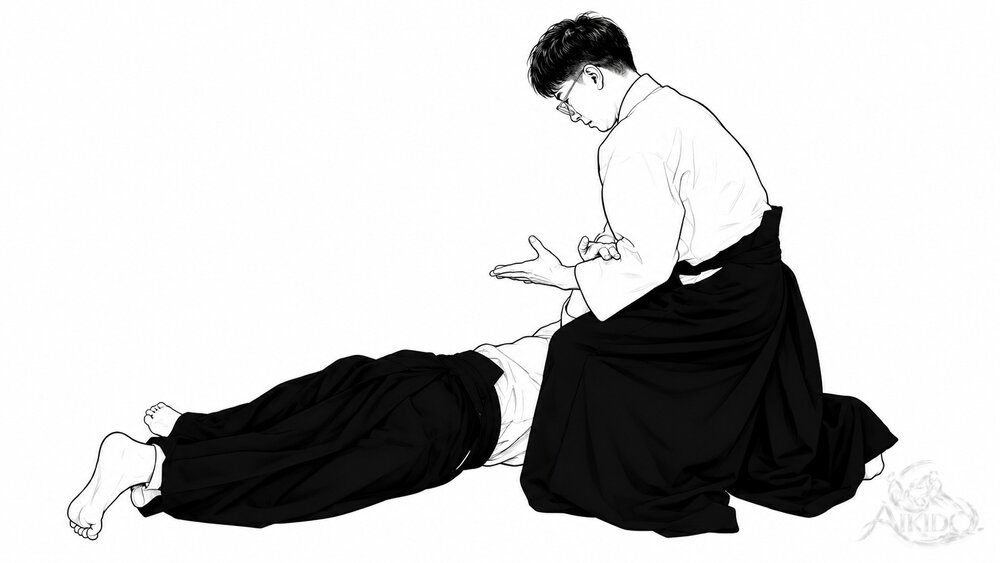
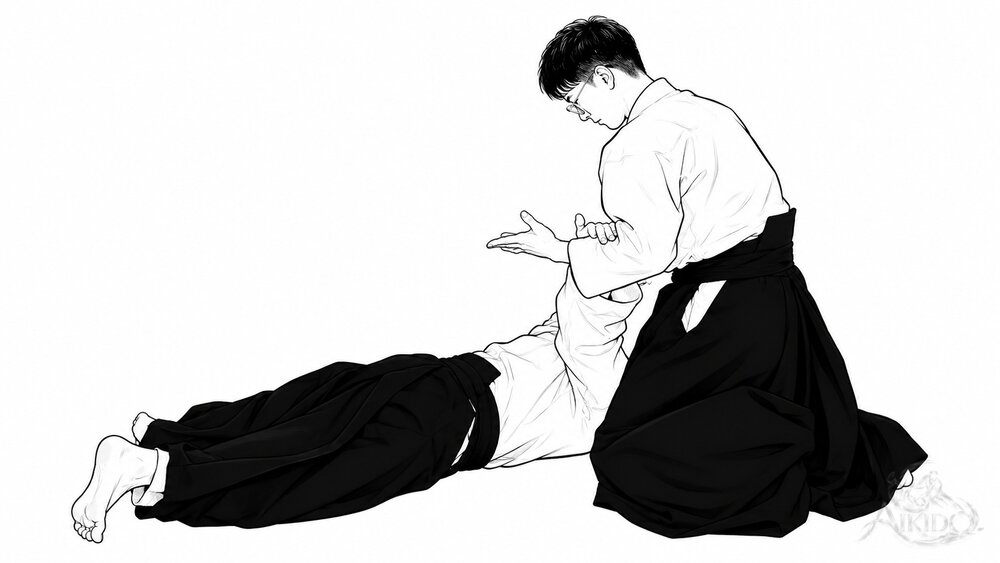
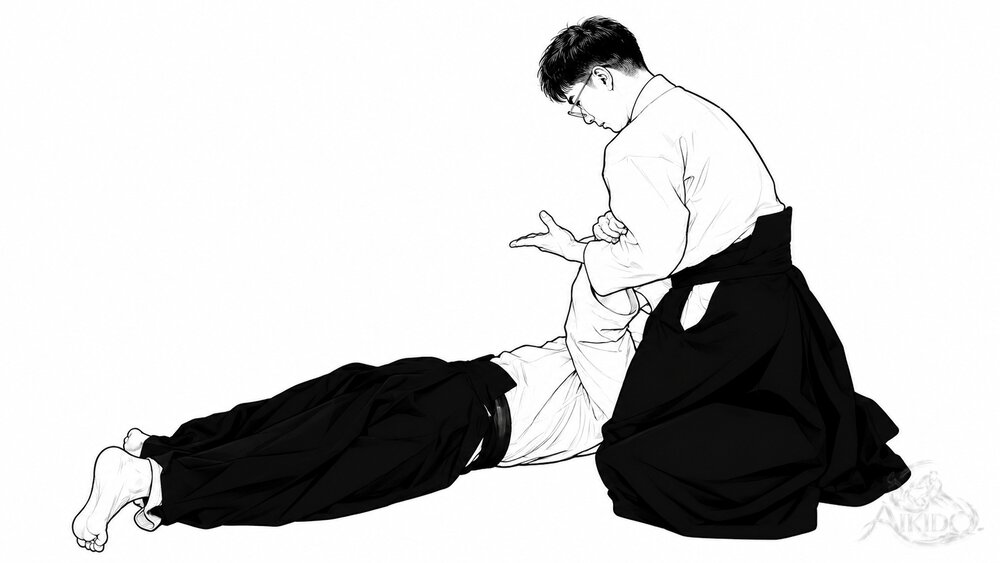
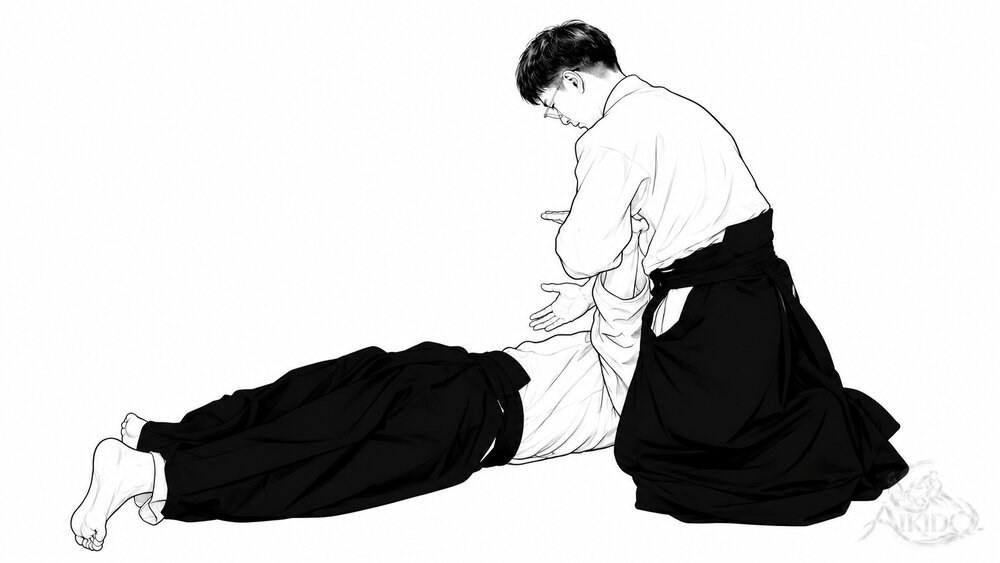
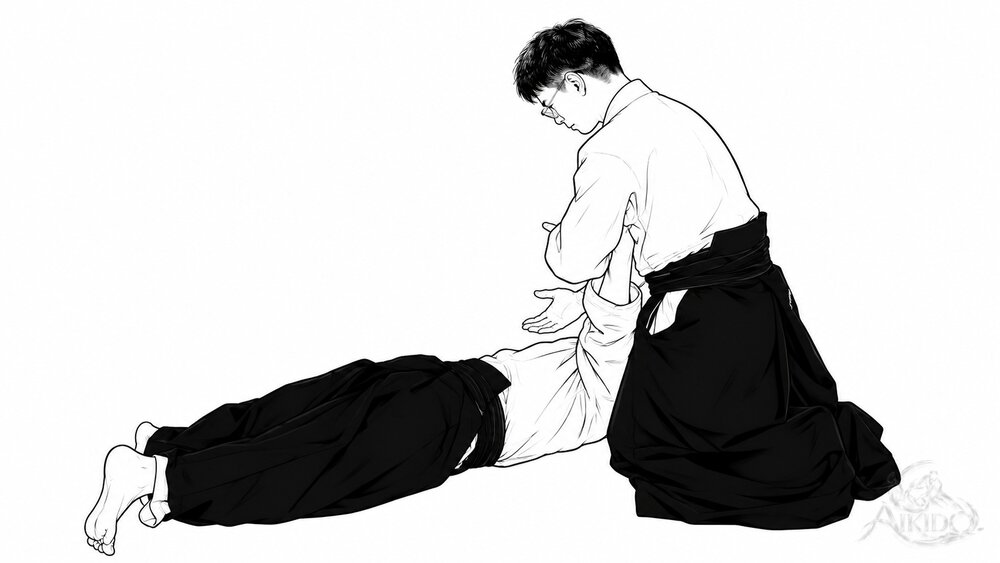
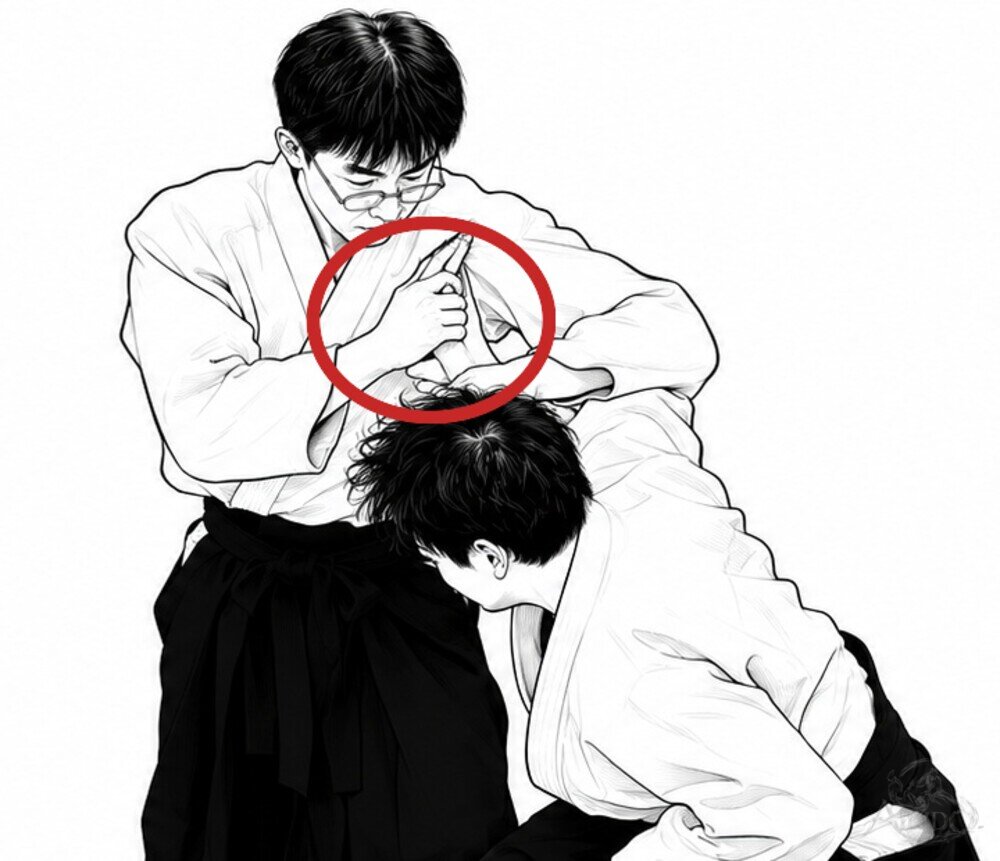
Gyaku-hanmi katate-dori nikyo ura breaks your partner’s balance with tenshin and then turns with tenkan from there. Lead your partner’s hand to the front of your shoulder, and with the hand held against your body, lower your center to control the wrist. Then control your partner’s elbow to bring them face down, and after that hold your partner’s arm and pin in the same way as omote. The key to this technique is how to control the wrist in front of the shoulder. It is important to hold the side of your partner’s thumb and index finger against the front of your shoulder and lower your center to control the wrist.
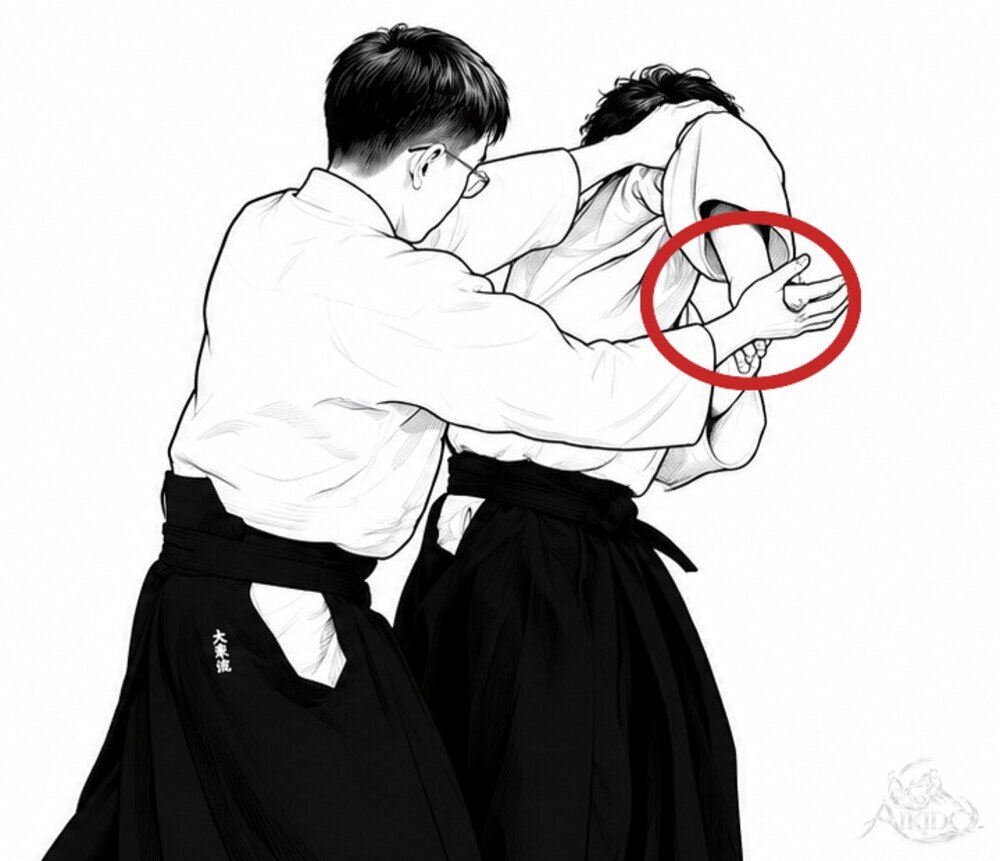
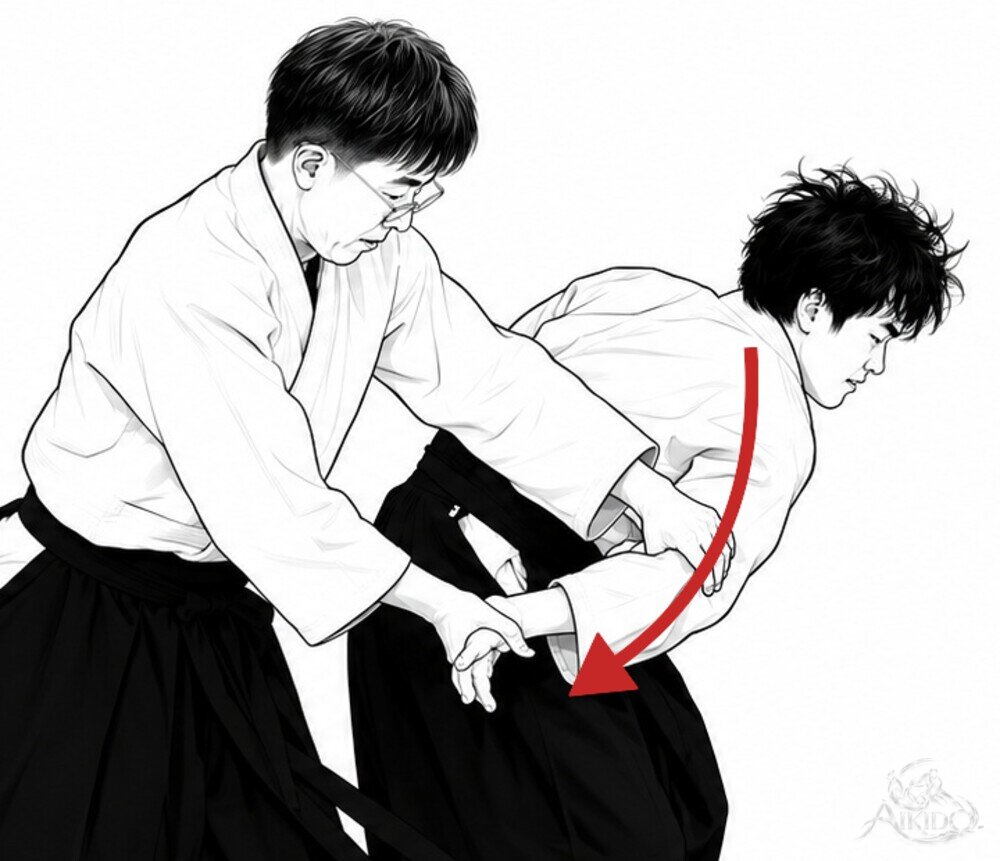
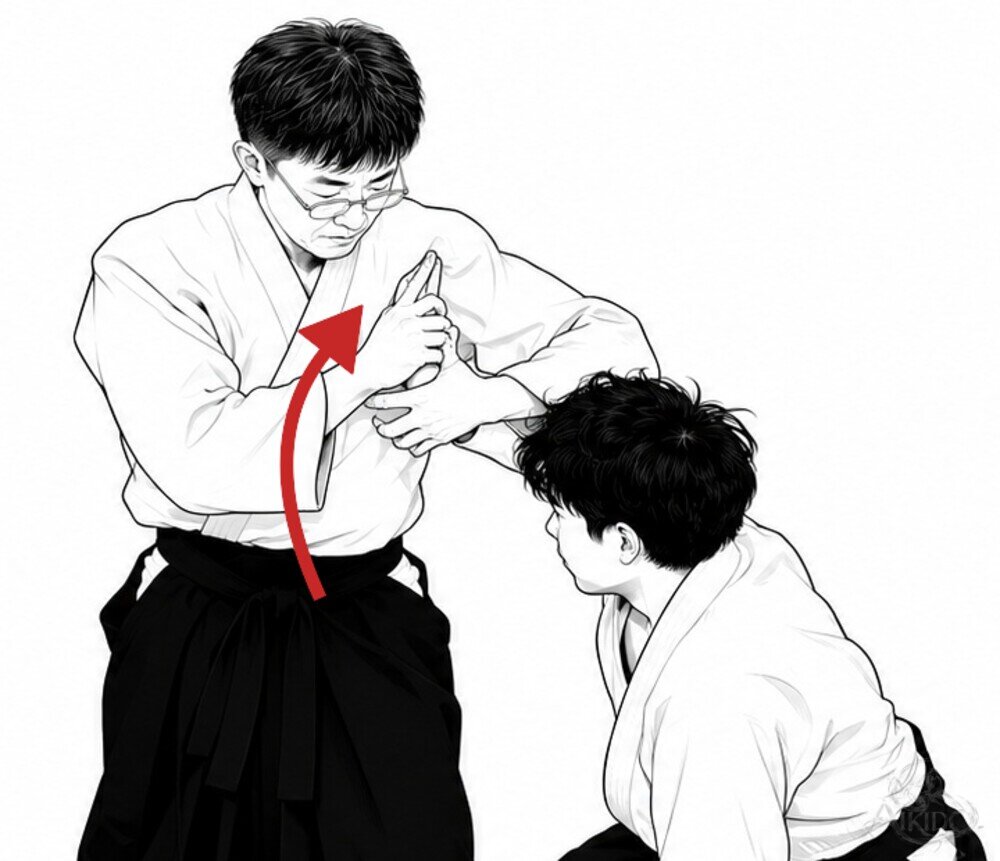
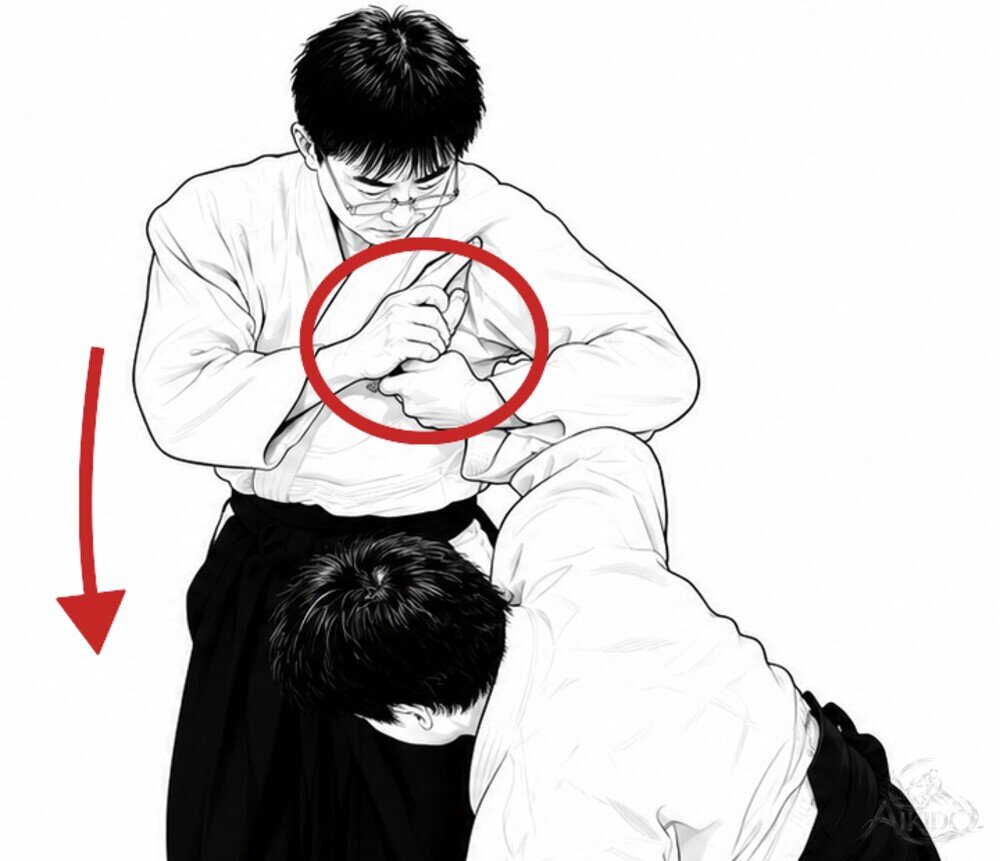
- Lead your partner’s hand in front of your shoulder: As in omote, after breaking your partner’s balance with tenshin, cut the hand down while performing the body movement of irimi into tenkan. Release the hand from the elbow, lead your partner’s hand to the front of your shoulder with the right hand, and then take your partner’s hand from above with the left hand.
- How to control the wrist joint: Take the base of your partner’s thumb with your thumb, and the little-finger side with the other four fingers. Grip so that no gap forms between the back of the hand and your palm. Hold the side of your partner’s thumb and index finger against the front of your shoulder, and take the wrist with the other hand so that your partner’s elbow bends. If you lower your center as if controlling the wrist with your whole body, the wrist joint is controlled.
Gyaku-hanmi Katate-dori Sankyo Omote (逆半身片手取り第三教 表)
Key point: Turn your partner’s wrist over and change your grip, controlling the joint as you bring your partner down.
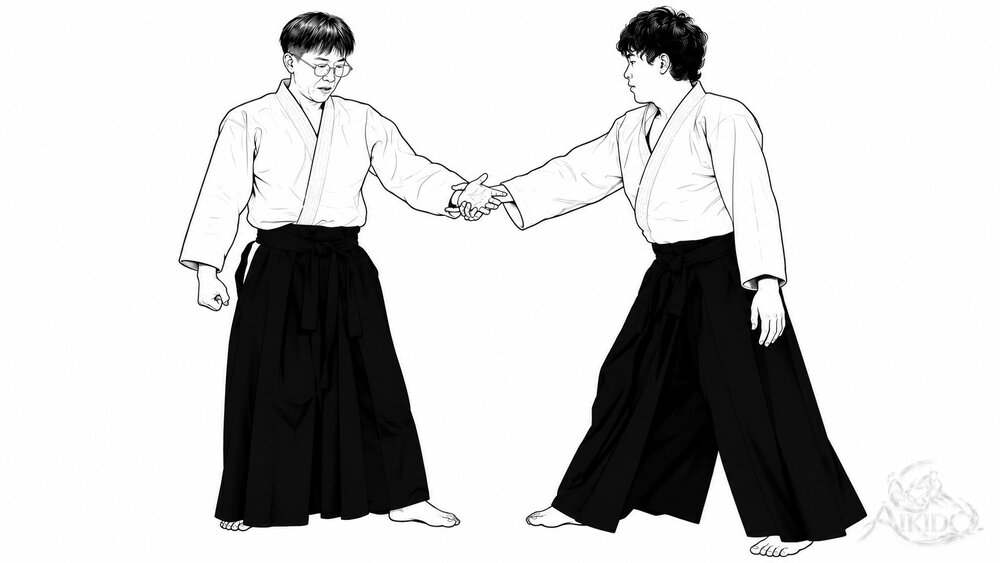
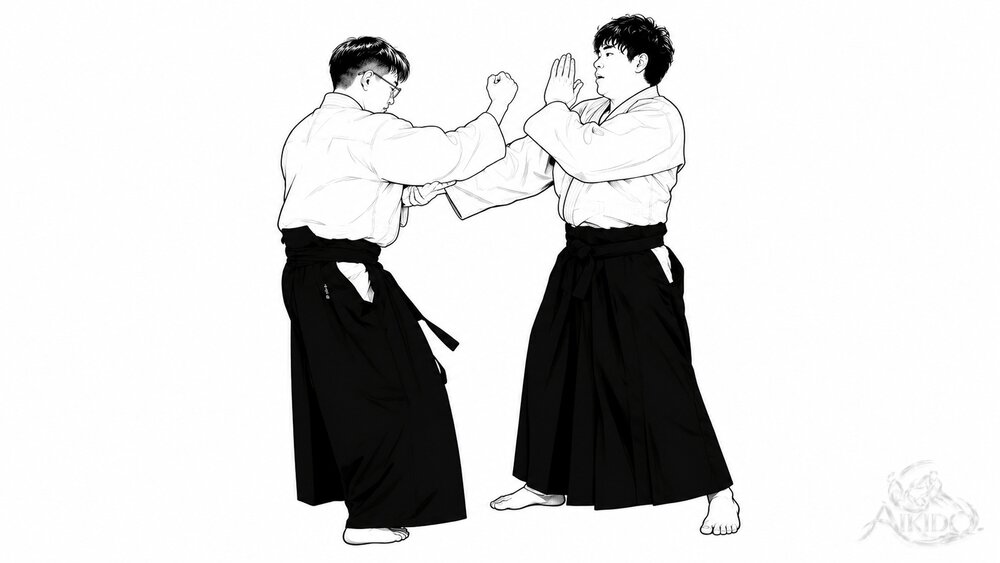
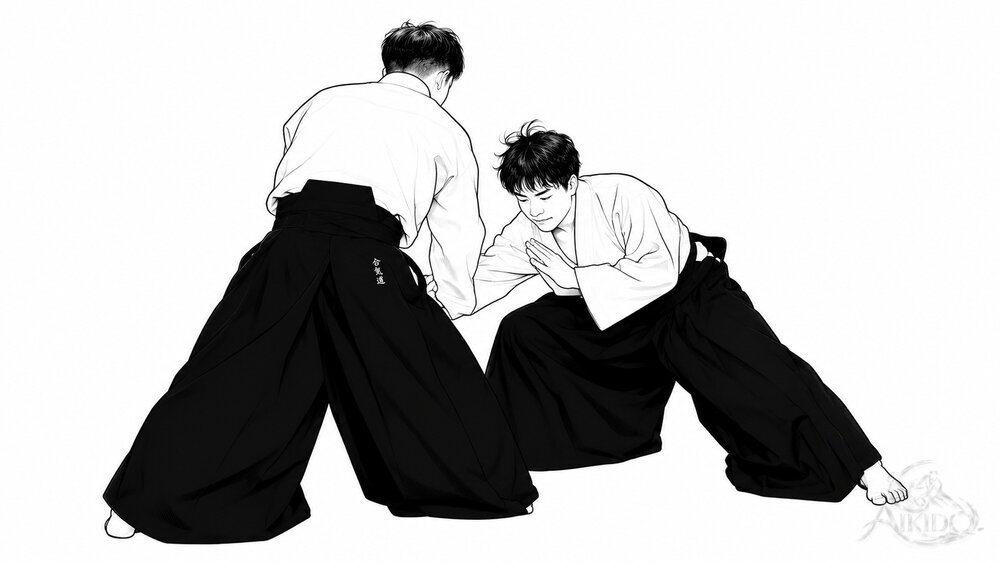
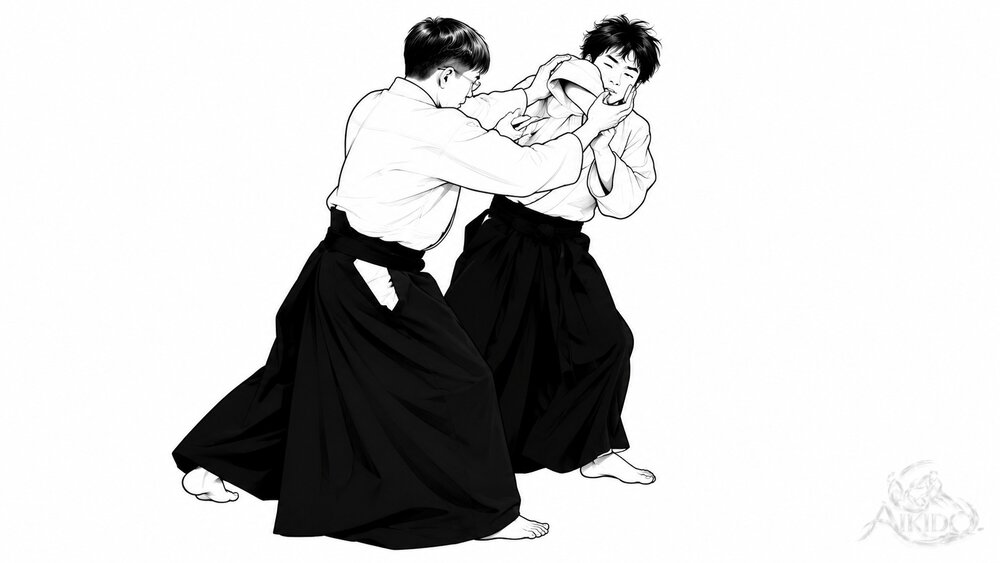
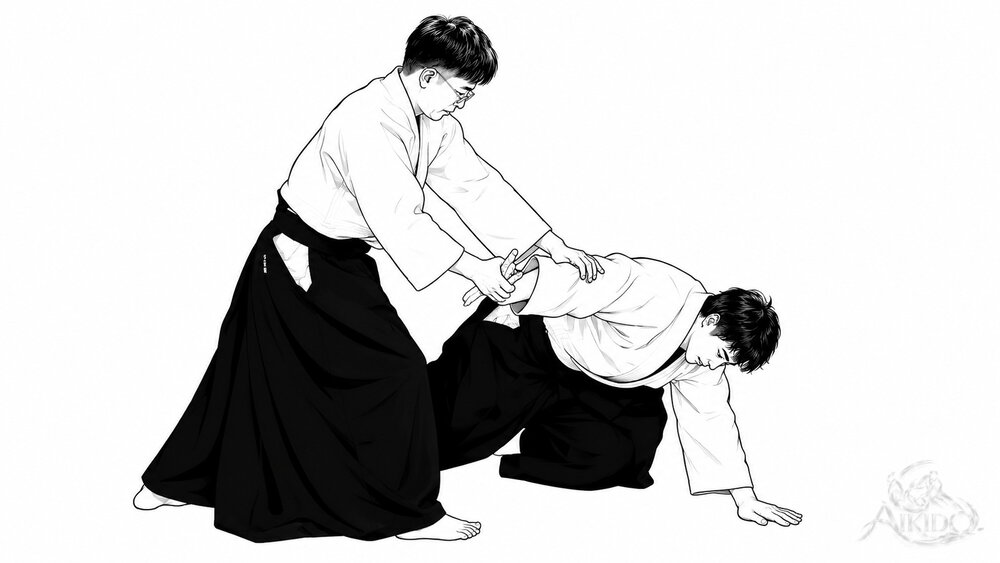
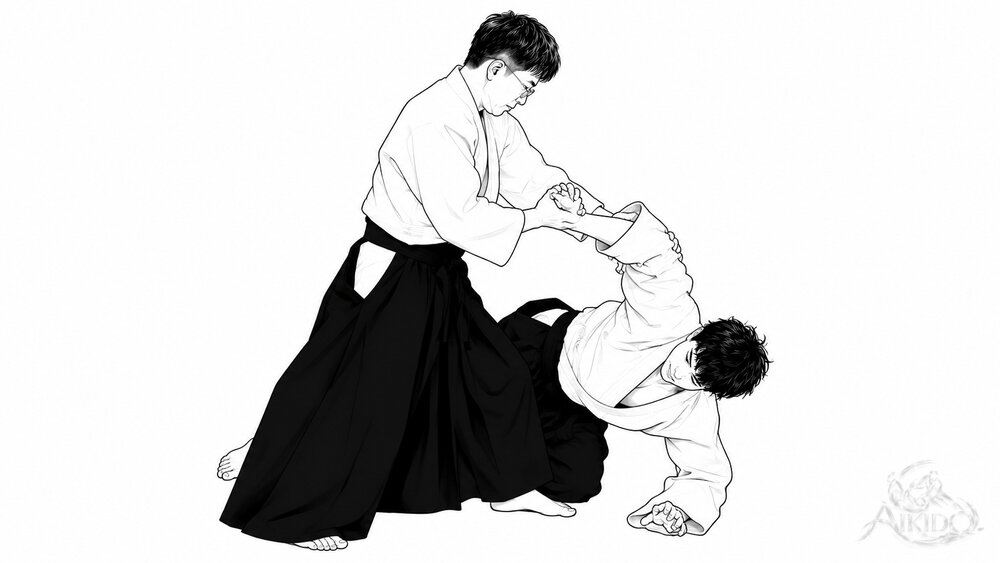
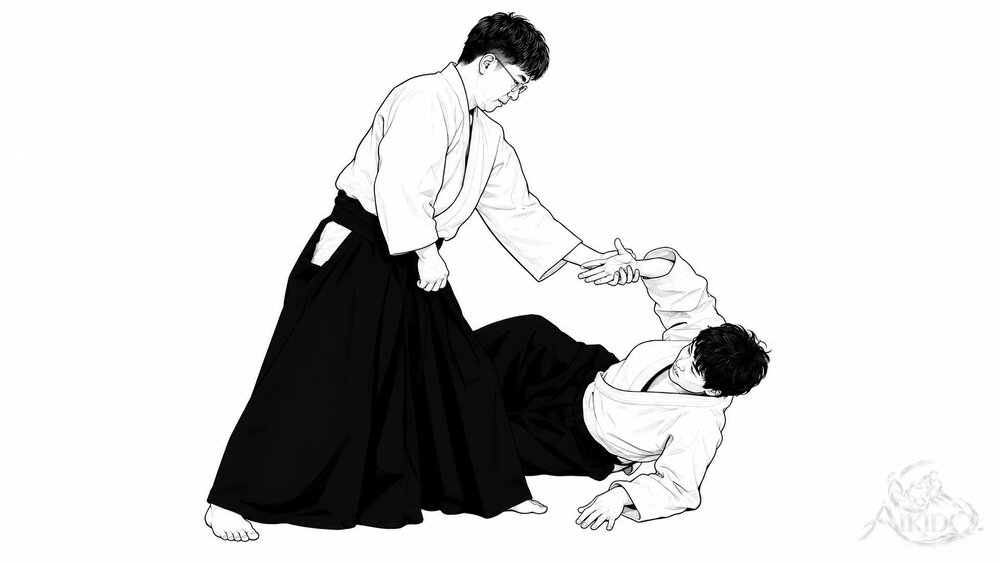
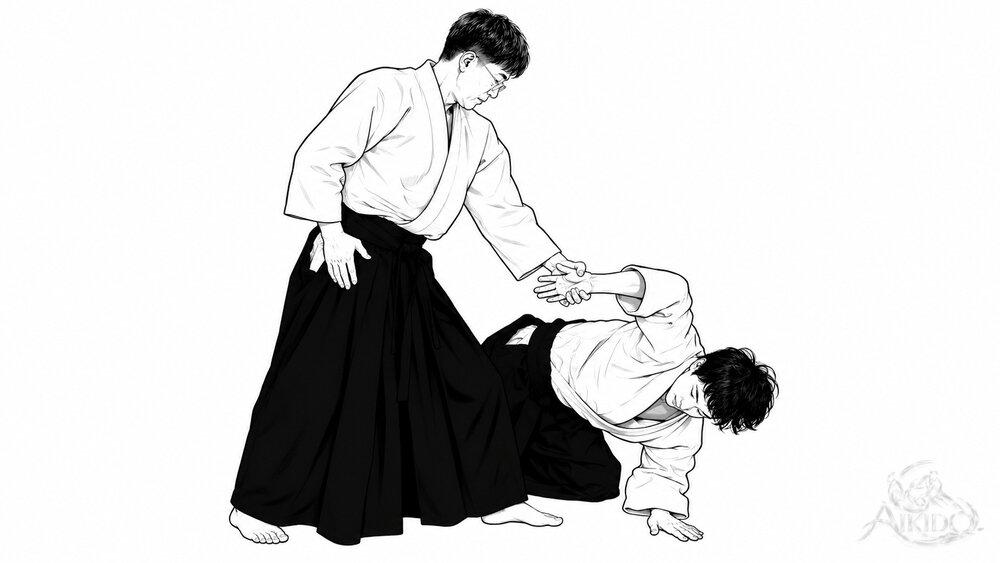
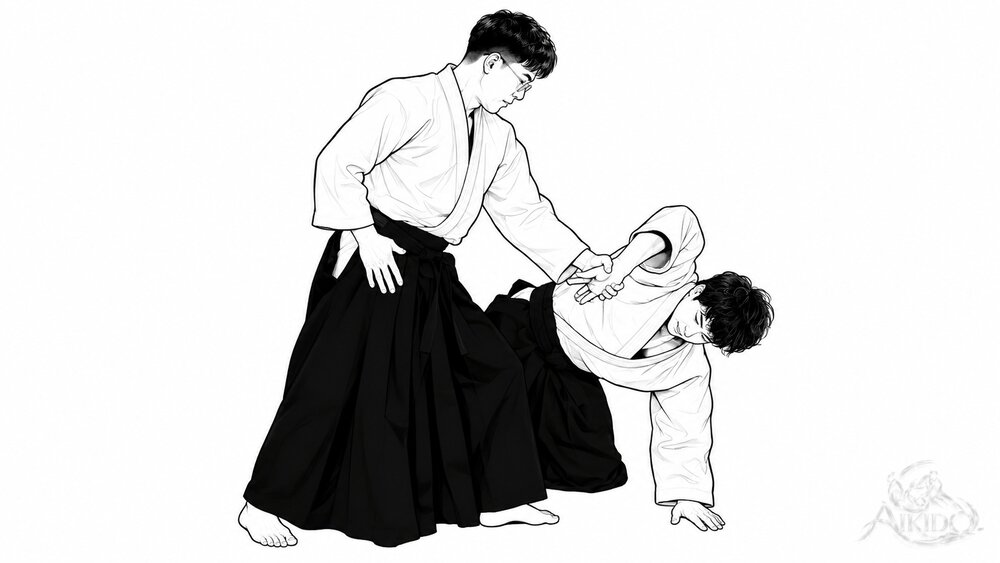
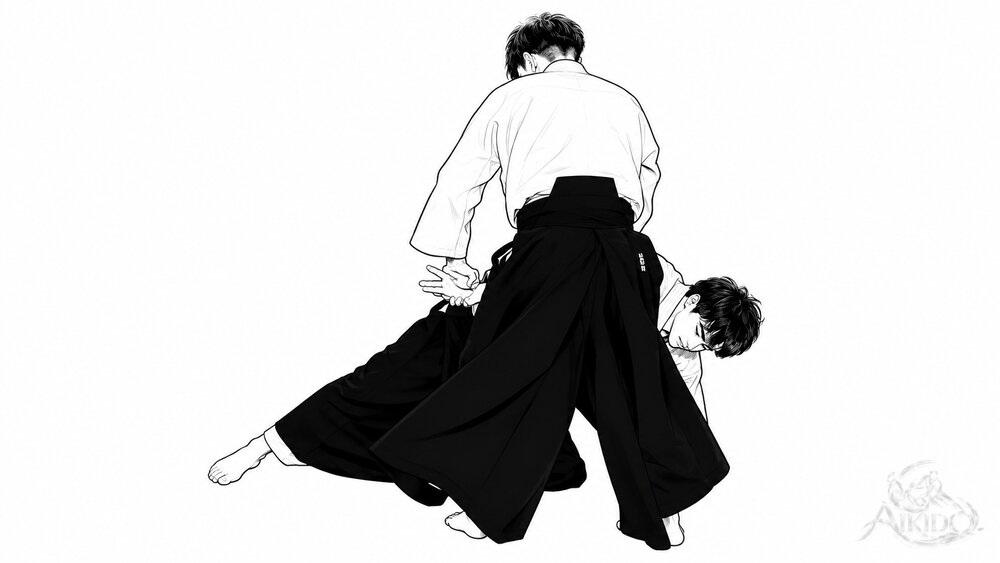
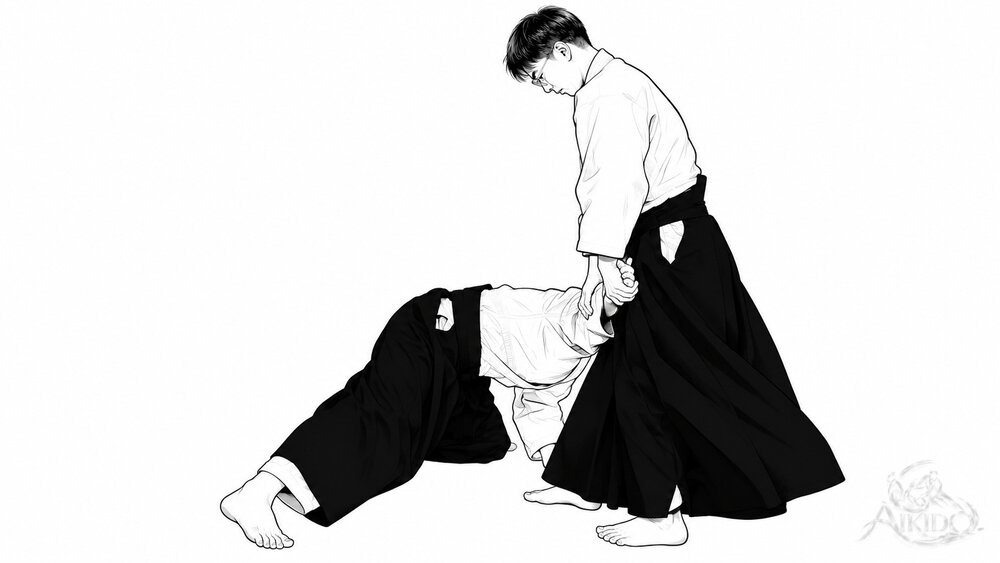
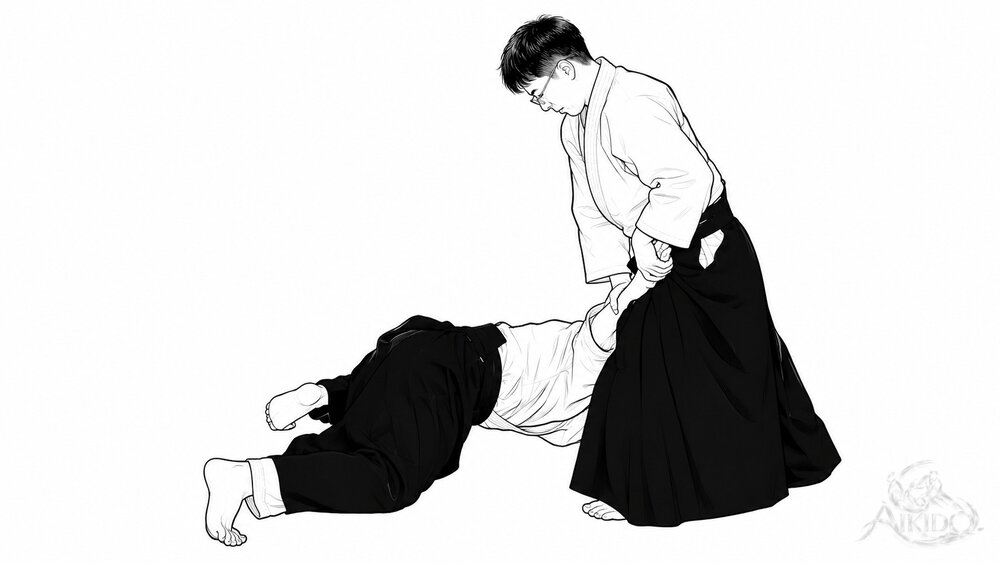
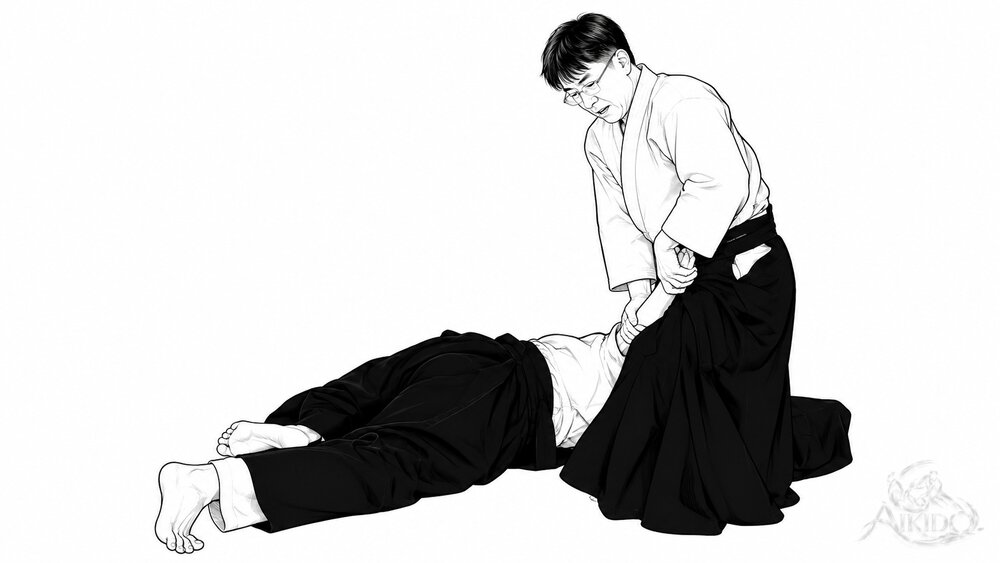
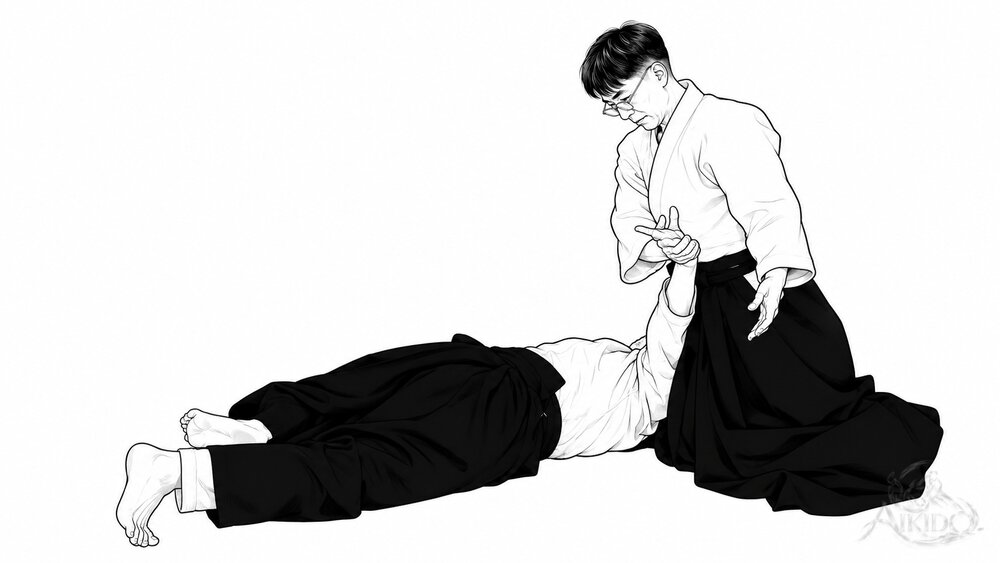
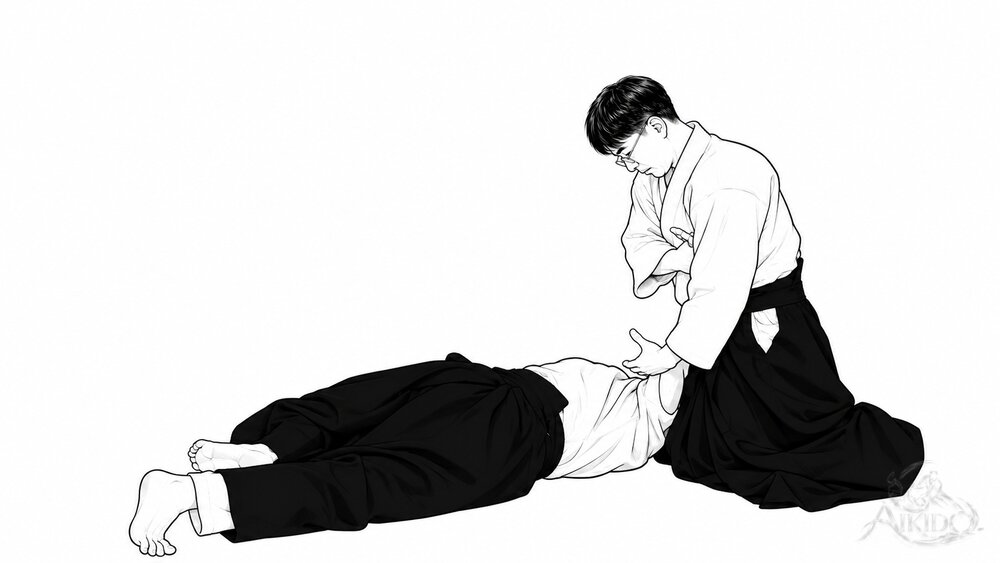
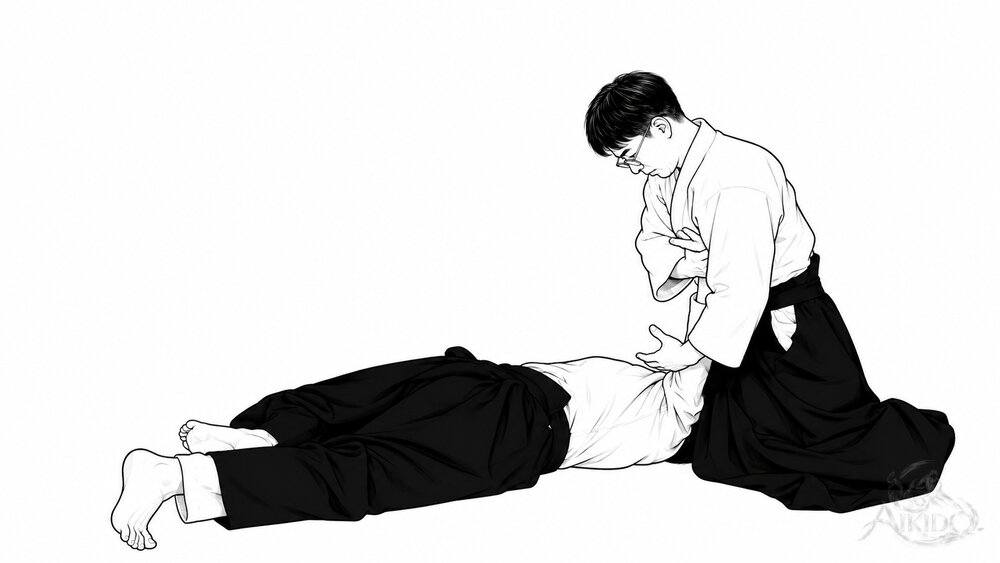
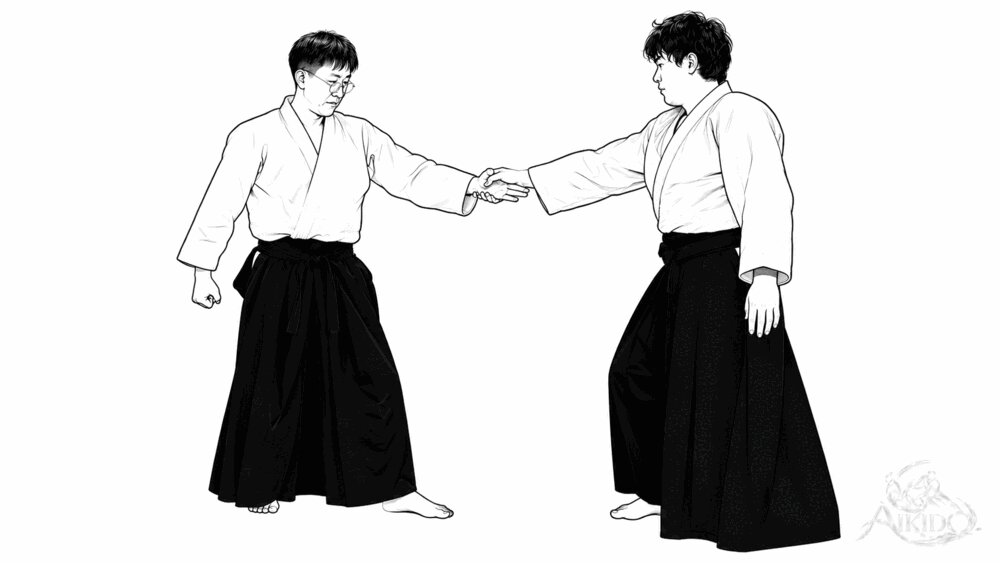
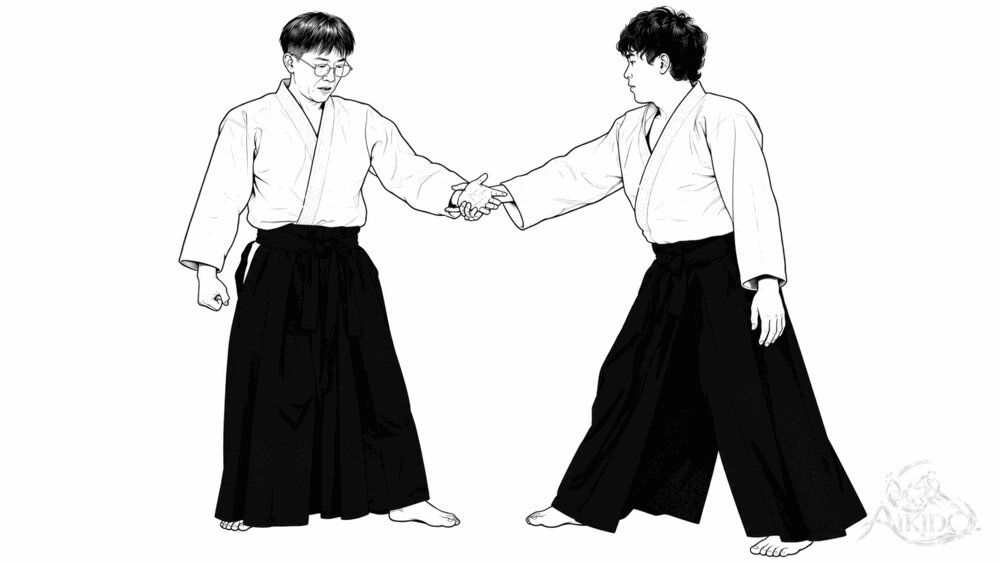
In hidari gyaku-hanmi katate-dori, as in nikyo, open the body with the tenshin body movement while leading your partner’s hand down with the grabbed left tegatana and taking the elbow with the right hand. Advancing, cut both hands down and forward; at that point take your partner’s fingers with the right hand and twist them to break your partner’s balance. Move that hand into your left hand, enter with irimi, and immediately turn with tenkan toward your partner’s head. Once your partner is face down, form kiza and move your partner’s wrist from your left hand into your right. Finally, twist the wrist and hold it against the front of your shoulder to control.
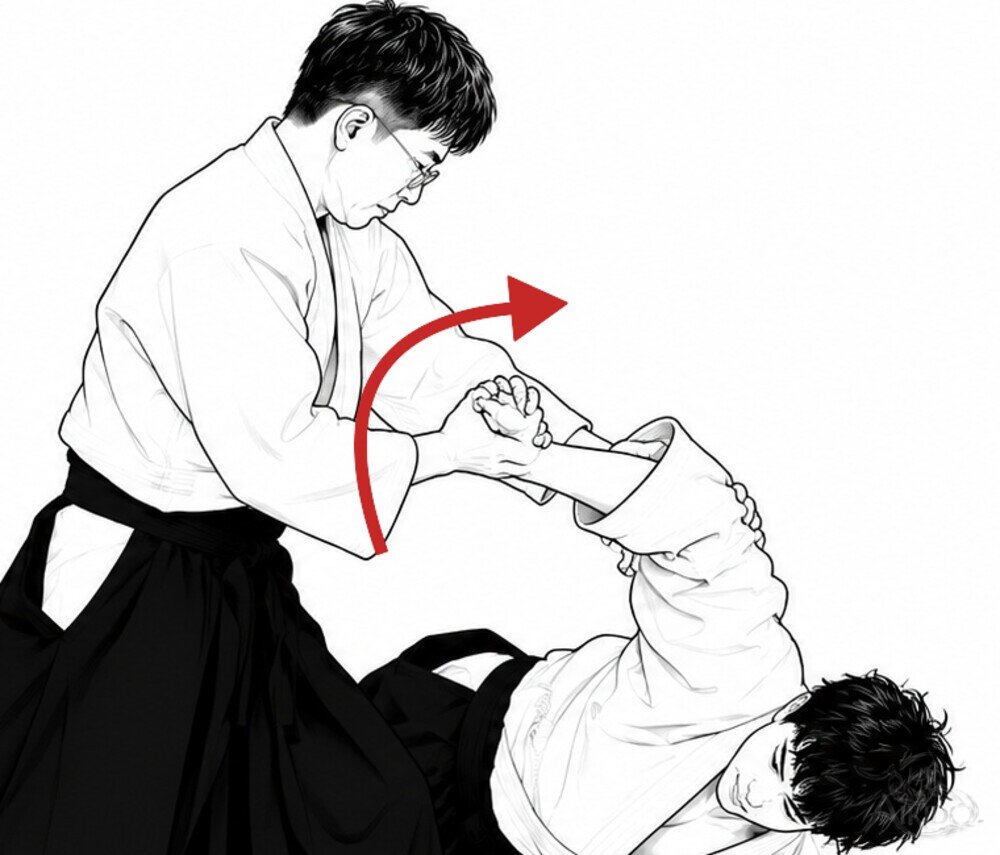
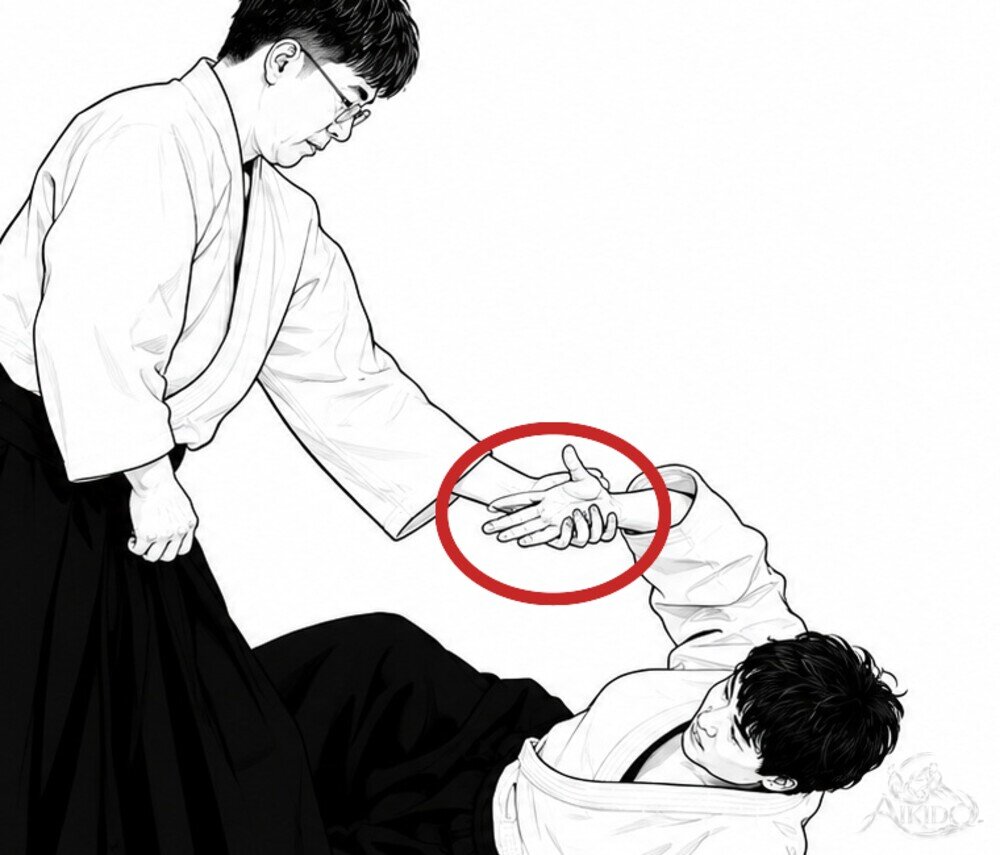
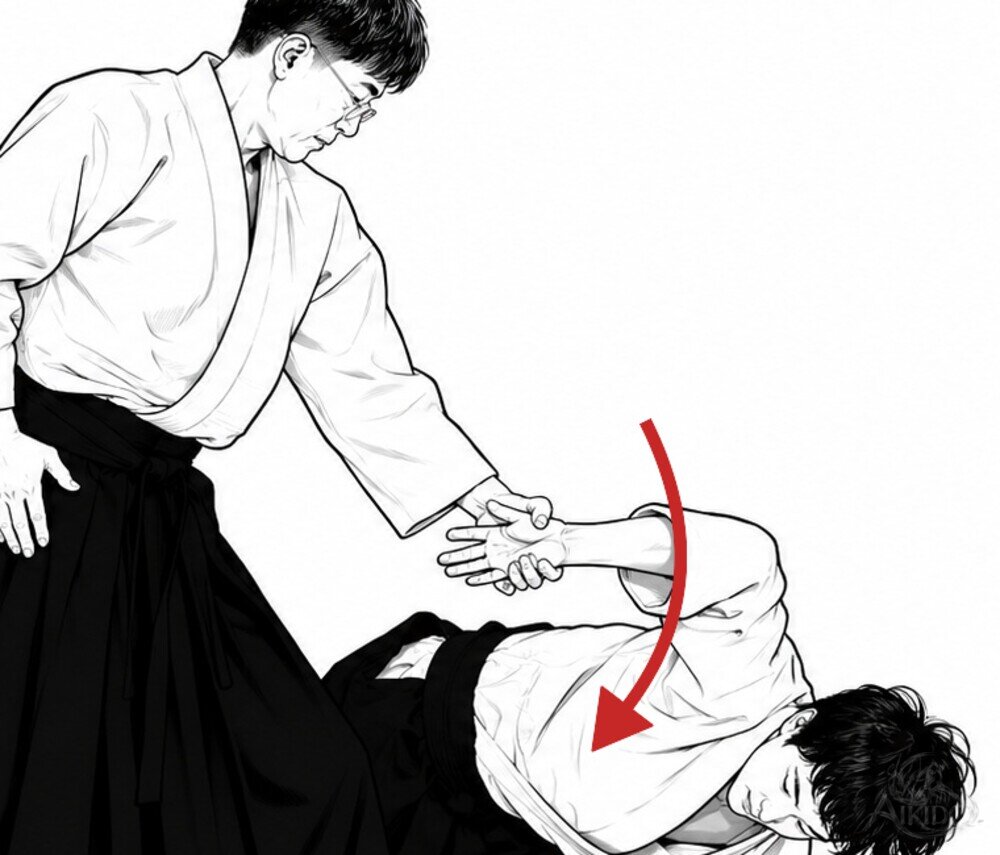
- Twist the fingers to break your partner’s balance: At the point where you have cut your partner down, move the tegatana from the wrist and change your grip so that it wraps the four fingers. With that hand, as if twisting your partner’s fingers inward, enter with irimi and break your partner’s balance forward.
- The key is how you change your grip on the fingers: Take over your partner’s twisted hand with the hand that was holding the elbow. Here it is important to hold the base of your partner’s thumb firmly with your thumb and the little-finger side of the palm with your four fingers, and to put the heel of your palm (shoteibu) against the back of your partner’s hand. In that state, close the armpit and cut down while twisting inward as if wringing.
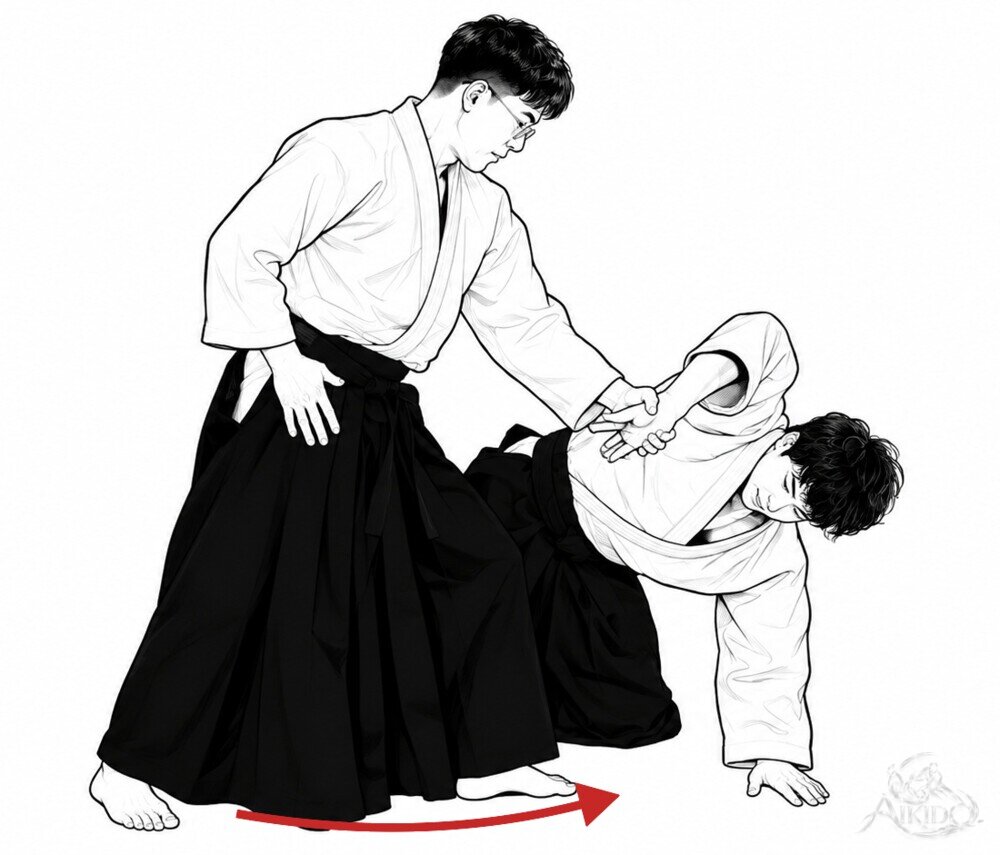
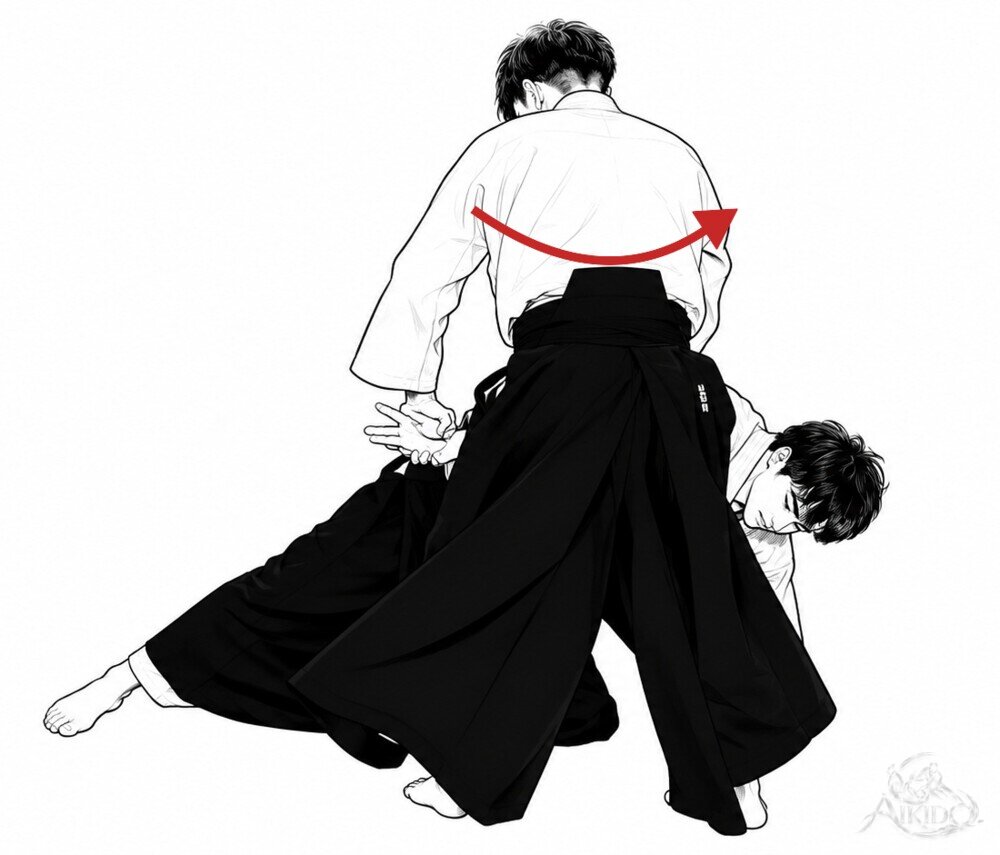
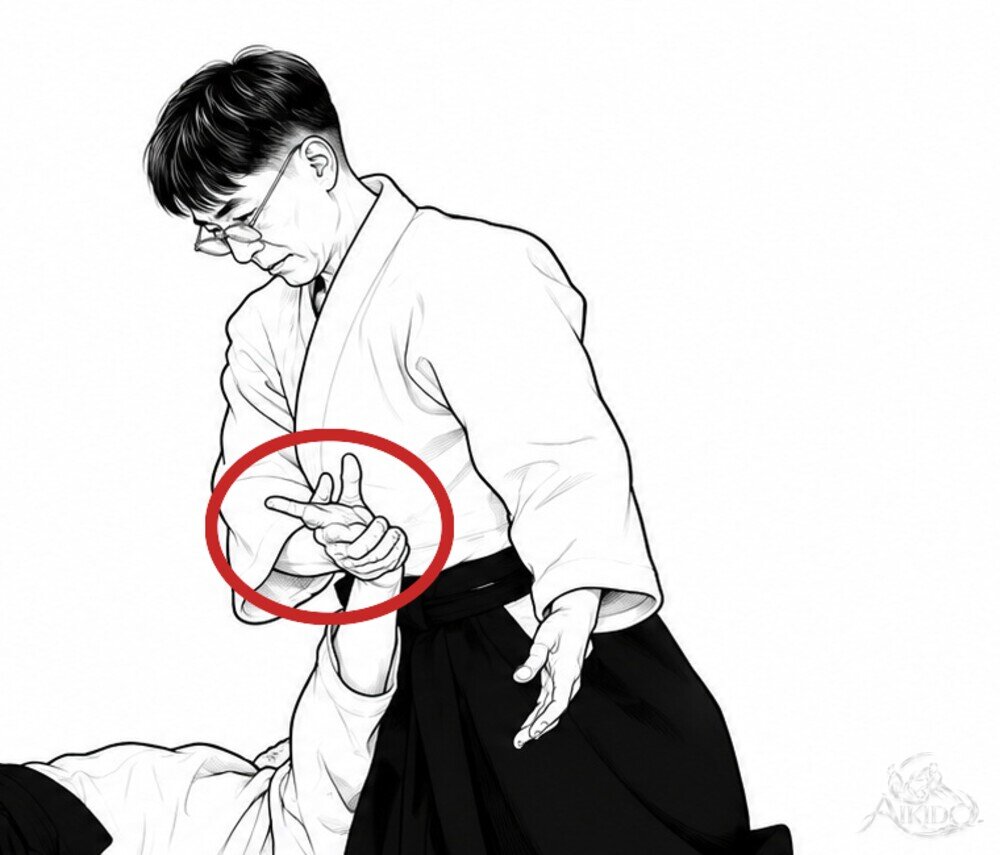
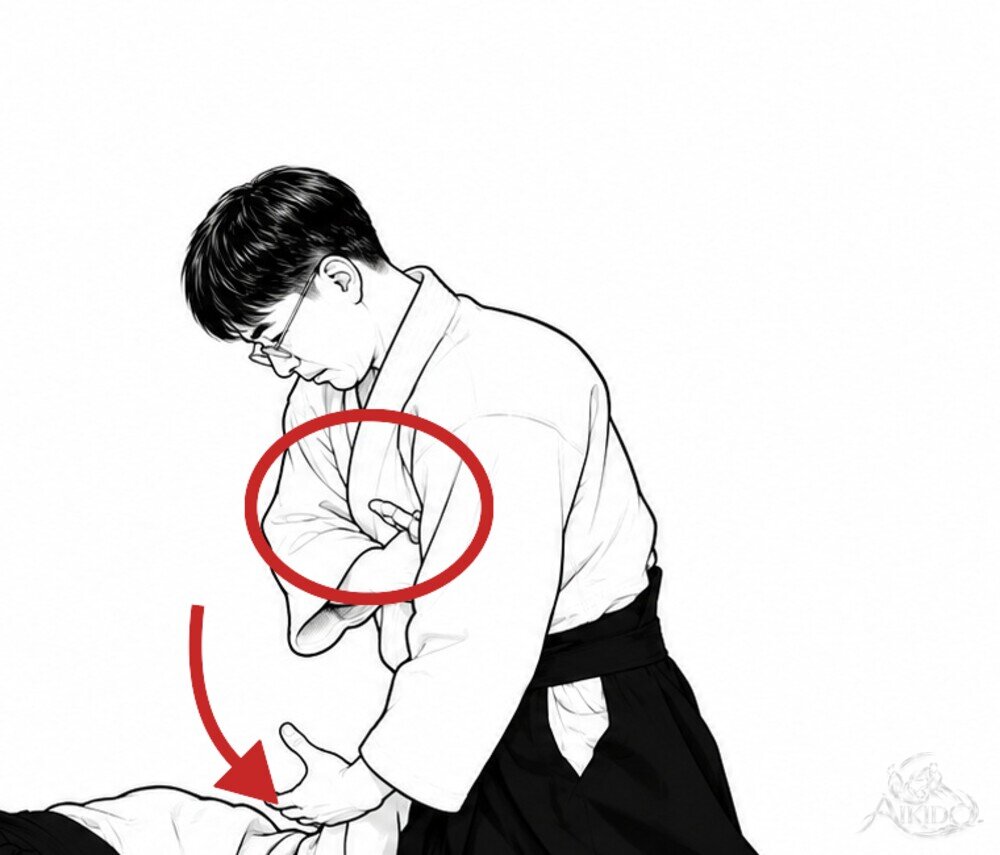
- Using irimi into tenkan: Having cut your partner’s wrist down with the left hand, close the armpit and twist inward as if wringing as you drop your partner down. Here you go around toward your partner’s head with the body movement of irimi into tenkan. Step the right foot forward and turn with tenkan on that foot. In time with this, control your partner’s elbow and bring them face down.
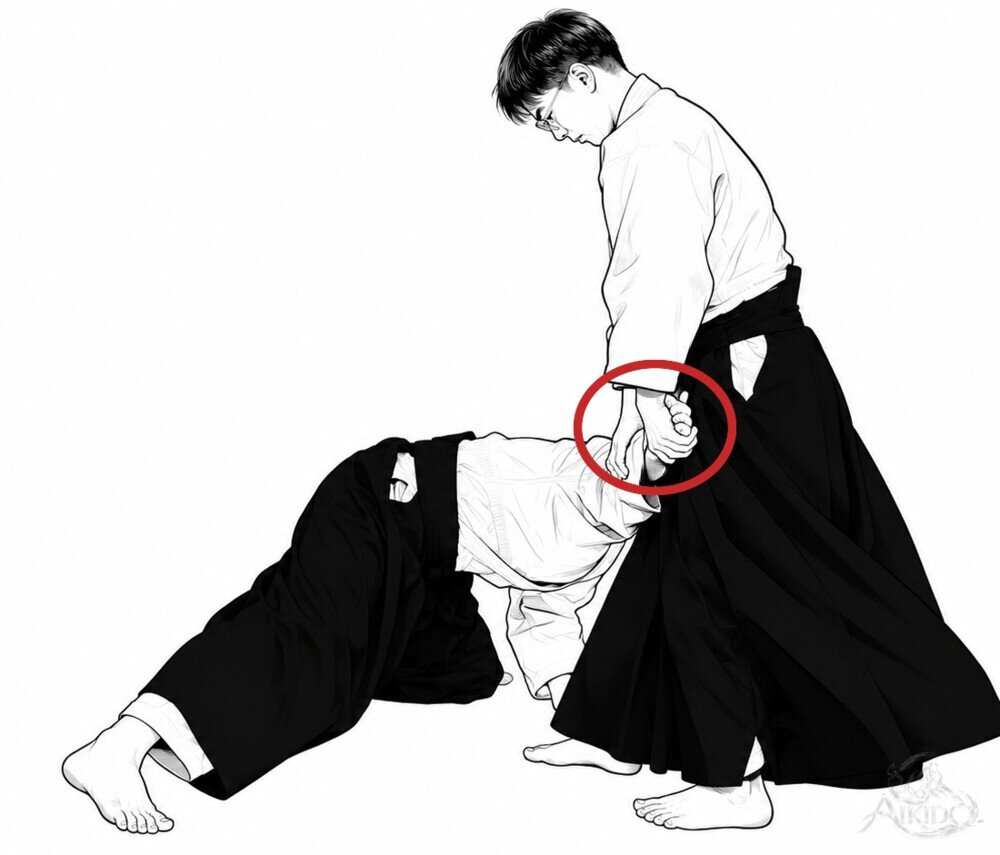
- Change your grip again to control: Once you have formed kiza and fixed your partner’s shoulder between both knees, move the wrist from the left hand that was controlling it back into your right hand. In that state, twist the wrist you have taken over and hold it against the front of your shoulder. Then, keeping it twisted, control it by leading with the left arm. Control by lowering your center without breaking your body’s axis.
Gyaku-hanmi Katate-dori Sankyo Ura (逆半身片手取り第三教 裏)
Key point: Controlling your partner by turning the wrist over, turn with tenkan and drop your partner behind you.
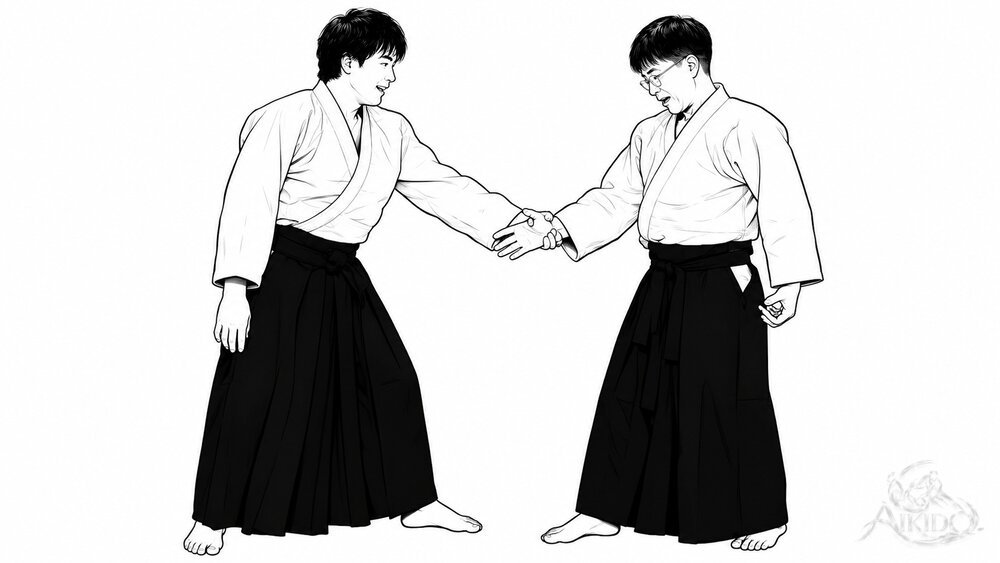
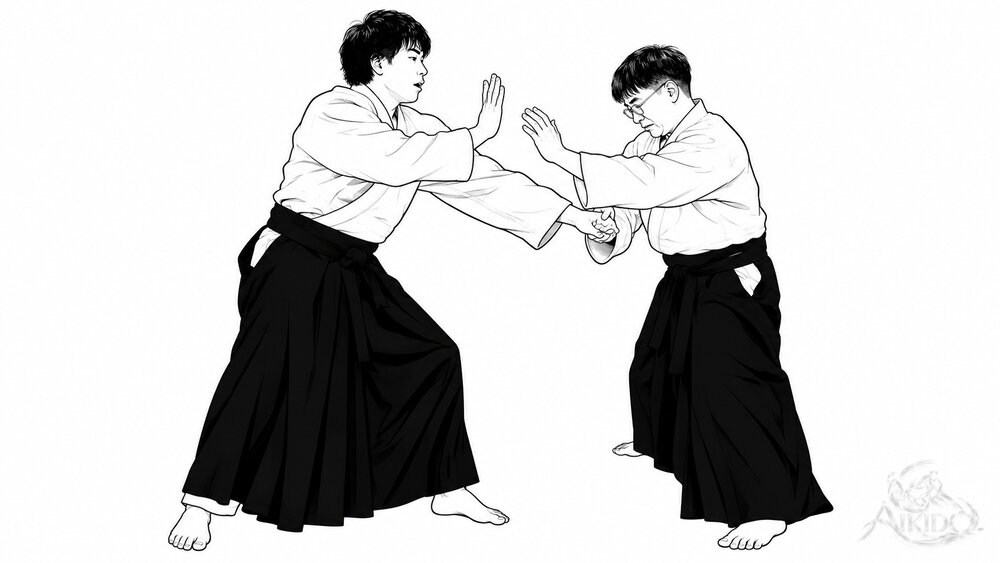
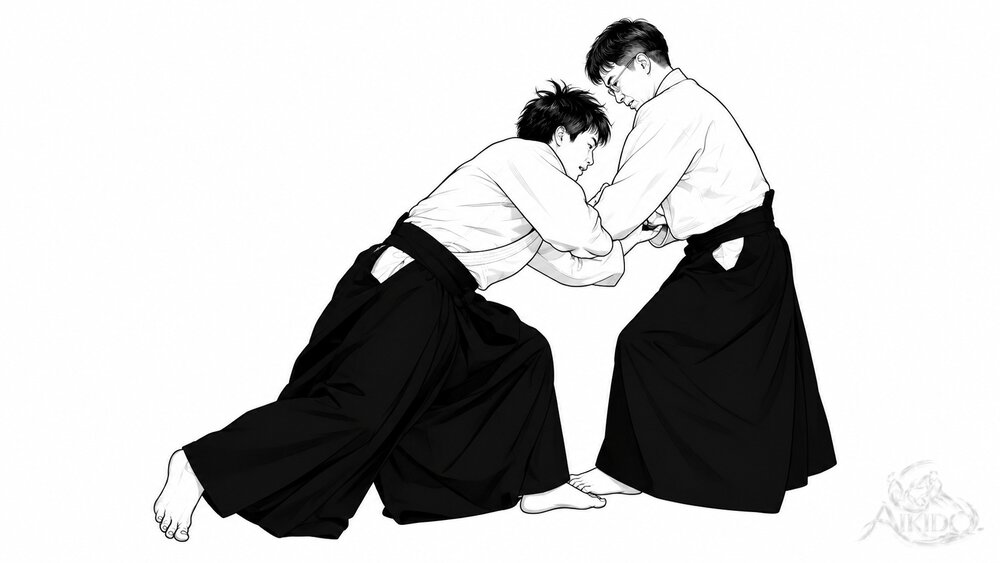
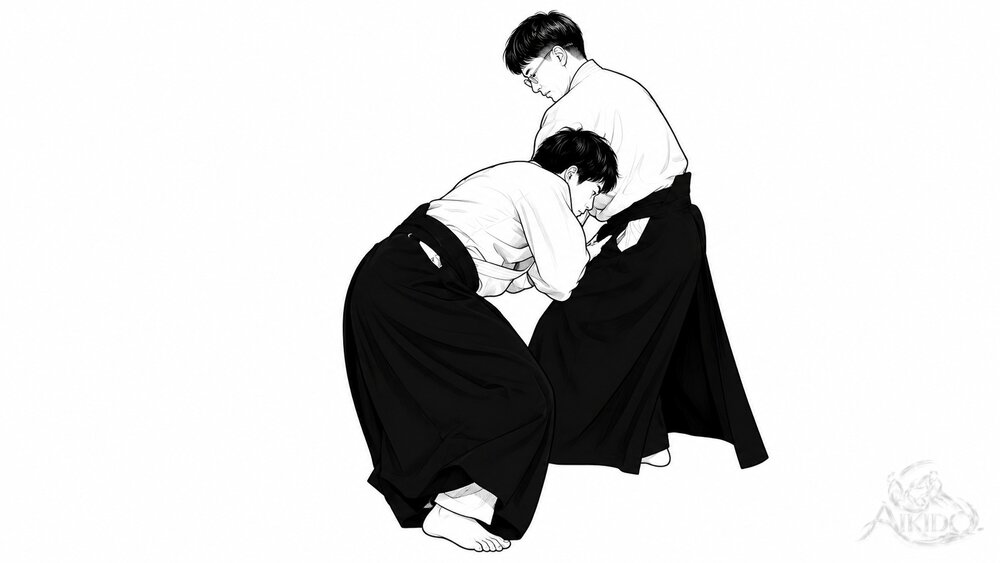
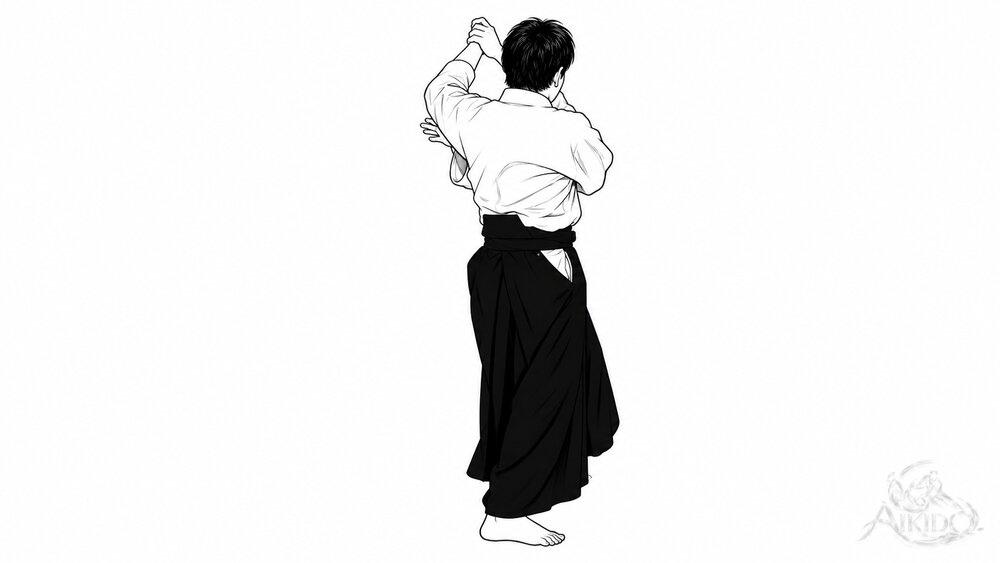
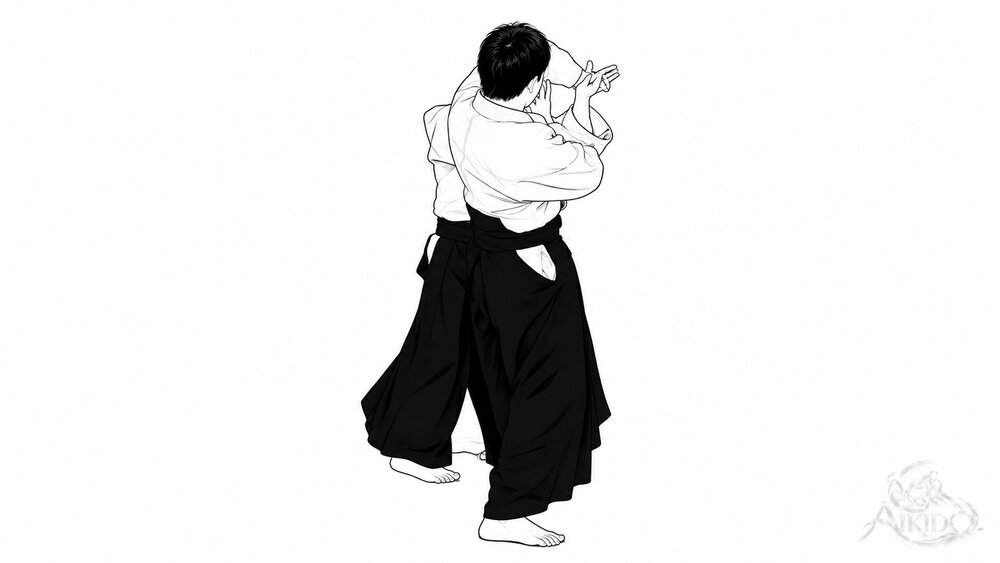
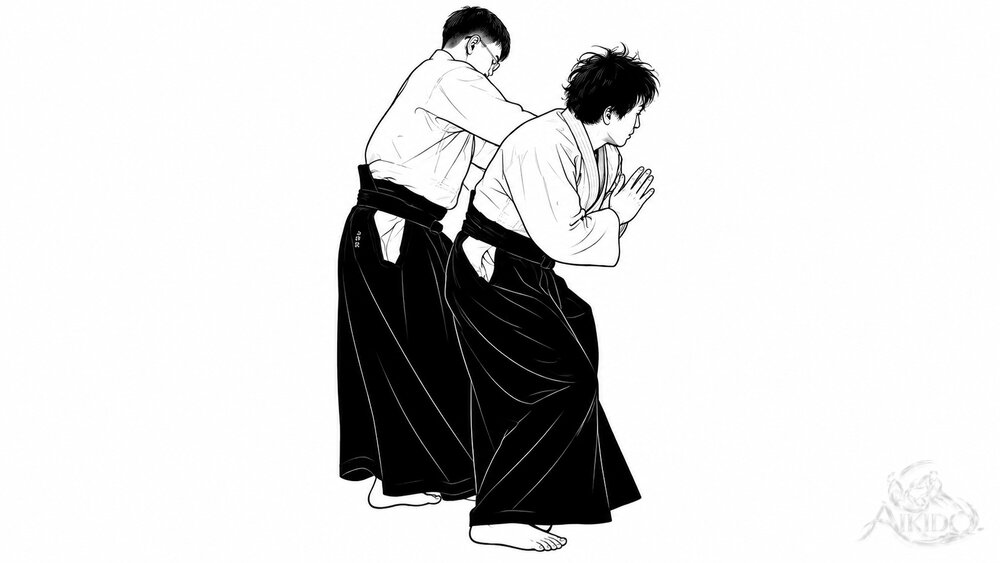
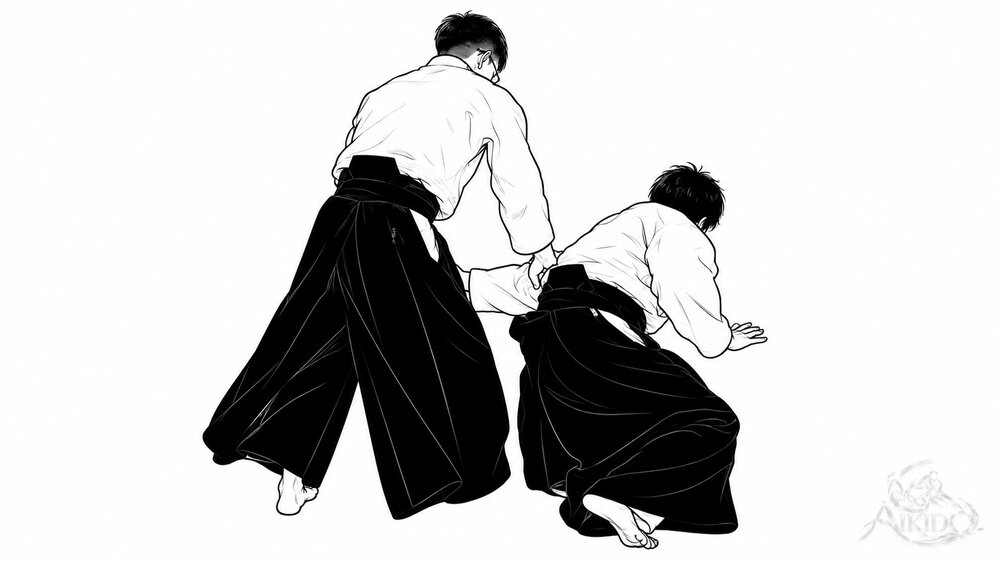
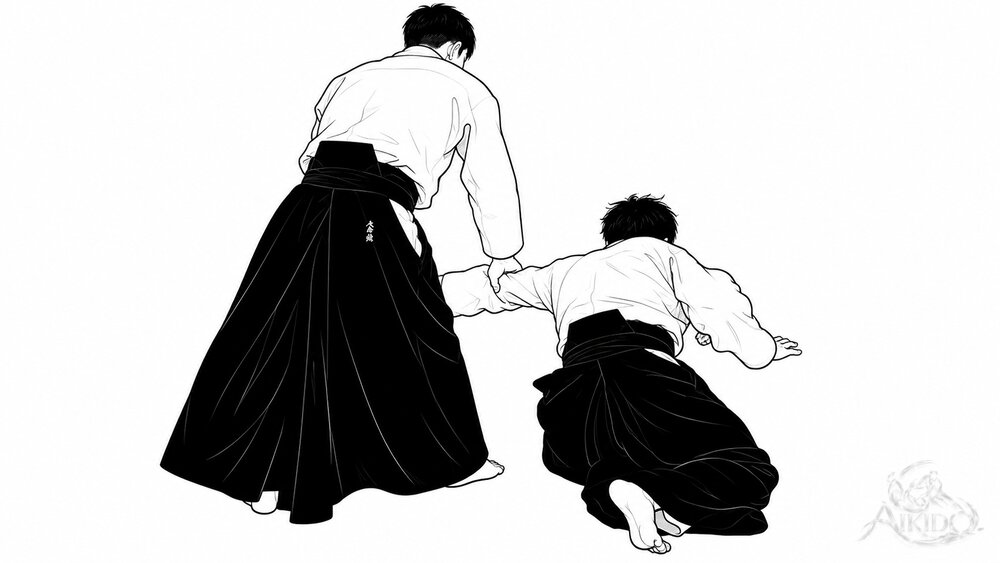
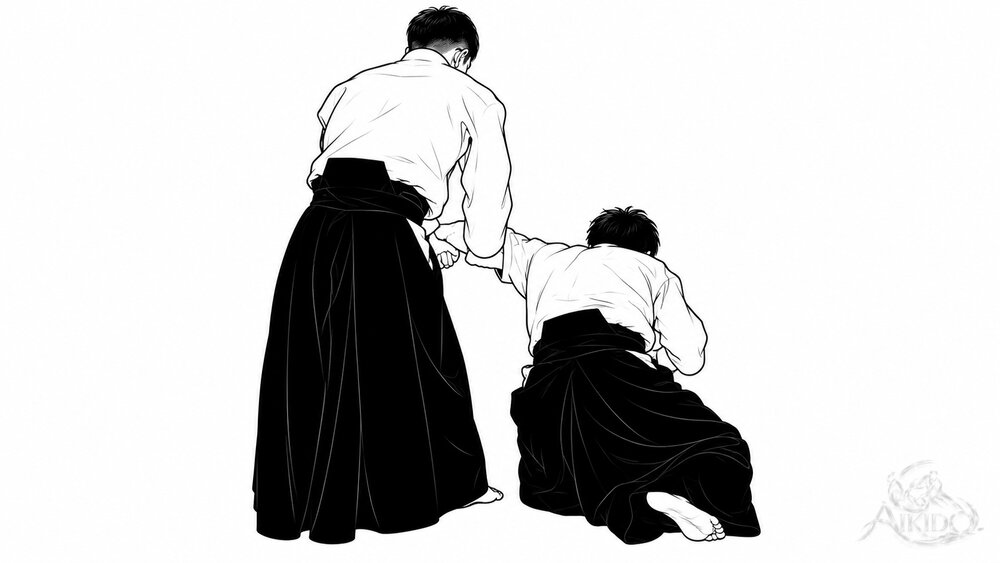
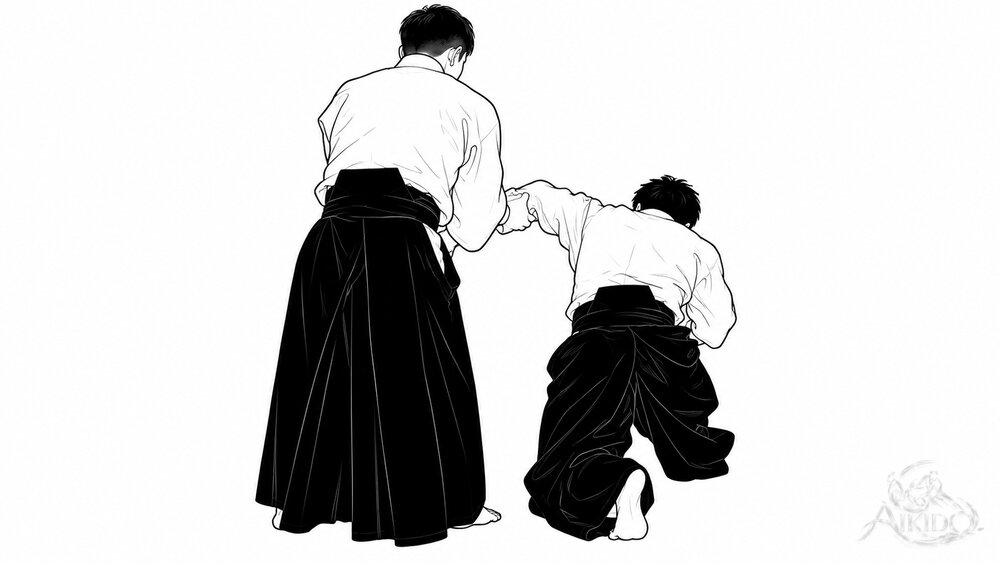
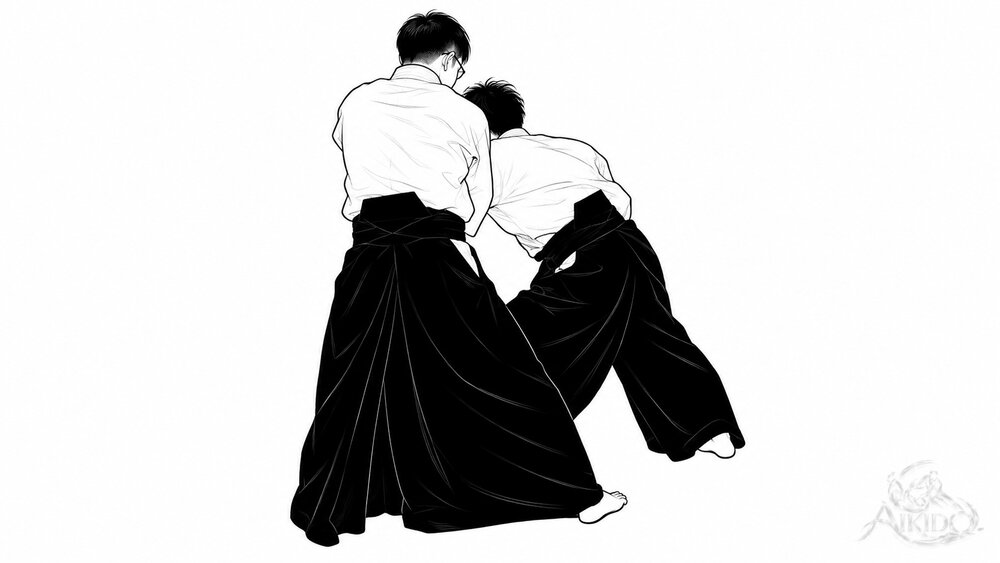
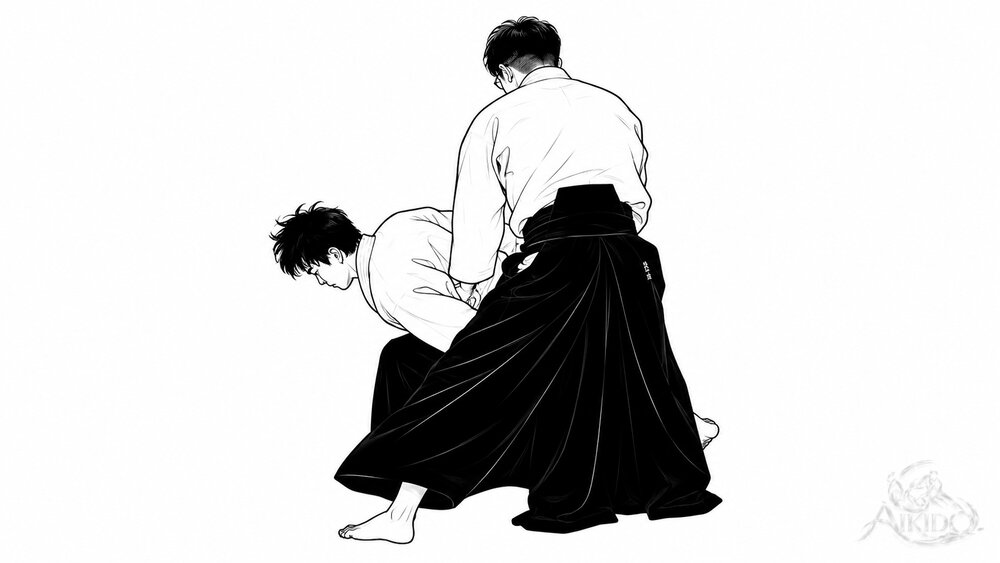
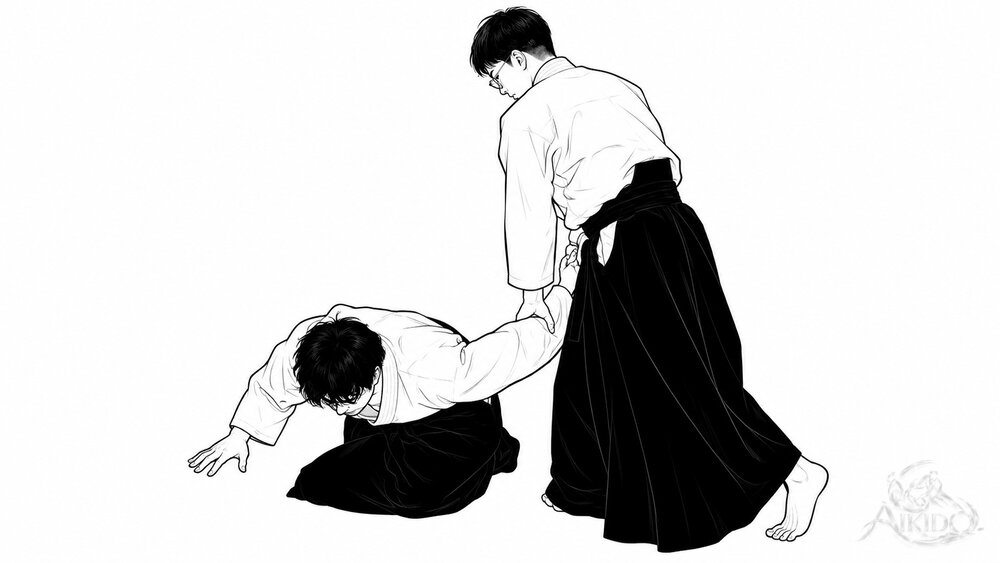
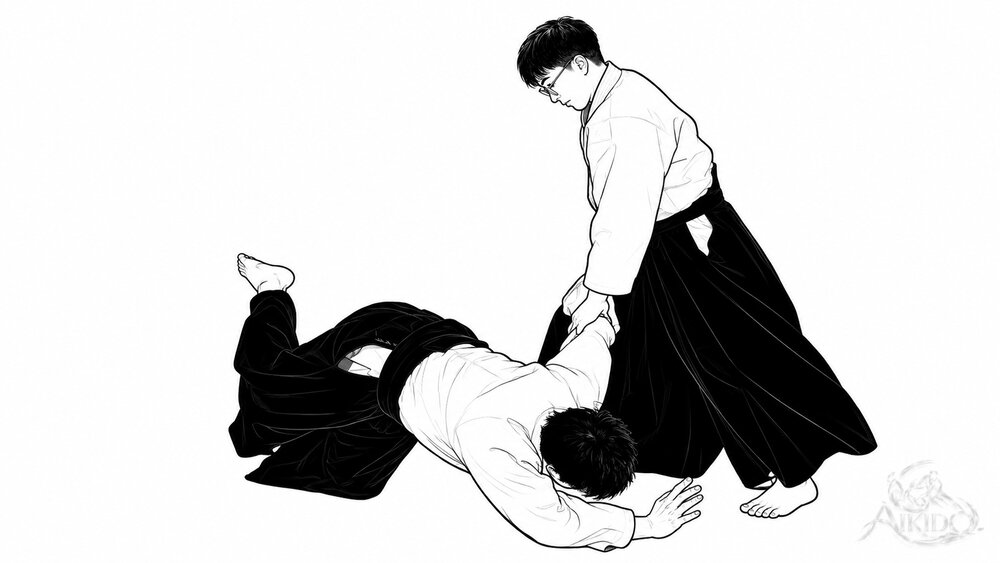
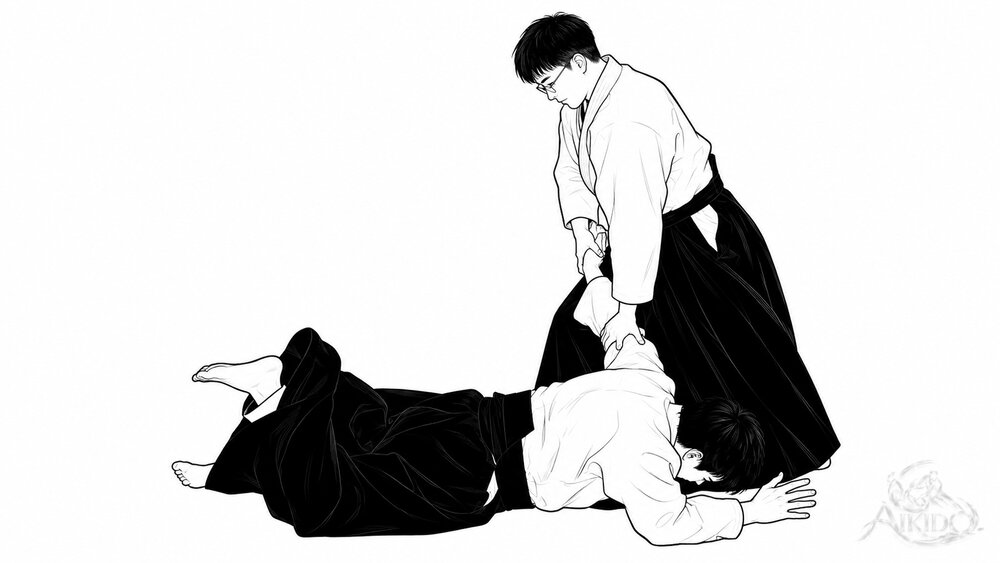
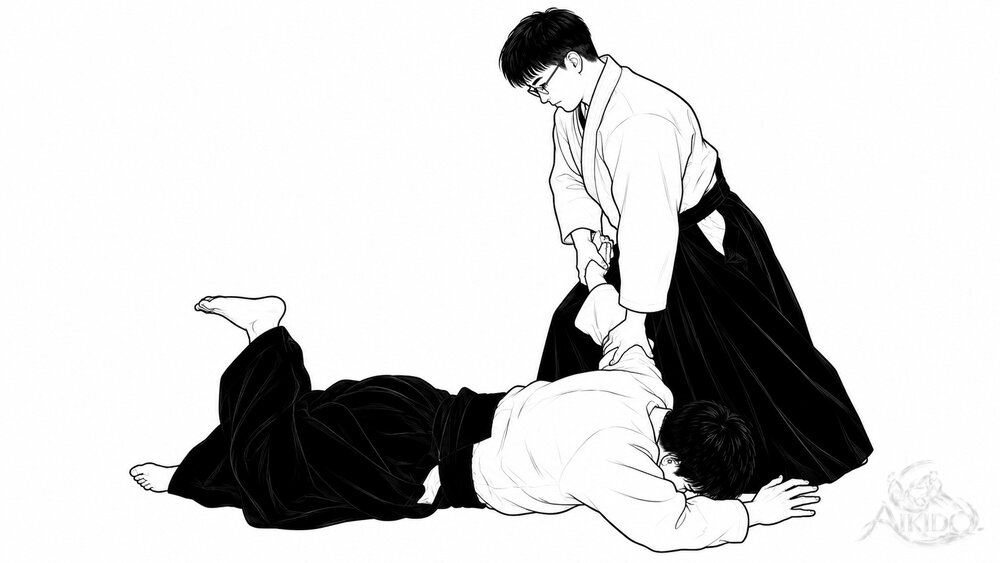
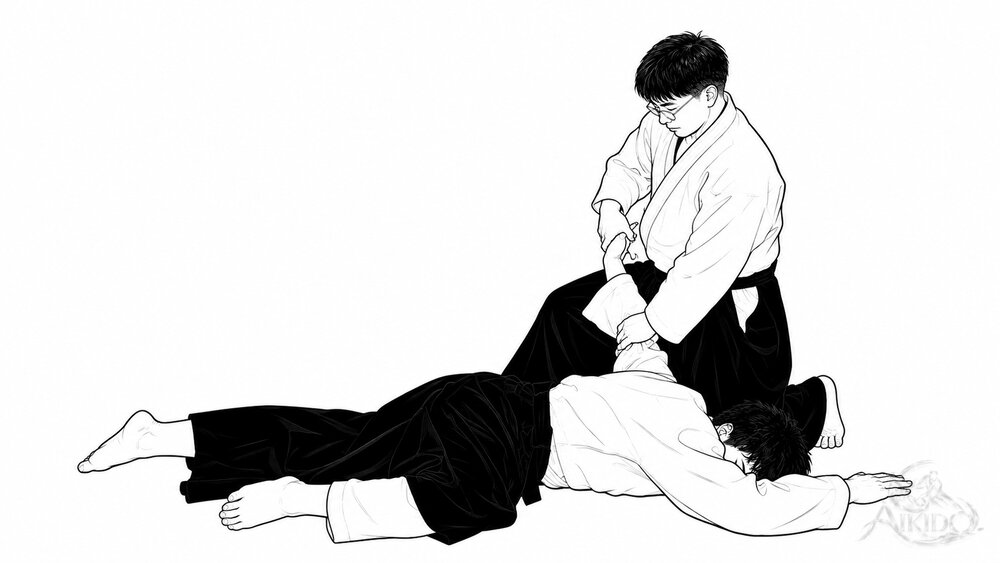
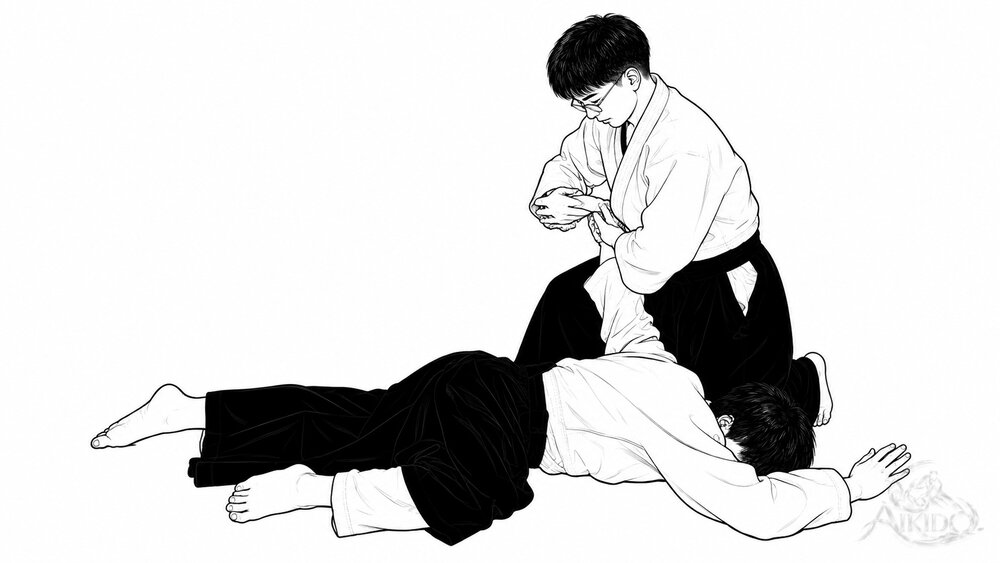
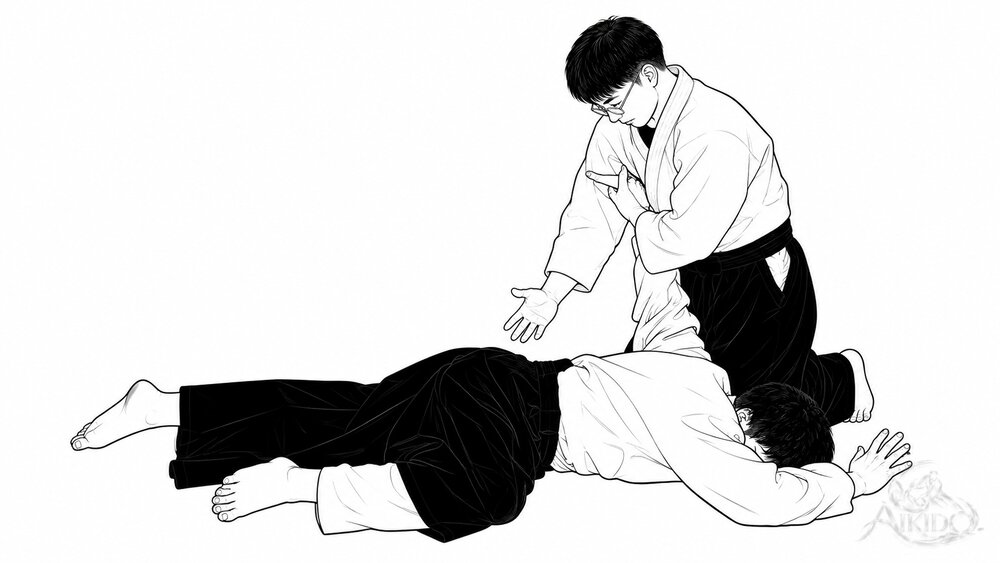
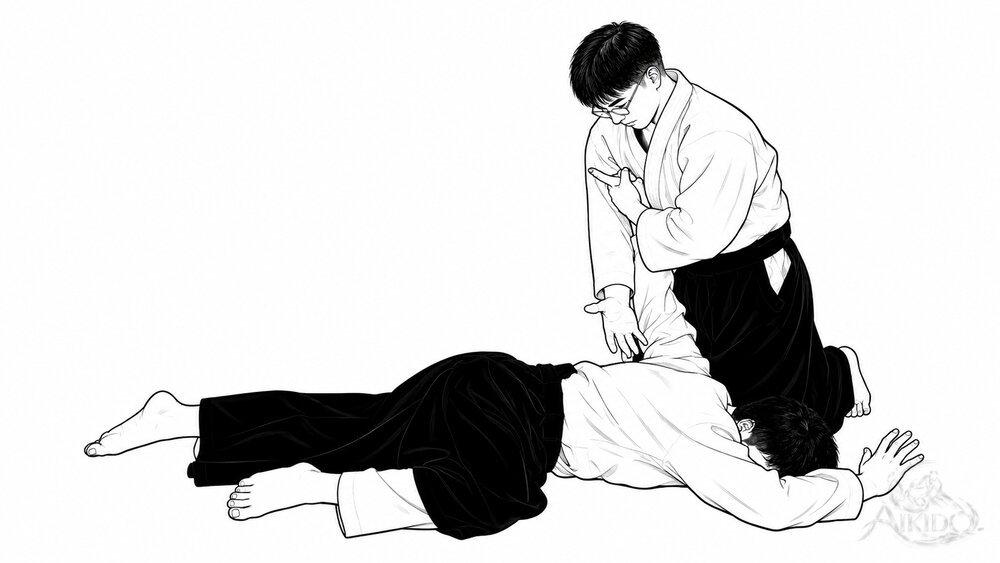
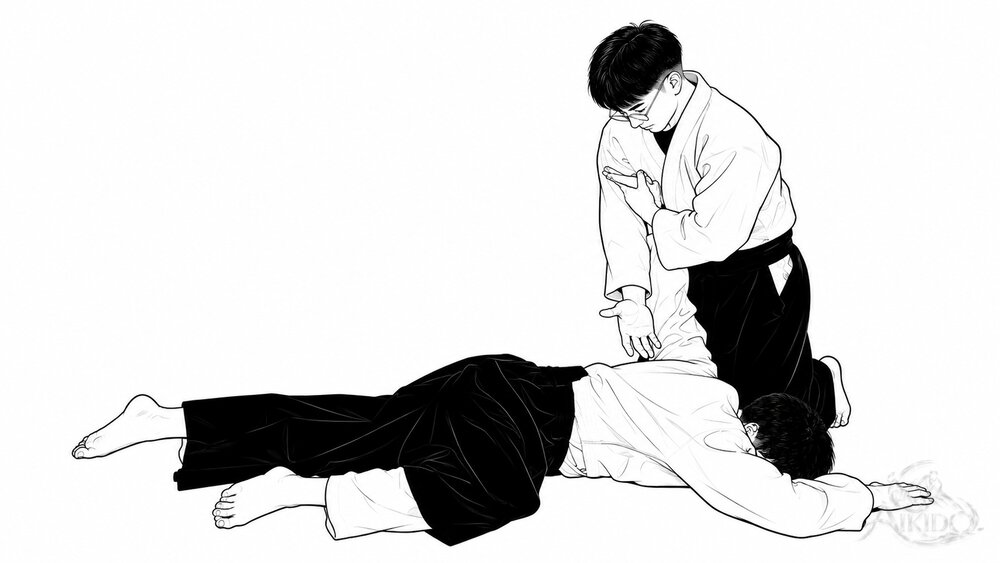
Gyaku-hanmi katate-dori sankyo ura breaks your partner’s balance backward as you turn with tenkan. First, with tenshin, free the grabbed hand and lead your partner, then turn with tenkan and cut down to break their balance. Then, as in omote, change your grip to the fingers, and from there turn with tenkan again to drop your partner behind you. Bring your partner face down as they come, and finally pin in the same way as omote. The fine points are the same, but the big difference is that you break your partner’s balance backward with the tenkan body movement.
- Lead with the back of the hand held close: When you take your partner’s fingers, hold the base of your partner’s thumb with your thumb and the little-finger side of the palm with your four fingers. It is important to put the heel of your palm against the back of your partner’s hand and hold with your elbow kept close.
- Break your partner’s balance backward and drop them: In omote you went around in front of your partner with irimi into tenkan and dropped them, but in ura you twist your partner’s fingers, take the elbow with the other hand, and drop your partner behind you with the tenkan body movement. Once your partner is face down, form kiza as you are, change your grip, and lower your center to control as in omote.
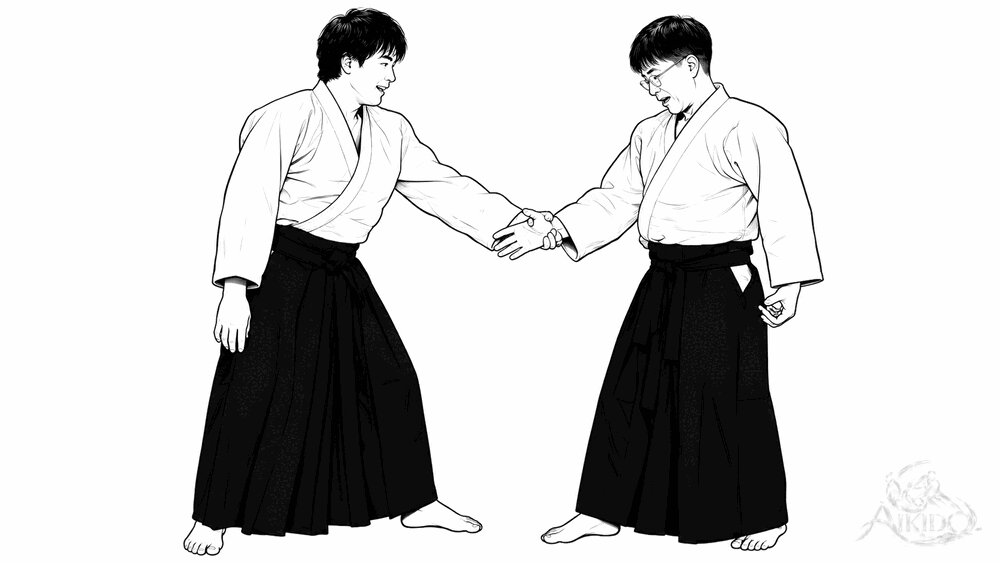
Gyaku-hanmi Katate-dori Yonkyo Omote (逆半身片手取り第四教 表)
Key point: Break your partner’s balance as you advance, and control the wrist while standing.
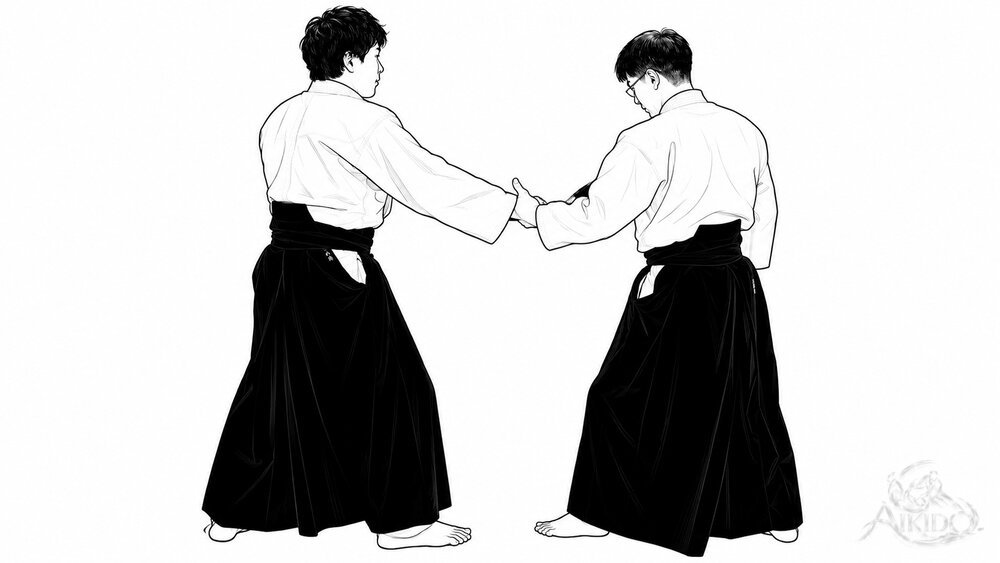
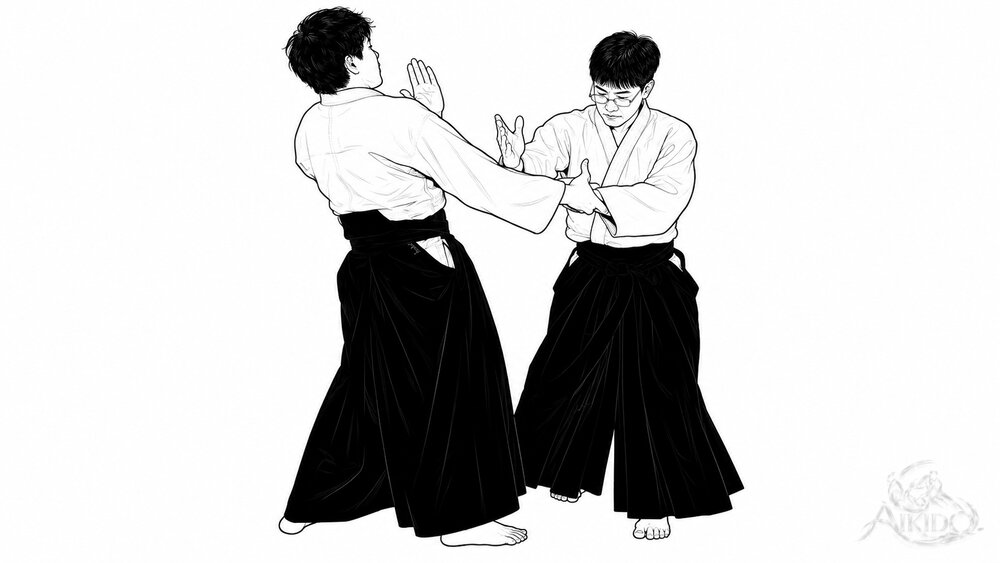
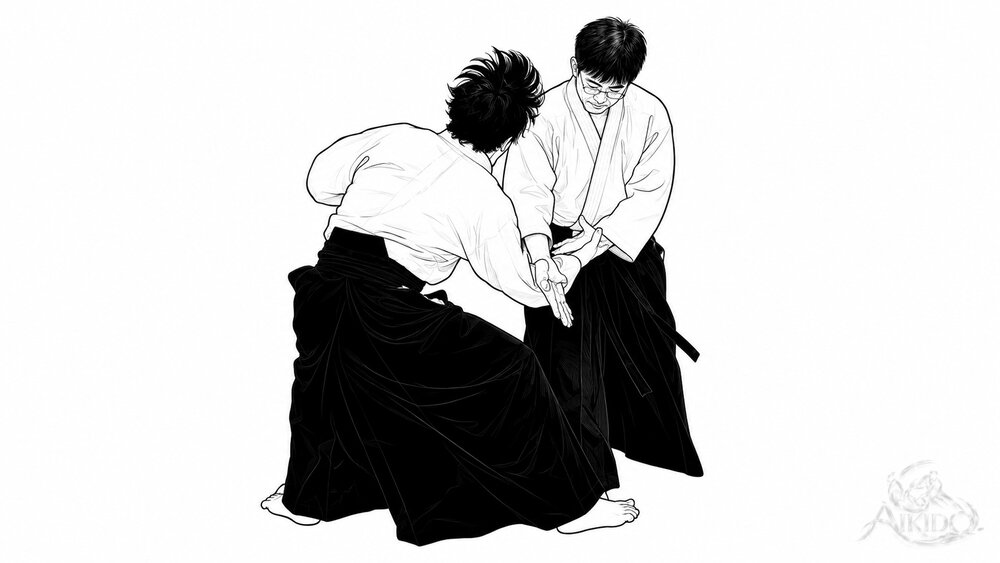
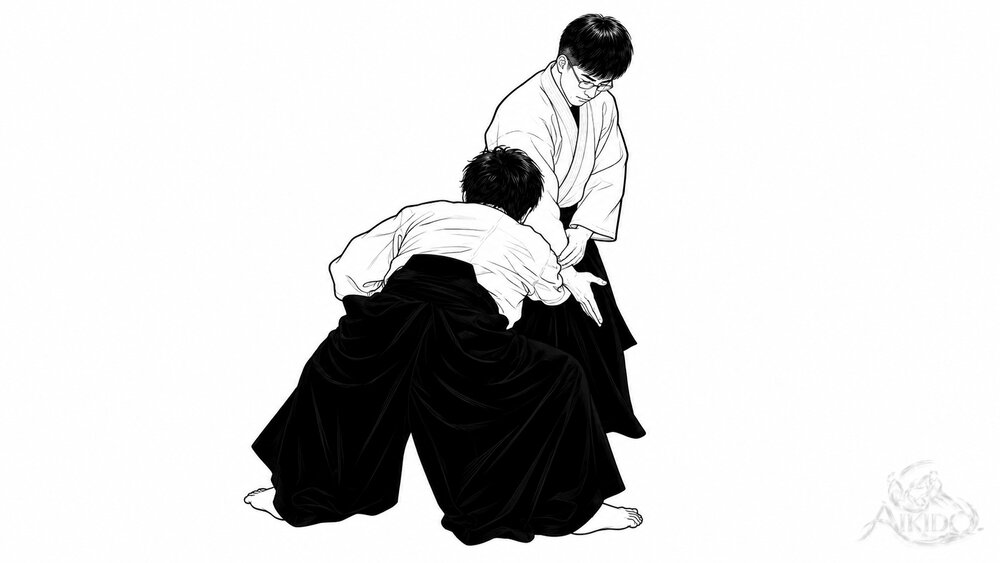
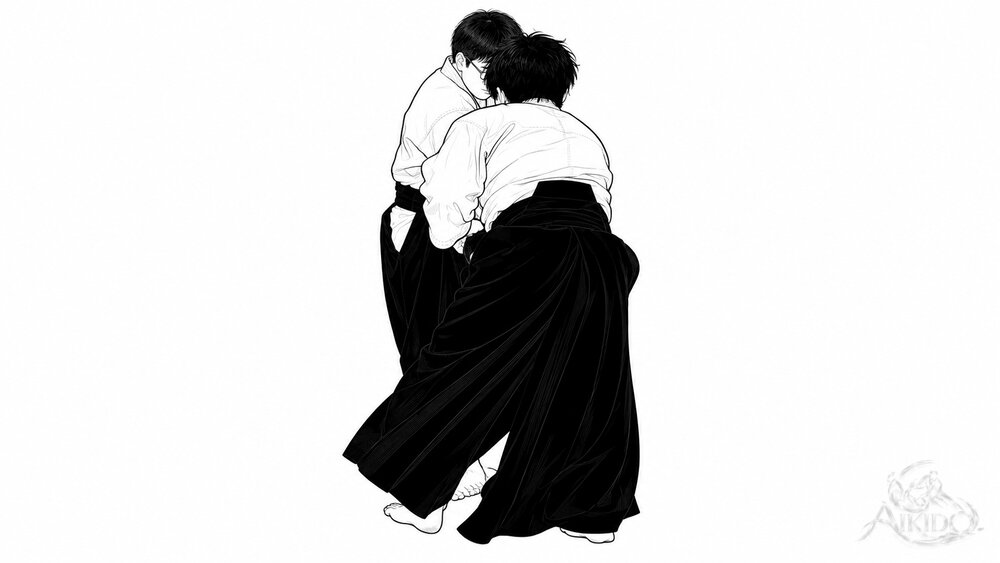
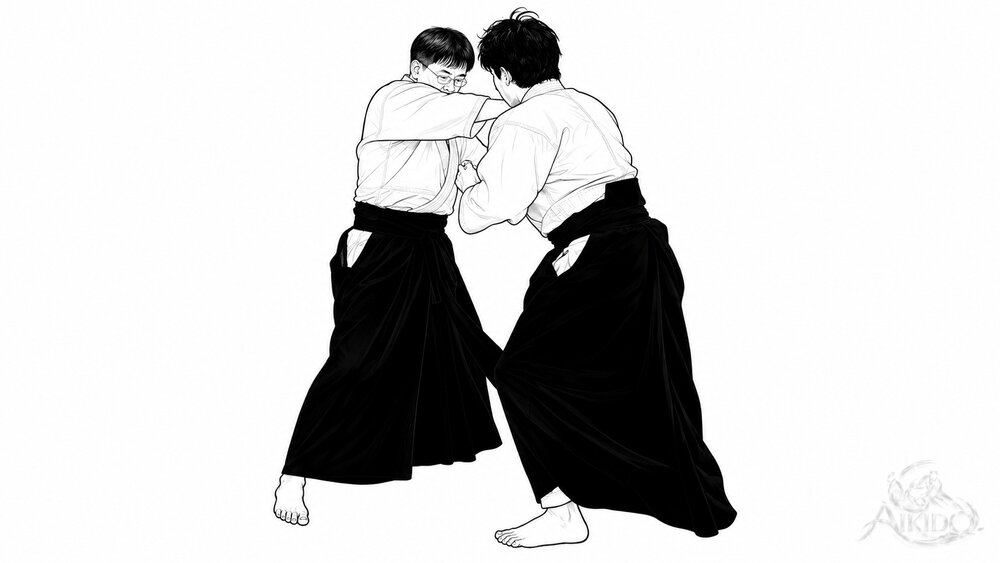
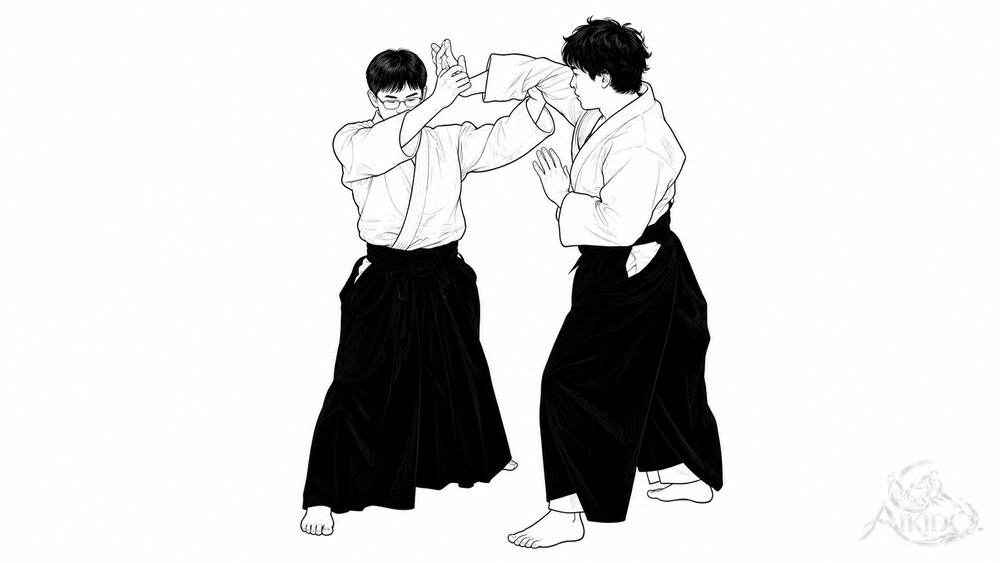
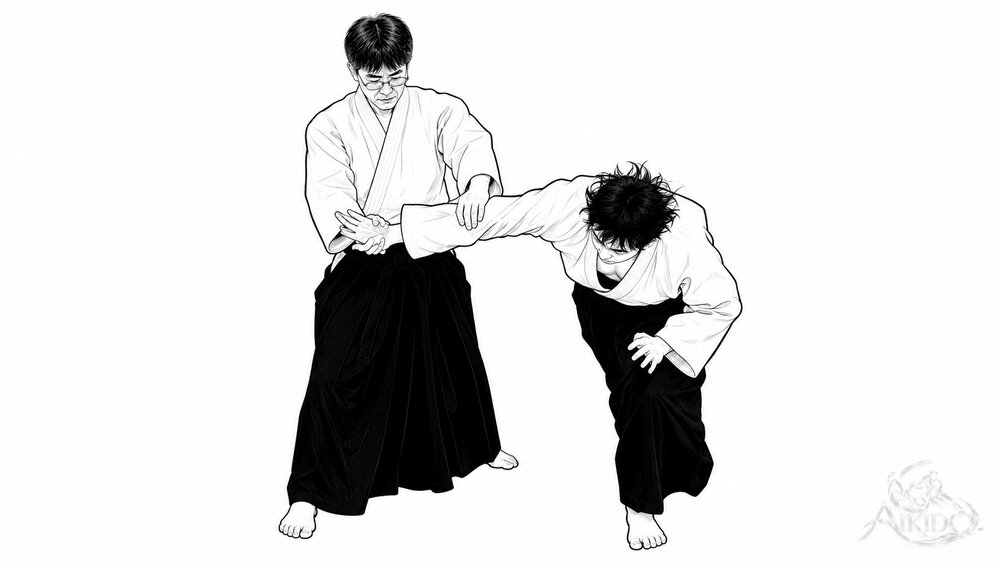
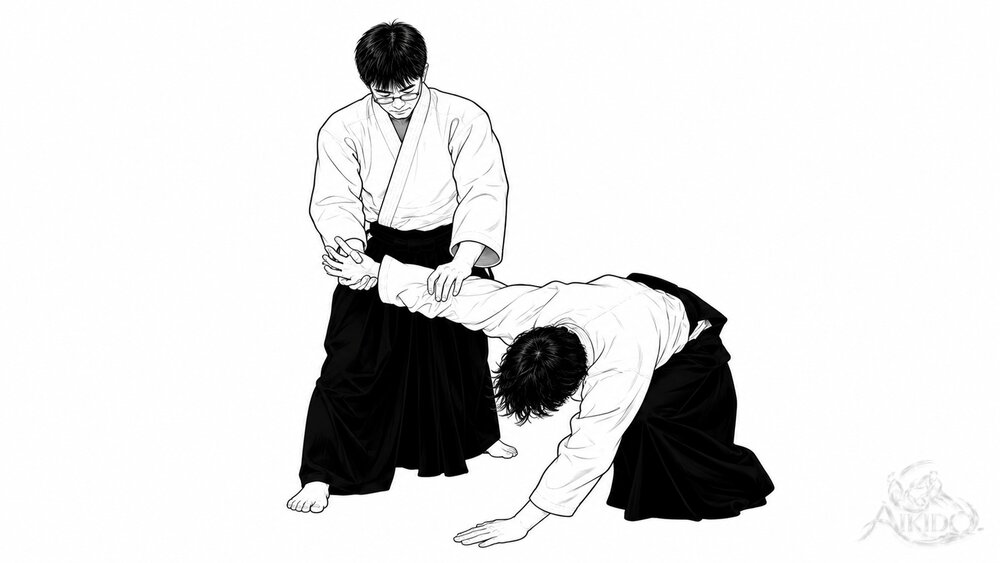
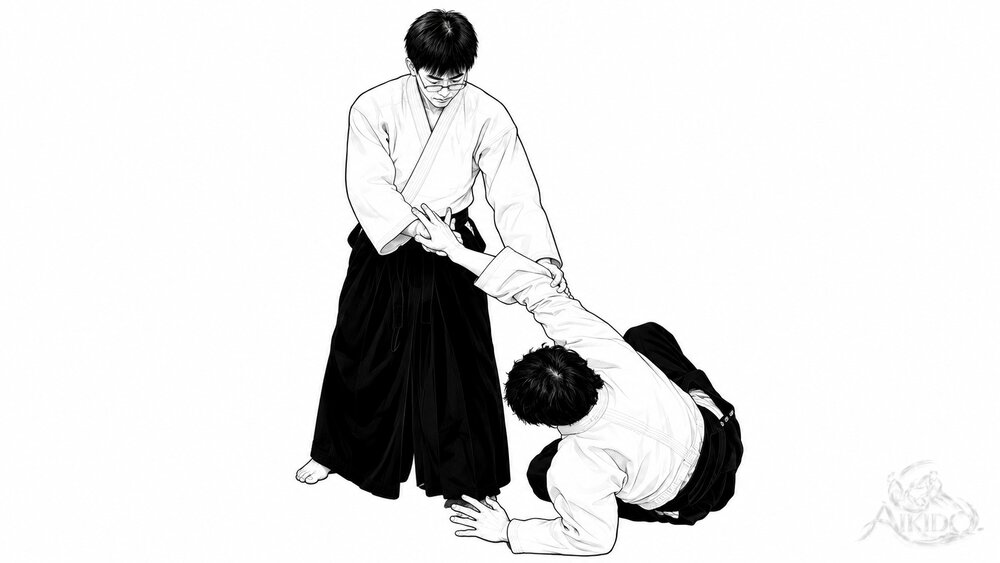
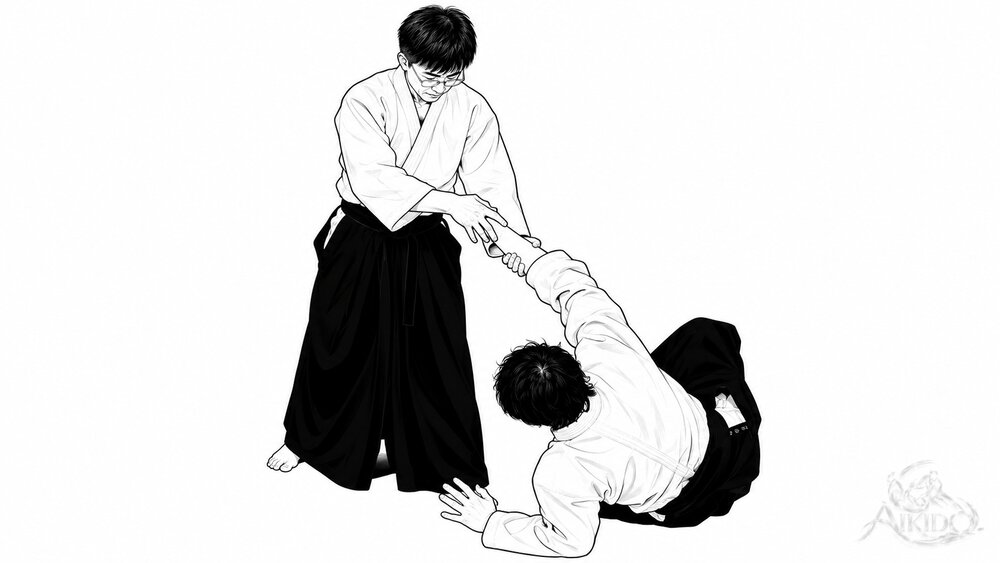
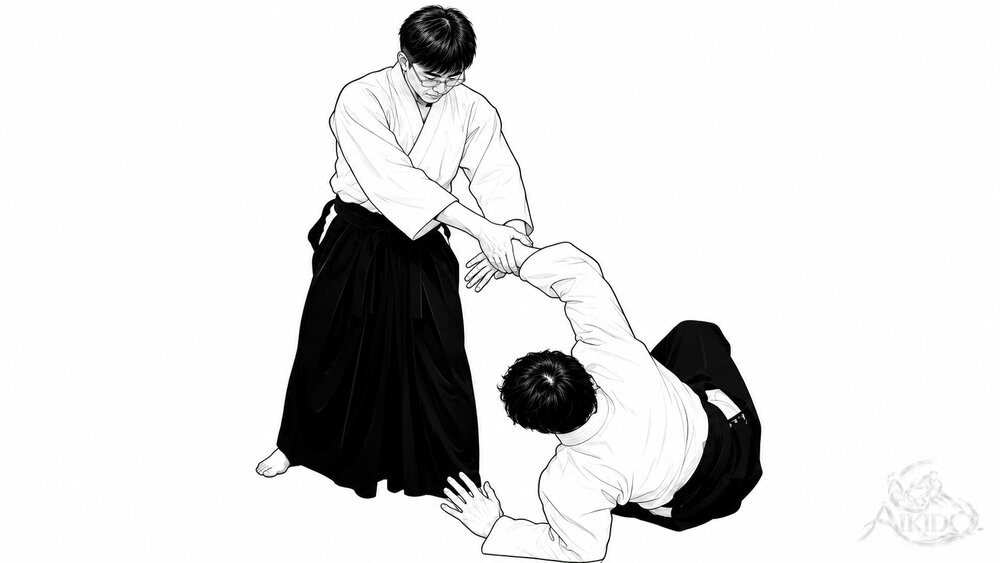
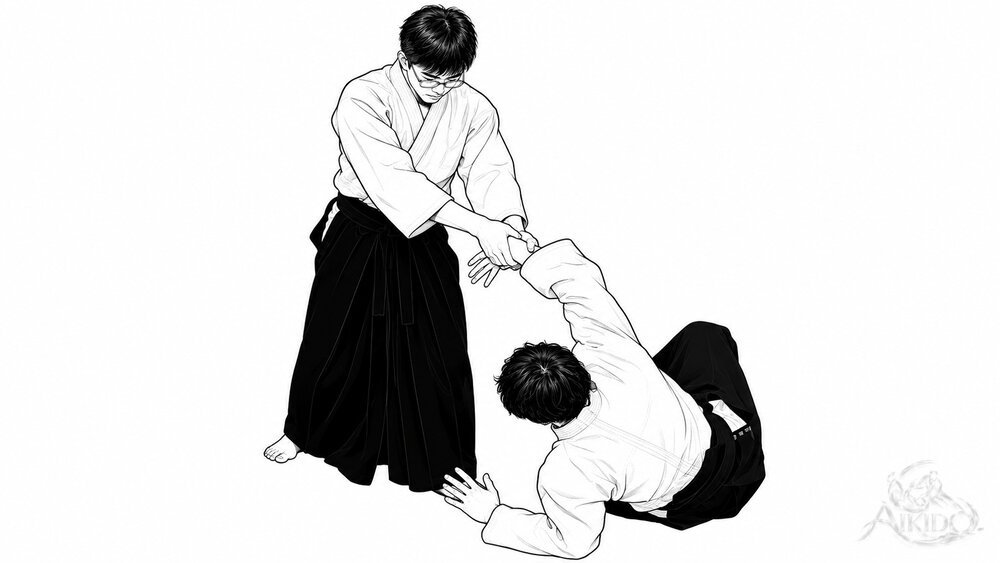
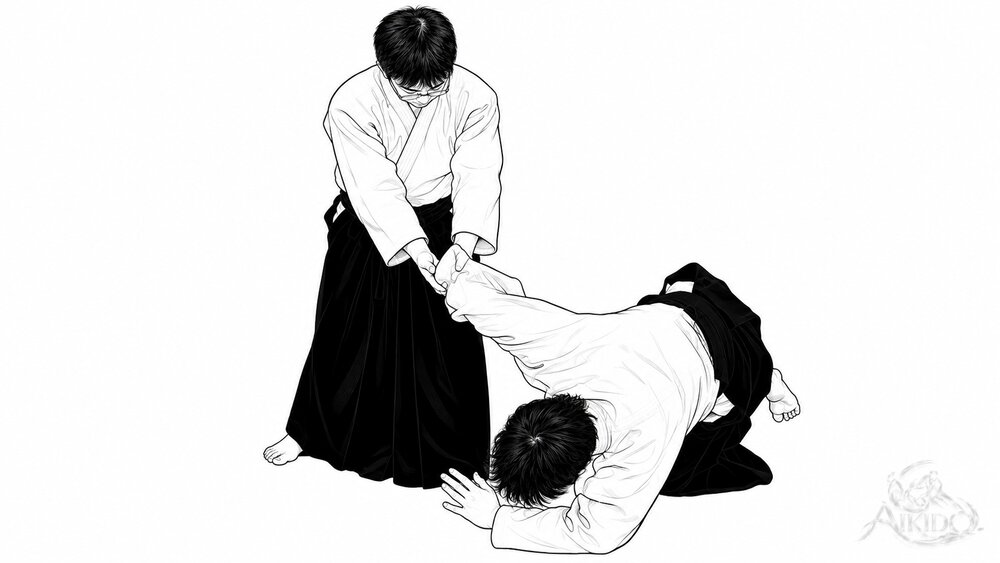
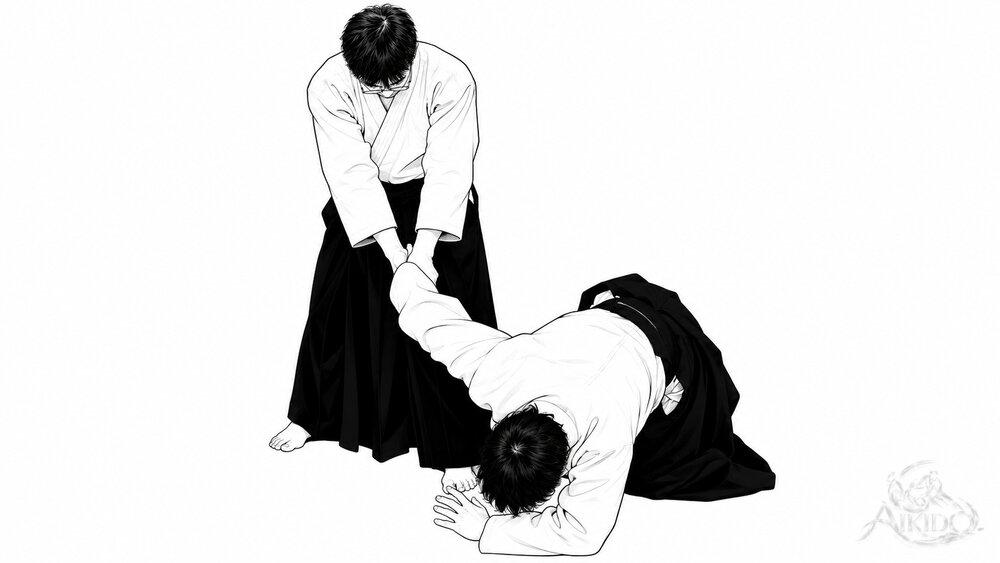
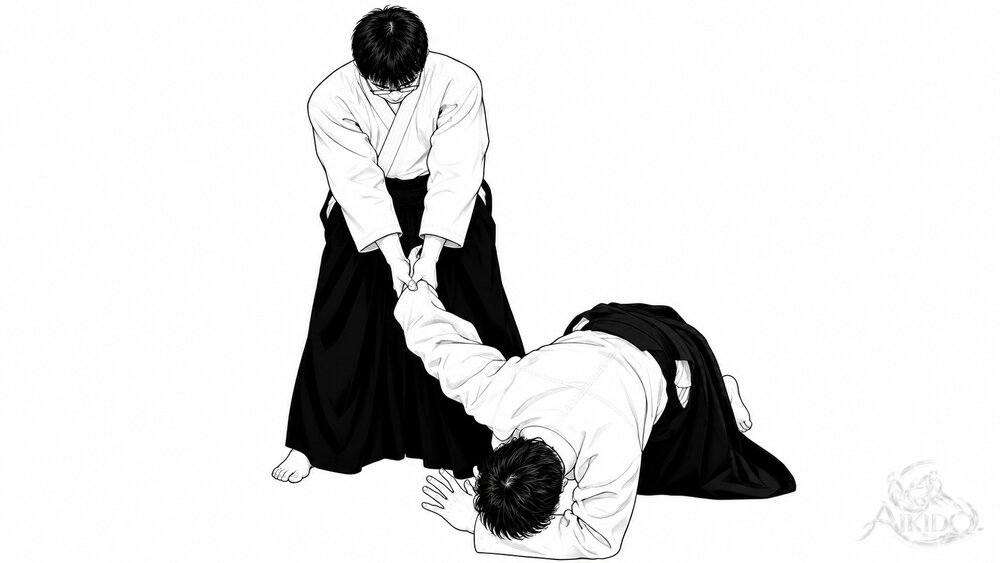
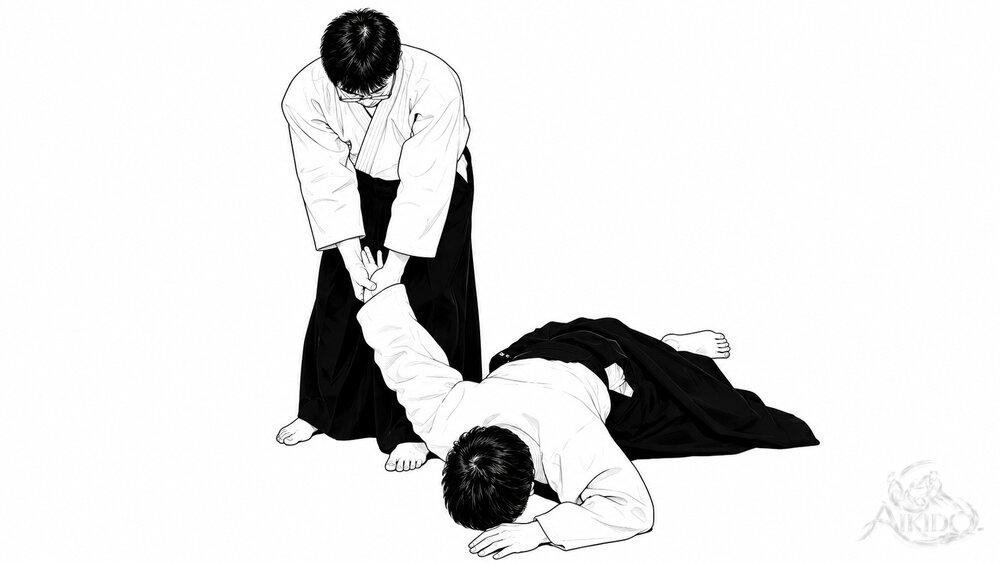
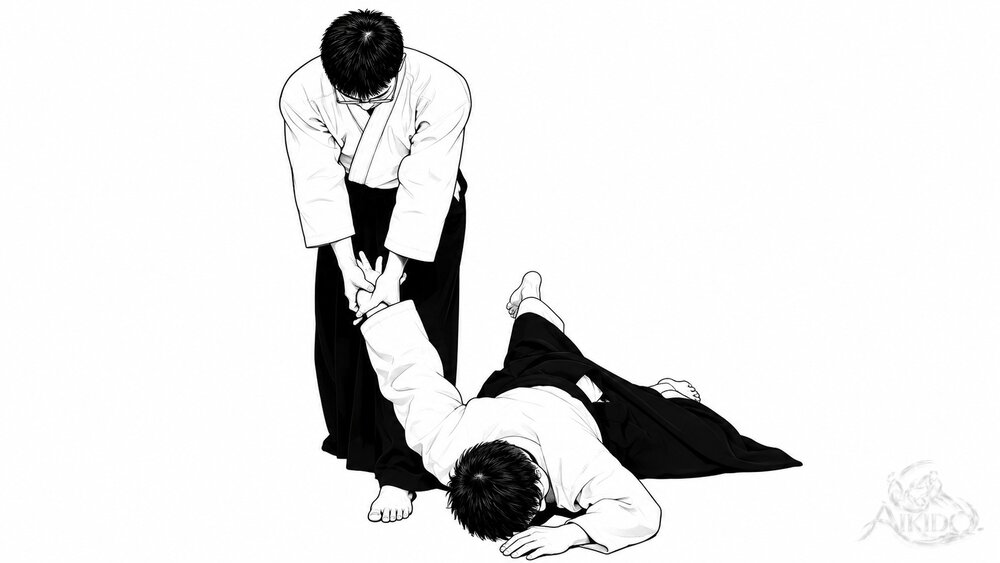
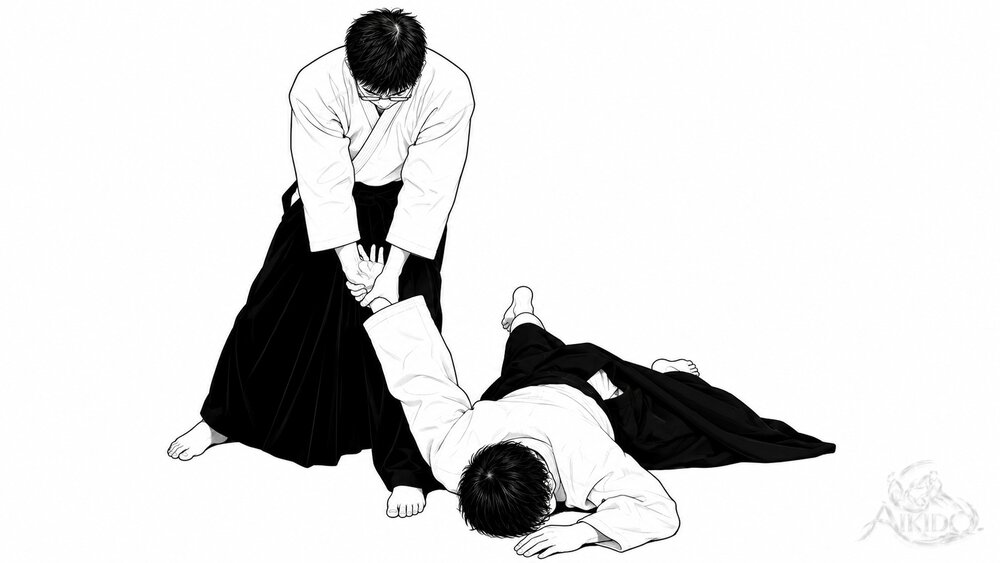
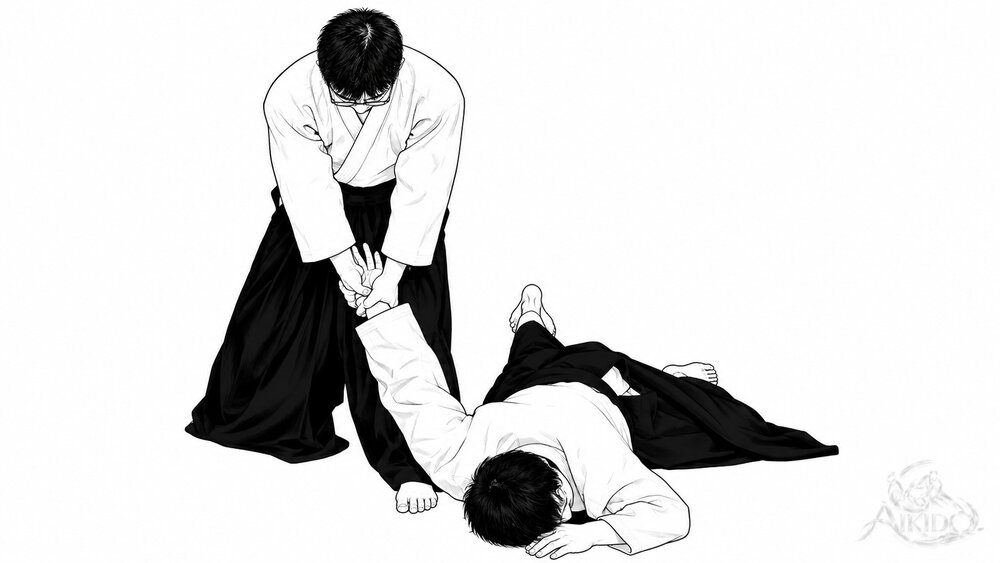
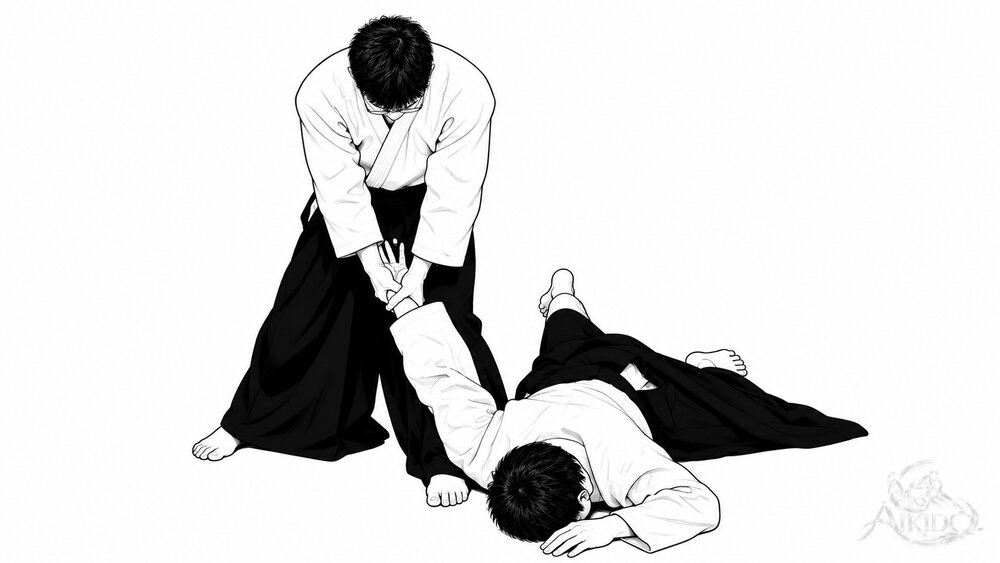
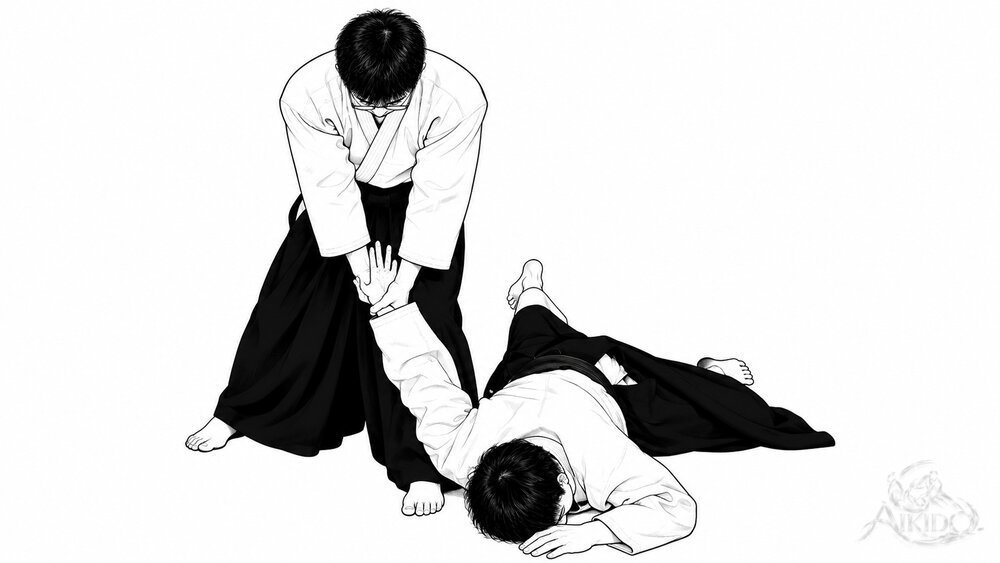
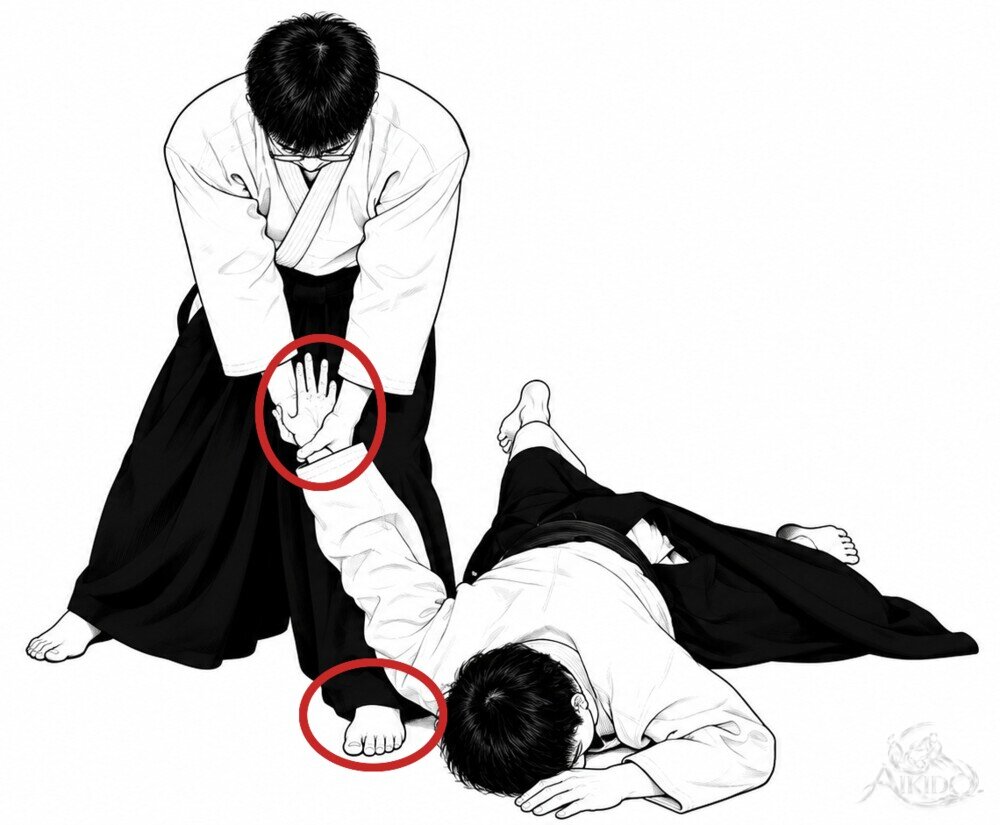
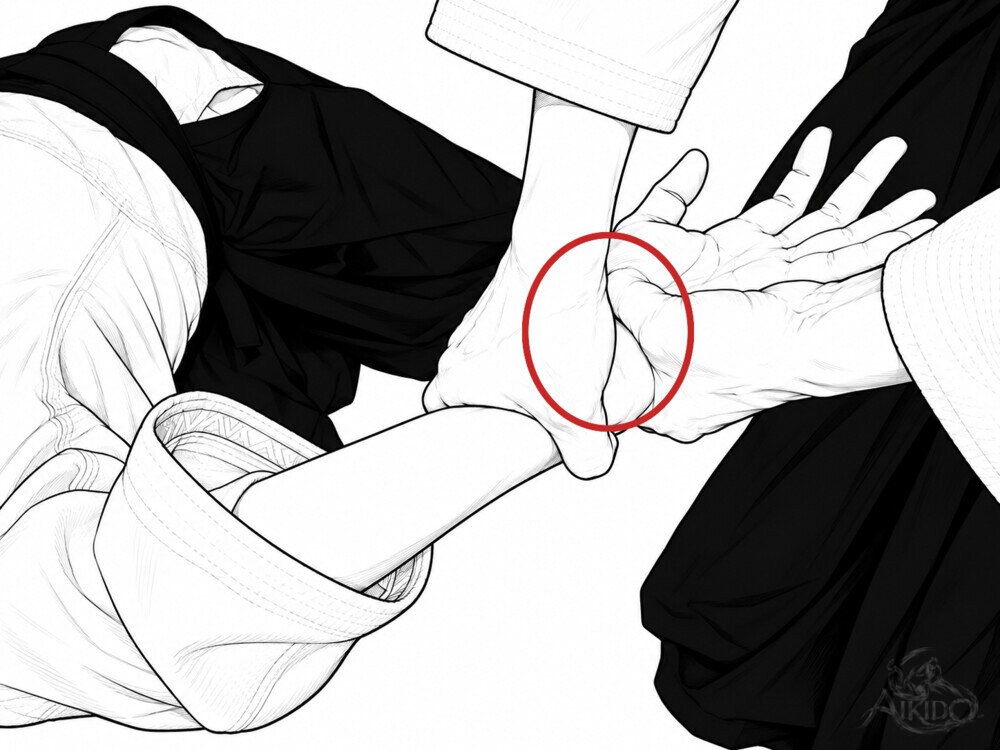
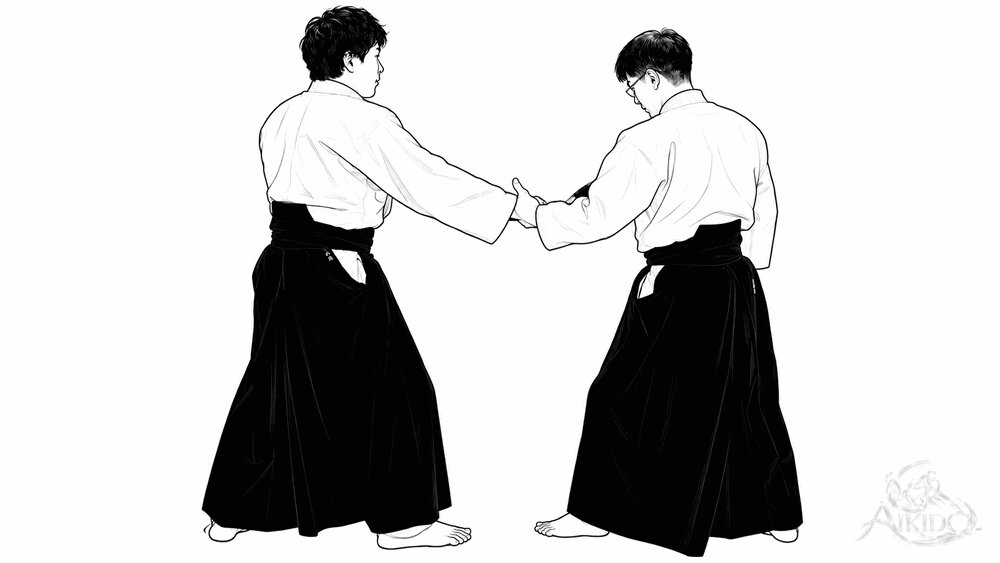
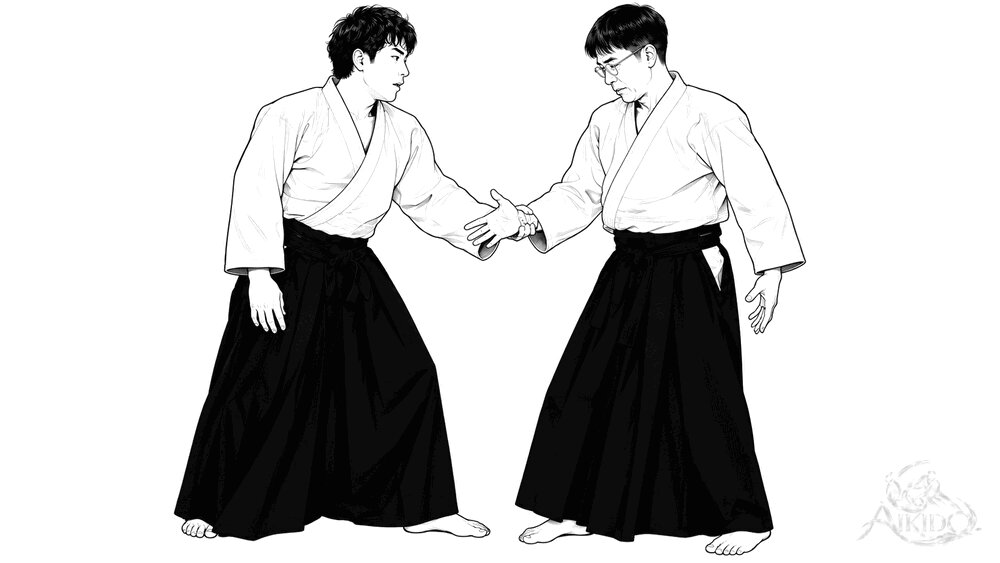
Gyaku-hanmi katate-dori yonkyo omote is a technique in which you enter forward with irimi to bring your partner down and control the wrist while standing. In hidari gyaku-hanmi katate-dori, open the body with the tenshin body movement while leading your partner’s hand down with the grabbed left tegatana, and take the elbow with the right hand. Cut straight down, and control the wrist with both hands as you bring your partner face down. Set the right foot against the front of your partner’s shoulder, and with the base of the right index finger control the place on your partner’s wrist where the pulse beats (myakubu, 脈部). It is important to gather the power you have at a single point.
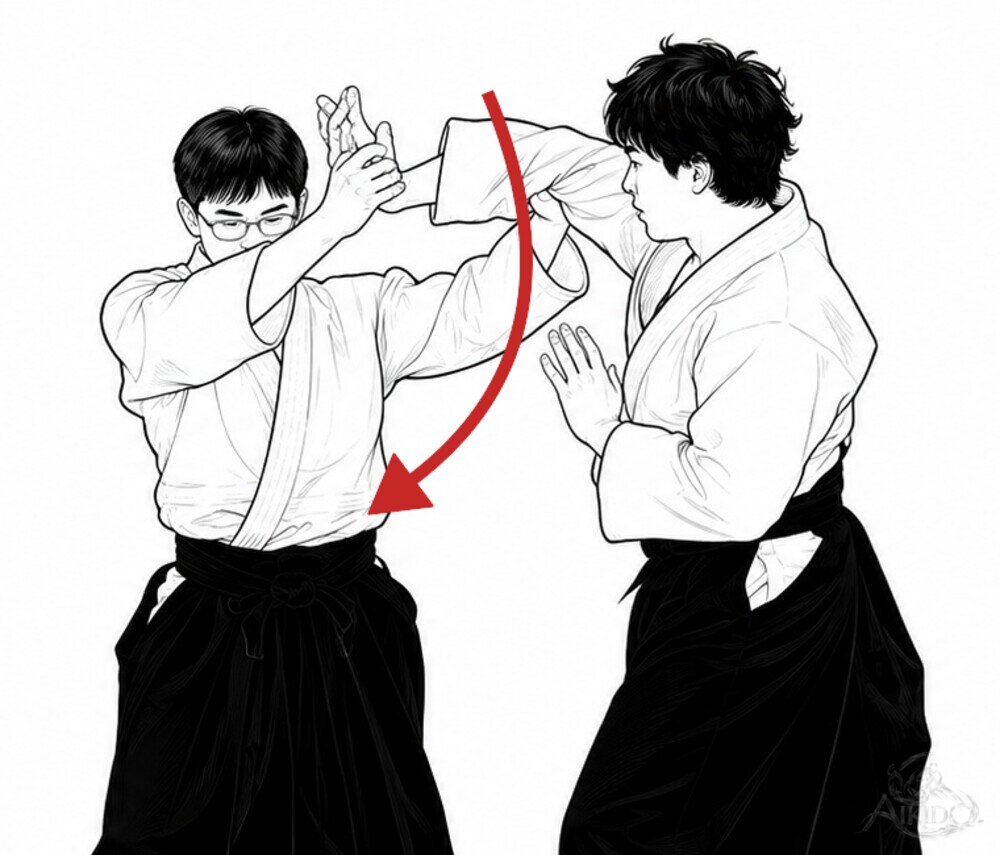
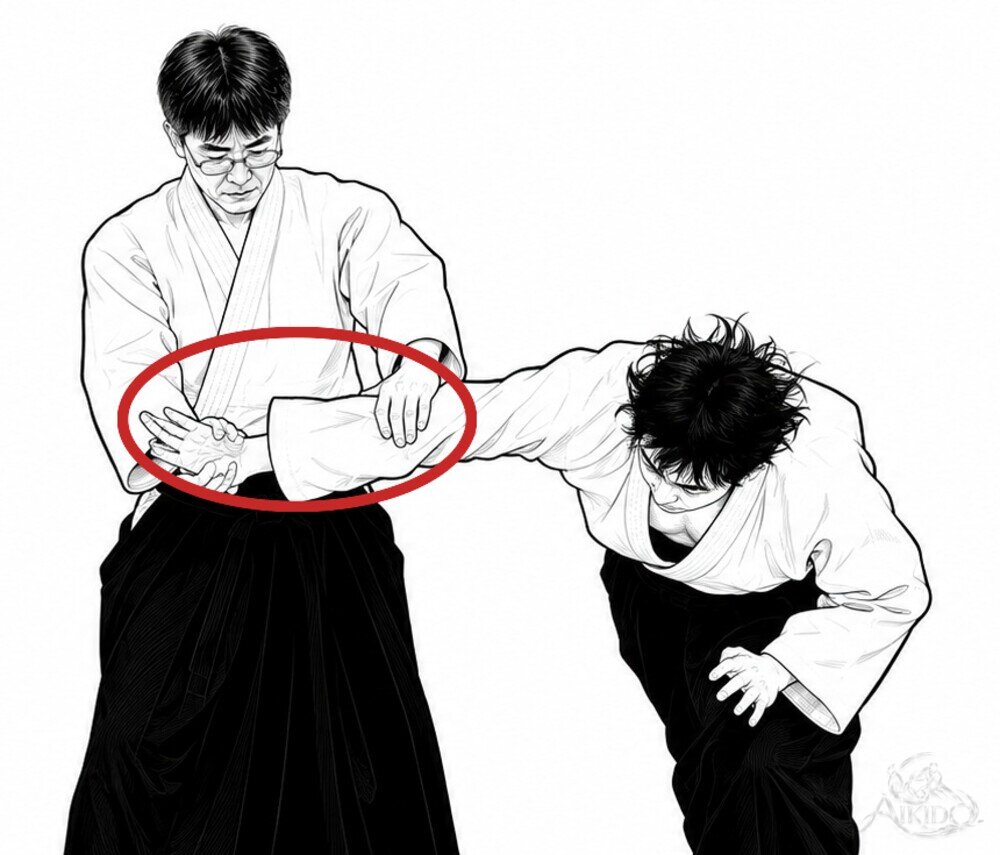
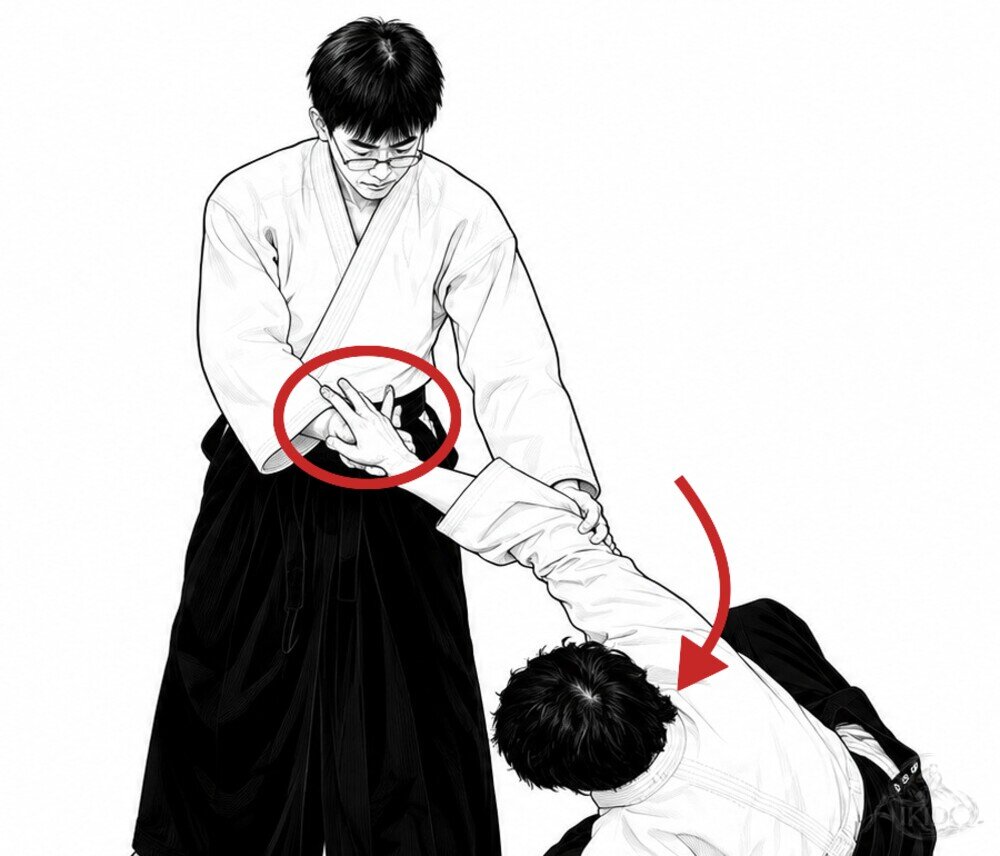
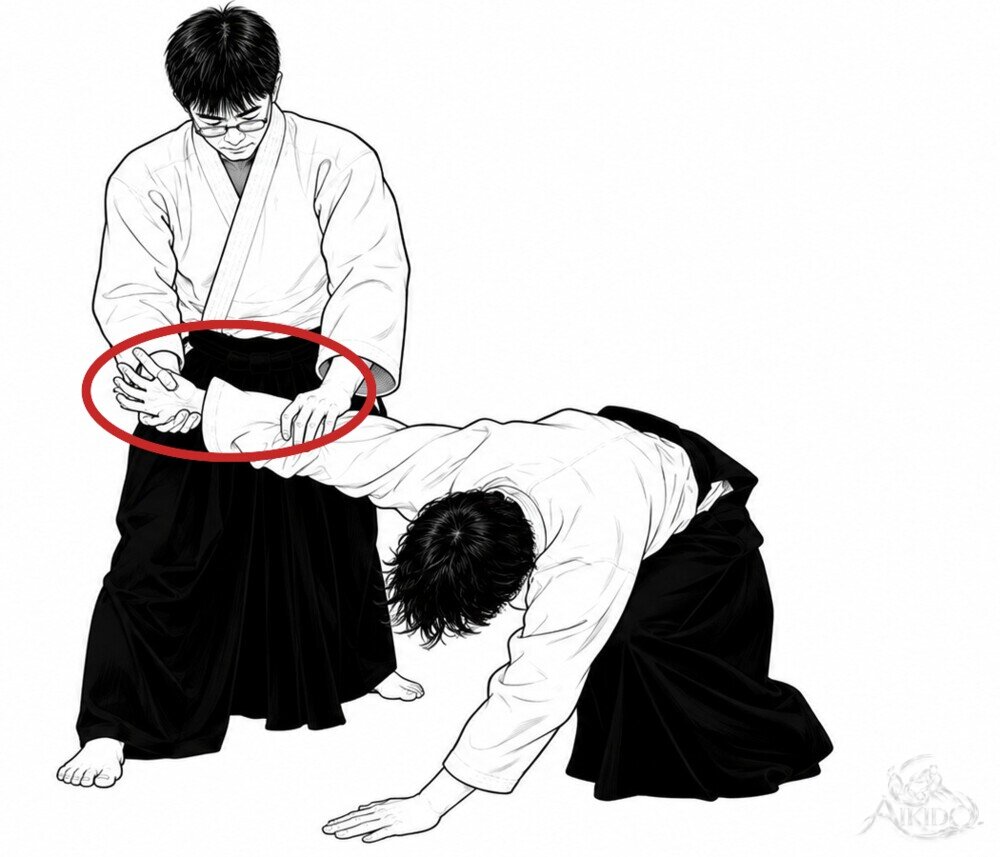
- Cut down along the body’s center: Entering to your partner’s side, cut your partner’s elbow down in a large arc with both hands. Here you turn the elbow to break your partner’s balance forward, and it is important always to use the body’s power effectively toward the body’s center.
- Break your partner’s balance as you advance: The cutting down with both hands must always be done together with the irimi body movement. Once you have broken your partner’s balance downward, advance again with ayumi-ashi and drop your partner’s posture down. Even after controlling the wrist with both hands, advance further to bring your partner face down. It helps to have the feeling of breaking your partner’s balance as you advance.
How to Control the Wrist
- Set your foot against the front of the shoulder: Set the right foot against the front of your partner’s shoulder to fix the shoulder.
- Hold your partner’s arm high: Holding your partner’s arm high is also a key point of the control.
- Control the pulse point with the base of the index finger: The key to yonkyo omote is controlling the place where the pulse beats with the base of the index finger. If this is off, the technique has no effect.
Gyaku-hanmi Katate-dori Yonkyo Ura (逆半身片手取り第四教 裏)
Key point: Turn with tenkan to break your partner’s balance backward, and control the tokotsubu.
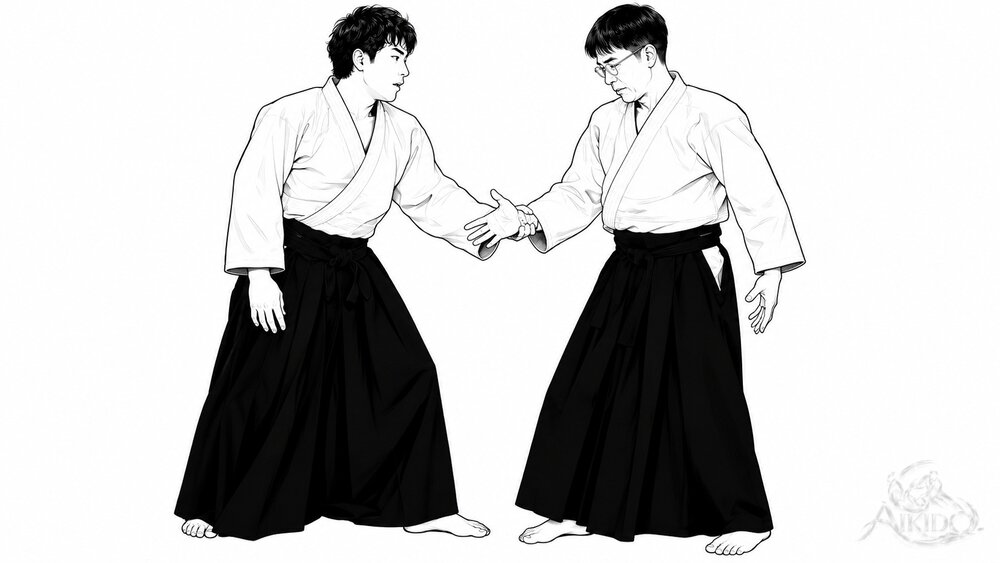
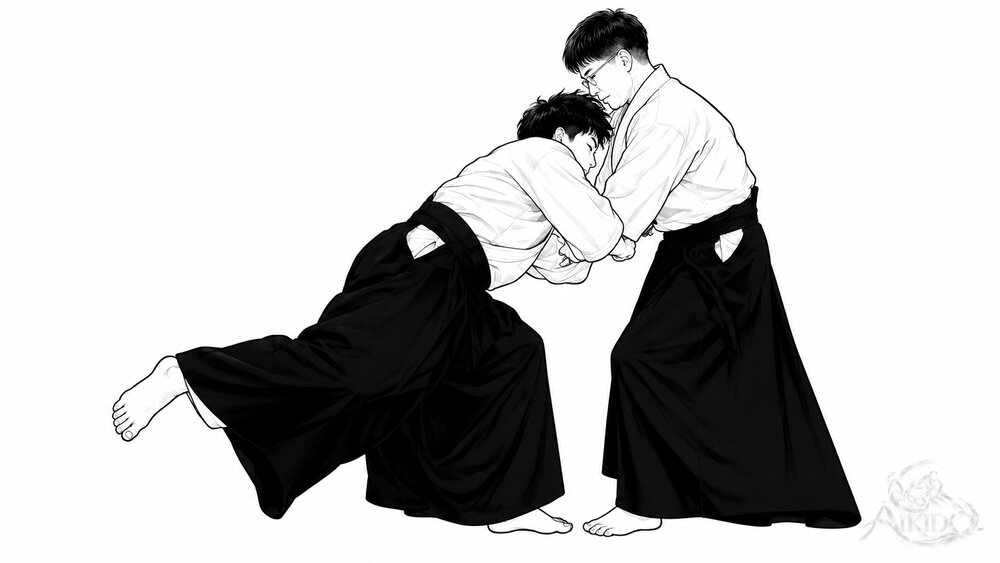
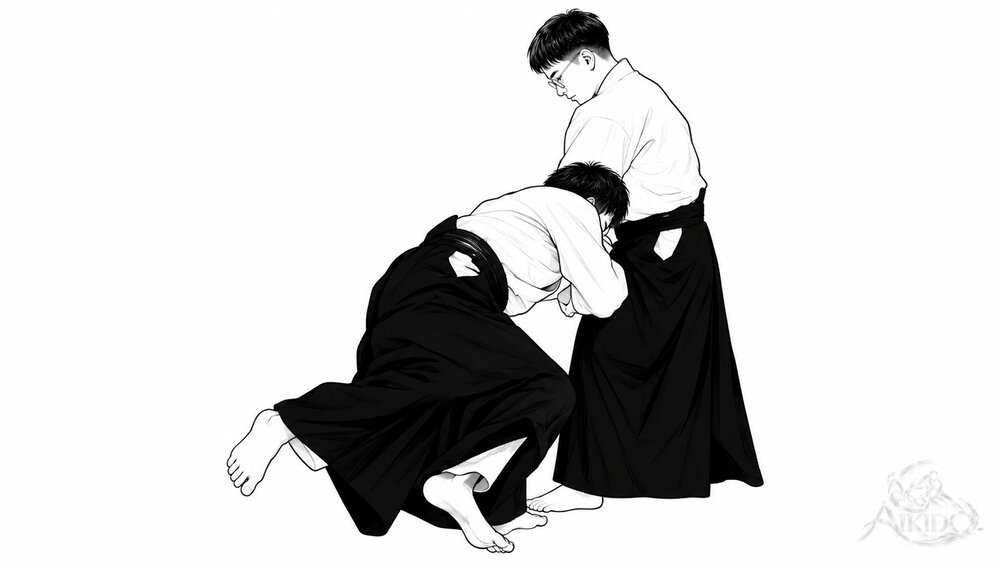
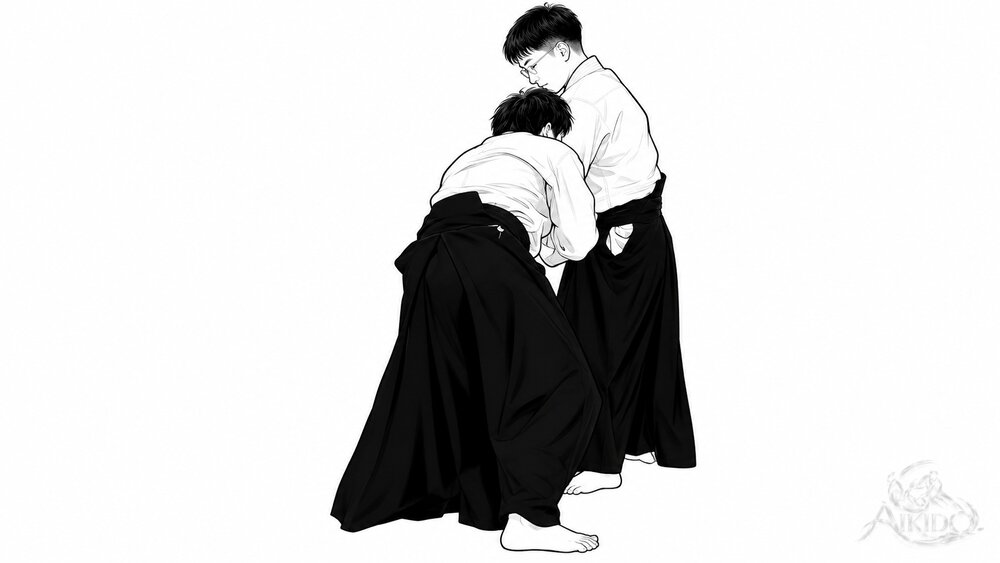
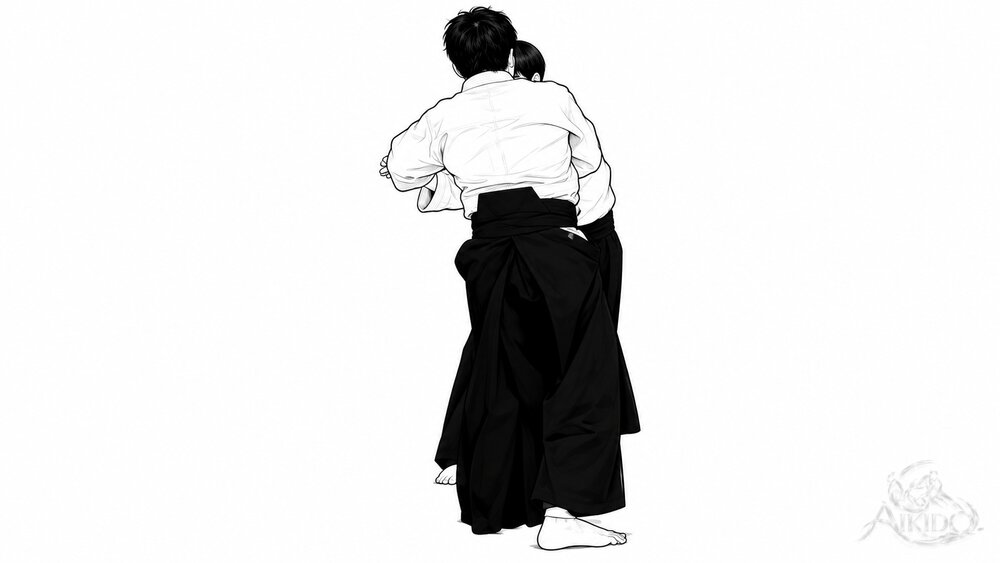
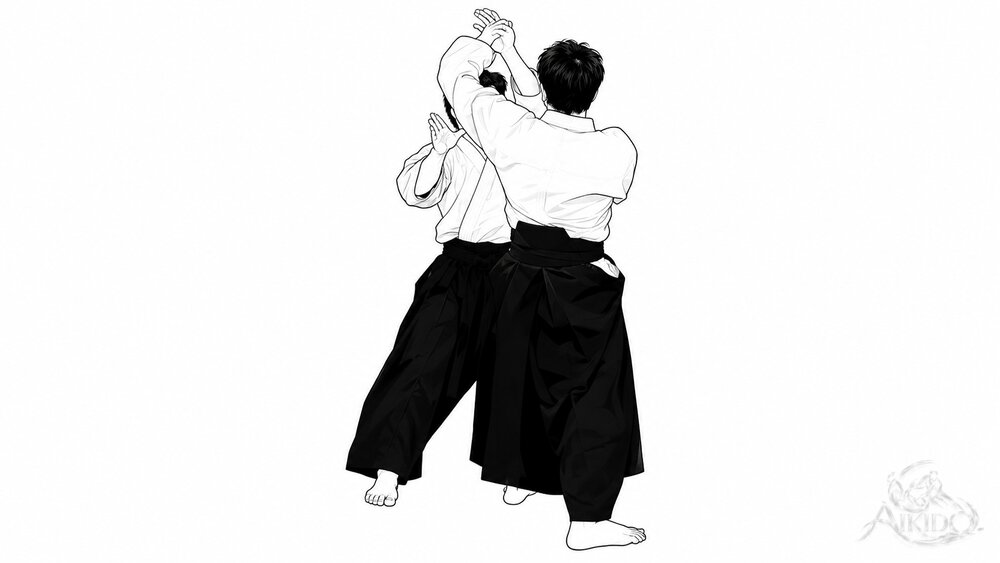
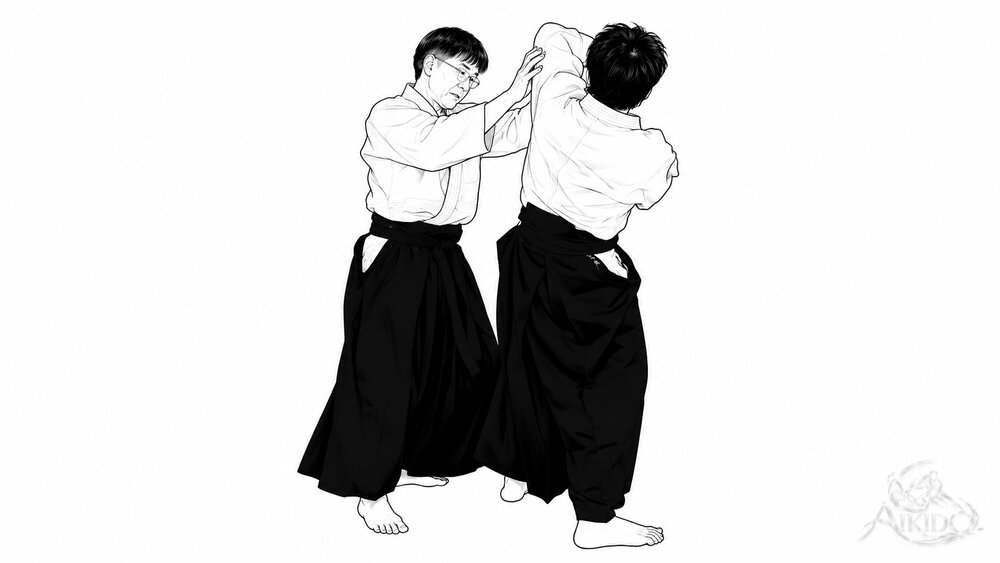
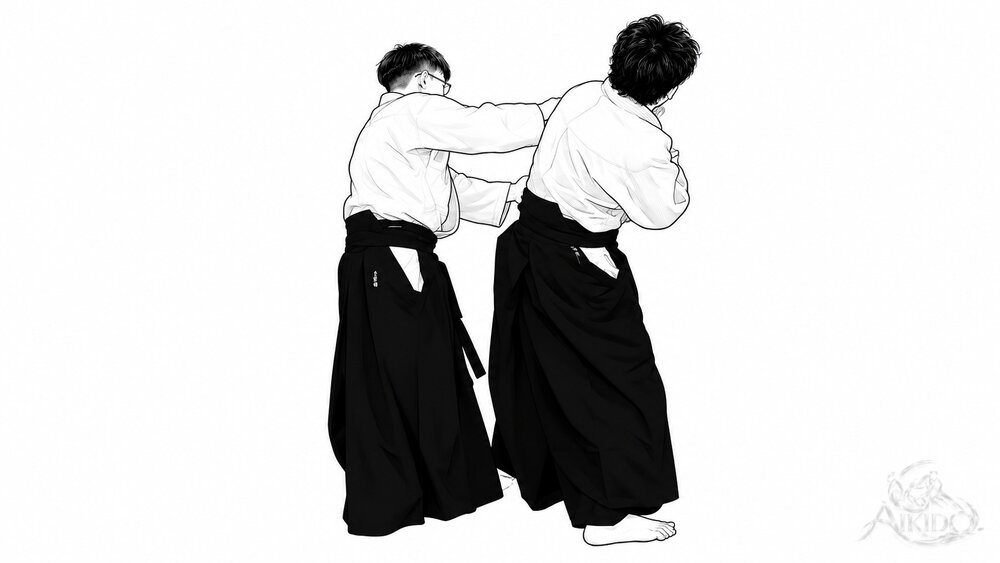
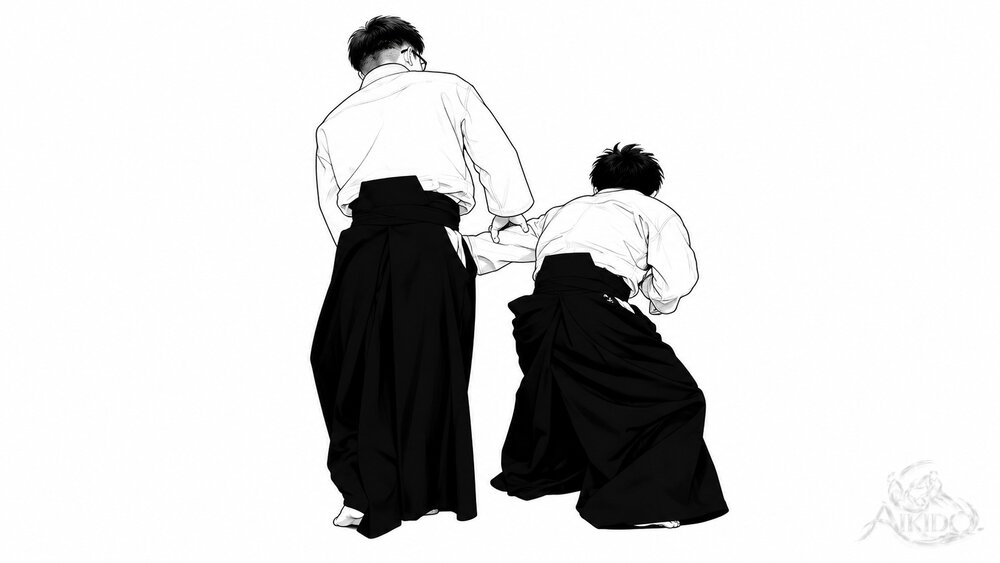
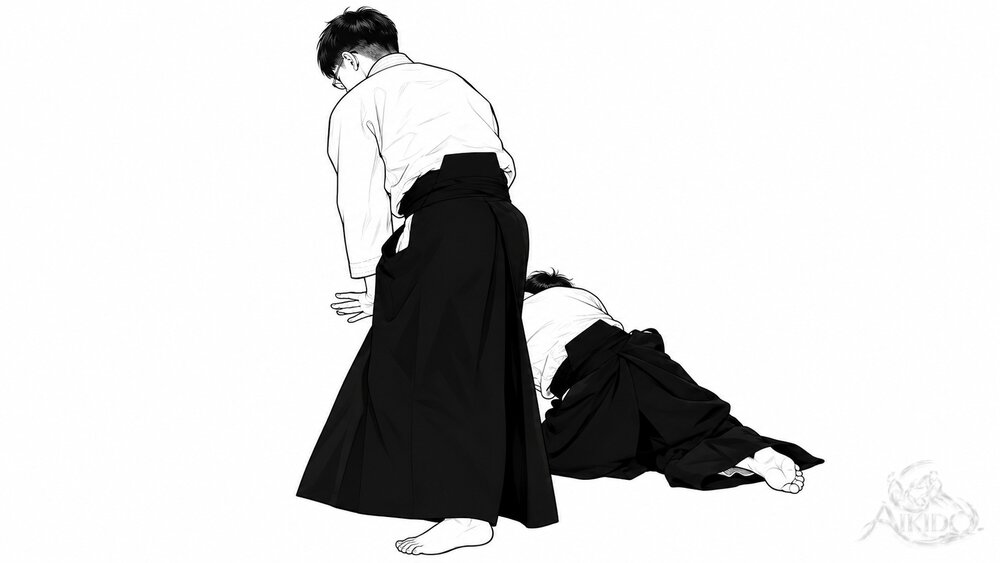
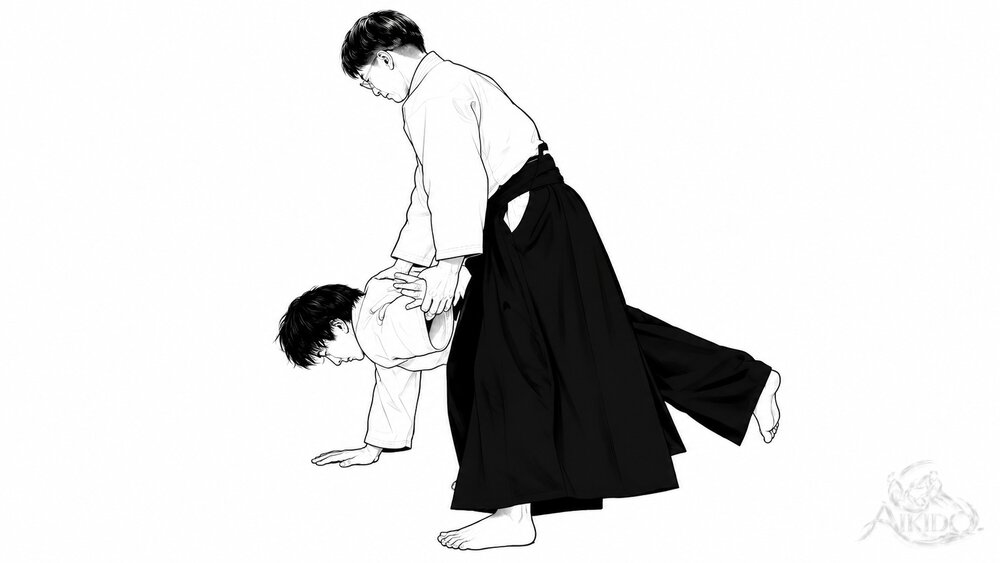
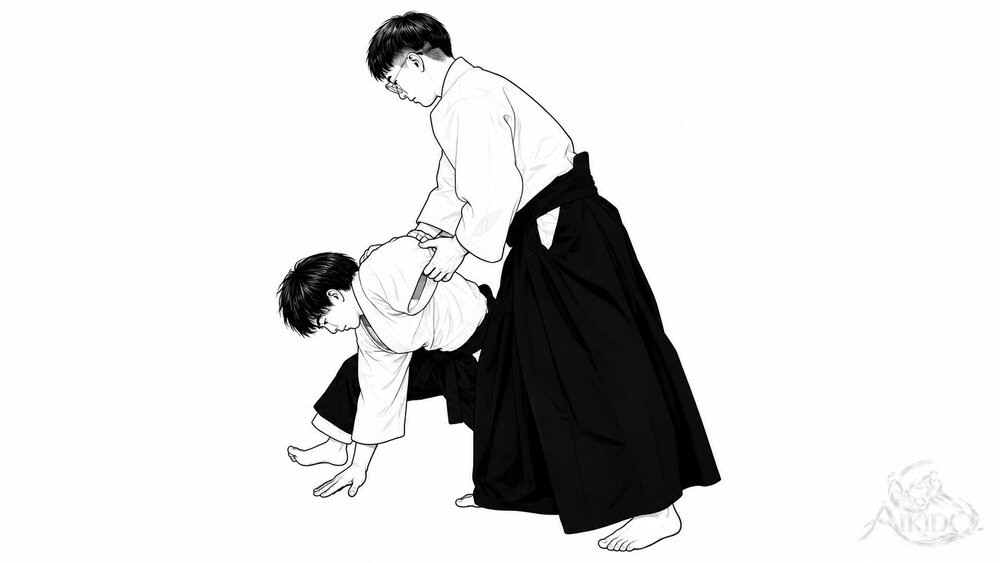
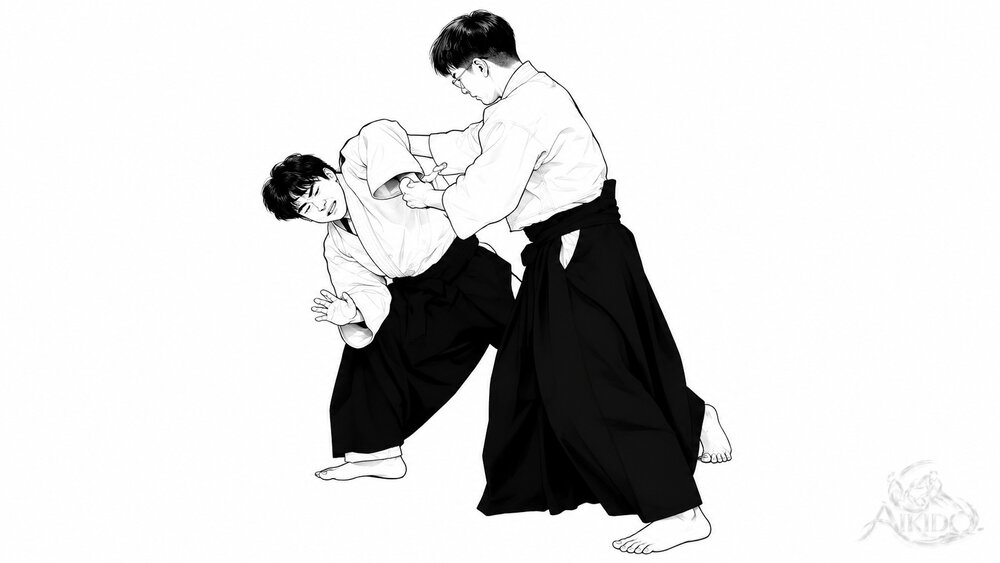
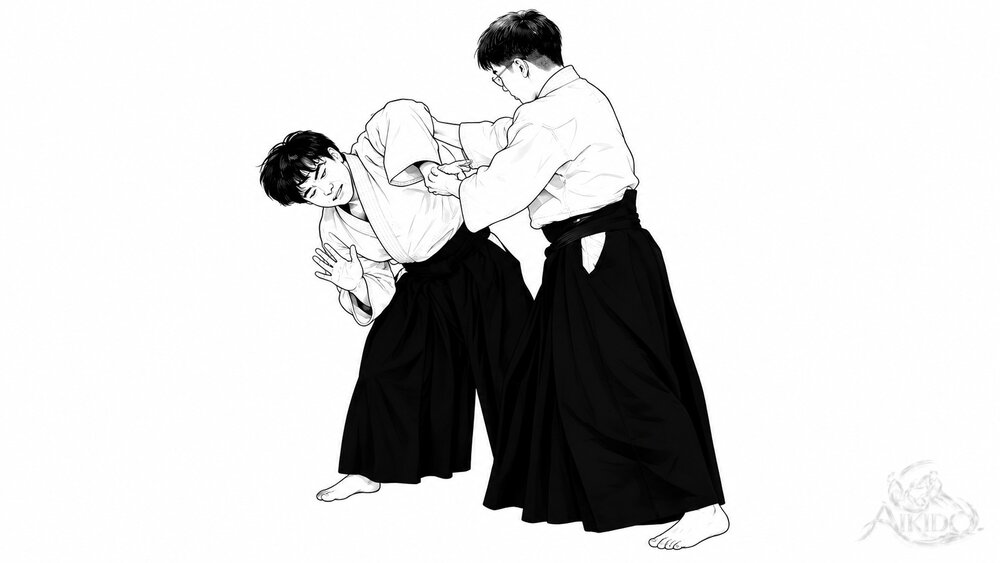
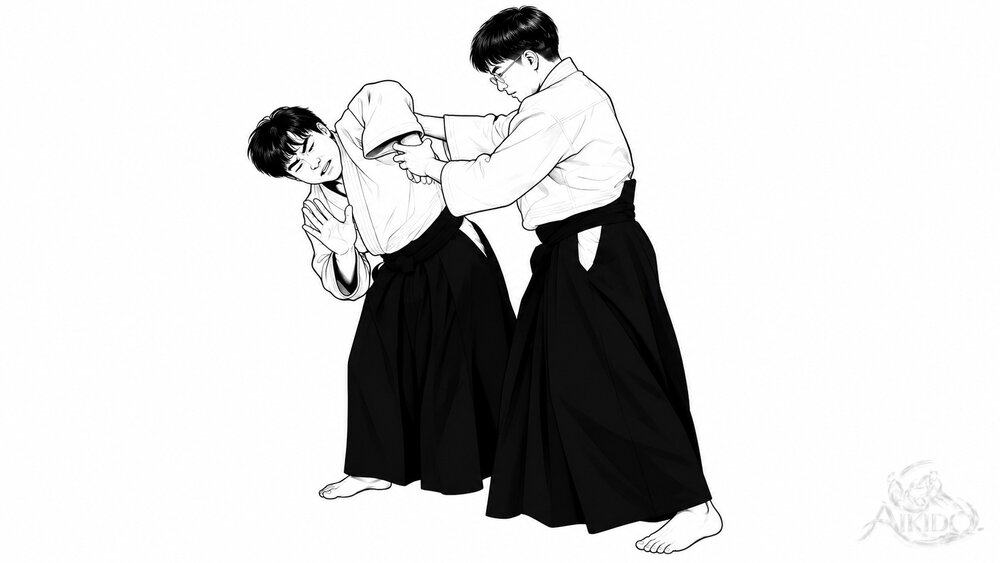
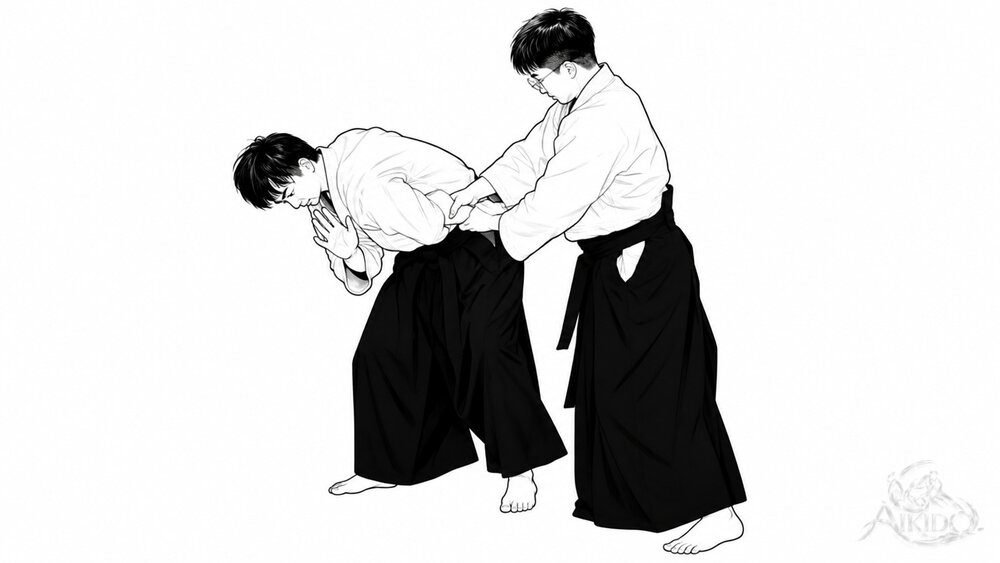
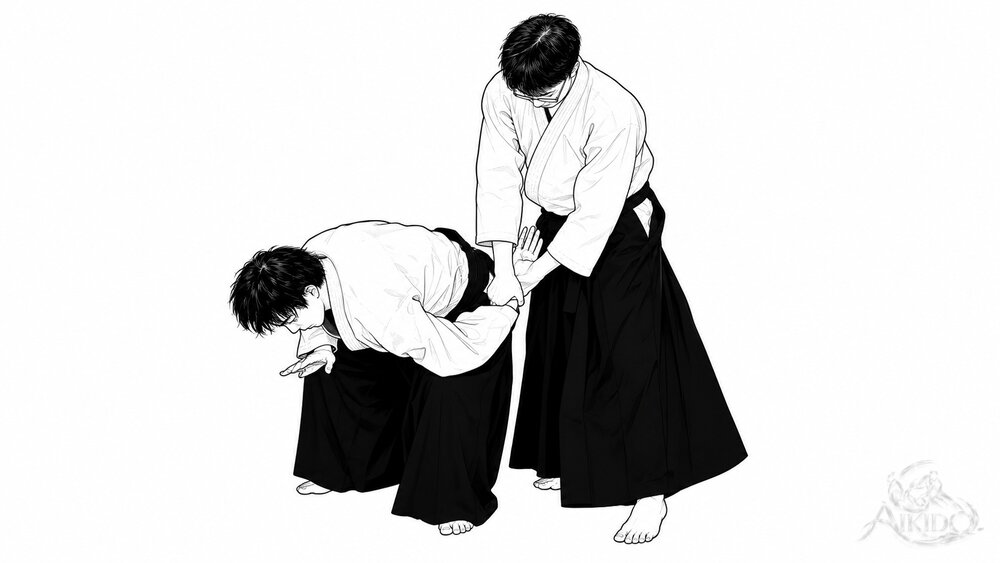
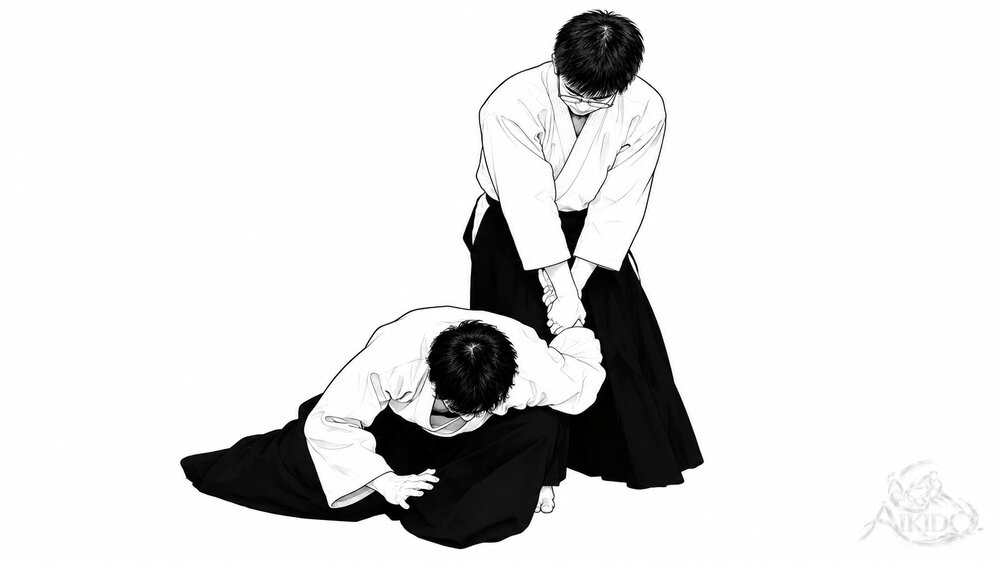
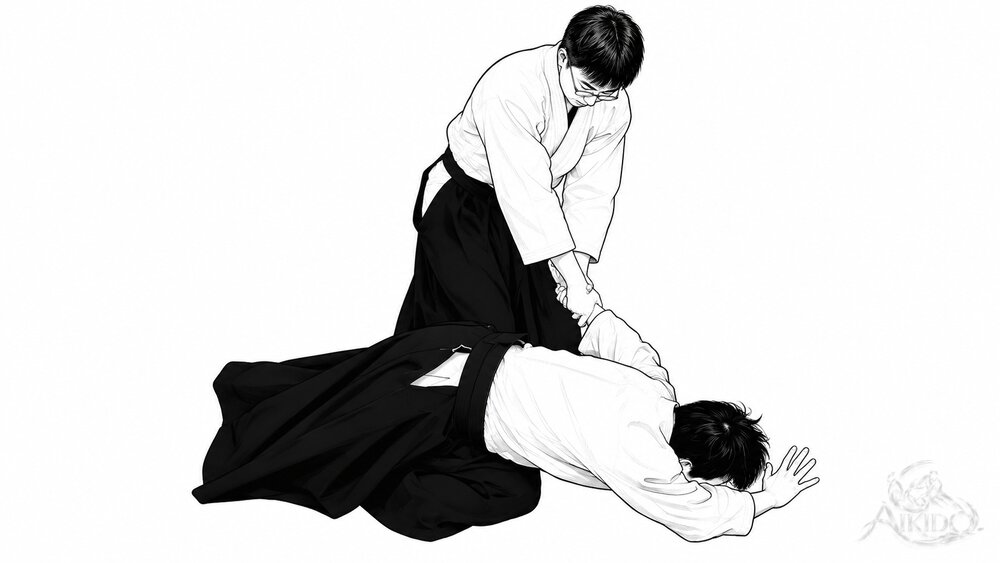
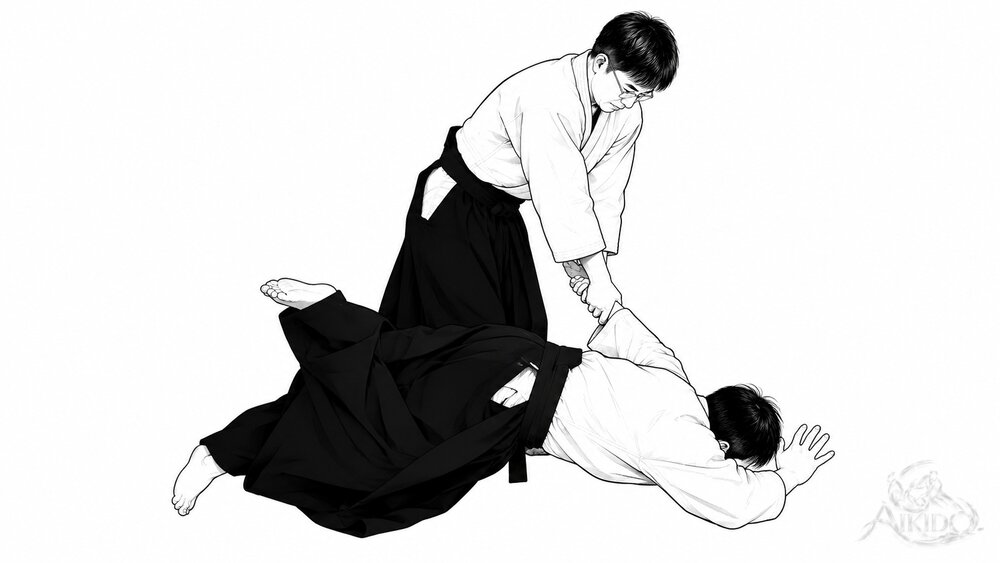
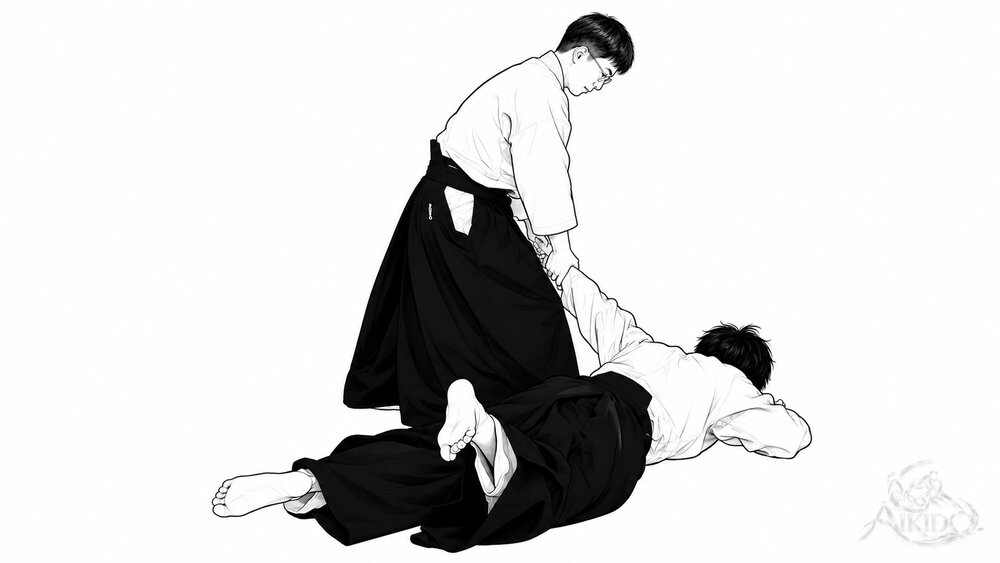
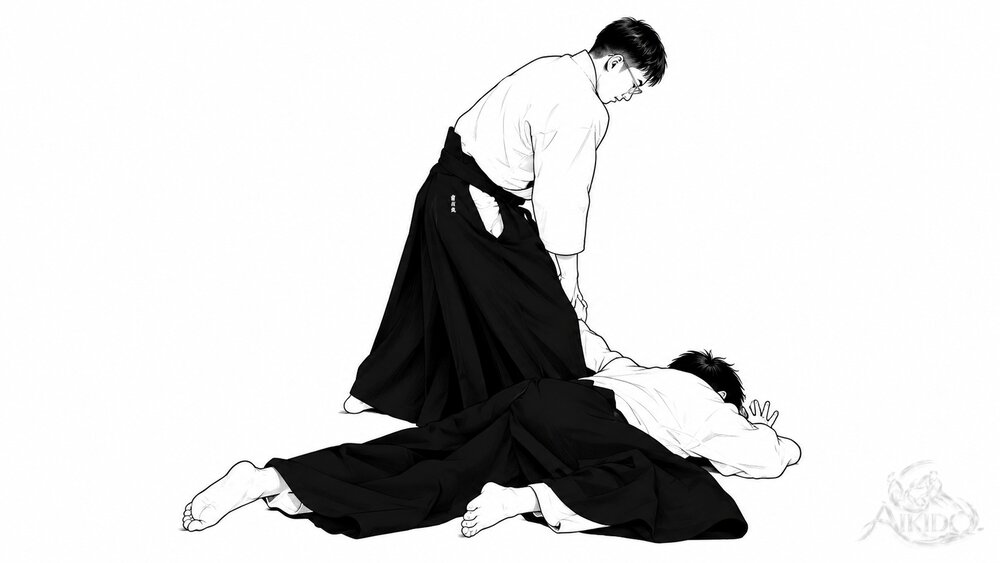
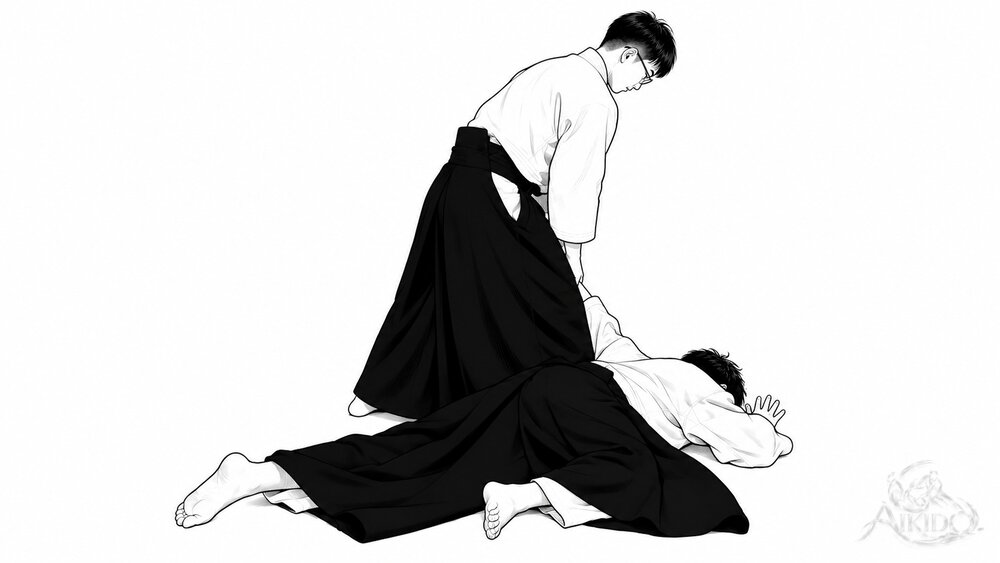
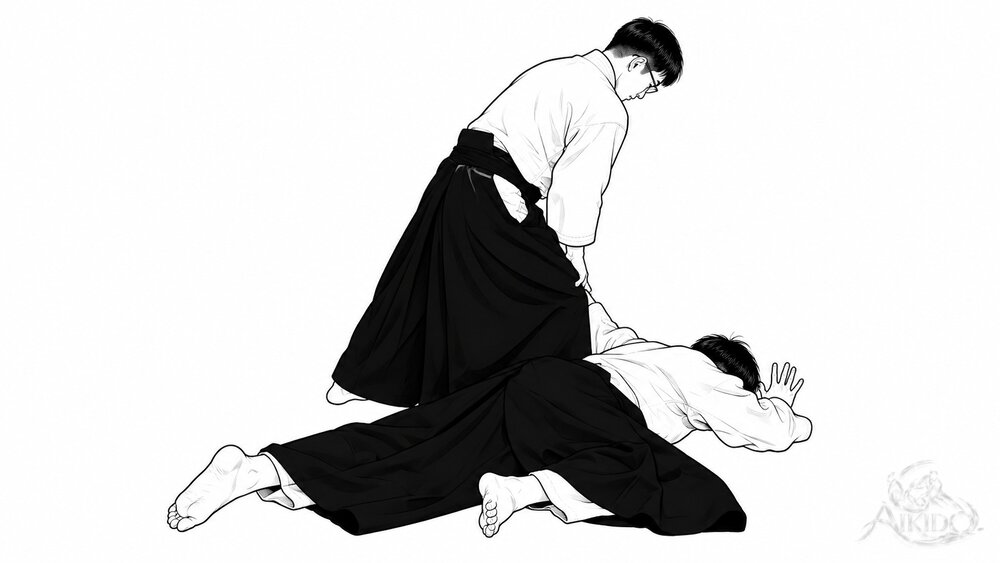
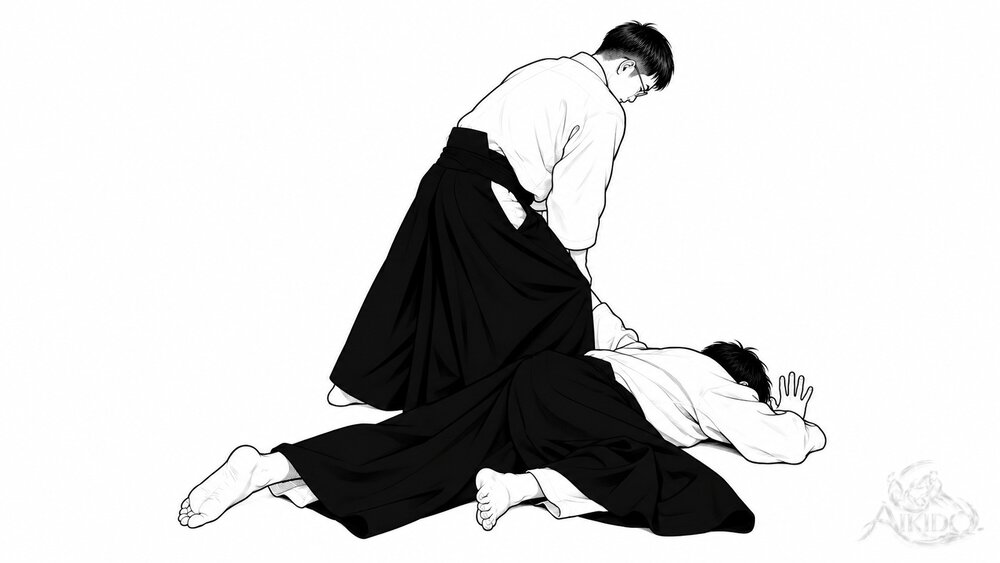
Gyaku-hanmi katate-dori yonkyo ura breaks your partner’s balance backward as if winding them in with the tenkan body movement, and controls the wrist. Not only do irimi and tenkan differ from omote, but the place you control with the base of the index finger at the end is also different: it is the tokotsubu (橈骨部), the wrist bone on the thumb side. Right after turning with tenkan, move the hand from the elbow to the wrist, then turn with tenkan again to break your partner’s balance backward. When your partner is face down, set your foot against the front of the shoulder and control the wrist.
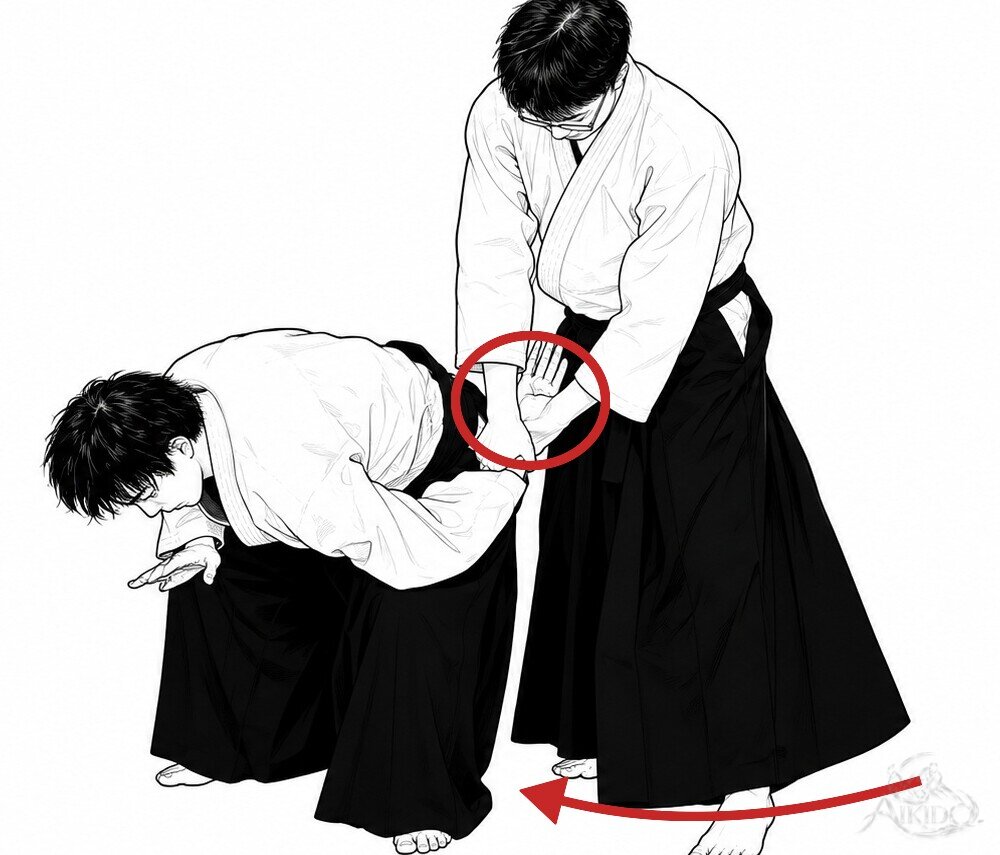
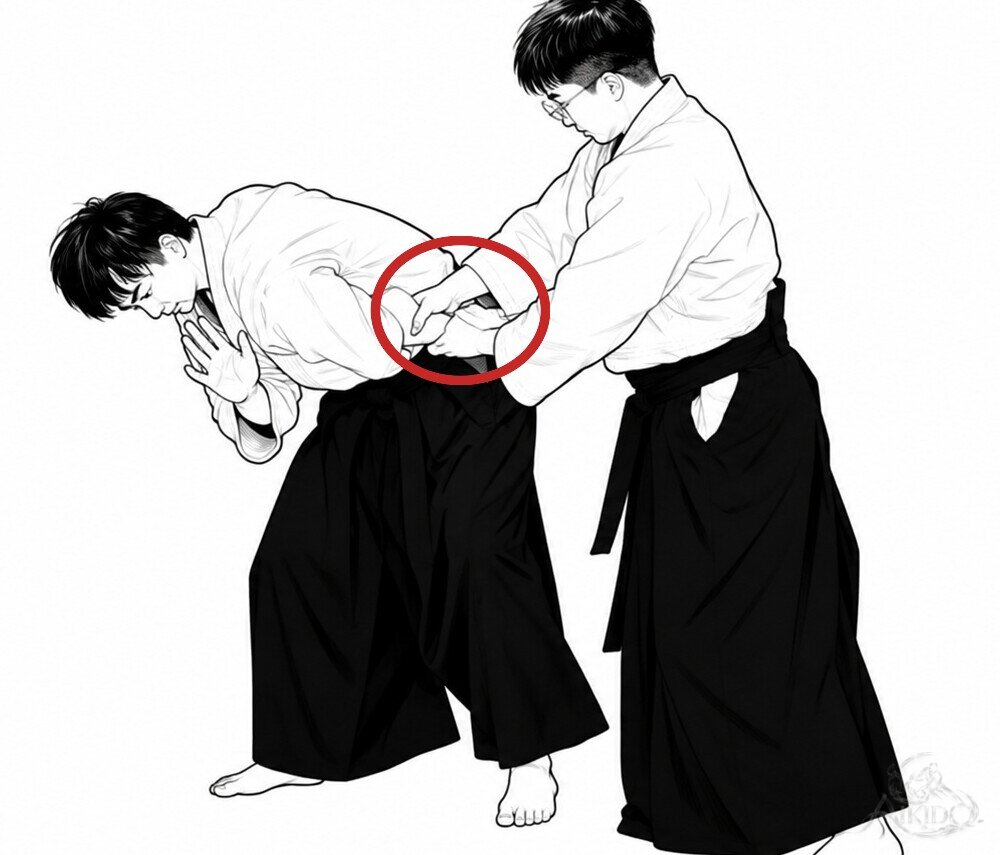
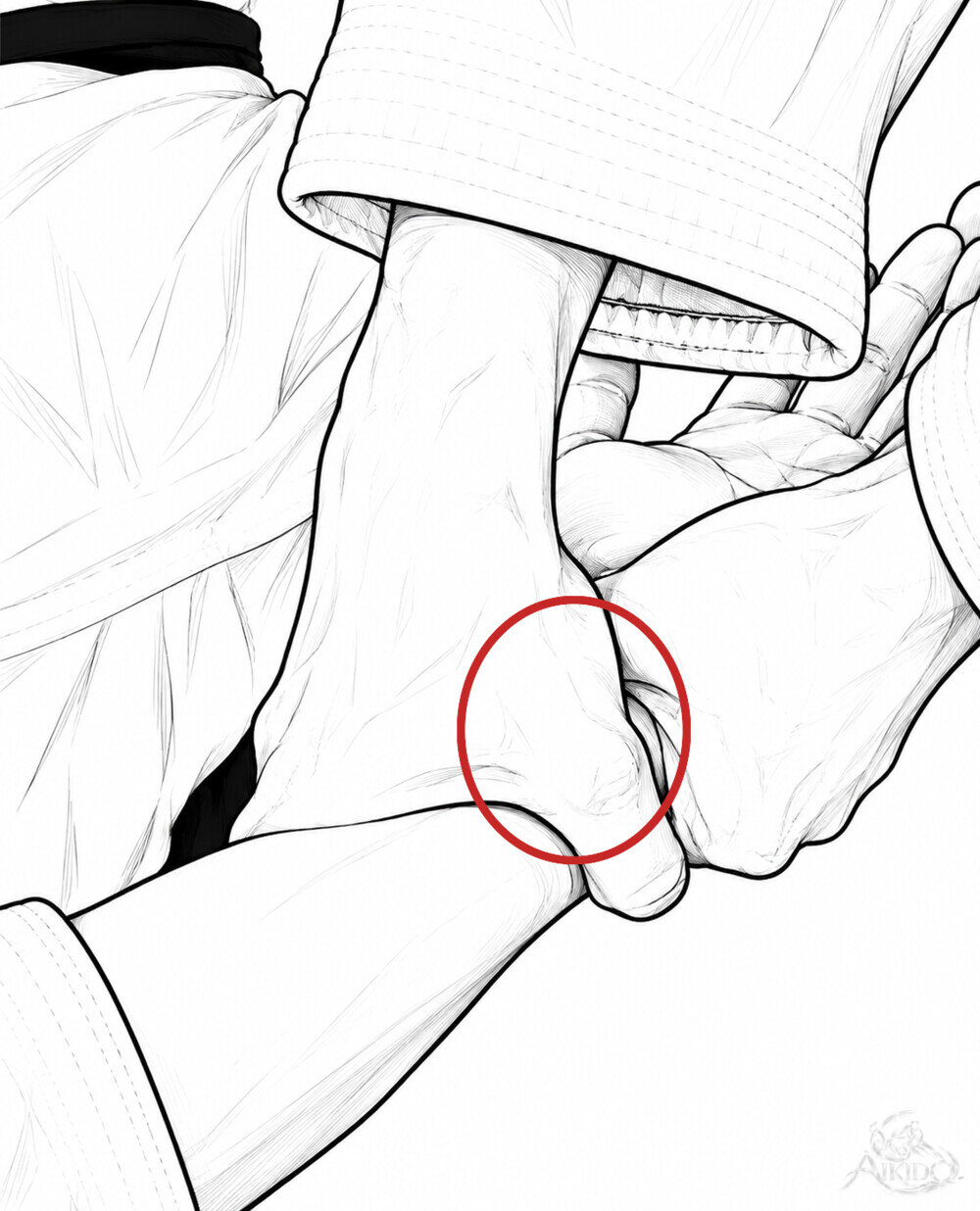
- Change your grip as you turn: Controlling the elbow with the right hand, use the tenkan body movement to lead down. Immediately move the right hand from the elbow to the wrist, changing your grip so that the base of the index finger rests on the tokotsubu.
- Omote and ura press with the index finger in different places: In omote you controlled the wrist by controlling the pulse point, but in ura you control the tokotsubu (Chapter 2) with the base of the index finger. Because tenkan changes the position of your body, pressing the pulse point weakens the twist on the wrist. Pressing the tokotsubu makes the control of the wrist secure and leads into the next cut down.
Last updated November 2, 2026 · This book continues to be revised after publication.
© 2026 Moon Young-chan. All rights reserved.
The text and images of this book are protected by copyright and may not be reproduced or distributed without permission.